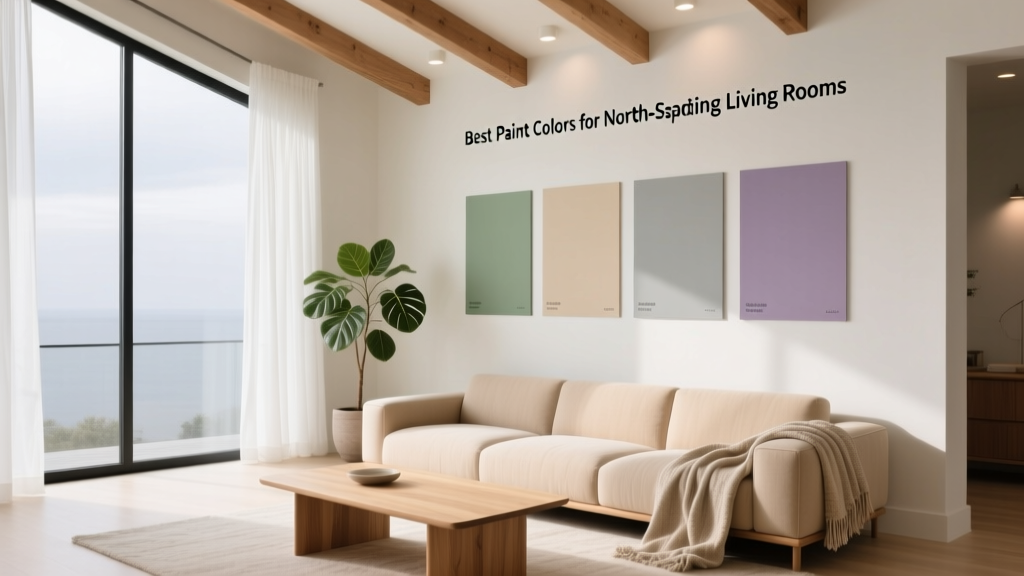
Best Paint Colors for North-Facing Living Rooms (2026)
A north-facing living room can be a design blessing and a decorating puzzle at the same time. The light is steady throughout the day, which means your wall color won’t swing wildly from morning to afternoon. But that same consistency often comes with a cool, grayish cast that can make a space feel dim, flat, or slightly chilly—especially if your furnishings lean modern, your floors are dark, or your windows are modest in size.
The right paint color changes everything. With a smart approach to undertones, sheen, and a few lighting adjustments, a north-facing living room can feel warm, bright, and inviting while still looking sophisticated. This guide breaks down how north light affects paint, the best color families to choose from, specific designer-loved paint recommendations, and the most common mistakes to avoid—plus practical tips on sampling, budgeting, and getting a professional-looking finish.
How North Light Changes Paint Color (and Why It Feels “Colder”)
North-facing rooms receive indirect light most of the day. That light tends to be cooler and less intense, which can:
- Emphasize cool undertones (blue, gray, green) in paint colors
- Mute warm pigments so creamy whites can look dingy or beige can look dull
- Reduce contrast in the room, making everything feel a little flatter
Quick rule of thumb: Warm up the undertones
When choosing paint colors for a north-facing living room, look for:
- Warm whites (creamy, not stark)
- Greiges with beige or pink undertones
- Soft warm neutrals (oat, sand, light taupe)
- Muted warm colors (clay, terracotta, blush, caramel)
- Rich, cozy hues (ink, forest, chocolate) if you’re embracing mood
Before You Pick a Color: Assess Your Room Like a Designer
Two north-facing living rooms can behave very differently depending on finishes and layout. Take five minutes to check these factors before falling in love with a paint chip.
1) Window size and orientation details
- Large windows: You can handle deeper, more saturated colors without the room feeling cave-like.
- Small windows: Favor lighter warm neutrals and consider brighter trim to bounce light.
2) Floors and large fixed elements
Your floor color is a huge undertone clue:
- Honey oak floors: Warm whites and greiges look cohesive; very cool grays can clash.
- Dark walnut floors: Lighter warm neutrals help balance; mid-tones can feel heavy in low light.
- Gray LVP or cool stone: Choose paint with subtle warmth (pink-beige, creamy) to counteract the cool base.
3) Existing furnishings and metals
- Brass/antique gold: Works beautifully with warm whites, greige, clay, and olive.
- Chrome/black: Pairs well with soft warm neutrals and moody colors (ink, deep green).
4) Choose your vibe: airy or cozy
North light is perfect for a calm, tailored look—but you’ll want to decide early:
- Airy and bright: Warm white walls, light-reflective finishes, layered lighting.
- Cozy and moody: Mid-tone to deep walls with warm lamps and textured textiles.
The Best Paint Color Families for North-Facing Living Rooms
Warm Whites That Don’t Turn Gray
Warm whites are a go-to for living room design because they make art, textiles, and wood tones shine. In north-facing rooms, skip stark whites—they often read icy.
- Benjamin Moore White Dove (OC-17): A soft, creamy white with balanced warmth—excellent for walls and trim if you like a monochrome look.
- Sherwin-Williams Alabaster (SW 7008): Warm and welcoming without feeling yellow; a classic for both renters and homeowners.
- Farrow & Ball School House White (No. 291): A gentle, lived-in off-white that feels timeless in traditional or modern spaces.
Design tip: Pair warm white walls with a slightly brighter trim (same color, 10–20% more white, or a cleaner white) to keep edges crisp in low light.
Greige and Warm Neutrals for a Soft, Elevated Look
If you want a neutral living room that still feels cozy, greige is your best friend. These shades avoid the “cold gray” trap and flatter both warm and cool decor.
- Benjamin Moore Pale Oak (OC-20): A light greige with a soft warmth that reads elegant and airy.
- Sherwin-Williams Agreeable Gray (SW 7029): Popular for a reason—its warmth helps in north light, especially with layered lighting.
- Benjamin Moore Edgecomb Gray (HC-173): A warm neutral that feels inviting and works beautifully with wood tones.
Real-world scenario: In a north-facing apartment living room with gray floors and a charcoal sofa, Pale Oak plus ivory curtains and warm brass accents prevents the space from looking “all cool tones.” Add a jute rug (5' x 8' for small seating areas; 8' x 10' for most living rooms) to bring in warmth and texture.
Soft, Warm Colors That Glow Instead of Going Flat
North light can make some colors look muted, which is actually a win if you love gentle color. Look for warm, earthy pigments.
- Muted blush / rosy beige: Adds warmth without reading “pink.” Try Benjamin Moore First Light (2102-70) or Sherwin-Williams Romance (SW 6323) for subtle warmth.
- Clay / terracotta: Cozy and trend-forward, especially with natural materials. Consider Farrow & Ball Red Earth (No. 64) or a similar softened terracotta.
- Soft caramel / sand: Great for boho or transitional living rooms. Look at Benjamin Moore Manchester Tan (HC-81).
Design tip: If you’re nervous about committing, use a warm color on a single focal wall behind the sofa or fireplace and keep the other walls a warm white.
Moody Paint Colors That Make North Light Feel Intentional
One of the most current design trends is embracing moody, cocoon-like living rooms—especially when natural light is limited. North-facing rooms are ideal for this because the light is consistent and won’t “wash out” deep colors.
- Deep blue-black: Dramatic and timeless. Try Benjamin Moore Hale Navy (HC-154) or Sherwin-Williams Naval (SW 6244).
- Deep green: Grounding and rich; stunning with walnut, brass, and cream textiles. Consider Benjamin Moore Essex Green (HC-188) for a classic library feel.
- Warm charcoal: Modern and cozy, especially with soft lighting and boucle textures. Look at Sherwin-Williams Iron Ore (SW 7069).
Real-world scenario: A north-facing living room with one large window and a media wall can feel intentional with Hale Navy on all walls, a warm white ceiling, and three warm light sources: a floor lamp, table lamp, and picture light. Add an 8' x 10' rug that extends at least 8–12 inches beyond the sofa on each side for a polished, designer look.
Sheen, Trim, and Ceiling: The Details That Make the Paint Work
Best sheen for north-facing living room walls
- Matte: Great for hiding wall imperfections; can feel softer but may absorb light.
- Eggshell: The sweet spot for most living rooms—easy to clean, subtle glow to help reflect light.
- Satin: More reflective; use if your room is very dim, but it can highlight wall texture.
Recommendation: Use eggshell for walls in most north-facing living rooms. If you’re painting a moody color and want it to feel velvety, choose matte and increase lighting instead.
Trim color strategy
- Warm white trim: Soft and cohesive, best with warm walls and traditional interiors.
- Crisp white trim: Adds contrast and brightness, great for modern living room design.
Easy combo: Warm neutral walls + Benjamin Moore Chantilly Lace or a similar clean white on trim if your room needs visual lift.
Ceiling color
A flat white ceiling can look shadowy in north light. Two options:
- Option A: Paint the ceiling the same white as trim (flat or matte).
- Option B: Use the wall color at 50% strength (if your brand offers it) to soften contrast and reduce “gray ceiling” effect.
Step-by-Step: How to Test Paint in a North-Facing Living Room
- Buy samples (or peel-and-stick swatches): Choose 3–5 options within the same family (warm white, greige, etc.).
- Paint large sample squares: At least 24" x 24" on two walls—one near the window, one deeper in the room.
- Observe for 48 hours: Check morning, afternoon, and evening with your lamps on.
- View next to fixed finishes: Hold the sample up to flooring, sofa fabric, and curtains.
- Decide with lighting in place: If you plan to change bulbs, do it before finalizing paint.
Lighting tip: Use warm bulbs in the 2700K–3000K range for most living rooms. Avoid very cool 4000K+ bulbs in north-facing spaces—they can make walls look sterile.
Product and Material Recommendations (That Make Paint Look Better)
Lighting upgrades (high impact, manageable budgets)
- Floor lamp with linen shade: Adds warm diffusion. Budget: $60–$250.
- Table lamps (pair): Balanced light reduces shadows. Budget: $80–$400 for two.
- Dimmers: Helps adjust mood and warmth. Budget: $25–$75 per switch (plus installation if needed).
Paint and tools
- Paint quality: Choose mid- to premium-grade for better coverage in darker rooms. Budget: $45–$110 per gallon depending on brand/line.
- Roller nap: 3/8" for smooth to lightly textured walls; 1/2" for more texture.
- Angled sash brush: 2"–2.5" for clean cut-ins.
Coverage planning: One gallon typically covers 350–400 sq ft per coat. North-facing rooms often need 2 coats, especially with deep or high-pigment colors.
Common Mistakes to Avoid in a North-Facing Living Room
- Choosing a cool gray because it looks modern: In north light, many grays turn steely or blue. If you want “modern neutral,” choose greige or warm taupe instead.
- Picking a white that’s too stark: Bright whites can read icy. Warm whites are usually more flattering.
- Sampling only in daylight: Living rooms are used at night. Your lamp lighting matters just as much.
- Ignoring undertones in furniture and floors: Cool floors + cool wall paint often equals a chilly room.
- Using the wrong sheen: Too flat can feel dull; too shiny can highlight imperfections. Eggshell is typically safest.
- Not budgeting for lighting: Paint alone can’t fix a dim room. Even $150–$300 in lamps can dramatically improve the result.
Color Pairing Ideas: What to Do After You Paint
Once your paint color is chosen, your decor can reinforce warmth and balance the light.
- Textiles: Add plush texture—wool throws, velvet pillows, boucle accent chairs—to counteract the coolness of north light.
- Window treatments: Hang curtains 4–8 inches wider than the window on each side to maximize light; mount rods 4–6 inches above the frame to make the window feel taller.
- Rug sizing: Aim for at least the front legs of the sofa and chairs on the rug. For many living rooms, 8' x 10' is the workhorse size.
- Wood and woven materials: Oak, walnut, rattan, and jute warm up a north-facing living room naturally.
- Art and accents: Bring in warmer tones (ochre, rust, tan, antique brass) to keep the palette inviting.
FAQ: Best Paint Colors for North-Facing Living Rooms
What undertones should I avoid in a north-facing living room?
Be cautious with strong blue, cool gray, and icy white undertones. In north light, they can read colder and darker than expected. If you love gray, choose a warm greige instead.
Is a white living room a bad idea for north-facing rooms?
Not at all—just choose a warm white rather than a stark, cool white. Pair it with warm lighting (2700K–3000K) and layered textures so it feels cozy, not flat.
Can I use bold or dark paint in a north-facing living room?
Yes, and it can look amazing. North light is consistent, which helps deep colors feel rich. Plan on layered lighting and consider a lighter ceiling/trim to keep the room balanced.
What’s the best paint finish for living room walls?
Eggshell is the most versatile for living rooms: durable, easy to clean, and reflective enough to help in lower light without looking shiny.
How do I make my north-facing living room feel brighter without repainting everything?
Try warm bulbs (2700K–3000K), add two to three lamps, swap heavy drapes for light-filtering curtains, use a larger mirror opposite the window, and add a light-toned area rug to bounce light.
Next Steps: Choose a Color, Then Make It Shine
Start by identifying whether you want your north-facing living room to feel bright and airy or cozy and moody, then narrow your paint choices to warm whites, greiges, soft earthy hues, or rich saturated tones. Test large swatches on multiple walls, check them under your evening lamps, and commit with the right sheen. Finish the look with warm lighting, properly sized rugs, and layered textures to create a living room that feels welcoming year-round.
For more paint guides, living room design trends, and decorating ideas that work in real homes, explore the latest inspiration on thedecormag.com.
More Articles
 Living Room Cozy Reading Corner Inspiration - The Decor Mag
 Living Room Entertainment Center Hideaway Ideas (2026)
 Mix Wood Tones in Living Room Furniture (2026)
 Living Room Foundations: Support, Ergonomics, Comfort
 Console Table Behind Sofa: Styling Ideas (2026)
 Living Room for All Ages: Design Tips (2026)
 Best Side Chair Styles to Complement a Sofa - The Decor Mag
 Best Furniture for First Home in 2026: Smart & Sustainable
 The Living Room Rug Size Guide: Stop Guessing, Start Styling
 Coastal Living Room Decor Inspiration - The Decor Mag