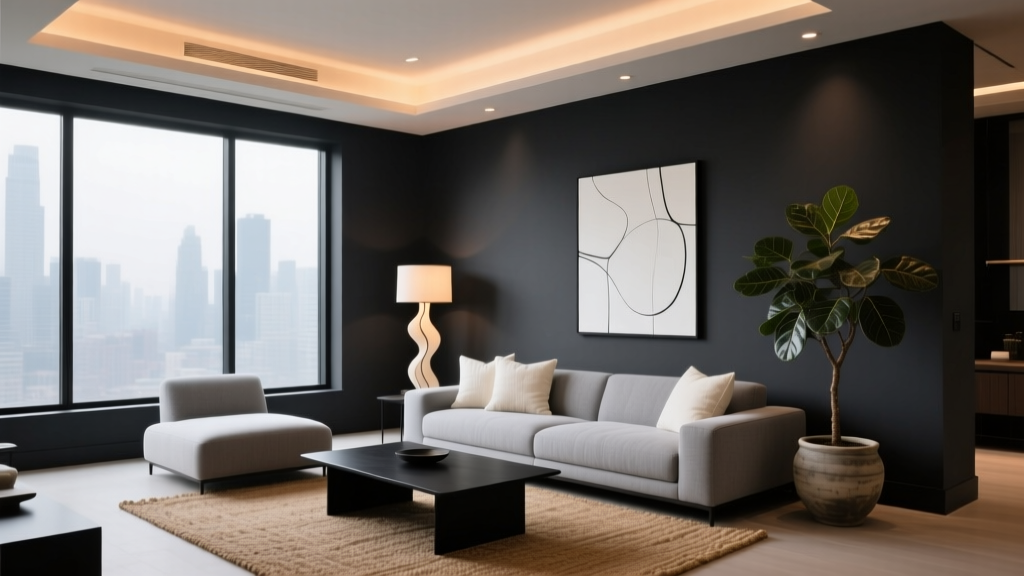
How to Style a Living Room with Dark Walls - The Decor Mag
Dark walls can feel like a design leap—especially if you’ve been told for years that “light colors make rooms look bigger.” But when done well, deep paint shades and moody wallpapers can make a living room feel richer, calmer, and far more intentional than a safe beige ever could. Dark walls create instant atmosphere: they highlight art, make textures look more luxurious, and can even visually “tidy” a space by softening awkward angles.
Whether you’re a homeowner ready for a bold refresh or a renter working with temporary options, styling a living room with dark walls is all about balance. You’ll learn how to choose the right shade, manage lighting, pick the best trim and ceiling colors, and layer furniture, rugs, and decor so the room feels inviting—not cave-like. Along the way, you’ll find practical measurements, material suggestions, budget-friendly upgrades, and real-world scenarios to help you pull it all together.
Let’s turn those dark walls into the best feature in your home.
Why Dark Walls Work (and When They Don’t)
Dark walls are having a major moment—think deep olive, inky navy, charcoal, aubergine, and chocolate brown—because they align with current design trends toward cozy, cocooning interiors. But the reason they’ve stayed timeless is simple: darker backgrounds allow furniture, art, and lighting to stand out in a way pale walls often don’t.
Dark walls work best when:
- You want a cozy, intimate feel (great for TV rooms and conversational seating areas).
- You have even one strong light source—natural or artificial—that you can control with layers.
- You’re willing to add contrast through trim, textiles, art, or metallic accents.
- You like a more tailored, “designed” look—dark walls tend to feel deliberate.
Dark walls can be tricky when:
- The room has very low ceilings (under 8 ft) and no plan for ceiling/trim color strategy.
- You rely on a single overhead light and nothing else.
- You don’t want to add any contrast—dark-on-dark can look flat without texture.
Step 1: Choose the Right Dark Color (Undertones Matter)
The secret to successful dark living room paint colors is undertone control. Two colors that look similar on a swatch can read completely different across a full wall, especially at night under warm bulbs.
Popular dark wall colors for living rooms
- Charcoal / soft black: Modern, dramatic, great for highlighting art and brass.
- Navy: Classic and versatile; pairs beautifully with warm woods and creams.
- Forest / olive green: A top trend with staying power; works with earthy textures and vintage accents.
- Deep brown: Underused and stunning; feels warm and grounded, especially with layered lighting.
- Plum / aubergine: Sophisticated and unexpected; gorgeous with velvet and antique gold.
Quick undertone test (do this before committing)
- Buy two sample pots (or peel-and-stick paint samples) in close shades.
- Paint 2 ft x 2 ft test squares on two different walls (one near a window, one in a darker corner).
- Check the color at three times: morning, late afternoon, and night with lamps on.
- Hold a piece of white printer paper next to it; undertones (green, blue, purple) become obvious.
Finish recommendations
- Matte/flat: Best for a modern, velvety look. It hides minor wall imperfections but may scuff more easily.
- Eggshell: A practical middle ground for living rooms—soft glow, easier wipe-down.
- Satin: Use sparingly on walls unless you want more sheen; it can highlight uneven drywall.
Pro tip: If you have textured walls or imperfect plaster, choose matte to minimize shadows and flaws.
Step 2: Get Lighting Right (The Make-or-Break Factor)
Dark walls don’t “eat light” as much as they reveal lighting mistakes. A single ceiling fixture can make a dark living room feel harsh or gloomy. The fix is layered lighting—an approach that’s both trend-forward and timeless.
A simple layered lighting plan
- Ambient lighting: Overall fill (ceiling fixture, semi-flush, or recessed). Aim for a warm, welcoming baseline.
- Task lighting: Reading lamps near seating; helps the room feel usable, not just moody.
- Accent lighting: Wall sconces, picture lights, LED strips on shelves; makes dark walls feel intentional and upscale.
Measurements and specs that work
- Color temperature: 2700K–3000K for living rooms (warm white). Avoid 4000K+ unless you want a cooler, modern gallery feel.
- Lumens guideline: Roughly 1,500–3,000 lumens total for a typical living room, split across multiple fixtures. Larger rooms may need 4,000+.
- Floor lamp height: 58–64 inches tall works well next to sofas; shade bottom around eye level when seated.
- Table lamp scale: Shade should be about 2/3 the width of the table; lamp height typically 24–32 inches on side tables.
Product recommendations (by budget)
- Budget ($25–$80 each): Plug-in sconces, paper or linen lampshades, warm LED bulbs (high CRI if possible).
- Mid-range ($100–$300 each): Sculptural floor lamps, dimmable table lamps, statement pendants.
- Investment ($300–$1,000+): Hardwired brass sconces, designer chandeliers, integrated picture lights.
Must-have: Put as many lights as possible on dimmers (or smart dimmable bulbs) so your dark walls look great day and night.
Step 3: Choose Trim and Ceiling Colors That Support the Mood
One of the fastest ways to make dark walls look high-end is a thoughtful trim and ceiling strategy. Contrast can feel crisp and classic, while color-drenching can feel modern and enveloping.
Two tried-and-true approaches
- High contrast: Dark walls + bright white trim/ceiling. This is clean, classic, and great for traditional homes or rentals. Choose a softer white (not stark blue-white) to keep it cozy.
- Color-drenching: Paint walls, trim, and sometimes the ceiling in the same shade (or 1–2 shades lighter). This is a current trend and makes rooms feel cohesive and intentional—especially with complex architecture.
Practical paint guidance
- Trim finish: Use satin or semi-gloss for durability and subtle contrast.
- Ceiling: If your ceiling is under 8 ft, consider keeping it 1–2 shades lighter than the walls to maintain height. If it’s 9 ft+, color-drenching can feel incredibly luxe.
Step 4: Build Contrast with Furniture and Textiles
The easiest way to style a living room with dark walls is to think in layers: light, mid, and dark tones—plus texture. You don’t need everything to be pale; you just need contrast that feels intentional.
What sofa colors work best with dark walls?
- Cream, ivory, oatmeal: Brightens instantly and feels timeless.
- Camel or cognac leather: Warm contrast that reads designer-level against navy, green, or charcoal.
- Soft gray: Calmer than white; great if you want a tonal, modern look.
- Jewel tones (rust, teal, mustard): Works best when the wall color is simpler (charcoal or navy) and the palette is controlled.
Rug sizing (common living room mistake fixer)
A too-small rug makes dark walls feel heavier because the room looks chopped up. Use these guidelines:
- 8' x 10' for most standard seating areas (so at least the front legs of the sofa and chairs sit on it).
- 9' x 12' for larger rooms or sectionals (helps the space feel anchored and elevated).
- Leave about 8–12 inches of bare floor between the rug and walls when possible.
Texture is your best friend
- Natural fibers: Linen curtains, wool rugs, cotton throws.
- Warm woods: Oak, walnut, or even bamboo tones bring life to dark paint.
- Metal accents: Brass warms; chrome/nickel cools; black metal looks modern and graphic.
- Velvet and bouclé: Adds depth and softness—especially effective in moody rooms.
Step 5: Treat Windows Like a Design Feature
Window treatments can either brighten a dark living room or make it feel boxed in. The goal is to maximize light and add softness.
Best curtain strategy for dark walls
- Hang the rod 4–8 inches above the window frame (closer to the ceiling if you want height).
- Extend the rod 8–12 inches beyond each side of the window so curtains can stack off the glass.
- Choose curtains that are 2x the window width for a full, tailored look.
Materials that work
- Linen or linen blends: Airy, softens dark walls beautifully.
- Sheers + drapes: Great for street-facing rooms—privacy without losing light.
- Roman shades: A clean option for small living rooms where drapes would feel bulky.
Step 6: Style Decor and Art to Pop Against Dark Walls
Dark walls are basically a built-in gallery backdrop. The trick is scale and spacing—small, scattered frames can look messy against a deep color.
Art placement rules that work
- Hang art so the center is around 57–60 inches from the floor (gallery standard).
- Over a sofa, aim for art that’s about 2/3 the sofa width.
- Leave 6–8 inches between the top of the sofa and the bottom of the frame.
Frame and finish ideas
- Light wood frames: Warm and modern against navy or charcoal.
- Gold/brass frames: Classic, especially with green or black walls.
- Oversized mirrors: Bounce light and reduce the “heavy” feel; choose an arched or vintage-inspired shape for softness.
Real-World Styling Scenarios
Scenario 1: Small rental living room with dark walls you can’t repaint
- Add a large cream rug (8' x 10') to brighten the floor plane.
- Use plug-in sconces and a warm floor lamp (2700K bulbs).
- Choose light curtains and hang them high and wide to fake bigger windows.
- Style with two or three large pieces (an oversized mirror, one big plant, one large art print) instead of many small items.
Budget range: $200–$700 for big impact (rug + lighting + curtains), depending on what you already own.
Scenario 2: Open-plan living room where dark walls feel “too intense”
- Limit dark paint to a single accent wall or the TV wall, then repeat the color subtly in pillows and art.
- Create a visual break with tall bookcases or a console in a lighter wood tone.
- Use a consistent warm metal (like brass) across lighting and hardware for cohesion.
Budget range: $100–$500 (paint + lighting tweaks + a few coordinating textiles).
Scenario 3: Traditional living room that needs warmth, not modern drama
- Choose a dark shade with a warmer undertone (deep olive, warm charcoal, chocolate).
- Keep trim creamy white (not stark white) to maintain classic charm.
- Add patterned textiles (plaids, small florals, stripes) to soften the moodiness.
Budget range: $300–$1,200 depending on whether you’re replacing textiles or reupholstering.
Common Mistakes to Avoid with Dark Living Room Walls
- Relying on one overhead light: This is the fastest path to “cave” vibes. Add at least two lamps.
- Choosing the wrong sheen: Too much shine can emphasize wall flaws and feel harsh at night.
- Going too small with the rug: A cramped rug makes the room feel smaller and darker.
- Ignoring undertones: A “black” that reads green under warm bulbs can surprise you—always sample first.
- Too many tiny decor pieces: Dark walls need stronger shapes and clearer groupings.
- Forgetting the ceiling: A bright ceiling with no plan can look disconnected; decide whether you want contrast or a cocoon.
FAQ: Styling a Living Room with Dark Walls
Will dark walls make my living room look smaller?
Not necessarily. Dark walls can actually make boundaries feel softer and more “infinite” when the lighting is layered and the furnishings are well-scaled. A large rug, high-hung curtains, and fewer (but bigger) decor pieces help the space feel expansive.
What’s the best white paint for trim with dark walls?
A warm or neutral white tends to look best in cozy living rooms. Look for whites without a strong blue cast, especially if you use warm bulbs (2700K–3000K). If you prefer a crisp modern look, choose a cleaner bright white and repeat it in pillows or artwork for balance.
Should I paint the ceiling dark too?
If you want a dramatic, cocooned feel and your ceiling is around 9 ft or higher, a darker ceiling can look stunning. For 8 ft ceilings, many people prefer a lighter ceiling (or the same color in a lighter shade) to keep the room feeling open.
How do I brighten a dark living room without repainting?
Focus on light reflectors and contrast: add a large mirror, swap to lighter curtains, use warm layered lighting with dimmers, and choose a rug and key textiles in cream or oatmeal tones. Even changing lampshades to linen can make a noticeable difference.
What colors look best with dark green or navy walls?
With dark green, lean into warm neutrals (cream, camel), brass accents, and natural woods. With navy, try crisp whites, cognac leather, light oak, and touches of rust or terracotta for warmth.
Is wallpaper with a dark background harder to decorate than dark paint?
It can be easier, actually—because wallpaper often includes multiple colors that help you build a palette. Pull two or three tones from the pattern (one light, one mid, one accent) and repeat them in pillows, art, and decor for a cohesive look.
Your Next Steps: A Simple Plan to Make Dark Walls Feel Stylish
- Sample your color (or evaluate the existing shade) under daytime and nighttime lighting.
- Add layered lighting: one floor lamp, one table lamp, and a warm bulb strategy with dimmers.
- Anchor the room with the right rug size (8' x 10' for most spaces) and introduce contrast with textiles.
- Style big before small: curtains hung high and wide, oversized art or a mirror, then a few curated accessories.
- Edit and refine: step back at night, dim the lights, and adjust placement until the room feels relaxed and balanced.
Dark walls are one of the most powerful tools in living room design—moody, elegant, and surprisingly livable when you support them with the right lighting, contrast, and texture. For more living room decor ideas, color guides, and layout tips, explore the latest inspiration on thedecormag.com.
More Articles
 Living Room Black and White Design Scheme - The Decor Mag
 Livingrooms Comfort & Value in 2026
 Pet-Friendly Flooring Options for Modern Homes
 How to Style a Living Room with a Large Rug - The Decor Mag
 Living Room TV Stand Styling Tips - The Decor Mag
 Best Swivel Chair Options for Living Rooms - The Decor Mag
 Best Ottoman Coffee Table Combinations - The Decor Mag
 Best Side Table Height Next to Sofa Arm - The Decor Mag
 Living Room Elevated Casual Design - The Decor Mag
 Contemporary vs Modern Living Rooms (2026)