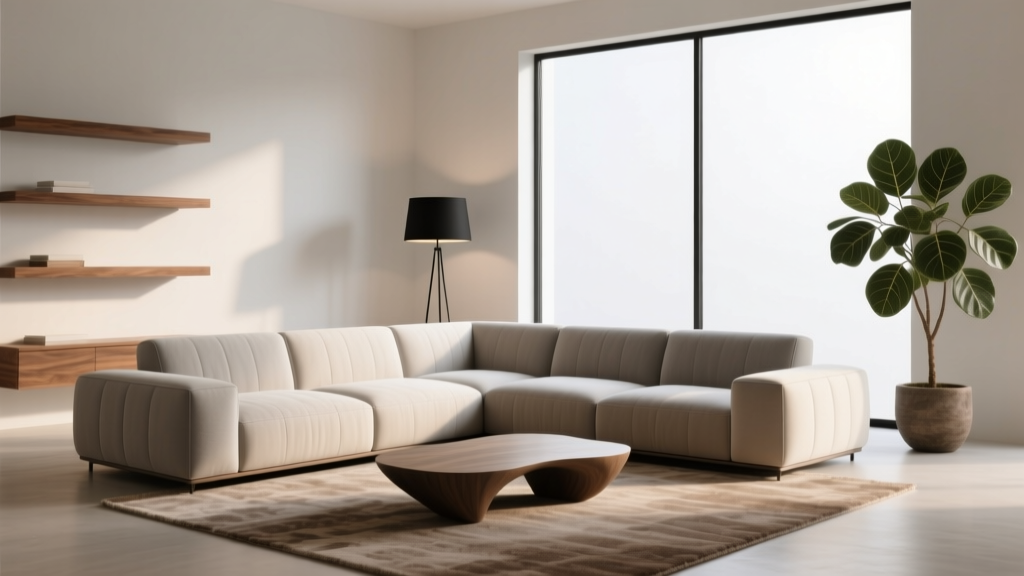
Living Room Sectional Sofa Configurations - The Decor Mag
A sectional sofa can be the smartest (and most stylish) way to anchor a living room—especially when you’re working with an open-concept layout, an awkward corner, or a space that needs to seat more than a standard three-seater can handle. The catch? The “right” sectional isn’t just about choosing a color you like. Configuration is everything. The wrong shape can block walkways, swallow the room, or leave you with a chaise pointed at the wrong focal point.
This guide breaks down the most popular living room sectional sofa configurations and how to choose one that fits your room dimensions, traffic flow, and lifestyle. You’ll learn practical measurements to follow, layout scenarios for real homes and apartments, common mistakes to avoid, and design tips that make a sectional look intentional—not like it was shoved into a corner.
Start Here: Measure Your Room and Map the Flow
Before you fall for a gorgeous modular sectional online, take 20 minutes to measure and sketch. A little planning prevents costly returns and makes your living room design feel effortless.
Key measurements to know
- Main seating wall length: The usable wall length where the sectional will sit (excluding baseboard heaters, radiators, doors that swing open).
- Room width: Helps determine chaise depth and whether an L-shape will crowd the center of the space.
- Walkway clearance: Aim for 30–36 inches for primary paths (entry to hallway, kitchen route). In tighter apartments, 24–30 inches can work if it’s not a major throughway.
- Coffee table distance: Leave 14–18 inches between the sectional and coffee table for comfortable reach and legroom.
- TV viewing distance: A simple guideline is 1.5–2.5× your TV’s diagonal size. (Example: a 65" TV often feels best around 8–11 feet away.)
Quick planning method (no fancy tools required)
- Measure your room and draw a basic rectangle on graph paper (or use painter’s tape on the floor).
- Mark doors, windows, vents, and power outlets.
- Identify your focal point (TV, fireplace, big window, or conversation area).
- Decide your primary walkway(s) and protect them first—then fit the sectional around that circulation.
Popular Sectional Sofa Configurations (and Where They Work Best)
1) L-Shaped Sectional: The Everyday Favorite
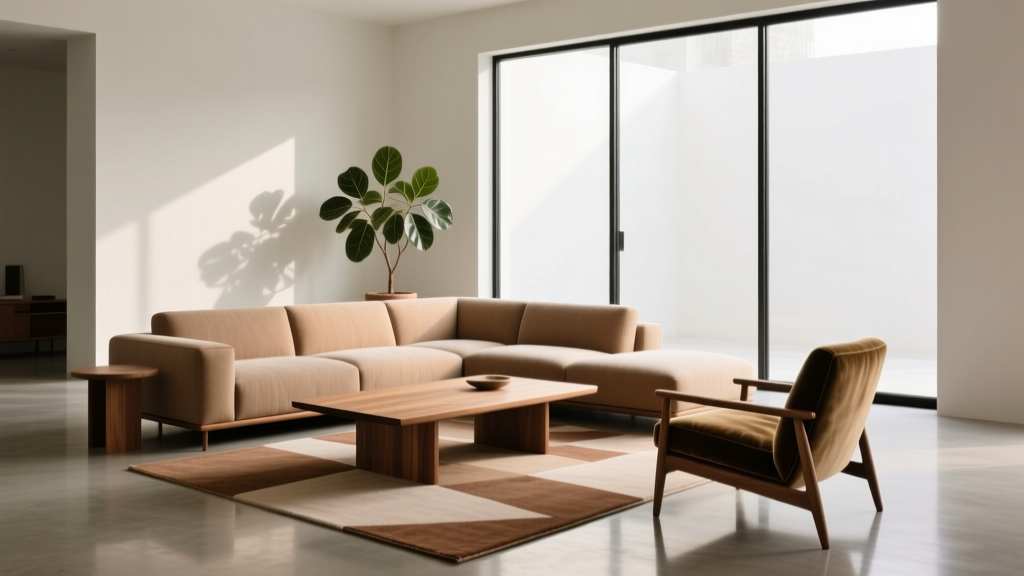
An L-shaped sectional is the most common configuration for a reason: it adapts to a wide range of living room layouts and creates a natural zone for conversation.
Best for: apartments, family rooms, open-plan living spaces, TV-focused seating
Design tips:
- Choose the “long side” to align with the main wall to keep the room feeling open.
- Float it (pull it off the wall) by 2–6 inches if you have baseboard heat, curtains, or you want a more tailored look.
- Balance the visual weight with a substantial rug—typically 8' x 10' for many living rooms, or 9' x 12' for larger spaces.
Real-world scenario: A renter with a 12' x 16' living room places an L-shaped sectional along the 16' wall with the return facing the window. A slim console table behind the sofa adds a drop zone without crowding the walkway.
2) Chaise Sectional: Maximum Lounging, Minimal Bulk
A chaise sectional (a standard sofa with an extended chaise on one side) offers the relaxed feel of a sectional with less footprint than a full L-shape.
Best for: small living rooms, studio apartments, multipurpose spaces
Measurements to watch: Many chaises run 60–73 inches deep from the back to the end of the chaise. Confirm you can still maintain 24–36 inches of walkway around it.
Design tips:
- Choose a reversible chaise if you expect to move or rearrange frequently.
- Pair with a round coffee table to soften corners and improve flow in tight layouts.
3) U-Shaped Sectional: The Social Hub
A U-shaped sectional creates an instant “room within a room.” It’s unbeatable for conversation, movie nights, and large households.
Best for: larger living rooms, open-concept great rooms, entertaining
Space planning rule: U-shapes typically need a minimum of 13–14 feet across (depending on depth) to avoid a cramped center.
Design tips:
- Use a large rug so at least the front legs of every section sit on it—this prevents the U from looking like disconnected pieces.
- Consider a storage ottoman in the center instead of a hard-edged coffee table for flexibility and kid-friendly comfort.
Real-world scenario: In a 18' x 20' open living area, a U-shaped sectional faces the TV, while a sofa table behind it defines the “living room” boundary from the dining space.
4) Modular Sectional: The Shape-Shifter
Modular sectionals are built from individual components (corner units, armless chairs, chaises, ottomans) you can rearrange. They’re a top design trend because they match how people actually live—hosting one day, stretching out the next.
Best for: renters, frequent movers, evolving households, odd-shaped rooms
Buying guidance:
- Look for connector hardware (not just “push together” pieces) to prevent sliding.
- Check the depth: 36–40 inches is a comfy standard; 40–45 inches is lounge-deep (great for tall people, less ideal for formal seating).
Budget range: Expect $1,800–$6,000+ depending on upholstery and number of pieces. Modular can cost more upfront but pays off in flexibility.
5) Curved Sectional: A Softer, High-Design Statement
Curved sectionals are having a moment in current design trends, especially in warm minimalism and “soft modern” interiors. They’re inviting, sculptural, and great for conversation-centric living rooms.
Best for: open layouts, large rooms, design-forward spaces
Design tips:
- Use a round or oval coffee table to echo the curve and keep circulation smooth.
- Give it breathing room—curved sectionals look best when they’re not pressed tightly into corners.
Choose the Right Orientation: Left-Facing vs. Right-Facing
The most common sectional buying mistake is ordering the wrong side. Here’s the simplest way to confirm orientation:
- Stand facing the sofa.
- If the chaise or return is on your left, it’s typically called left-facing.
- If it’s on your right, it’s typically called right-facing.
Because brands sometimes label differently, always confirm with the product diagram. If you’re unsure or expect to move, a reversible chaise or modular sectional is the safest choice.
Design Tips That Make Any Sectional Look Better
Keep it proportional to the room
- Small living room? Choose slim arms, higher legs, and a lighter visual profile. This helps the space feel open.
- Large living room? Go deeper and longer, or add a matching ottoman to avoid a “floating island” look.
Anchor with the right rug size
- 8' x 10' works for many medium rooms with an L-shape.
- 9' x 12' often suits larger sectionals and open-concept living rooms.
- As a rule, aim for at least 8–12 inches of rug extending beyond the sectional’s front edge.
Pick a coffee table shape that supports circulation
- For tight layouts: round or oval tables reduce bruised shins and improve flow.
- For large U-shapes: a large square table or ottoman fills the center appropriately.
Layer lighting so the sectional zone feels intentional
- A floor lamp at the corner balances the “L” visually and adds reading light.
- Table lamps on a console behind the sofa create ambient light and a polished look.
Materials and Upholstery: What Holds Up in Real Life
Sectionals are high-use pieces. Choose upholstery that matches your household and your cleaning tolerance.
Best fabrics for durability
- Performance fabric: Ideal for kids, pets, and spills; often resists stains and cleans easily. Budget: $2,000–$7,000+ depending on size and brand.
- Tight-weave polyester or microfiber: Practical and budget-friendly, often $900–$2,500 for smaller sectionals.
- Leather (top-grain): Timeless, wipeable, and develops character; great for modern or classic living room decor. Budget: $3,500–$10,000+.
What to avoid (or think twice about)
- Loose, open weaves if you have cats (snags happen fast).
- Delicate linen blends in the main family room unless you’re okay with frequent professional cleaning.
- Ultra-low seat heights if anyone in the home prefers easier standing—check seat height around 17–19 inches for comfort.
Step-by-Step: Match the Best Configuration to Your Living Room Layout
For small living rooms (under ~140 sq ft)
- Choose a chaise sectional or compact L-shape (often 84–110 inches wide).
- Prioritize raised legs and slim arms for a lighter look.
- Use a round coffee table (or nesting tables) and keep side tables narrow.
For open-concept layouts
- Float the sectional to define the living zone.
- Add a console table behind it (ideal depth: 10–14 inches).
- Use a large rug to visually “contain” the seating area.
For long, narrow rooms
- Use an L-shape with the longer side running along the long wall.
- Avoid extra-deep seats that steal walkway space.
- Consider armless modular pieces to keep sightlines open.
Product Recommendations by Budget (What to Look For)
Rather than naming a single “best sectional,” focus on features that consistently perform well in real homes.
Under $1,500 (starter-friendly)
- Look for a compact chaise sectional with a sturdy frame and removable cushions.
- Choose medium-tone fabrics (they hide wear better than very light solids).
- Expect: basic foam cushions, fewer custom options, limited fabric choices.
$1,500–$4,000 (sweet spot for most homes)
- Prioritize performance upholstery, kiln-dried hardwood frames, and higher-resilience foam or spring support.
- Consider a modular sectional for flexibility and future moves.
- Expect: better durability, more sizes, upgraded fabrics, reversible options.
$4,000–$10,000+ (investment pieces)
- Look for top-grain leather, high-end performance fabrics, and cushion upgrades (down blend or premium foam).
- Custom configurations can solve tricky living room layouts beautifully.
- Expect: longer lead times, superior comfort, and more tailored silhouettes.
Common Mistakes to Avoid
- Buying based on seat count instead of room flow: A “6-seater” doesn’t help if it blocks the walkway.
- Forgetting the doorway and stairwell: Measure delivery paths. Modular pieces often solve tight entries.
- Choosing the wrong chaise side: Confirm left-facing vs. right-facing with the diagram, not just the listing title.
- Going too deep for your lifestyle: Lounge-deep seats are cozy, but shorter people may feel like they’re perched.
- Skipping the rug plan: A sectional without a properly sized rug can make the living room feel unfinished.
FAQ: Living Room Sectional Sofa Configurations
What’s the best sectional configuration for a small apartment living room?
A chaise sectional or compact L-shaped sectional is usually the best fit. Look for a width around 84–110 inches, slim arms, and raised legs to keep the room feeling open.
How much space should I leave between a sectional and a coffee table?
Aim for 14–18 inches. This keeps drinks within reach while leaving enough room to move comfortably.
Should a sectional be against the wall or floating?
Both can work. Against the wall is space-efficient for small living rooms. Floating works beautifully in open-concept layouts because it defines the seating zone—especially when paired with a rug and a console table behind the sofa.
Is a U-shaped sectional too big for most living rooms?
Not always, but it needs room to breathe. Many spaces need at least 13–14 feet across to keep the center comfortable and avoid cramped walkways.
What upholstery is best for pets and kids?
Performance fabric is a top choice for family-friendly living room design. It’s typically more stain-resistant and easier to clean than delicate weaves. For pets, avoid loose weaves that snag; for shedding, mid-tone fabrics often hide hair better.
Can I use a sectional in a formal living room?
Yes—choose a tailored silhouette (clean lines, structured cushions), keep the sectional proportional, and elevate the look with a refined rug, layered lighting, and a balanced mix of accent chairs or a statement coffee table.
Next Steps: Choose Your Configuration with Confidence
Start by protecting your walkways, then pick the sectional configuration that supports how you actually use the room—lounging, entertaining, movie nights, or all of the above. With the right measurements, a smart orientation choice, and a few styling upgrades (the right rug size and coffee table shape go a long way), your sectional can turn your living room into a comfortable, well-designed hub.
For more living room layout ideas, sectional styling tips, and decor trends that last, explore more guides and inspiration on thedecormag.com.
More Articles
 Science-Backed Room Design Principles for 2026
 Best Conversation Pit Ideas - The Decor Mag
 Best Accent Pillow Fill Inserts - The Decor Mag
 Sofa for Small Spaces: Best Picks (2026)
 Best Color Palettes for Contemporary Living Rooms (2026)
Living Room Color Schemes That Work Every Time
Best Color Palettes for Contemporary Living Rooms (2026)
Living Room Color Schemes That Work Every Time
 Living Room TV Stand Styling Tips - The Decor Mag
 Best Recliner Chairs That Look Stylish - The Decor Mag
 How to Style Bookshelves in Your Living Room - The Decor Mag
 Living Room Furniture That Lasts: 2026 Picks