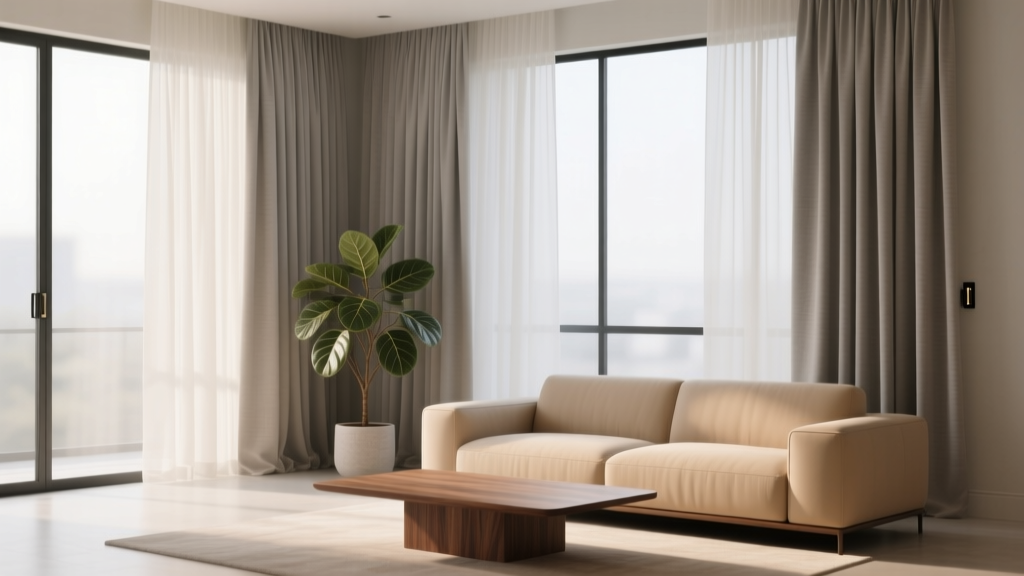
Living Room Curtains: How to Choose (2026)
Living room curtains do more than cover a window—they frame your view, soften hard architectural lines, and influence how bright (or cozy) your space feels from morning to night. They can make ceilings look taller, help a small room feel more expansive, and pull together colors that otherwise seem unrelated. If your living room feels “almost there,” the right curtains are often the missing piece.
Choosing the perfect set isn’t about following one rule or copying a showroom. It’s about balancing privacy, light control, insulation, and style—while staying realistic about your budget and lifestyle (kids, pets, rentals, or lots of sun exposure). This guide walks you through measurements, fabric choices, header styles, color and pattern strategy, and installation tips—plus real-world examples, common mistakes to avoid, and a quick FAQ.
Start With Function: What Do You Need Curtains to Do?
Before you fall for a gorgeous linen panel, get clear on what your living room needs most. Your ideal curtain fabric and lining depends on the way you use the space and the challenges you’re solving.
Quick curtain “needs” checklist
- Privacy: Do you face the street or a neighbor’s window?
- Light control: Do you watch TV in the afternoon sun? Do you want soft glow or full blackout?
- Insulation: Are there drafty windows or a room that overheats?
- Noise reduction: Do you live near traffic?
- Style impact: Are curtains a subtle frame—or the statement feature?
- Maintenance: Do you need washable fabrics or pet-hair-friendly textures?
Matching function to fabric + lining
- For bright, airy living rooms: Sheer voile or lightweight linen-look sheers; consider layering with heavier side panels.
- For TV glare and strong sun: Light-filtering panels with a privacy lining, or blackout lining if the room doubles as a media space.
- For drafty windows: Heavier fabrics (velvet, lined cotton, wool-blends) and a snug installation that reduces gaps.
- For rentals and easy care: Polyester linen-look blends that resist wrinkles; machine-washable panels when possible.
Measure Like a Pro: Length, Width, and Placement
The biggest difference between “okay curtains” and designer-looking living room curtains usually comes down to measurement and placement. Even budget-friendly panels look elevated when they’re hung correctly.
Step-by-step: curtain measurements that work
- Decide rod placement first. Hang the rod 4–8 inches above the window frame (or closer to the ceiling for extra height). Extend the rod 6–12 inches past each side of the window so panels can stack off the glass.
- Measure length from the rod. Measure from the top of the rod (or the ring clips) to where you want the curtain to end.
- Choose your hem style:
- Puddle: Adds drama; allow 1–3 inches extra length (best for low-traffic spaces).
- Kiss the floor: Clean and tailored; aim for 0–½ inch above the floor.
- Float: Practical with pets/robot vacuums; stop ½–1 inch above the floor.
- Calculate width for fullness. For a rich look, your total curtain panel width should be 2–2.5x the rod width (or the window width if you’re not extending the rod). For a more modern, tailored look, 1.5–2x can work.
Example: How many panels do you need?
If your rod spans 96 inches (8 feet) and you want 2x fullness, you need 192 inches of total fabric width. If each panel is 50 inches wide, you’ll need 4 panels (4 x 50 = 200 inches). Two panels often look skimpy on wide windows—this is a common surprise.
Choose the Right Fabric: Linen, Velvet, Cotton, Sheers, and More
Fabric choice affects drape, light filtration, and how “finished” your living room feels. It also impacts cleaning and longevity, especially in sunny rooms.
Popular curtain materials (and where they shine)
- Linen and linen-blends: Relaxed, timeless, and perfect for modern organic or coastal living room decor. Linen can wrinkle; blends look similar with less upkeep.
- Cotton and cotton canvas: Versatile and easy to style; great for casual, traditional, and transitional rooms. Often benefits from lining for better drape.
- Velvet: Luxurious, excellent for insulation and light blocking. Trending in jewel tones and warm neutrals for a cozy living room vibe.
- Sheers (voile, chiffon, polyester sheers): Softens daylight and provides daytime privacy (depending on density). Best layered with heavier panels if you need nighttime privacy.
- Performance fabrics: Stain-resistant and durable—ideal for family rooms and homes with pets.
Don’t skip lining (it’s the secret upgrade)
- Unlined: Best for decorative side panels or naturally heavy fabrics.
- Privacy lining (light-filtering): Reduces transparency and helps panels hang better.
- Blackout lining: Maximum light control; helpful if the living room doubles as a guest room or media room.
- Thermal lining: Adds insulation for hot/cold climates and drafty windows.
Pick a Header Style: Pleats, Grommets, Rod Pocket, or Rings
The top of the curtain determines the overall vibe—structured and tailored or relaxed and casual—and it changes how easily the curtains open and close.
Common curtain headings for living rooms
- Pinch pleat (tailored pleats): Classic, high-end look; works beautifully in traditional and transitional living room design.
- Ripple fold: Sleek, modern waves; a current favorite in contemporary interiors.
- Grommet: Easy to slide, casual-modern; the visible rings can read less formal.
- Rod pocket: Soft and simple, but harder to move; best for panels you don’t open daily.
- Ring clips: Great for renters and quick upgrades; adds a casual, slightly airy look and can “fake” extra length.
Color and Pattern: How to Choose Curtains That Belong
Curtains can blend in, tie the palette together, or become the main visual feature. The best choice depends on your wall color, sofa upholstery, rug pattern, and how much contrast you want.
Easy color-matching formulas
- Match the wall color (one shade lighter or darker): Makes the room feel larger and calmer—great for small living rooms.
- Match a background tone in your rug: Creates cohesion when the room has multiple colors.
- Echo the trim color: Crisp and timeless, especially with white or cream curtains.
- Go darker than the walls: Adds depth and a cozy, moody living room feel (a big trend right now).
Pattern rules that keep things balanced
- If your rug and pillows are busy, choose solid curtains with texture (linen, slubbed weave, tonal embroidery).
- If your room is mostly solid, you can introduce pattern: subtle stripes for height, or large-scale prints for drama.
- When mixing patterns, vary scale: pair a large rug motif with a small curtain pattern, not two mediums that compete.
Layering Curtains Like a Designer (Even in a Rental)
Layering is one of the most effective ways to get that elevated, magazine-ready look while improving functionality.
Two popular layering setups
- Sheer + drapery panels: Sheers stay closed for daytime glow; drapes close at night for privacy and insulation.
- Roman shade + side panels: Great when you want a clean window treatment that still looks soft and finished.
Rental-friendly installation tips
- Use a tension rod for lightweight sheers (best for small windows).
- If you can drill, patchable holes from a standard rod bracket are usually renter-manageable.
- Choose ring clips to make off-the-shelf panels look custom and easier to adjust.
Budget Guide: What Great Living Room Curtains Cost
You can create a high-impact look at almost any price point—just spend strategically on what shows.
Typical budget ranges (per window)
- Budget ($50–$150): Ready-made polyester or cotton-blend panels, simple rods, ring clips. Best for quick upgrades.
- Mid-range ($150–$500): Better fabric, lined panels, sturdier rods, optional double rod for layering.
- Custom ($500–$2,000+): Exact length/width, premium linings, designer fabrics, tailored pleats, professional installation.
Where to invest vs. save
- Invest in: Proper width/fullness, lining, and a sturdy rod (especially for heavier fabrics like velvet).
- Save on: Ready-made panels you hem to fit, ring clips instead of custom headers, and neutral fabrics that stay relevant.
Real-World Living Room Curtain Scenarios
Scenario 1: Small living room, low ceilings, one wide window
- Goal: Make the room feel taller and wider.
- Solution: Mount the rod 6–8 inches above the frame (or near the ceiling), extend 10–12 inches on each side, choose floor-length panels that “kiss” the floor, and go with a light neutral (warm white, oatmeal, pale greige).
- Fabric pick: Linen-blend with privacy lining for better drape.
Scenario 2: Street-facing apartment with lots of daylight
- Goal: Daytime privacy without losing light.
- Solution: Layer sheers (closed most of the day) with side panels for nighttime. Consider a double rod.
- Fabric pick: High-quality sheers + medium-weight cotton with privacy lining.
Scenario 3: Family room with TV glare and kids/pets
- Goal: Light control and durability.
- Solution: Blackout-lined panels (or room-darkening), mounted wide so they fully clear the glass when open. Choose washable or performance fabrics.
- Fabric pick: Performance weave or tightly woven textured polyester; avoid delicate open weaves that snag.
Common Mistakes to Avoid
- Hanging the rod too low: This shortens the wall and makes ceilings feel lower.
- Buying too little width: Curtains should have generous fullness; flat panels look skimpy and let in light at the edges.
- Stopping at the window sill: Sill-length curtains can look unfinished in living rooms (unless it’s a radiator or a design-specific choice).
- Ignoring undertones: A “white” curtain can look yellow next to cool gray walls or icy next to warm beige paint. Compare in daylight.
- Skipping lining in sunny rooms: Unlined curtains can fade quickly and may look see-through at night.
- Choosing a flimsy rod: A sagging rod ruins the look and makes curtains harder to operate.
Quick Product Recommendations (What to Look For)
Rather than chasing a single “best curtain,” focus on specs that consistently deliver a polished look.
- Rods: 1-inch diameter (or thicker) for most living rooms; use a center support if the span is over 60–72 inches.
- Panels: Look for longer lengths (96", 108", 120") so you can hang high; choose wider panels or buy extra for fullness.
- Linings: Privacy lining for everyday living rooms; blackout lining for media-heavy spaces.
- Hardware finish: Matte black and warm brass are current favorites; brushed nickel is a timeless choice that blends easily.
FAQ: Living Room Curtains
What is the best curtain length for a living room?
Most living rooms look best with floor-length curtains. Aim for panels that “kiss” the floor (0–½ inch above) for a tailored look, or float ½–1 inch above the floor for easier cleaning and pet-friendly function.
Should curtains match the wall color or the sofa?
Either can work. For a calm, cohesive living room, choose curtains close to the wall color (slightly lighter/darker). If your sofa is the anchor piece, pick curtains that echo the sofa’s tone or pull a color from the rug for a more designed feel.
How wide should curtains be for a full look?
Plan for 2–2.5x fullness relative to the rod width (or the window width if the rod is minimal). Wide windows often need four panels, not two.
Are sheer curtains enough for privacy?
Sheers provide some daytime privacy depending on fabric density and lighting, but at night—when interior lights are on—they’re usually see-through. For street-facing rooms, layer sheers with lined drapery panels or add a shade.
What curtains are best for blocking heat and cold?
Choose heavier fabrics (velvet, lined cotton, wool-blends) with thermal lining, and mount the rod wide and high to reduce gaps. This combination can noticeably improve comfort near windows.
Can I make ready-made curtains look custom?
Yes. Hang the rod higher and wider, use ring clips or tailored pleating tape for structure, ensure enough width for fullness, and hem panels to the right length. These small moves deliver a custom look on a ready-made budget.
Your Next Steps: A Simple Curtain Plan
- Pick your goal: airy light, privacy, blackout, insulation, or a statement look.
- Measure and place the rod: 4–8 inches above the frame (or near the ceiling) and 6–12 inches past each side.
- Choose fabric + lining: linen-blend for relaxed elegance, velvet for cozy drama, cotton for versatility, sheers for daylight softness.
- Buy enough width: aim for 2–2.5x fullness for a designer finish.
- Install with sturdy hardware: especially for heavier curtains and wide spans.
The right living room window treatments make your space feel more intentional, comfortable, and pulled together—whether you’re styling a rental apartment or a forever home. For more living room decor ideas, curtain styling tips, and trend-forward design inspiration, explore the latest guides on thedecormag.com.
More Articles
 Living Room Monochromatic Design Guide - The Decor Mag
 Cheap vs Premium Decor: What’s Worth It in 2026?
 Living Room Classic Design Principles - The Decor Mag
 Contemporary vs Modern Living Rooms (2026)
 Colorguides for Living Spaces: Step-by-Step Guide 2026
 Best Living Room Focal Point Ideas for 2026
 Smart Living Spaces on a Budget in 2026
 Living Room Design From Life, Not Moodboards
 Living Room Quiet Luxury Aesthetic - The Decor Mag
 Living Room Statement Piece Furniture Guide - The Decor Mag