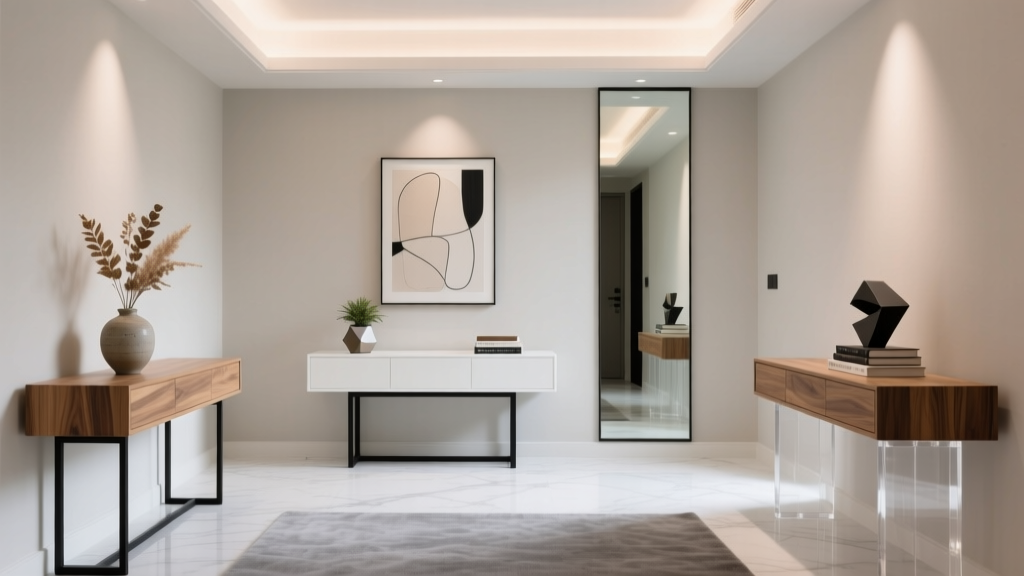
Best Console Tables for Entry Living Rooms - The Decor Mag
The moment you step into a home, you’re already forming an impression—of the style, the mood, and how well the space works for real life. In many homes and apartments, the entry opens directly into the living room, which means your “welcome zone” has to do double duty: it needs to look intentional while also handling everyday essentials like keys, bags, mail, and shoes.
That’s where a console table shines. Slim, versatile, and easy to style, the right console table can make an entry living room feel more organized, more inviting, and more designed—without needing a full foyer. Ahead, you’ll learn how to choose the best console table for your space, the most popular styles and materials, practical sizing guidelines, styling formulas, budget-friendly picks, and common mistakes to avoid so your entry living room feels polished from day one.
Why Console Tables Work So Well in Entry Living Rooms
A console table is one of the most effective pieces for living room design because it creates structure where there isn’t much architectural definition. When your front door opens into the living room, a console table can:
- Create a “landing zone” for daily items (keys, sunglasses, packages).
- Add storage without the visual bulk of a dresser or sideboard.
- Define pathways and subtly guide traffic flow from entry to seating area.
- Provide styling real estate for lamps, art, and decor that make the space feel finished.
- Protect walls by catching bags and coats before they scrape paint and corners.
Whether you’re working with a narrow apartment entry or a wide open-plan living room, a console table can anchor the transition and elevate the entire room’s decor.
How to Choose the Right Console Table: Measurements That Matter
1) Width: Aim for Proportion, Not “As Big As Possible”
Console table width depends on what it’s paired with:
- Behind a sofa: Choose a console that’s about 2/3 to 3/4 the length of the sofa. For an 84" sofa, look for a console around 56"–64".
- Against an entry wall: If you have a blank wall near the door, pick a console that leaves at least 4"–8" of breathing room on each side for a tailored look.
- Small spaces: A 30"–42" wide console often works best without crowding the walkway.
2) Depth: The Secret to Easy Traffic Flow
For entry living rooms, depth is the deal-breaker. Most people do best with:
- 10"–14" depth for tight entries and narrow pass-throughs.
- 14"–18" depth for average spaces where you want a lamp and a catchall tray.
- 18"–20" depth if you’re using it as a room divider behind a sofa (only if you have generous circulation space).
Clearance rule: Keep walkways at 30"–36" where possible. If your entry path is already tight, choose a shallower console and consider wall-mounted lighting to save surface space.
3) Height: Match the Task
- Entry console: 30"–34" high is ideal for setting items down comfortably.
- Behind a sofa: The console should be within 1"–3" of the sofa back height for a clean line.
- For statement styling: Slightly taller consoles (34"–36") can work, especially with large art or a tall mirror.
Best Console Table Styles for Entry Living Rooms
1) Narrow Console Tables for Small Entry Living Rooms
If your front door opens right into your seating area, a slim console keeps things airy. Look for open bases and light visual weight.
What to look for:
- Depth of 10"–12"
- Open metal base or slender legs
- A lower shelf for baskets (hidden storage without bulky cabinets)
Real-world scenario: In a studio or one-bedroom apartment, a 36" wide, 12" deep console against the wall by the door can hold a tray for keys, a small lamp, and a plant—while two baskets below hide dog leashes and reusable bags.
Budget range: $90–$300
2) Storage Console Tables (Drawers, Cabinets, and Shelves)
If clutter is your enemy, choose a console table with built-in storage. Drawers are especially helpful for entry living rooms because they conceal the “little stuff” that piles up fast.
Smart storage features:
- 1–3 drawers for mail, chargers, and spare keys
- Cabinet doors for shoes or board games
- Lower shelf for bins, books, or decor
Pro tip: If you live in a rental and can’t install a full entry system, a storage console plus a large mirror and a pair of hooks (adhesive, damage-free options) mimics a mudroom moment.
Budget range: $200–$900 (solid wood and soft-close hardware usually sit $600+)
3) Sofa-Back Console Tables (The Open-Plan Hero)
In open layouts, a console behind the sofa creates a “soft boundary” between the entry path and the living room seating. It’s one of the most timeless living room decor moves—and it still feels fresh with current trends like warm woods, sculptural decor, and textured neutrals.
Best features:
- Length: 50"–72" for most sofas
- Depth: 14"–18" (only if you can keep at least 30" clearance behind it)
- Sturdy build to support lamps
Real-world scenario: A family home with kids: place a 60" console behind the sofa with two durable lamps, a lidded basket for remotes, and a tray for drop-zone items. The entry feels intentional, and the living room stays functional.
Budget range: $250–$1,200
4) Floating or Wall-Mounted Console Shelves (Rental-Friendly and Ultra Slim)
When floor space is limited, a wall-mounted console shelf delivers the look without blocking foot traffic. It’s a favorite for narrow entry living rooms and minimalist interiors.
Recommended specs:
- Depth: 7"–10"
- Height: mount at 30"–34"
- Pair with a plug-in sconce or wall light to free the surface
Note for renters: Always use the appropriate anchors for your wall type and keep the styling light (tray, small vase, slim catchall). If drilling isn’t allowed, consider a very narrow freestanding console instead.
Budget range: $80–$350
5) Statement Console Tables (Marble, Stone, Sculptural Bases)
If your entry living room feels bland, a statement console becomes instant architecture. Current trends lean toward:
- Travertine-look tops (real or faux)
- Fluted wood fronts on drawer consoles
- Curved silhouettes and waterfall edges
- Mixed materials like wood + metal or stone + oak
Where it works best: Wider living rooms where the console can breathe and you can hang large-scale art above it.
Budget range: $350–$2,500+ (real stone and artisan pieces climb quickly)
Material Guide: What Holds Up (and What Looks Best)
- Solid wood (oak, walnut, ash): Timeless, durable, and easy to re-style as trends change. Great for warm, inviting living room design. Expect $500–$2,000+ for quality.
- Engineered wood with veneer: Often the best value for renters and first-time homeowners. Look for thicker veneer and solid legs for stability. $150–$800.
- Metal frames: Slim profiles and modern lines; great for narrow spaces. Check weld quality and weight capacity. $120–$700.
- Glass tops: Visually light and contemporary but show fingerprints easily. Best for low-traffic homes. $150–$900.
- Stone or faux stone: High-end look; heavy and sometimes fragile at corners. Use felt pads and avoid placing in tight walkways. $350–$3,000+.
Finish tip: If your living room already has a lot of wood tones, choose a console that either matches closely (for calm cohesion) or clearly contrasts (for intentional layering). Avoid “almost matching” woods—it tends to look accidental.
Product Recommendations by Budget and Style
Rather than a one-size-fits-all list, use these “best console table” categories to shop smarter. When browsing retailers, plug in the measurements and keywords below.
Best Budget Console Tables ($100–$250)
- Slim metal + wood-look console (10”–12” deep): Search terms: “narrow console table metal frame,” “entry console 12 inch depth.”
- Basic two-tier console: Great for baskets and quick styling. Search: “2 tier console table entryway.”
Best Mid-Range Console Tables ($250–$800)
- Veneer wood console with drawers: Search: “console table with 2 drawers modern.”
- Sofa-back console with shelf: Search: “behind sofa console table 60 inch.”
- Fluted-front storage console: A trend-forward look that still feels timeless in neutral spaces.
Best Investment Console Tables ($800–$2,500+)
- Solid oak or walnut console: Look for dovetail or quality joinery, and a durable topcoat.
- Travertine or stone console: Choose rounded edges if the entry walkway is tight.
- Custom or vintage console: Vintage is especially good for unique dimensions in older homes.
Styling Your Console Table: A Simple Formula That Always Works
The 3-Part Styling Recipe
- Anchor: A mirror or artwork above the console. Ideal size: about 2/3 the width of the table.
- Light: A table lamp (or two) to add warmth. Lamp shade bottom should land around eye level when seated if it’s behind a sofa, or slightly higher for an entry console.
- Function: A tray or bowl for keys, plus one practical item (catchall box, small dish, or a lidded container).
Finishing Touches That Feel Designer
- Add height variation: Pair a lamp with a taller vase or branches on the opposite side.
- Use baskets underneath: Two matching baskets (about 12"–16" wide) look tailored and hide clutter.
- Keep decor to a “few great things”: Too many small items reads messy, especially in an entry living room.
- Layer texture: A ceramic vase, woven basket, and a wood or stone tray makes neutrals feel rich.
Step-by-Step: Setting Up an Entry Living Room Console Zone
- Measure your wall and walkway: Confirm you can keep 30"–36" of clearance for the entry path.
- Choose the console depth first: In most entry living rooms, 12"–14" is the sweet spot.
- Decide on storage needs: If you have daily clutter, prioritize drawers or baskets.
- Hang a mirror: Center it above the console; leave 6"–10" between tabletop and frame bottom.
- Add lighting: Use a warm bulb (around 2700K) for an inviting glow.
- Create a drop zone: Tray + small dish + (optional) mail sorter. Keep it consistent so items don’t migrate to the sofa.
Common Mistakes to Avoid
- Choosing a console that’s too deep: If it turns your entry into an obstacle course, it won’t get used.
- Ignoring stability: Wobbly consoles are frustrating and unsafe. Check leg design and weight capacity—especially if you’re adding lamps or a heavy mirror.
- Cluttering the top: A console table should make your living room decor look calmer, not busier. Use trays and lidded boxes.
- Hanging art too high: Keep the mirror/art visually connected to the console. Too high makes the wall feel disjointed.
- Not planning for outlets: If you want a lamp, ensure there’s an outlet nearby or use a cable-hiding solution. Consider a slim plug and cord clips for a cleaner look.
- Mismatched scale: A tiny console on a large wall looks lost; an oversized console in a tight entry overwhelms the room.
FAQ: Console Tables for Entry Living Rooms
What size console table is best for a small entry living room?
Look for a console around 30"–42" wide and 10"–12" deep. That depth keeps the walkway open while still giving you space for a tray, small lamp, or decor.
Should a console table match my coffee table and TV stand?
It doesn’t need to match exactly. Aim for coordination through tone and style (for example, warm wood with warm wood, or black metal accents repeated). Exact matching can feel like a furniture set; thoughtful coordination looks more curated.
Can I use a console table behind the sofa if my living room is small?
Yes, as long as you maintain at least 30" of clearance for walking. Choose a slim profile (10"–14") and avoid bulky decor that sticks out into the pathway.
What’s the best material for a high-traffic entry?
Solid wood or a high-quality veneer with a durable topcoat is forgiving and easy to maintain. If you love stone, consider rounded edges and place it where bags won’t bump corners.
How do I style a console table so it doesn’t look cluttered?
Use a simple structure: one anchor (mirror/art), one light (lamp), and one functional catchall (tray/bowl). Keep small items contained inside a drawer, basket, or decorative box.
What can I use instead of a console table in a very narrow space?
Try a wall-mounted console shelf (7"–10" deep) or a floating shelf paired with a mirror and a small catchall dish. You’ll get the entry function without taking up floor space.
Next Steps: Pick the Console That Makes Your Living Room Work Better
Start with measurements—especially depth and walkway clearance—then choose the type of console that fits your lifestyle: slim and minimal, drawer storage for clutter control, or a sofa-back console to define an open-plan entry living room. Once it’s in place, style with a mirror, warm lighting, and one tidy drop zone, and your living room design will feel more welcoming instantly.
For more living room ideas, entryway styling tips, and decor trends you can actually use, explore the latest guides on thedecormag.com.
More Articles
 Best Lighting Fixtures for Living Rooms - The Decor Mag
 Best Coffee Table Material Comparisons - The Decor Mag
 Conversation Areas in Large Living Rooms (2026)
 Bohemian Living Room Decor Ideas - The Decor Mag
 Industrial Chic Living Room Inspiration - The Decor Mag
 Antique Living Room Decor: Modern Mix Ideas (2026)
 How to Create a Warm Inviting Living Room - The Decor Mag
 Living Room Statement Piece Furniture Guide - The Decor Mag
 Living Room Elevated Casual Design - The Decor Mag
 Living Room Soft Glam Decor Tips - The Decor Mag