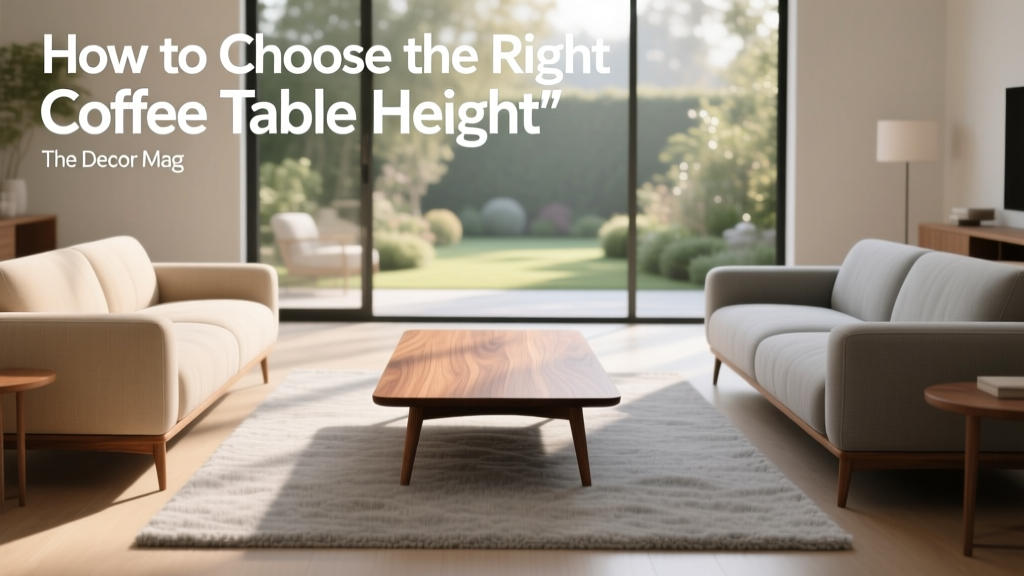
How to Choose the Right Coffee Table Height - The Decor Mag
The coffee table is one of the hardest-working pieces in a living room. It’s where drinks land, books stack, feet occasionally rest, and decor moments happen. Yet one detail quietly determines whether your space feels effortless or awkward: coffee table height.
Choose a table that’s too tall and it blocks sightlines, feels bulky, and makes reaching for a mug uncomfortable. Choose one that’s too low and you’ll constantly lean forward, knock things over, or feel like the seating and table are disconnected. The right height instantly improves flow, comfort, and the overall “put-together” look of your living room design.
This guide breaks down the best coffee table height rules (and when to bend them), plus practical measuring steps, real-world examples, common mistakes, and style-forward recommendations—from apartment-friendly picks to family-proof options.
The Golden Rule: Coffee Table Height vs. Sofa Seat Height
If you remember one guideline, make it this: your coffee table should be close to the height of your sofa seat (the top of the seat cushion), or slightly lower.
Recommended coffee table height range
- Ideal: 1–2 inches lower than your sofa seat height
- Also works: equal to seat height (especially for firmer, tailored seating)
- Typical coffee table heights: 14–18 inches
- Common sofa seat heights: 17–19 inches (but can range from 15–21 inches)
Why this works: A slightly lower table is easier to reach over, keeps the room visually open, and feels relaxed—perfect for most living room decor styles, from modern to transitional.
Step-by-Step: How to Measure for the Right Coffee Table Height
Measuring takes five minutes and saves you from a return nightmare (and awkward daily living). Grab a tape measure and follow these steps:
- Measure your sofa seat height: Measure from the floor to the top of the seat cushion (where you actually sit, not the frame).
- Decide your comfort target: Aim for a coffee table that’s 1–2 inches lower than that measurement.
- Factor in cushion compression: If your cushions sink a lot, your “real-life” seat height may be lower than it looks. Sit down, then measure again for accuracy.
- Mock it up before buying: Stack books, a storage ottoman, or a moving box to your target height and live with it for a day.
- Check sightlines: Sit on the sofa—does the table block the TV or conversation across the room? If yes, go lower or choose a more open base.
Quick example: If your sofa seat measures 18 inches, look for a coffee table around 16–18 inches, with 16–17 inches often feeling best.
Height Isn’t Everything: Pair Height With the Right Scale and Clearance
A coffee table can be the “right” height and still feel wrong if the proportions and spacing are off. Nail these two supporting measurements for a living room layout that works in real life.
1) Distance from sofa to coffee table
- Ideal clearance: 14–18 inches between the sofa edge and the table
- Smaller rooms/apartments: 12–14 inches (just enough to pass through)
- Family rooms with heavy traffic: 18–20 inches (more walk space)
This spacing keeps the table within reach while allowing comfortable circulation.
2) Coffee table length relative to your sofa
- Best practice: Choose a coffee table about 1/2 to 2/3 the length of your sofa
- Sectionals: Consider a larger rectangle, a square, or two smaller nesting tables to cover the “L” shape
When the table is too small, the room looks under-furnished. Too large, and the seating feels cramped.
Choose Height Based on How You Actually Use Your Living Room
The right coffee table height depends on your lifestyle as much as your sofa. Use these common scenarios to guide your choice.
If you eat on the couch or work from the sofa
Go slightly taller (within reason) for better ergonomics.
- Target: equal to seat height or up to 1 inch higher
- Look for: lift-top coffee tables or nesting tables that pull closer
Real-world scenario: In a small rental with no dining area, a lift-top table (17–19 inches closed, higher when lifted) can replace a desk and make weeknight dinners easier.
If your living room is mainly for lounging and entertaining
Keep it lower for a relaxed, design-forward feel.
- Target: 1–2 inches lower than seat height
- Look for: open bases, rounded corners, and generous surface area for trays
If you have kids or pets
Prioritize safety, durability, and ease of cleaning—while staying within the ideal height range.
- Target: 1–2 inches lower than seat height (stable and easy to reach)
- Look for: rounded edges, sturdy legs, and performance finishes
- Avoid: sharp corners at shin level and wobbly pedestal bases
If you love a plush, low-slung sofa
Many modern, deep sofas sit lower than traditional ones. A standard coffee table can suddenly look too tall.
- Target: 12–16 inches is often the sweet spot
- Try: a low profile wood slab table, an upholstered ottoman, or a large tray on a low bench
Modern Trends vs. Timeless Principles (and How to Blend Them)
Current living room trends lean warm, grounded, and tactile—think organic modern, quiet luxury, and scandi-inspired minimalism. Many of these looks favor lower, visually lighter coffee tables that emphasize negative space.
Timeless design principles still apply, though:
- Comfort beats aesthetics: A table you can’t comfortably use will never feel “right,” no matter how beautiful.
- Proportion creates calm: Match table scale to seating size and room layout.
- Visual weight matters: A chunky, dark table feels taller and heavier than a light-toned table at the same height.
Style tip: If you love the airy look of a low table but need function, choose a low table with a slim top plus a lower shelf or pair it with a small side table for daily essentials.
Material and Shape Choices That Affect Perceived Height
Two coffee tables can measure the same height but feel totally different depending on materials and shapes. Use these cues to fine-tune your choice.
Materials
- Wood (oak, walnut, ash): Warm, timeless, and forgiving. A thicker wood top can feel heavier—great for grounding airy rooms.
- Glass: Visually disappears, making it ideal for small living rooms. Choose tempered glass and rounded edges for safety.
- Metal: Sleek and modern; thin profiles can make a table feel lower and lighter.
- Stone or faux stone (marble, travertine, sintered stone): High-end look, but can feel visually “tall” due to weight. Consider a lower height or an open base.
- Upholstered ottoman: Softens a space, adds comfort, and can substitute for a table with a tray on top—especially good for family rooms.
Shapes
- Round/oval: Great for tight layouts and high-traffic spaces—fewer bruised shins, easier flow around seating.
- Rectangle: Classic for standard sofas; best for maximizing surface area.
- Square: Works well with sectionals and large seating arrangements.
- Nesting tables: Flexible for entertaining and small apartments; pull one closer without changing the main table height.
Product Recommendations by Budget (Height-Friendly Picks)
These are reliable directions to shop in, with height ranges that work for most living rooms. Always verify the exact height and measure against your sofa.
Budget-friendly ($80–$250)
- Round metal + wood-top coffee tables (typically 15–17 inches): a clean, modern look that fits small spaces.
- Compact nesting table sets (15–18 inches): flexible and renter-friendly.
- Lift-top laminate/wood-look tables (16–19 inches closed): practical for WFH or dining in the living room.
Mid-range ($250–$900)
- Solid wood coffee tables (15–18 inches): timeless and durable; look for dovetail or reinforced joinery.
- Upholstered storage ottomans (16–18 inches): family-friendly and perfect for hiding throws, toys, or remotes.
- Modern oval tables (14–16 inches): on-trend for organic modern living room design.
Investment ($900–$2,500+)
- Stone-top or travertine-style tables (13–16 inches): luxe and sculptural; keep height lower to avoid heaviness.
- Designer-grade modular/nesting systems (varies, often 14–18 inches): ideal for large sectionals and entertaining.
- Custom or artisan wood tables: tailor height to your exact seat height—worth it if you’re keeping your sofa long-term.
Real-World Living Room Examples (Height Decisions That Work)
Example 1: Small apartment, standard sofa, narrow walkway
Room: 11' x 13' living room with a 76" sofa, seat height 18".
Best choice: A 16–17 inch oval coffee table with a slim profile and rounded edges, placed 12–14 inches from the sofa to preserve flow.
Why it works: The oval shape eases circulation, and the slightly lower height keeps the room feeling open.
Example 2: Deep sectional for movie nights
Room: Large family room with a deep sectional, seat height 17", chaise included.
Best choice: A square 16-inch coffee table or two nesting tables (one at 16", one at 18") so everyone has a reachable surface.
Why it works: The square footprint meets the sectional’s scale, and nesting pieces add flexibility for snacks and drinks.
Example 3: Low-profile modern sofa + statement table
Room: Contemporary living room with a low sofa, seat height 15".
Best choice: A 13–14 inch coffee table in warm wood or travertine-style stone, with an open base.
Why it works: Matching the low seating keeps proportions intentional and gallery-like—very current, but still comfortable.
Common Coffee Table Height Mistakes to Avoid
- Buying based on looks alone: A beautiful table that’s 4 inches taller than your seat will feel wrong every day.
- Ignoring cushion sink: Plush sofas “sit lower” once you’re on them—measure with someone seated if possible.
- Forgetting clearance: If you can’t walk through the space comfortably, the room will always feel cramped.
- Choosing a heavy-looking table at a standard height: Thick tops, dark finishes, and bulky bases can visually overpower a small living room.
- Picking a too-low table without backup surfaces: If you’re going low for style, add a side table so daily items stay within reach.
- Overcrowding with decor: Tall vases or big stacks can make a properly sized table feel “taller” and block sightlines.
Design Tips for Styling a Coffee Table at Any Height
Once your height is right, styling should support function, not fight it. Use these living room decor ideas to keep things polished and practical:
- Use a tray to corral remotes and coasters—especially on ottomans or textured surfaces.
- Keep decor low (or use one medium-height piece) so people can still see each other across the table.
- Layer with books + one organic element (a small plant, branch, or sculptural object) for a timeless look.
- Add coasters that suit your material: felt-backed for wood, soft-bottomed for stone, and non-slip for glass.
- Balance negative space: Aim to keep about 1/3 of the surface clear for real life—drinks, snacks, laptops.
FAQ: Coffee Table Height and Living Room Layout
What is the standard coffee table height?
Most coffee tables fall between 14 and 18 inches tall. The best “standard” for your home depends on your sofa seat height—aim for the table to be 1–2 inches lower than the top of the seat cushion.
Should a coffee table be higher than the sofa seat?
Usually, no. A coffee table that’s higher than your seat can feel intrusive and is less comfortable to use. The main exception is if you frequently eat or work at the coffee table—then equal height (or up to 1 inch higher) can be more ergonomic.
What if my sofa is very low?
Low-profile sofas often pair best with 12–16 inch coffee tables. Consider a low table with an open base to keep the room airy, and add a side table for everyday reach.
Is an ottoman a good substitute for a coffee table?
Yes—especially for family rooms, small spaces, and cozy living room design. Choose an ottoman around 16–18 inches tall, and use a sturdy tray to create a flat surface for drinks and decor.
How do I choose the right height for a sectional?
Use the same rule: measure the sectional’s seat height and choose a coffee table 1–2 inches lower. If the sectional is large, consider a square table or nesting tables so everyone has a reachable spot.
Does coffee table thickness affect height?
It can affect how tall the table feels. A thick top (especially dark wood or stone) adds visual weight. If you love a chunky top, consider choosing a slightly lower overall height or an open, airy base to balance it.
Next Steps: Find Your Perfect Coffee Table Height
If you want a living room that feels comfortable, cohesive, and easy to live in, start with measurements—then layer in style. Here’s a simple plan you can use today:
- Measure your sofa seat height (with cushion compression in mind).
- Shop for a table 1–2 inches lower, adjusting for how you use the room.
- Confirm clearance (14–18 inches from sofa to table is the sweet spot).
- Choose materials and shapes that match your lifestyle—rounded edges for kids, glass for small spaces, wood for timeless warmth.
- Style with restraint so the table stays functional and sightlines stay open.
When your coffee table height is right, everything else in your living room—layout, comfort, and decor—starts to click. For more smart, stylish living room ideas (from layout guides to trend-forward styling), explore the latest on thedecormag.com.
More Articles
 Warm, Sustainable Wood Living Spaces for 2026
 Coffee Table Height & Sofa Relationship (2026)
 Effortless Living Room Styling: Tips & Ideas
 Palette vs Paint: Color Systems vs Surface Finishes 2026
 Living Room Vintage Decor Finds - The Decor Mag
 Living Room Architectural Detail Ideas - The Decor Mag
 Warm, Budget-Friendly Living Spaces in 2026
 Small Living Room Storage Solutions - The Decor Mag
 Cheap vs Premium Living Room Setup Cost in 2026
 Living Room Furniture with Kids: Smart Picks (2026)