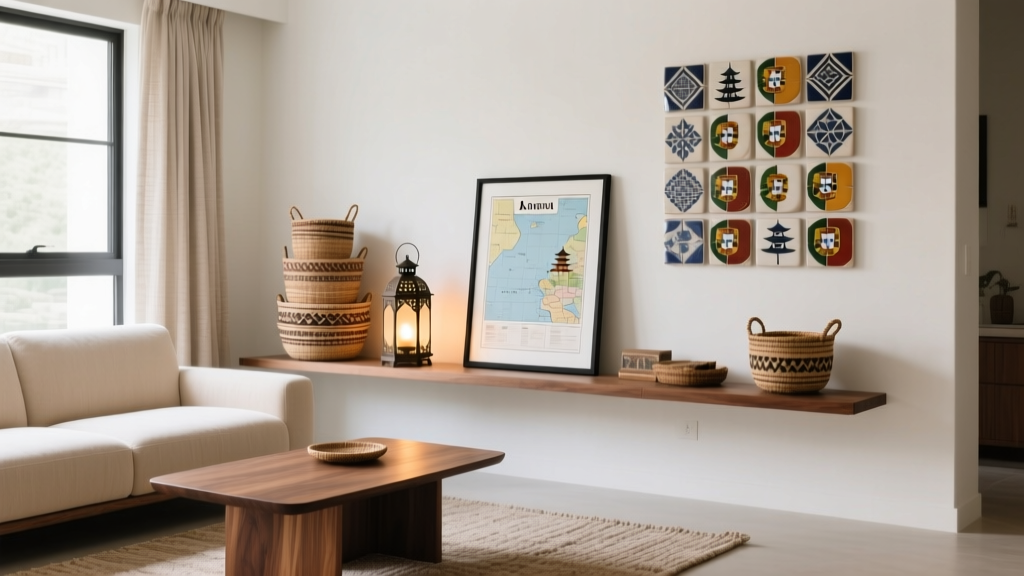
Travel Souvenirs in Living Room Decor (2026)
Travel souvenirs aren’t just “stuff” you picked up on a trip—they’re memory anchors. A woven basket from Marrakech, a street-market print from Lisbon, or a small bowl of sea glass collected on a coastal getaway can instantly make a living room feel more personal than any showroom-perfect setup. The challenge is that souvenirs often arrive home without a plan: different sizes, colors, and styles that can quickly turn a cozy space into visual clutter.
This guide will show you how to style travel finds so your living room feels curated, not chaotic. You’ll learn how to choose which pieces deserve display space, how to group items like a designer would, and where to place them for maximum impact. Expect practical measurements, budget-friendly display options, renter-safe tips, and real-world scenarios you can copy.
If you’re aiming for a living room that looks intentional—layered, warm, and uniquely yours—your souvenirs can become some of the most meaningful decor you own.
Start With a Quick Edit: Curate Before You Decorate
The most stylish souvenir displays begin with restraint. Before you buy shelves or rearrange furniture, do a simple edit so your living room decor supports your daily life (and doesn’t swallow every surface).
The “Keep, Store, Gift” Method (15 Minutes)
- Gather everything you might display: small objects, textiles, art, books, bowls, ceramics, masks, postcards.
- Choose a theme per zone (more on zones below): coastal, vintage travel, artisan ceramics, black-and-white photography, etc.
- Keep only what fits your living room’s color palette or story—ideally 5–12 pieces total for a standard living room.
- Store the rest in labeled boxes and rotate seasonally.
- Gift or repurpose duplicates (extra mugs, magnets, tiny trinkets) into holiday ornaments or shadow boxes.
Quick Rule for Visual Calm
- Limit yourself to 2–3 dominant colors across your souvenir display.
- Repeat each color at least twice in the room (for example: a terracotta pot + a rust pillow).
- Mix matte + glossy finishes for depth (handmade pottery next to a glass vase).
Match Souvenirs to Your Living Room Design Style (So They Don’t Feel Random)
Whether your space leans modern, traditional, or eclectic, souvenirs can work beautifully when you connect them to timeless design principles: balance, scale, repetition, and negative space.
Modern and Minimal Living Rooms
If you love clean lines, let your travel souvenirs act as “statement punctuation,” not background noise.
- Display one large item instead of many small ones (a carved bowl, a framed textile, an oversized print).
- Choose black frames or light oak frames for travel photography and prints.
- Use closed storage (media console with doors) to hide smaller keepsakes.
Cozy Contemporary or Transitional Spaces
This style thrives on warmth and texture—perfect for artisan souvenirs.
- Layer textiles: a kantha throw on the sofa or a handwoven pillow cover on an accent chair.
- Use a tray on the coffee table to corral smaller objects.
- Blend old and new: handmade ceramics look great beside modern lighting.
Eclectic and Maximalist Living Rooms
If you collect boldly, the key is still structure.
- Group souvenirs by material (all ceramics together, all brass together).
- Use a consistent “backbone” like matching frames or repeated wood tones.
- Build a “gallery wall” that mixes travel art, maps, and photography in a cohesive palette.
Create Display Zones That Feel Intentional
Designers rarely sprinkle meaningful items evenly across a room. Instead, they create a few strong focal points. For most living rooms, aim for 2–4 souvenir zones depending on size.
Zone 1: The Coffee Table (A Curated Vignette)
The coffee table is prime real estate for travel decor—if it stays functional. Keep at least 40–60% of the surface clear for daily use.
Try this easy formula (the “3-layer” coffee table):
- Base: A tray (about 12–18 inches wide). Materials: wood, rattan, lacquer, or metal.
- Middle: 1–2 books (design, architecture, travel photography). Stack height: 2–4 inches.
- Top: One meaningful object + one practical piece:
- Meaningful: small vase from a local market, carved box, miniature sculpture
- Practical: candle, coasters, match striker, small bowl for remotes
Budget range:
- Tray: $15–$60 (budget), $70–$200 (mid-range), $200+ (artisan/handmade)
- Decor books: $25–$80 each
Zone 2: Shelves and Built-Ins (The “Museum” Moment)
Open shelving is ideal for travel souvenirs because you can play with height, color, and negative space. The secret is scale: don’t line up tiny items like a gift shop display.
Shelf styling guidelines that work in most living room layouts:
- Leave 30–40% of each shelf empty so objects can breathe.
- Vary heights: aim for a mix of tall (10–14"), medium (6–10"), and small (2–6") items.
- Use the “triangle rule”: arrange items so the tallest point shifts from left to right across shelves.
- Place fragile items away from the front edge by 2–3 inches.
Product recommendations for shelf styling:
- Acrylic risers (helps small souvenirs read as intentional): $10–$30
- Bookends in stone, metal, or wood: $20–$80
- Glass cloches for delicate items (shells, small figurines): $25–$70
Zone 3: Walls (Gallery Walls, Maps, and Textile Art)
Walls are your best friend when floor space is limited—especially for renters. Travel wall decor also happens to be a major trend right now, with a shift toward personal galleries and collected, storied interiors over generic prints.
Best wall souvenir ideas:
- Framed local art prints or market paintings
- Black-and-white travel photography in matching frames
- Framed maps (city maps, trail maps, vintage atlas pages)
- Textiles: woven panels, scarves, small rugs (properly mounted)
Measurements for a balanced wall layout:
- Hang the center of your main piece at about 57–60 inches from the floor (gallery standard).
- Above a sofa, the art should span about 2/3 the sofa width (for an 84" sofa, aim for 56–60" total art width).
- Keep a gap of 6–8 inches between the top of the sofa and the bottom of the frame(s).
Renter-friendly hanging options:
- Removable picture hanging strips (great for frames up to manufacturer limits)
- Picture ledges (one or two long ledges create a flexible display)
- Lean framed art on a console or mantel to avoid wall damage
Zone 4: Textiles and Soft Decor (The Easiest Way to Add Story)
Textiles are often the most livable souvenirs. They add color, pattern, and texture while still serving a purpose—very on-trend with the move toward comfort-forward living rooms.
How to use travel textiles well:
- Pillow covers: Insert size matters. For a full look, use an insert that’s 2 inches larger than the cover (18" cover + 20" insert).
- Throws: Drape a handwoven throw over the sofa arm; ideal size is around 50" x 60" (varies by textile).
- Rugs: If you have a small travel rug, layer it over a neutral larger rug (jute or wool). A common living room anchor rug size is 8' x 10' for medium rooms.
Material recommendations:
- Wool: durable, hides wear, cozy underfoot
- Linen/cotton: breathable, great for pillow covers
- Silk blends: beautiful sheen, best as wall art or low-contact pieces
Real-World Styling Scenarios You Can Copy
Scenario 1: Small Apartment Living Room (No Built-Ins, Limited Storage)
You have a 72" sofa, a small coffee table, and one wall you can decorate. You also have souvenirs: postcards, a small ceramic vase, and a woven textile.
Plan:
- Create a picture ledge gallery above the sofa with 6–10 framed postcards and 1–2 small prints. Use matching frames for cohesion.
- Style the coffee table with a 12–14" tray, one travel book, and the ceramic vase.
- Use the textile as a throw or mount it as a wall hanging if it’s too delicate for daily use.
Budget range: $80–$250 (frames, ledge, tray), depending on frame quality and ledge length.
Scenario 2: Family Living Room (Kids, Pets, and High Traffic)
You love your travel finds but need durability. You have a media console and a couple of shelves.
Plan:
- Use closed storage for fragile items; display only sturdy pieces (wood, stone, woven baskets).
- Put small souvenirs under a glass cloche on a higher shelf.
- Choose washable pillow covers and rotate delicate textiles to a bedroom or office.
Pro tip: Add museum putty under decor objects on shelves to reduce tipping.
Scenario 3: Open-Concept Living Room (Needs Cohesion)
Your living room flows into dining/kitchen areas, and your souvenirs are from multiple destinations.
Plan:
- Unify the space with one repeating element: black frames, brass accents, or a natural wood tone.
- Use a consistent color palette across zones (for example: navy + sand + white).
- Dedicate one “feature” moment (a gallery wall or shelf) and keep other zones minimal.
How to Make Souvenirs Look Elevated (Not Like Clutter)
These designer tricks work regardless of whether your souvenirs are high-end artisan pieces or small market finds.
- Group in odd numbers: Sets of 3 or 5 look more natural than 2 or 4.
- Mix heights: Pair a tall vase with a medium bowl and a small object.
- Use “anchors”: A tray, book stack, or decorative box makes small items feel intentional.
- Add negative space: Empty space is part of the design—especially in modern living rooms.
- Repeat materials: If you have a brass tray from India, echo brass in a lamp base or picture frame.
- Upgrade the frame: A simple frame swap can make a $5 print look custom.
Common Mistakes to Avoid
- Displaying everything at once: Rotating items seasonally keeps the room fresh and prevents overload.
- Ignoring scale: Tiny souvenirs disappear on large shelves. Use risers, trays, or shadow boxes.
- Too many small trinkets on open surfaces: If it can’t be grouped, it should be stored.
- Mismatch without a “thread”: Different countries and styles can coexist, but you need a unifier (color palette, frame style, wood tone, or material).
- Overly themed rooms: A living room shouldn’t feel like an airport gift shop. Keep a few modern basics (neutral rug, clean-lined sofa) so souvenirs feel special.
- Poor lighting: If you’re proud of your pieces, light them. Add a picture light, a small lamp on the console, or LED puck lights on shelves.
FAQ: Decorating With Travel Souvenirs in the Living Room
How many travel souvenirs should I display in my living room?
For most rooms, 5–12 pieces displayed intentionally is plenty. If you have a large space with built-ins, you can display more, but keep each shelf or surface edited with visible negative space.
What’s the best way to display small souvenirs like coins, shells, or tickets?
Use shadow boxes, glass cloches, or lidded jars. A shadow box (often 8" x 10" or 11" x 14") keeps tiny items dust-free and instantly more polished.
How do I incorporate souvenirs if my living room decor is modern or minimalist?
Choose one statement piece (framed textile, large bowl, or oversized print) and give it breathing room. Stick to a tight color palette and consider matching frames to keep the look clean.
What souvenirs work best as functional living room decor?
Look for pieces you’ll use: woven baskets (blanket storage), ceramic bowls (keys/remotes), textiles (throws and pillow covers), and art (prints and photography).
How can renters decorate with souvenirs without damaging walls?
Try removable hanging strips, picture ledges, or leaning frames on a console. You can also mount textiles using clamp hangers or a simple dowel system that requires minimal hardware.
How do I keep souvenir decor from looking mismatched?
Pick one “unifier”: consistent frame style, repeated metal finish (brass/black), or a shared palette (for example: earth tones). Then group by material or color so the collection reads as curated.
Your Next Steps: Turn Memories Into Living Room Style
Start small: choose one surface—coffee table, console, or a single shelf—and build a souvenir vignette using the tray-and-layers approach. Then expand to a wall moment with framed travel art or photography. If your living room starts to feel busy, rotate pieces instead of adding more storage.
Most of all, let your souvenirs do what they’re meant to do: tell your story. A well-styled living room doesn’t need to look perfect—it needs to feel like home.
Looking for more living room decor ideas, layouts, and styling guides? Explore the latest inspiration on thedecormag.com.
More Articles
 Living Room Decor with Hardwood Floors (2026)
 Stylish Nightstands Under $150 – 2026 Picks
 Living Room Refined Rustic Charm - The Decor Mag
 Best Conversation Pit Ideas - The Decor Mag
 Living Room Textured Wall Ideas - The Decor Mag
 Living Room Desert Southwest Aesthetic - The Decor Mag
 Living Room Soft Neutral Palette Guide - The Decor Mag
 How to Layer Lighting in a Living Room - The Decor Mag
 Best Lighting Fixtures for Living Rooms - The Decor Mag
 Coffee Table Height & Sofa Relationship (2026)