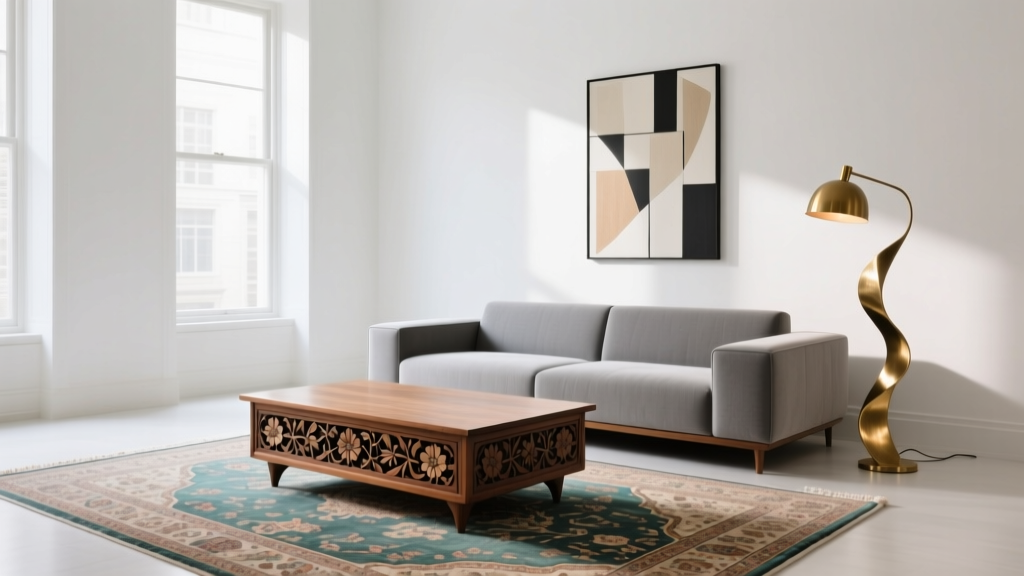
Antique Living Room Decor: Modern Mix Ideas (2026)
A modern living room can feel crisp, efficient, and beautifully edited—but sometimes a little too polished. That’s where antiques shine. An antique piece brings history, patina, and soul: the subtle wear on a brass handle, the warmth of aged oak, the hand-carved details that you simply don’t see in mass-produced furniture.
The best part? You don’t need to live in a period home or commit to a fully traditional style to use antiques successfully. With the right balance, antique furniture and decor can elevate a modern space, making it feel layered, personal, and intentionally collected rather than “showroom perfect.”
This guide walks you through how to mix antique and modern decor in a way that looks cohesive. You’ll get practical measurements, styling formulas, budget ranges, and real-life scenarios—plus common mistakes to avoid—so your modern living room feels both fresh and timeless.
Why Antiques Work So Well in Modern Living Room Design
Modern design thrives on clean lines, negative space, and a limited palette. Antiques add the counterpoint: texture, craftsmanship, and visual storytelling. When you combine them, you get contrast—one of the most timeless interior design principles.
- Patina adds depth: A worn leather club chair or aged wood console breaks up the flatness of new materials.
- Craftsmanship elevates the room: Hand-turned legs, dovetail joints, and original hardware read as “quality” instantly.
- Sustainability: Decorating with vintage and antiques is a chic way to reduce consumption and choose pieces that last.
- Trend-proof character: Modern trends shift, but a well-chosen antique is always relevant.
Start with a Plan: Decide the Role Your Antique Will Play
Before you shop, decide what the antique is doing in your living room. This prevents the most common outcome: a random old piece that feels “plopped” into a modern space.
Choose one of these roles
- Statement anchor: The antique is the star (a large armoire, an ornate mirror, a carved sideboard).
- Supporting character: A subtle antique that warms up the room (a small side table, brass lamps, framed art).
- Functional upgrade: Replace a modern “filler” piece with an antique that works harder (console with storage, trunk as coffee table).
A simple ratio that works
For a modern living room, aim for 80/20 or 70/30 modern-to-antique. This keeps the space feeling current while still benefiting from antique charm.
Design Principles for Mixing Antique and Modern Decor
1) Use contrast intentionally
One of the easiest ways to make antiques look at home in modern living rooms is to lean into contrast:
- Curvy antique + boxy sofa: Pair an antique wingback chair with a low-profile modern sectional.
- Ornate mirror + minimal console: A gilded mirror above a simple stone or black metal console creates instant sophistication.
- Warm antique wood + cool modern finishes: Balance walnut, oak, or mahogany with concrete, glass, matte black, or chrome.
2) Repeat one element to create cohesion
Your living room design feels cohesive when the eye can “connect the dots.” Repeat at least one element from your antique elsewhere in the room:
- Wood tone: Echo antique oak in a picture frame, tray, or shelving.
- Metal finish: If your antique has brass, add a brass picture light, candleholders, or lamp base.
- Shape: Repeat an arch or curve (in a mirror, rug motif, or coffee table edge).
3) Keep the palette edited (especially at first)
If you’re new to mixing styles, a restrained palette makes everything easier. Consider:
- Warm neutrals: cream, camel, greige, soft white
- Moody modern: charcoal, deep olive, navy, black
- Accent colors that suit antiques: oxblood, ochre, dusty blue, forest green
Best Antique Pieces to Use in Modern Living Rooms
Antique coffee tables and trunks
A trunk is a modern living room hero: it adds storage, texture, and an instant collected look.
- Ideal size: Coffee table length should be about 2/3 the length of your sofa.
- Height: Aim for 1–2 inches lower than your sofa seat height (typically 16–18 inches for most sofas).
- Practical tip: If the trunk lid isn’t flat, place a custom-cut glass top (3/8 inch tempered glass is a common choice) for stability.
Budget range: $150–$600 for many vintage trunks; $800–$2,500 for rare or designer-quality pieces.
Antique consoles and sideboards
A slim antique sideboard can replace a modern media unit or sit behind a sofa as a console.
- Clearance: Leave 36 inches for main walkways; 30 inches can work in tighter rooms.
- Behind a sofa: Choose a console within 2–4 inches of the sofa back height for a tailored look.
- Media setup: If hiding cords, look for pieces with an open back or plan for discreet rear cutouts (a pro can do this cleanly).
Material recommendation: Solid wood (oak, walnut, mahogany) tends to age well and refinish beautifully. Avoid pieces with extensive veneer damage unless you’re ready for restoration.
Antique mirrors (the easiest upgrade)
If you want maximum impact with minimal commitment, start with an antique mirror. It adds light, scale, and an instant focal point.
- Over a mantel/console: Mirror width should be about 2/3 to 3/4 the width of the furniture below.
- Height placement: Hang so the center of the mirror is around 57–60 inches from the floor (adjust for tall ceilings).
Trend pairing: Antique gilded or wood-framed mirrors look especially current with limewash walls, plaster finishes, and soft modern lighting.
Antique accent chairs
One antique chair can break up a living room set that feels too matchy. Look for sturdy frames and plan to reupholster if needed.
- Comfort check: Seat depth around 20–22 inches fits most adults comfortably.
- Reupholstery budget: $600–$1,800+ depending on fabric, labor, and repairs.
Fabric recommendations: For a modern-meets-antique look, choose linen blends, textured bouclé, performance velvet, or a subtle herringbone wool. Stick to solids or small-scale patterns so the silhouette remains the star.
Antique lighting and lamps
Antique lamps can make a modern living room feel finished. If wiring is old, rewire it—this is common and worth doing.
- Table lamp height: Typically 24–32 inches tall for side tables next to sofas.
- Shade rule: Shade width should be roughly 2x the base width for balanced proportions.
Budget range: $80–$300 for many vintage lamps; $300–$1,200 for designer or rare antique pieces plus rewiring.
Step-by-Step: A Simple Formula for Styling Antiques in a Modern Living Room
- Pick one anchor antique. Choose a mirror, trunk, console, or chair—something you’ll see immediately when you enter the room.
- Set a modern foundation. Keep large upholstered pieces streamlined: a low-profile sofa, clean-lined rug, simple drapery.
- Add one bridging element. This is the “translator” between old and new: a contemporary art piece in a vintage frame, a modern lamp on an antique table, or a minimalist vase on a carved sideboard.
- Balance the visual weight. If your antique is dark and heavy (mahogany sideboard), balance with lighter elements (cream rug, airy curtains, glass decor).
- Finish with texture. Use pillows, throws, and natural materials—wool, linen, jute, leather—to soften transitions between styles.
Real-World Scenarios: What This Looks Like at Home
Scenario 1: Small apartment living room with a modern sofa
You have a 78-inch modern sofa, white walls, and a tight layout. Add an antique piece without making the room feel crowded:
- Choose: An antique mirror (36–44 inches wide) above a slim modern console (10–14 inches deep).
- Keep it airy: Add two small vintage brass sconces (battery or hardwired) to frame the mirror without taking up floor space.
- Budget approach: Spend $150–$400 on the mirror; $120–$300 on sconces; keep the console simple and affordable.
Scenario 2: Open-plan living room that feels too new
Your space has modern floors, a large sectional, and a big blank wall. It looks nice but lacks personality.
- Choose: A substantial antique sideboard (60–72 inches long) as a statement wall piece.
- Modernize it: Hang a large abstract artwork above it, and place a sculptural ceramic lamp on one end.
- Scale tip: Keep at least 6–8 inches between the top of the sideboard and the bottom of the artwork for breathing room.
Scenario 3: Rental-friendly refresh with zero painting
You can’t change wall color, and you don’t want big furniture purchases.
- Choose: One antique accent chair and one antique table lamp.
- Update the chair: Use a fitted slipcover (linen-look cotton) or a tailored throw to soften worn upholstery.
- Pull it together: Add a modern rug in a neutral pattern (8x10 for most living rooms; 9x12 for larger rooms) so the front legs of the sofa and chair sit on the rug.
Where to Shop and What to Look For (Without Getting Burned)
Best places to find antiques and vintage decor
- Estate sales and auctions (great value for solid wood pieces)
- Antique malls (more curated, sometimes higher pricing)
- Online marketplaces (Facebook Marketplace, Craigslist, Chairish, 1stDibs for higher-end)
- Architectural salvage shops (mirrors, mantels, lighting, hardware)
Quick inspection checklist
- Stability: Does it wobble? Minor wobble is fixable; major structural issues can be costly.
- Wood condition: Look for deep cracks, severe water damage, or delaminating veneer.
- Drawers/doors: Do they open smoothly? Misalignment may indicate warping.
- Smell: Musty odors can be hard to remove (especially from upholstered pieces).
- Pest evidence: Tiny holes and fine dust can indicate wood-boring insects—avoid unless professionally treated.
Product and Material Recommendations That Make Antiques Feel Modern
- Rugs: A large, simple rug anchors mixed styles. Try wool (durable and luxe) or a wool-blend for budget. Expect $300–$900 for quality 8x10 options; $900–$2,500+ for premium wool.
- Paint and finishes (when appropriate): If a piece is common and not historically significant, a matte painted finish can modernize it. Use durable furniture paint or cabinet-grade enamel in warm whites, deep olive, charcoal, or inky navy.
- Hardware swaps: For a vintage dresser used as a media console, swapping to simple unlacquered brass or matte black pulls can subtly bridge styles (keep original hardware stored).
- Lighting temperature: Use warm bulbs, 2700K for cozy living rooms, especially with antique wood tones.
Common Mistakes to Avoid When Mixing Antiques with Modern Decor
- Buying without measuring: Bring a tape measure. For seating zones, keep 14–18 inches between sofa and coffee table; side tables should be within 2 inches of sofa arm height.
- Matching wood tones too perfectly: A modern room looks more natural when woods coordinate rather than match. Aim for complementary undertones (warm with warm, cool with cool).
- Overcrowding with small vintage items: Too many knickknacks can read cluttered. Choose a few larger pieces instead.
- Ignoring comfort: A gorgeous antique chair that no one sits in becomes visual clutter. If you love the frame, reupholster it for everyday use.
- Over-antiquing the whole room: If everything is vintage, the modern feeling disappears. Keep a strong modern base: clean-lined seating, minimal window treatments, contemporary art.
- Skipping safety updates: Rewire antique lighting and anchor tall antique furniture (especially in homes with kids or pets).
FAQ: Incorporating Antiques in Modern Living Rooms
How do I make an antique piece look intentional in a modern living room?
Give it a “frame”: place it on a large rug, add a modern lamp or artwork nearby, and repeat one detail (wood tone, metal finish, or shape) elsewhere in the room. Intentional contrast looks designed; random contrast looks accidental.
Is it okay to paint antique furniture?
Yes—especially for common, mass-produced vintage pieces or items in poor cosmetic condition. For rare or historically significant antiques, consider restoration instead. If you paint, use a durable enamel and keep original hardware so you can reverse the change later.
What’s the easiest antique to start with if I’m nervous?
An antique mirror or a pair of vintage lamps. They add instant character, work with almost any modern living room style, and don’t require changing your main furniture layout.
How can renters incorporate antiques without damaging walls or floors?
Use floor mirrors, plug-in sconces, and table lamps. Add felt pads under antique wood pieces, and consider a trunk coffee table for storage without installing anything.
How do I mix different wood tones without the room feeling chaotic?
Limit yourself to two to three dominant wood tones, and connect them with a rug and textiles. For example: a medium walnut coffee table, an antique oak sideboard, and black accents (metal, frames) to unify the look.
What should I budget for a meaningful antique addition?
For many living rooms, $300–$1,200 can bring a strong upgrade (mirror, trunk, lamp pair, or small console). If you’re investing in an upholstered antique chair with reupholstery, plan for $900–$2,500+ depending on fabric and labor.
Actionable Next Steps for Your Living Room
- Measure your room today: sofa length, coffee table clearance, wall widths, and walkway space.
- Choose one antique category: mirror, trunk, console, chair, or lighting—start with just one.
- Set a budget range: $200–$500 for a small win, or $800–$1,800 for a standout investment piece.
- Create a cohesive palette: pick 3–5 colors and 2 metals (for example: warm white + camel + black, with brass and matte black).
- Shop with a checklist: stability, smell, function, and condition—then plan any updates like rewiring or reupholstery.
Antiques don’t make a modern living room feel old—they make it feel lived-in, layered, and uniquely yours. Start small, focus on scale and contrast, and let one great piece set the tone for the rest of the space.
Looking for more living room design and decor ideas? Explore more inspiration, styling guides, and trend-forward tips on thedecormag.com.
More Articles
 Best Living Room Designs for 2026: Stylish & Human-Centered
 Best Outdoor Furniture for Modern Living Spaces 2026
 Living Room TV Stand Styling Tips - The Decor Mag
 How to Layer Lighting in a Living Room - The Decor Mag
 Best Table Lamp Pairings for End Tables - The Decor Mag
 Living Room Vaulted Ceilings: Styling Tips (2026)
 Living Room Sustainable Decor Choices - The Decor Mag
 Floating Shelves Living Room Styling (2026)
 How to Create a Formal Living Room - The Decor Mag
 Best Side Table Height Next to Sofa Arm - The Decor Mag