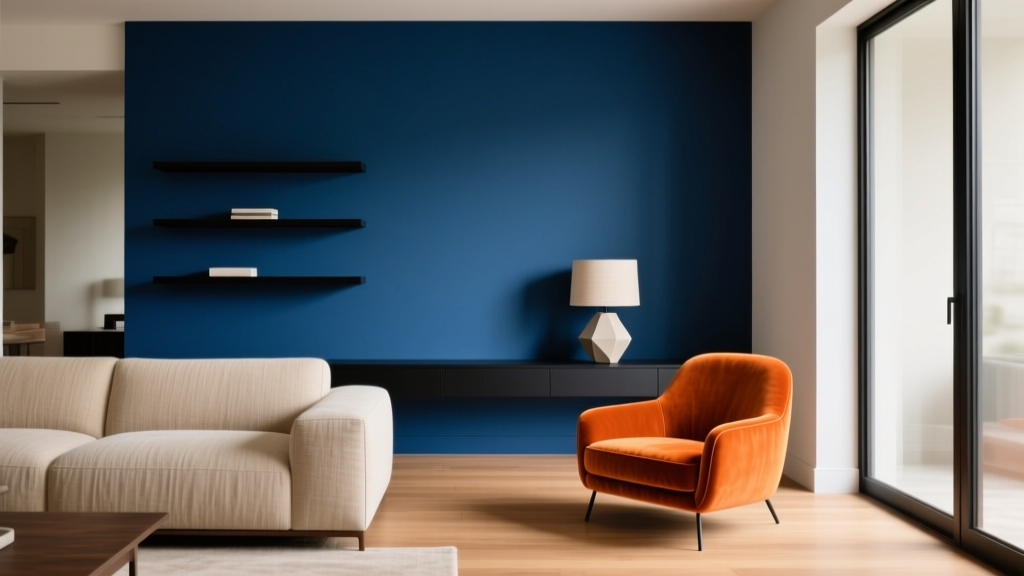
Living Room Bold Color Accent Ideas - The Decor Mag
Bold color can do what new furniture often can’t: instantly change the mood of a living room. Whether you’re working with a compact rental, a builder-grade open plan, or a beautifully proportioned older home, a strong accent color adds depth, personality, and a designer-finished look—without requiring a full renovation.
Color also helps solve common living room challenges. It can visually “anchor” a floating sofa, create a focal point in a room with no fireplace, and bring cohesion to mismatched pieces you already own. The best part? Bold accents are scalable. You can start with a pillow set and a vase, or go all-in with a saturated paint color and statement upholstery.
This guide walks you through bold color accent ideas for living rooms—how to choose the right hue, where to place it for maximum impact, what to buy, and how to avoid the most common missteps. Expect practical measurements, material suggestions, and budget ranges so you can move from inspiration to action confidently.
What Counts as a “Bold Color Accent” (and Why It Works)
A bold accent is any high-impact color used in a controlled way to create contrast against your room’s main palette. In living room design, the goal is balance: one or two vibrant colors that feel intentional rather than scattered.
Why accents feel “designed”
- Contrast creates hierarchy: The eye naturally goes to the boldest element first—perfect for highlighting art, architectural details, or a reading corner.
- Color creates rhythm: Repeating an accent color 2–4 times around the room helps it feel cohesive.
- Small changes deliver big returns: Swapping textiles and decor is often easier than changing large furniture pieces—ideal for renters.
Fast rule of thumb for balance
Try the 60–30–10 approach:
- 60% dominant color (walls, large rug background, main sofa tone)
- 30% secondary color (curtains, chairs, wood tones, larger textiles)
- 10% bold accent color (pillows, art, a chair, painted niche, lampshade, decor)
Choosing Your Bold Accent Color: A Simple Method
The best bold color accent ideas start with choosing a hue that plays nicely with your existing finishes—floors, sofa, and any built-ins you can’t change.
Step-by-step: Pick a color that won’t fight your room
- Identify your fixed neutrals: warm (cream, beige, oak) or cool (gray, marble, black metal).
- Decide the vibe: energizing (citrus, coral), cozy (rust, burgundy), serene (teal, deep green), modern (cobalt, black + bright).
- Choose one hero color: keep it to a single bold shade first; add a second only if the room is large or open plan.
- Test in the room’s lighting: buy sample paint pots or swatches and check morning vs. evening.
Reliable bold accent colors (timeless + trending)
- Deep green: evergreen, hunter, olive (pairs beautifully with walnut, brass, and cream)
- Cobalt or navy: crisp with white walls; sophisticated with camel leather
- Terracotta/rust: warm, earthy, excellent with linen, boucle, and oak
- Mustard/ochre: a modern classic that reads sunny without neon
- Burgundy/wine: luxe, great for traditional or vintage-inspired rooms
- Teal: bold but calming, especially with warm metals
Where to Add Bold Color: High-Impact Accent Ideas
1) Paint a Bold Accent Wall (or Better: a “Color Block”)
Accent walls still work—when placed thoughtfully. Choose the wall that naturally draws attention: behind the sofa, the TV wall (if styled carefully), or a fireplace wall.
Designer upgrade: color block only a portion of the wall to control intensity.
- Behind a sofa: paint a rectangle that extends 6–10 inches wider than the sofa on each side and stops 8–12 inches below the ceiling for a framed effect.
- TV wall: use a matte finish to reduce glare and visually recess the screen.
- Rental-friendly option: removable wallpaper in a saturated tone or bold pattern.
Budget range: $40–$120 for paint + supplies (DIY); $300–$900+ for professional painting depending on region and wall condition.
2) Choose One Statement Upholstery Piece
If your walls are neutral, one colorful upholstered piece can become the living room’s signature. This is one of the most effective bold color accent ideas for renters because it’s moveable and doesn’t rely on paint.
- Accent chair: velvet in emerald, mohair in cobalt, or performance fabric in terracotta.
- Ottoman: a saturated cube ottoman doubles as extra seating.
- Small loveseat: great for apartments when a full-size sectional feels too heavy.
Material recommendations:
- Performance fabric: best for kids/pets; look for stain resistance and high rub counts (20,000+ double rubs).
- Velvet: rich color payoff; choose performance velvet for durability.
- Leather: camel or oxblood reads bold yet timeless; scuffs patina well.
Budget range: $250–$600 (accent chair), $120–$300 (ottoman), $700–$2,500 (sofa/loveseat).
3) Layer Bold Color Through Textiles (The Easiest Win)
Textiles are the quickest path to a “collected” living room. The key is to vary scale and texture, not just color.
- Throw pillows: start with 3–5 pillows on a standard sofa. Mix solids + patterns.
- Throw blanket: drape over the sofa arm or ladder it across the back.
- Curtains: bold color panels can frame a view and add height.
Practical measurements:
- Pillow sizes: 22" x 22" for corners, 20" x 20" for layering, 12" x 20" lumbar for contrast.
- Rug sizing: aim for at least the front legs of the sofa on the rug; ideally the entire seating area. Common living room sizes: 8' x 10' for most rooms, 9' x 12' for larger spaces.
- Curtain placement: hang rods 4–8 inches above the window frame and extend 6–12 inches past each side to make windows feel larger.
Budget range: $60–$250 for pillows (depending on inserts), $30–$150 for throws, $80–$300+ for curtains per window.
4) Add Bold Color with Art (Big Impact Without Big Commitments)
Artwork is a smart way to introduce bold color accents while keeping the room flexible. If your living room feels bland, oversized art can instantly fix it.
- Scale tip: above a sofa, choose art that’s about 2/3 the sofa’s width.
- Gallery wall trick: repeat your accent color in at least two pieces for cohesion.
- Frame finishes: black for modern contrast, brass for warmth, light oak for soft Scandinavian-inspired rooms.
Budget range: $40–$150 for prints, $150–$800 for large pieces, $25–$120 per frame depending on size.
5) Style a Color “Moment” on Shelves or a Console
If you’re nervous about bold color, concentrate it in a small area. A styled console table or bookshelf can be a controlled splash that still reads intentional.
Easy formula (repeatable anywhere):
- One tall item: lamp or vase in your accent color
- One medium item: art leaning against the wall or a sculptural object
- One grounding element: stacked books or a tray in wood/black
- One organic touch: greenery or dried stems to soften the look
Product ideas: colored glass vases, lacquer trays, ceramic lamps, or a stack of design books with bold spines.
6) Go Bold on a Smaller Architectural Element
Not ready for a full accent wall? Paint a smaller feature for a high-design feel:
- Built-in shelves: paint the back panel deep green or navy to add depth.
- Interior doors: a glossy black-blue or aubergine door looks custom.
- Ceiling accent: a soft bold (like muted teal) can feel dramatic yet cozy—especially in rooms with crown molding.
Finish tip: use matte for walls, eggshell for washability, and semi-gloss for trim/doors for durability.
Real-World Color Accent Scenarios (What This Looks Like at Home)
Scenario 1: Small rental living room with beige carpet
Challenge: Beige carpet can make a room feel dated, and renters often can’t paint.
Bold accent plan: Add cobalt through textiles and decor.
- 8' x 10' rug with a cream base and cobalt pattern to distract from the carpet
- 3–4 pillows mixing cobalt velvet + geometric prints
- One large abstract print with cobalt + warm neutrals
- Optional: removable wallpaper panel behind the sofa
Approximate budget: $250–$900 depending on rug and art choices.
Scenario 2: Open-plan living room that feels “flat”
Challenge: Open layouts can lack a focal point.
Bold accent plan: Create a defined living zone with deep green.
- Paint the TV/fireplace wall deep green in matte finish
- Add brass accents (floor lamp, picture frames) for warmth
- Bring in one green element on the opposite side (pillow or vase) to balance the room
Approximate budget: $80–$600 (DIY paint + accessories; more if upgrading lighting).
Scenario 3: Family living room with kids and pets
Challenge: You need style and durability—no precious fabrics.
Bold accent plan: Use rust/terracotta in performance materials.
- Performance fabric accent chair in rust
- Washable rug with hints of terracotta and cream
- Textured pillows (woven, boucle, or indoor/outdoor fabric)
Approximate budget: $500–$1,800 depending on chair and rug.
Product Recommendations That Make Bold Color Feel Elevated
- Performance velvet pillow covers (great color saturation; easy refresh)
- Washable rugs in bold patterns (ideal for high-traffic living rooms)
- Colored glass (vases, candleholders) for light-catching accents
- Lacquer or enamel trays to corral remotes and small decor in one punchy color
- Statement lampshades (pleated or colored linen) to introduce accent color at eye level
- Peel-and-stick wallpaper panels for renters who want bold pattern and color
Common Mistakes to Avoid with Bold Living Room Accents
- Using too many bold colors at once: If everything is loud, nothing is. Start with one hero color and one supporting shade at most.
- Ignoring undertones: A cool cobalt can clash with warm beige. Match warm-with-warm and cool-with-cool when possible.
- Going too small: A single tiny accent (one pillow) can look accidental. Repeat the color at least 2–4 times around the room.
- Forgetting texture: Bold color looks richer when layered: velvet + linen + wood + metal beats flat cotton alone.
- Choosing the wrong rug size: A rug that’s too small makes the room feel disconnected, no matter how great the color is.
- Overdoing glossy paint on big walls: High gloss shows flaws and can cause glare. Use matte/eggshell for most living room walls.
FAQ: Living Room Bold Color Accent Ideas
What is the easiest way to add bold color to a living room?
Start with textiles: pillow covers, a throw, and a rug with your chosen accent color. It’s affordable, renter-friendly, and easy to swap seasonally.
How do I pick an accent color if my living room is all gray?
Gray pairs well with saturated jewel tones like emerald, teal, and cobalt, or with warm tones like rust and mustard to add contrast. Choose based on the mood you want: jewel tones feel sleek; warm tones feel cozy.
How many accent colors should a living room have?
One primary accent color is usually enough. In larger rooms, you can add a second accent, but keep them related (for example: teal + navy, or rust + burgundy) and repeat each color at least twice.
Should my accent color match my rug or my artwork?
Either works, but it’s easiest to pull an accent color from your rug or artwork so the palette feels intentional. If you already own a rug you love, use it as your color “map.”
Can bold colors work in a small living room?
Yes. Use bold color strategically—on one wall, through a single chair, or in a concentrated decor moment. Keep the rest of the palette light to avoid visual heaviness, and use mirrors or sheer curtains to maintain brightness.
What bold accent colors feel timeless (not trendy)?
Navy, deep green, terracotta, and burgundy have staying power because they’re rooted in classic design palettes. Pair them with timeless materials like wood, linen, leather, and brass for longevity.
Your Next Steps: A Simple Plan to Try This Weekend
- Pick one bold color you love and that suits your room’s undertone (warm vs. cool).
- Choose your “anchor” item: an accent chair, a rug, or a bold art piece.
- Repeat the color 2–4 times using smaller decor (pillows, vase, books, lampshade).
- Check scale: confirm rug size and art width so the room feels intentional, not piecemeal.
- Edit before adding more: remove one or two small items so the bold accents have space to shine.
Bold color accents are one of the most effective living room design upgrades because they’re flexible: you can start small, refine your palette, and build toward bigger changes over time. For more practical living room decor ideas, furniture layouts, and trend-forward inspiration, explore the latest guides on thedecormag.com.
More Articles
 Colorguides for Living Spaces: Step-by-Step Guide 2026
 Living Room Sectional Sofa Configurations - The Decor Mag
 How to Mix Old and New in Living Room Decor - The Decor Mag
 How to Style a Living Room for the Holidays - The Decor Mag
 Living Room Bright Airy Design Tips - The Decor Mag
 Rug Size for Living Room: How to Choose (2026)
 Cozy Farmhouse Living Room Decor Tips - The Decor Mag
 Exposed Beams Living Room Decor (2026)
 Living Room Fireplace Design Ideas - The Decor Mag
 Living Room Ceiling Design Inspiration - The Decor Mag