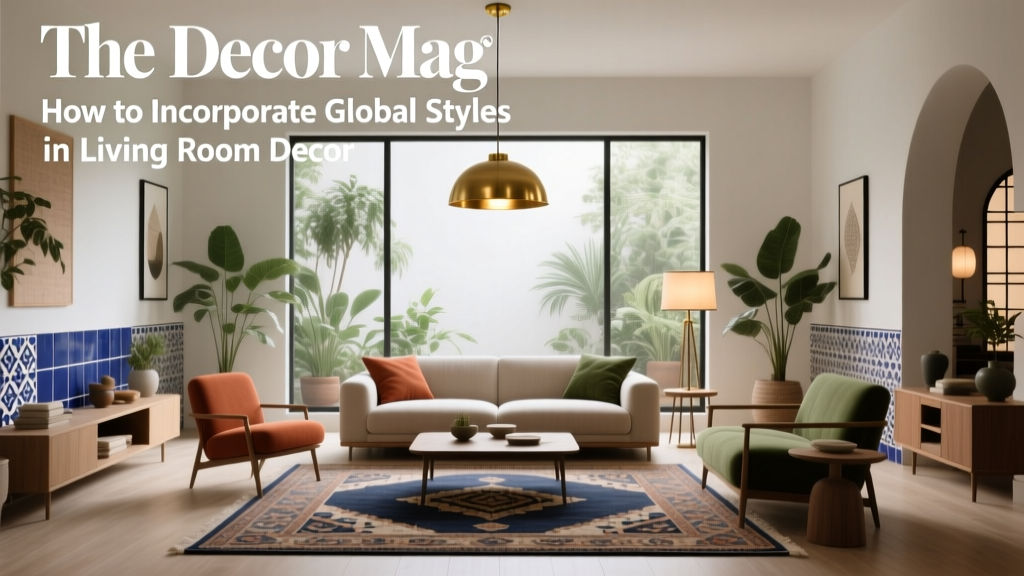
Global Living Room Decor: Stylish Ideas (2026)
A living room is where life happens: quiet mornings with coffee, movie nights, impromptu chats with friends, and the daily moments that make a home feel personal. Global-style living room decor matters because it turns those everyday scenes into something richer—layered with stories, craft, color, and texture that feel collected rather than copied.
The best part? You don’t need a passport (or a massive budget) to create an international look. Global design is less about themed rooms and more about thoughtful mixing—pairing timeless pieces with accents that reference places and traditions: Moroccan rugs, Japanese joinery, Scandinavian calm, Mexican ceramics, West African textiles, or Mediterranean plaster walls.
This guide will show you how to bring global styles into your living room in a way that feels cohesive and livable. You’ll learn how to choose a base style, layer patterns without chaos, pick materials that look authentic (and wear well), and avoid common mistakes that can make global decor feel cluttered or costume-y.
What “Global Style” Really Means (and Why It Works)
Global style is a curated blend of influences from around the world—usually anchored by a neutral, modern foundation so the room feels fresh instead of like a museum. It works because it relies on universal design principles:
- Balance: mixing bold textiles with calm solids.
- Proportion: giving statement pieces breathing room.
- Repetition: repeating a color or material (wood, brass, linen) across the room.
- Texture: using natural materials—wool, jute, rattan, clay, leather—to add depth.
Current design trends also support global living room design: “collected interiors,” warm minimalism, artisan-made decor, handmade ceramics, sustainable materials, and vintage/secondhand sourcing are all having a moment. The timeless side of global design is craftsmanship—objects that feel made by hand, not mass-produced.
Start with a Strong Foundation: Choose a Base Style
If you’ve ever seen a globally inspired living room that felt “busy,” it often lacked a grounding foundation. Pick one base style to keep the room cohesive, then add global layers on top.
3 Easy Base Styles for Global Decor
- Warm modern: clean-lined sofa, neutral walls, minimal window treatments—then add patterned textiles and artisan accents.
- Transitional: classic shapes (roll-arm sofa, tailored drapery) with global prints and rustic woods for contrast.
- Scandi-inspired: light woods and simple forms paired with bolder, high-contrast global patterns (mudcloth, kilim, indigo).
Color Palette Guidance (Simple and Reliable)
For a globally inspired living room, start with a calm palette and add 2–3 accent colors pulled from your textiles.
- Base (60%): warm white, soft greige, sand, or clay-beige
- Secondary (30%): mid-tone wood, camel leather, charcoal, olive
- Accents (10%): indigo, terracotta, saffron, emerald, oxblood
Paint tip: If you want a subtle global feel without committing to bold color, choose a warm off-white with a hint of yellow or red undertone. It complements natural fibers and makes patterns feel intentional.
Pick a Global “Hero Piece” (Then Build Around It)
One standout item creates a focal point and helps you avoid over-decorating. Choose one hero piece for your living room design and let it steer your palette and materials.
Great Hero Piece Options
- A patterned rug: Moroccan, Turkish, Persian-style, kilim, or dhurrie
- A large textile wall hanging: mudcloth, suzani, embroidered fabric, tapestry
- A statement coffee table: carved wood, travertine, hammered metal, vintage trunk
- Oversized art: global-inspired abstract, block print, landscape photography from your travels
Rug Sizing (So It Looks Designed, Not Floating)
- 8' x 10': works for many standard living rooms; front legs of sofa and chairs should sit on the rug.
- 9' x 12': ideal for larger rooms or open concept spaces; anchors seating fully.
- 5' x 8': best for small spaces; use only if you can’t fit larger—place it under the front legs at minimum.
Pro tip: Leave 8–18 inches of bare floor between the rug edge and the wall for a polished border, depending on room size.
Layer Global Textiles Like a Pro (Without Visual Noise)
Textiles are the fastest way to bring global style into living room decor. The trick is mixing patterns with a clear “rule” so it feels curated.
A Foolproof Pattern-Mixing Formula
- Choose one large-scale pattern (your rug or curtains).
- Add one medium-scale pattern (2–3 throw pillows, an ottoman, or a blanket).
- Finish with one small-scale pattern or texture (a subtle stripe, nubby weave, or embroidered accent pillow).
Materials That Instantly Read “Global”
- Wool: durable and forgiving (great for rugs and throws)
- Linen and cotton: breathable, casual, easy to mix
- Leather: camel or cognac tones add warmth; consider poufs or accent chairs
- Natural fiber: jute, sisal, seagrass—perfect for layering under a smaller vintage rug
Product Recommendations (Easy-to-Find Categories)
- Pillows: mudcloth-inspired covers, block-printed cotton, ikat patterns (look for concealed zippers and removable covers)
- Throws: Moroccan wedding blanket style, chunky wool, or lightweight cotton in indigo
- Window treatments: flax linen panels in oatmeal or ivory; add a patterned roman shade if you want more global flair
Budget ranges: Pillow covers ($15–$60 each), inserts ($10–$30), throws ($30–$200), linen curtains ($60–$250 per panel depending on length and lining).
Bring in Authentic Texture with Wood, Metal, and Clay
Global-style living rooms look rich because they mix finishes—often with a handmade feel. Aim for a blend of at least three material families.
Materials and Where They Work Best
- Wood: mango wood, teak, walnut, reclaimed pine (coffee tables, side tables, shelving)
- Metal: aged brass, blackened steel, hammered copper (lighting, trays, hardware)
- Ceramics and clay: terracotta, stoneware, earthenware (vases, bowls, planters)
- Stone: travertine, marble, soapstone (tabletops, decor objects)
Styling Tip: The “Three Heights” Rule for Shelves and Tables
When styling a coffee table or console with globally inspired decor, use objects in three height ranges to create rhythm:
- Tall (12–18 inches): vase with branches, a lamp, or tall candlesticks
- Medium (6–10 inches): stacked books, a lidded box, a sculptural object
- Low (1–5 inches): trays, bowls, small pottery, coasters
Create Travel-Ready Vignettes (Even If You’ve Never Left Town)
Global decor works best in intentional moments—small vignettes that look collected. You don’t need to fill every surface; a few well-styled areas look more elevated (and are easier to live with).
Step-by-Step: A Globally Inspired Console Table
- Anchor: place a large mirror or art piece above (aim for 2/3 to 3/4 the console width).
- Light: add a lamp with a ceramic or textured base (24–30 inches tall is a good range).
- Texture: include a woven basket underneath for throws or kids’ toys.
- Story items: add 2–4 objects like a carved bowl, brass tray, or pottery vase.
- Edit: leave at least 25–30% of the surface empty so it feels curated, not crowded.
Real-World Scenario: Renter-Friendly Global Living Room
Imagine a renter with white walls and beige carpet who wants a more elevated living room. A smart plan:
- Start with an 8' x 10' vintage-style rug in terracotta/indigo to add color and distract from the carpet.
- Add linen curtains hung high and wide (4–6 inches above the window frame; 6–12 inches beyond each side) to visually enlarge the window.
- Use removable accents: a leather pouf, rattan chair, and a woven pendant (plug-in version if needed).
- Finish with accessories: a set of baskets, a few ceramic vases, and 2–3 patterned pillows that pull colors from the rug.
Estimated budget: $400–$1,200 depending on rug choice (new vs. vintage), plus $150–$400 for pillows, throws, and styling pieces.
Blend Global Styles the Right Way: A Simple “2 + 1” Rule
Mixing multiple regions can look incredible—if you do it with restraint. Try the “2 + 1” rule:
- Pick two primary influences (example: Moroccan + Scandinavian).
- Add one supporting accent (example: Japanese ceramics or Greek-inspired amphora vases).
Winning Combinations for a Cohesive Look
- Mediterranean + Modern: plaster-look walls, linen sofas, terracotta pottery, olive tones
- Japanese + California casual: low furniture, warm woods, wabi-sabi ceramics, soft neutrals
- Moroccan + Transitional: classic sofa, patterned rug, brass accents, carved wood table
- West African + Minimalist: crisp silhouettes, mudcloth pillows, sculptural baskets, black/cream palette
Lighting and Greenery: The Quiet Power Moves
Lighting and plants are often what make global living room decor feel warm and finished, rather than purely decorative.
Lighting Tips That Flatter Global Textures
- Use warm bulbs: 2700K–3000K for a cozy glow that enhances wood and textiles.
- Layer lighting: one overhead (or plug-in pendant), one table lamp, and one floor lamp.
- Choose textured shades: woven grasscloth, linen, or rattan to echo global materials.
Plant Pairings That Look Collected
- Olive tree (faux or real): great for Mediterranean-inspired living rooms
- Snake plant or ZZ plant: sculptural, low maintenance for modern spaces
- Fiddle leaf fig: bold, best in bright rooms with space to grow
Container tip: Use terracotta pots, hand-glazed ceramics, or woven baskets with a hidden liner. For larger plants, choose a 12–16 inch diameter planter for stability.
Common Mistakes to Avoid (So Global Decor Looks Elevated)
- Going “theme” instead of curated: A room full of the same motif (all Moroccan, all bamboo, all tribal prints) can feel like a set. Mix in modern solids and clean lines.
- Too many small trinkets: Tiny souvenirs scattered everywhere read as clutter. Group items into 1–2 intentional vignettes.
- Ignoring scale: A small rug or undersized art can make the room feel unfinished. Size up when possible.
- Overusing bold patterns: If everything is patterned, nothing stands out. Balance with solids and texture.
- Buying “fake patina” everything: One or two distressed pieces feel authentic; a whole room can feel forced.
- Skipping comfort: Global living room design should still function for real life. Choose washable covers, durable rugs, and surfaces that can handle daily use.
FAQ: Global Styles in Living Room Decor
How do I make a global living room feel cohesive?
Use a consistent base (warm modern, transitional, or Scandi), repeat 2–3 colors across the room, and stick to a “2 + 1” approach for cultural influences. Let one hero piece—often the rug—guide the rest.
What are the best rugs for a globally inspired living room?
Wool rugs are the most durable and classic. Look for Moroccan, Turkish, Persian-style, kilim, or dhurrie rugs in an 8' x 10' or 9' x 12' when possible so the seating feels anchored.
Can I do global decor in a small living room or apartment?
Yes—keep the base light, choose one statement textile (like a rug), and use vertical space: a textile wall hanging, tall curtains hung high, and one bold floor lamp or plug-in sconce. Limit accessories to a couple of impactful vignettes.
How can renters add global style without painting or renovations?
Focus on removable upgrades: rugs, curtains, pillows, throws, plug-in lighting, peel-and-stick wallpaper on a single wall, and large art. Baskets and ceramics add global texture with zero commitment.
What’s a realistic budget to get the look?
You can make a noticeable change for $250–$600 with pillows, a throw, baskets, lighting, and styled accessories. For a bigger transformation including a quality rug and a few furniture upgrades, plan on $800–$2,500, depending on vintage finds and material choices.
How do I avoid cultural appropriation while using global influences?
Prioritize artisan-made goods and brands that credit and compensate makers, learn the basics of what you’re buying (materials, origin, symbolism), and avoid sacred motifs used purely as decoration. When possible, buy directly from artists, fair-trade sources, or reputable galleries.
Actionable Next Steps for Your Globally Inspired Living Room
- Pick your base style (warm modern, transitional, or Scandi) and commit to it.
- Choose one hero piece—ideally a properly sized rug (8' x 10' for most rooms).
- Select 2–3 accent colors from the hero piece for pillows, art, and accessories.
- Add texture strategically: one woven element, one ceramic element, one warm metal accent.
- Edit and refine: create two styled vignettes, then leave some negative space.
A global approach to living room decor isn’t about recreating a destination—it’s about creating a space that feels worldly, welcoming, and distinctly yours. Keep it intentional, focus on craftsmanship, and let your room evolve over time.
Looking for more inspiration? Explore more living room ideas, layouts, and decor guides on thedecormag.com.
More Articles
 Living Room English Country Cottage Feel - The Decor Mag
 Smart Function Storage Ideas for Real Living Spaces
 Living Room Polished Casual Style - The Decor Mag
 Scandinavian Living Room Design Essentials - The Decor Mag
 Best Living Room Focal Point Ideas for 2026
 Best Wall Sconce Wiring Options - The Decor Mag
 Luxury Living Room Design Trends - The Decor Mag
 Living Room Art Placement Guide - The Decor Mag
 Reading Nook Ideas for Living Rooms (2026)
 Living Room Bright Airy Design Tips - The Decor Mag