How to Layer Textiles in a Living Room - The Decor Mag
Textiles are the fastest way to make a living room feel finished—more welcoming, more stylish, and more “you.” They add softness to hard surfaces, absorb sound in echo-prone spaces, and bring color and pattern into a room without committing to paint or new furniture. Whether you’re working with a compact apartment living room or a sprawling family space, layered textiles can make it look intentional rather than thrown together.
Layering is also one of the most renter-friendly upgrades around. A rug can hide dated flooring. Curtains can disguise awkward windows. Throws and pillows can revive an aging sofa. When you understand how different fabrics, weights, and textures work together, you can create that cozy, curated living room look you see in design magazines—without needing a full renovation.
This guide breaks down a simple, repeatable method for layering living room textiles: start with large foundational pieces (rugs and curtains), then build toward mid-scale elements (upholstery and accent textiles), and finish with small styling layers (pillows, throws, and tactile decor). You’ll get practical measurements, material recommendations, budget ranges, real-world examples, and a checklist of common mistakes to avoid.
What “Layering Textiles” Actually Means
Layering textiles is the art of combining multiple fabric elements—different materials, weaves, patterns, and weights—so the living room feels balanced and comfortable. The goal isn’t to add more stuff; it’s to create depth. A room with one flat texture (say, a leather sofa and bare floors) can feel cold. Add a rug, linen curtains, a knit throw, and a mix of pillows, and the space becomes visually richer and physically softer.
The 3-Part Formula: Foundation, Mid-Layers, Finishing Touches
- Foundation: Area rug(s), window treatments, large upholstered pieces
- Mid-layers: Accent chairs, ottomans, bench cushions, slipcovers
- Finishing touches: Pillows, throws, poufs, fabric lampshades, textile wall art
Step 1: Start with a Rug That Anchors the Seating Area
In living room design, the area rug is often the biggest textile you’ll buy—and the one that determines how cohesive the room feels. A too-small rug makes everything look disconnected. A properly sized rug instantly makes the space look more expensive and thoughtfully designed.
Best Rug Sizes (with Practical Measurements)
- Small living rooms: 5' x 8' (works when the front legs of the sofa and chairs sit on the rug)
- Most average living rooms: 8' x 10' (ideal for anchoring a standard sofa + coffee table + chairs)
- Large living rooms / open concept: 9' x 12' or 10' x 14' (helps define a conversation area)
Rule of thumb: Aim for at least the front legs of all main seating pieces to sit on the rug. Leave 8–18 inches of floor visible around the rug perimeter, depending on room size.
Trending + Timeless Rug Materials
- Wool: Soft, resilient, naturally stain-resistant; great for cozy living rooms (mid to high budget)
- Jute/sisal: Textural and airy; popular in modern organic and coastal styles (budget to mid, but can feel rough)
- Cotton flatweave: Lightweight and washable; best for low-pile needs (budget-friendly)
- Performance synthetic (polypropylene, PET): Family- and pet-friendly; easy maintenance (budget to mid)
- Viscose/silk blends: Beautiful sheen; best in low-traffic living rooms (mid to high, higher maintenance)
Budget Ranges for Rugs
- Budget: $100–$300 (often synthetic or cotton)
- Mid-range: $300–$900 (wool blends, higher-quality synthetics)
- Investment: $900–$3,000+ (100% wool, hand-knotted, designer lines)
Pro Styling Move: Layered Rugs
Layering rugs is a major design trend—especially “modern organic” and relaxed European-inspired interiors. Use a large neutral base (jute or flatweave) and place a smaller patterned rug on top to add personality.
- Base rug: 8' x 10' natural jute
- Top rug: 5' x 7' vintage-style printed rug (centered under coffee table)
This works beautifully in rentals where you want a high-end look without buying one expensive, oversized wool rug.
Step 2: Add Curtains That Soften the Room (and Make Ceilings Look Higher)
Window treatments are often overlooked, but they’re a key textile layer for a cozy living room. Curtains add vertical softness, reduce glare, and make the room feel complete—even if you already have blinds.
Correct Curtain Measurements for a Polished Look
- Hang high: Install the rod 4–8 inches above the window frame, or 1–2 inches below the ceiling for a taller look.
- Go wide: Extend the rod 6–12 inches beyond each side of the window so panels can stack off the glass.
- Choose the right length:
- Just touching: hem sits 0.5" above the floor (clean and modern)
- Breaking: hem rests 0.5–1" on the floor (soft and tailored)
- Puddling: 2–4" extra length (romantic, best in low-traffic rooms)
Fullness tip: Total curtain width should be 2x the window width for a luxe look. For example, a 60-inch wide window typically looks best with two panels that are 50–60 inches wide each.
Fabric Choices for Curtains
- Linen or linen blends: Breezy, textured, on-trend for modern organic living rooms
- Cotton canvas: Crisp, versatile, great for casual and transitional spaces
- Velvet: Dramatic and cozy; also excellent for insulation and sound absorption
- Sheers: Ideal for privacy with light; pair with a heavier drape for layering
Real-World Scenario: The Rental Living Room with Builder Blinds
If your living room has standard white blinds, keep them for function and add curtains for style. Choose off-white linen panels to soften the space, then bring in texture through a rug and pillows. This “blinds + drapes” combo is renter-friendly and instantly elevates the room.
Step 3: Build a Cohesive Palette (Without Making It Matchy)
The secret to layered textiles that look intentional is a clear color story. You don’t need everything to match, but you do want everything to relate.
An Easy Color Framework: 60-30-10
- 60% base: walls + large rug + sofa color (often neutral)
- 30% supporting: curtains + accent chair upholstery + secondary rug tones
- 10% accent: pillows, throws, small patterns, seasonal changes
On-Trend Yet Timeless Color Ideas
- Warm neutrals: ivory, oat, camel, mushroom, taupe
- Earthy accents: terracotta, rust, olive, tobacco, clay
- Moody classics: navy, forest green, charcoal
- Fresh modern notes: soft black details, muted blue-gray, buttery cream
Tip: Repeat each accent color at least twice (e.g., a rust pillow + a rust-toned detail in the rug) so it feels intentional.
Step 4: Mix Textures Like a Designer
Texture is what makes a neutral living room feel layered and expensive. Even if you stick to a simple palette, mixing tactile surfaces creates depth and comfort.
Texture Combinations That Always Work
- Linen + wool: relaxed and classic
- Velvet + bouclé: plush, modern, and trend-forward
- Leather + chunky knit: balanced contrast (sleek + cozy)
- Cotton + rattan/jute: light, airy, coastal or modern organic
Quick Texture Checklist for a Cozy Living Room
- One nubby texture (bouclé, tweed, looped wool)
- One smooth texture (linen, cotton sateen, leather)
- One plush texture (velvet, faux fur, chenille)
- One structured texture (jute, basketweave, canvas)
Step 5: Style Pillows and Throws with Purpose
Throw pillows and blankets are the easiest textile layers to refresh seasonally. They’re also where many living rooms go wrong—either too many small pillows, or a pile of mismatched patterns that feels chaotic.
How Many Pillows Do You Need?
- Standard 84–90" sofa: 4–6 pillows
- Apartment sofa / loveseat: 3–4 pillows
- Sectional: 5–8 pillows (cluster by corners, leave sitting space)
A Foolproof Pillow Formula (Sizes Included)
- Back layer: 22" x 22" or 24" x 24" (solid or subtle texture)
- Middle layer: 20" x 20" (pattern or contrasting texture)
- Front accent: lumbar 12" x 20" or 14" x 22" (statement pattern or special fabric)
Insert tip: Use inserts 2 inches larger than the cover (e.g., a 22" insert in a 20" cover) for a fuller, more high-end look.
Throw Blanket Placement That Looks Styled (Not Messy)
- Drape a throw over one sofa arm and let it cascade to the seat
- Fold neatly and place on the corner of a sectional
- Layer two throws with different textures (e.g., linen + chunky knit) in complementary tones
Budget Ranges for Pillows and Throws
- Budget: $15–$35 per pillow cover; $25–$60 for a throw (cotton, basic knits)
- Mid-range: $35–$90 per cover; $60–$150 throws (linen blends, heavier weaves)
- Investment: $90–$200+ covers; $150–$400 throws (designer textiles, wool, mohair)
Step 6: Add Upholstered Accents and Soft “In-Between” Layers
Once your rug and curtains are in place, look for opportunities to add textile layers at different heights. This creates a living room that feels multidimensional rather than flat.
High-Impact Textile Additions
- Ottoman or pouf: Try leather for contrast or a woven fabric for softness
- Slipcover: Great for renters or families; washed linen looks relaxed and current
- Bench cushion: Adds comfort under a window and introduces a new pattern
- Fabric lampshades: A subtle but powerful way to soften lighting
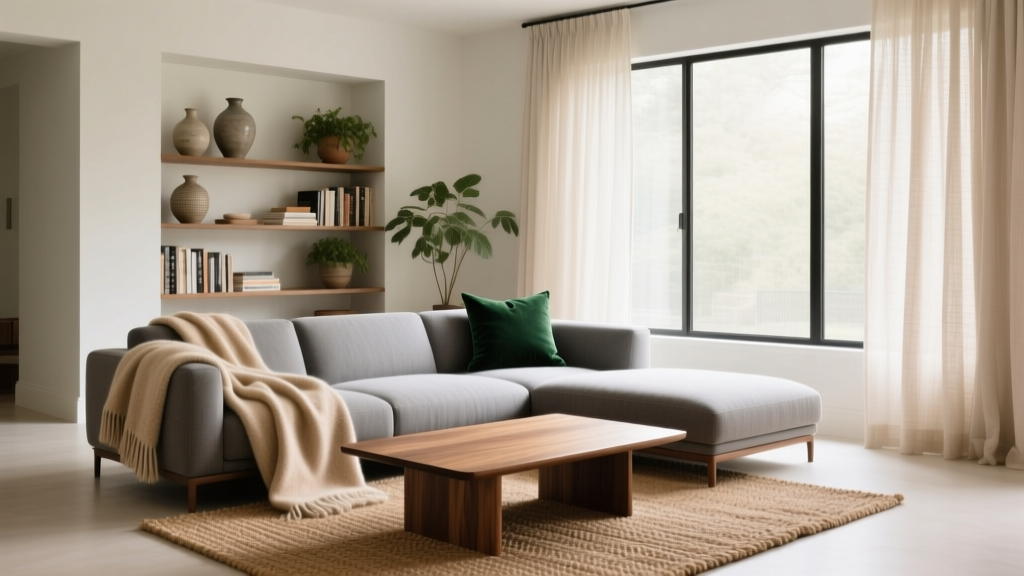
Real-World Example: Making a Gray Sofa Feel Warm
A cool gray sofa can read sterile if the rest of the room is minimal. Warm it up with:
- A cream and taupe wool-blend rug (8' x 10')
- Oat-colored linen curtains
- Pillows in camel velvet, ivory bouclé, and a small-pattern print that includes warm tones
- A chunky knit throw in a warm beige
This keeps the sofa but shifts the mood toward cozy, modern living room decor.
Step 7: Mix Patterns Without the “Visual Noise”
Pattern mixing is where layered textiles look either designer-level or overwhelming. The easiest way to succeed is to vary scale and keep a consistent palette.
A Simple Pattern Recipe
- One large-scale pattern: rug or statement curtain (bold geometric, oversized floral)
- One medium-scale pattern: a pair of pillows (stripe, ikat, checker)
- One small-scale pattern: lumbar pillow or throw (tiny print, subtle texture pattern)
Designer trick: Include at least one “solid” that’s actually texture (like bouclé or a slubby linen) to give the eye a resting place.
Common Mistakes to Avoid When Layering Living Room Textiles
- Choosing a rug that’s too small: It makes the seating area feel like it’s floating.
- Hanging curtains too low: This shortens the wall and can make windows look smaller.
- Overusing one texture: Too much velvet or too many chunky knits can feel heavy and one-note.
- Buying matching sets: Coordinated pillow sets often look flat; aim for complementary pieces instead.
- Ignoring durability: In high-traffic living rooms, choose performance fabrics and washable covers.
- Too many tiny pillows: A pile of 16" pillows can look cluttered; mix larger sizes for a more tailored look.
Quick Shopping Guide: Product Recommendations by Lifestyle
If You Have Kids or Pets
- Rug: Low-pile performance synthetic or washable rug
- Pillows: Removable, machine-washable covers (cotton canvas, performance fabric)
- Throws: Tightly woven cotton or washable knit
- Colors: Mid-tones and mixed patterns hide wear better than bright white solids
If You Want a Calm, Neutral Living Room
- Rug: Wool or jute base, subtle pattern on top
- Curtains: Linen blend in ivory, oatmeal, or warm gray
- Pillows: Layer texture (bouclé + linen + knit) more than color
If You Love Color and Personality
- Start with one “hero” textile: a bold rug or patterned curtains
- Pull 2–3 colors from it: repeat them in pillows and throws
- Balance with solids: keep at least half of pillows solid/texture-only
FAQ: Layering Textiles in a Living Room
How do I layer textiles in a small living room without making it feel crowded?
Use fewer, higher-impact pieces: one properly sized rug (often 5' x 8' or 8' x 10'), curtains hung high to elongate the wall, and 3–4 pillows max. Prioritize texture over lots of patterns, and stick to a tight color palette (2–3 main colors).
What’s the best rug material for a high-traffic living room?
Wool is a top choice for resilience and comfort, but for busy households, performance synthetics (polypropylene or PET) are extremely practical. If you’re concerned about spills, consider a washable rug or a low-pile option that’s easy to vacuum.
How do I mix patterns on pillows without clashing?
Keep patterns in the same color family and vary the scale: one large pattern, one medium, one small. Add a textured solid (like bouclé or linen) to break up the prints.
Should curtains match the rug or the sofa?
They don’t have to match either. Curtains typically look best when they relate to the wall color or the room’s neutral base, then you can tie everything together with accent colors repeated in pillows, art, or decor.
How often should I switch textiles seasonally?
A practical rhythm is 2–3 times per year: lighter linens and cottons for spring/summer, and warmer textures like velvet, wool, and chunky knits for fall/winter. You can keep your rug and curtains consistent and just swap pillows and throws.
What’s the simplest way to make my living room feel cozier fast?
Add an appropriately sized rug, a textured throw, and two larger pillows (22" x 22") in a tactile fabric. If possible, hang curtains higher and wider—this alone can make the room feel more finished and inviting.
Your Next Steps: A Simple Layering Plan You Can Do This Weekend
- Measure your seating area and choose the right rug size (aim for front legs on the rug).
- Pick a palette (neutral base + 1–2 accents) and commit to it while shopping.
- Upgrade window treatments by hanging curtains high and wide for an instant lift.
- Mix textures intentionally—at least three different tactile finishes across rug, curtains, pillows, and throws.
- Finish with pillows and a throw using a simple size formula and one standout accent.
Layering textiles is one of those design skills that pays off in every home, every style, and every budget. Start with the biggest pieces, build gradually, and let texture do the heavy lifting—your living room will feel warmer, more polished, and more personal with each layer.
Want more easy upgrades and living room decor ideas? Explore the latest guides and inspiration on thedecormag.com.
More Articles
 Best Living Room Color Guides for Harmony in 2026
 Cheap vs Premium Decor: What’s Worth It in 2026?
 Living Room Furniture That Lasts: 2026 Picks
 Best Recliner Chairs That Look Stylish - The Decor Mag
 Metallics in Living Room Decor: 2026 Ideas
 How to Style a Living Room with Dark Walls - The Decor Mag
 Living Room Earth Tone Color Palettes - The Decor Mag
 Eclectic Living Room Decor Tips - The Decor Mag
 How to Style a Coffee Table Like a Designer - The Decor Mag
 Palette vs Paint: Color Systems vs Surface Finishes 2026