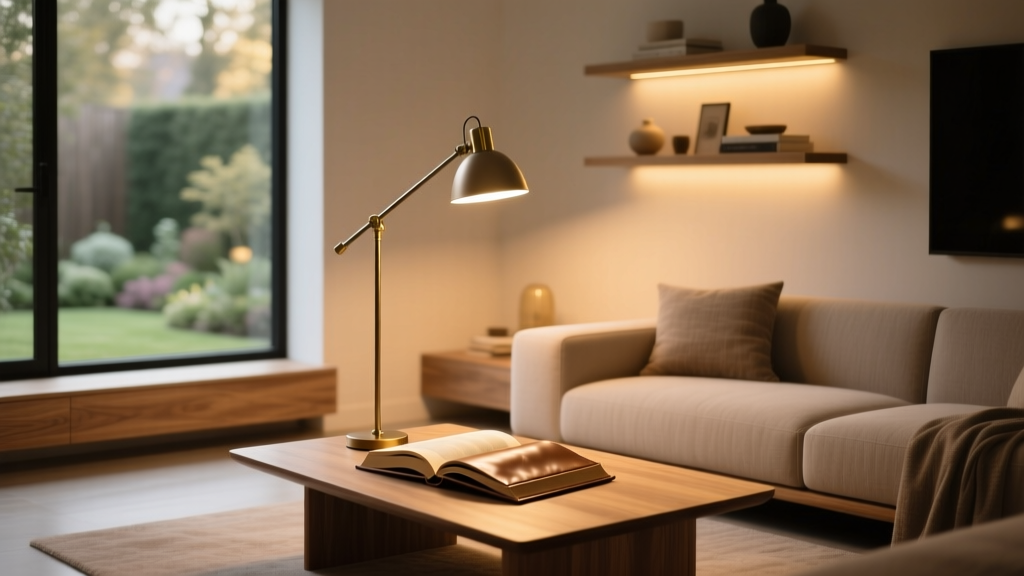
Best Floor Lamp Options for Reading - The Decor Mag
A great reading lamp is one of those small living room upgrades that changes how the whole space feels. When the lighting is right, the sofa becomes a true destination—cozy, functional, and flattering for the room. When it’s wrong, you end up squinting, fighting glare on your phone or book pages, and relying on harsh overhead lights that flatten your decor.
The good news: finding the best floor lamp for reading isn’t about chasing the most expensive fixture. It’s about choosing the right light output, shade style, and placement for your seating layout. Ahead, you’ll learn exactly what to look for (with practical measurements), which styles work best for different living room designs, and how to avoid the most common lighting mistakes homeowners and renters make.
Whether you’re styling a small apartment living room or refreshing a spacious family room, these floor lamp options will help you create a layered lighting plan that supports reading—while elevating your living room decor.
What Makes a Floor Lamp “Good for Reading”?
Reading light needs to be bright enough for comfort, directional enough to land on the page, and soft enough to avoid glare. A floor lamp can do all three if you pay attention to a few key specs and design details.
Brightness: How Many Lumens Do You Need?
- Target range: 450–800 lumens focused at the reading area for most people.
- For low vision or detailed tasks: aim for 800–1,100 lumens at the chair/sofa arm.
- If the lamp provides ambient light too: you may want a higher total output, but with a shade/diffuser to keep it comfortable.
Quick reference: an LED bulb labeled 60W equivalent is typically around 800 lumens. For a dedicated reading lamp, that’s often the sweet spot—especially when the bulb is positioned near shoulder height and directed down.
Color Temperature: Warm, Neutral, or Cool?
- Best for living rooms: 2700K–3000K (warm white) feels cozy and flattering on skin tones and textiles.
- Best for crisp contrast while reading: 3000K–3500K works well if you prefer a slightly cleaner look.
- Avoid for most living rooms: 4000K+ can feel office-like unless your style is very modern/minimal.
Shade and Diffuser Design: Control Glare
Glare is the #1 reason a lamp “looks nice” but fails for reading. Look for:
- Opaque or lined shades that direct light downward (drum, cone, empire).
- Diffusers (frosted glass or acrylic) to soften LED hotspots.
- Avoid clear glass shades next to seating unless the bulb is fully frosted and low-glare.
Adjustability: Your Secret Weapon
Adjustable arms, swivel heads, and dimmers make a reading lamp usable for more than one person and more than one seat.
- Dimmers are ideal for layered living room lighting (bright for reading, low for movie night).
- Goosenecks or pivoting heads let you aim light precisely at the page.
- Height adjustment helps if your sofa seat is deep or your chair has a tall back.
Best Types of Floor Lamps for Reading (And Where Each One Shines)
1) Task Floor Lamps (Directed, Focused Light)
Task floor lamps are purpose-built for reading: a smaller shade or head, focused beam, and adjustable positioning. This is often the best floor lamp option if reading is your main goal.
Best for: armchairs, recliners, compact living rooms, and renters who need performance without rewiring.
Design tips:
- Choose a matte black or brushed nickel finish for a modern living room.
- Try warm brass for a current-yet-timeless look that pairs beautifully with cream sofas and walnut tables.
- Look for a weighted base if you have kids or pets.
Placement sweet spot: Position the lamp so the light source sits 6–12 inches behind your shoulder and slightly above eye level, aimed at the book. This reduces shadows and glare.
2) Pharmacy Floor Lamps (Classic, Adjustable, and Stylish)
Pharmacy lamps feature a horizontal shade and an adjustable arm, making them a favorite for reading nooks and sofa corners. They’re also a staple in traditional and transitional living room design.
Best for: reading next to a sofa arm, layered lighting in traditional spaces, and homes with darker wall colors that need targeted light.
Trend meets timeless: Pharmacy lamps in antique brass or aged bronze fit right in with the ongoing love for vintage-inspired details—without feeling dated.
What to look for:
- A shade that blocks the bulb from direct view when seated.
- A sturdy pivot joint that doesn’t drift out of position.
- A dimmer switch (ideally on the pole for easy reach).
3) Arc Floor Lamps (Perfect for Sectionals and “No Side Table” Layouts)
Arc lamps extend over seating, so you can place the base behind a sofa or beside a sectional while the light reaches your reading spot. They’re also excellent for small living rooms where side tables aren’t an option.
Best for: sectionals, chaise lounges, or a modern living room layout with floating furniture.
Key measurements:
- Clearance: Aim for the bottom of the shade to sit 60–66 inches from the floor, depending on ceiling height and seating.
- Reach: Measure from the lamp base to the center of your seat cushion; look for an arc with enough extension to land the light where you actually read.
Material recommendations: A marble base adds stability and a luxe touch; a linen shade softens the light and complements cozy living room decor.
4) Torchiere + Reading Arm Combos (The Best “Two-in-One”)
A torchiere washes the ceiling with ambient light, while a small attached arm provides directed task lighting. This is a strong solution when you want one lamp to cover multiple lighting needs.
Best for: renters, open-concept living rooms, and anyone building a layered lighting plan on a budget.
Pro tip: Make sure the reading arm is bright enough on its own—look for an integrated LED reading head around 300–500 lumens, plus the torchiere’s separate output.
5) Tripod and Drum Shade Floor Lamps (Ambient-First, Reading-Second)
These are gorgeous for living room styling—especially in Scandinavian, coastal, and modern farmhouse interiors—but they aren’t always the best for serious reading unless the shade design directs light downward.
Best for: adding warmth, balancing a sofa wall, and creating that “finished” living room look.
Make it reading-friendly:
- Use a high-lumen LED bulb (800–1,000 lumens).
- Choose a shade with a narrower bottom opening to push more light down.
- Add a dimmer so you can go bright for reading and soft for entertaining.
Product Recommendations by Budget (What to Look for When Shopping)
Instead of brand-specific picks that can go in and out of stock, use these “buying targets” to match your budget while still getting a reading-worthy lamp.
Budget: $60–$150
- Best styles: basic task lamps, torchiere + reading arm combos, simple pharmacy lamps.
- Look for: LED compatibility, a stable base, and a shade that hides the bulb from seated view.
- Avoid: ultra-light bases and tiny switches placed near the socket (hard to reach behind a chair).
Mid-Range: $150–$350
- Best styles: sturdier pharmacy lamps, refined arc lamps, integrated LED task lamps with dimming.
- Look for: smoother adjustability, better finishes (brushed brass, satin black), and higher-quality shades (linen, cotton, or lined fabric).
- Nice upgrades: a full-range dimmer and a pivoting head with a diffused lens.
Premium: $350–$900+
- Best styles: statement arcs with marble bases, designer pharmacy lamps, sculptural modern pieces with excellent light control.
- Look for: replaceable LEDs (or high-quality integrated LEDs), impeccable shade construction, and weighted components that feel stable.
- Worth paying for: glare control and durability—especially if this is your everyday reading spot.
Step-by-Step: How to Place a Floor Lamp Next to a Sofa or Reading Chair
- Choose the side: Place the lamp on the same side as your dominant hand if possible (right side for right-handed readers) to reduce shadows on the page.
- Set the distance: Start with the lamp base about 8–14 inches from the outer edge of the chair or sofa arm.
- Check shade height: When seated, the bottom of the shade should be roughly at shoulder to chin height, and the bulb should not be directly visible.
- Aim the light: Direct the beam toward your lap/book, not your face. If you wear glasses, angle the light slightly forward to reduce reflections.
- Layer the room: Pair your reading lamp with a second light source (table lamp, wall sconce, or soft overhead) so the room doesn’t feel like a spotlight in a dark corner.
Real-World Living Room Scenarios (And the Best Lamp Match)
A Small Apartment Living Room with a Loveseat
You’re working with limited floor space and probably one main seating area. A slim task floor lamp with a small footprint is ideal. Look for a base under 10–12 inches in diameter and a swivel head, so you can read without pushing furniture around.
A Sectional in an Open-Concept Space
Reading happens at the chaise end, but there’s no room for an end table. Choose an arc floor lamp with a sturdy base (marble or weighted metal). Pair it with warm bulbs (2700K–3000K) to keep the space inviting, especially if your kitchen lighting is cooler.
A Traditional Living Room with a Classic Reading Chair
If you have a wingback chair or a higher back, a pharmacy floor lamp with an adjustable arm helps you place light exactly where you need it. Choose a warm brass finish to complement wood tones and classic upholstery patterns.
A Modern, Minimal Living Room That Feels Flat at Night
Modern spaces can look stunning but sometimes lack warmth. A torchiere + reading arm adds ambient glow plus task lighting, making the room feel layered and livable. Opt for matte black or satin nickel to keep the silhouette clean.
Common Mistakes to Avoid
- Picking style over function: A gorgeous lamp with an exposed bulb can be uncomfortable for reading and create harsh glare.
- Going too dim: Many decorative lamps ship with low-wattage bulbs. Upgrade to an LED around 800 lumens if the shade and fixture allow.
- Wrong color temperature: Very cool light can make a cozy living room feel sterile. Stick to 2700K–3000K for most living room decor styles.
- Placing the lamp too far away: If the lamp is more than 18 inches from the reading position, the light often won’t land where you need it.
- Ignoring cord management: Visible cords disrupt a polished living room design and can be a tripping hazard. Use cord covers or route behind furniture.
- No dimmer, no flexibility: A dimmer is one of the easiest ways to make your lighting feel custom and intentional.
Design Trends + Timeless Principles for Reading Lamps
Current living room design trends are leaning warm, layered, and personal—think mixed metals, soft curves, and vintage-inspired details. Floor lamps fit beautifully into that direction, especially when they’re chosen as part of a lighting “set,” not a standalone piece.
- Trend: Warm metals (brass, bronze) paired with creamy textiles and natural wood.
- Trend: Sculptural silhouettes (arched forms, minimal cones) that double as decor.
- Timeless: Layered lighting—ambient + task + accent—always looks more expensive and feels more comfortable.
- Timeless: Consistency in bulb temperature across the living room for a cohesive glow.
FAQ: Floor Lamps for Reading
What is the best height for a reading floor lamp?
Aim for the light source to sit around shoulder to eye level when seated, with the bulb not directly visible. For many living rooms, that means the bottom of the shade lands around 48–60 inches from the floor, depending on your chair and lamp style.
Is an arc floor lamp good for reading?
Yes—if the shade directs light down and the arc reaches far enough over your seating area. Choose an arc with a stable, weighted base and consider a dimmable bulb to fine-tune brightness.
How many lumens should a floor lamp have for reading?
For comfortable reading, look for 450–800 lumens focused at the page. If the lamp is farther away or you like brighter light, go up to 1,000+ lumens with a shade/diffuser to prevent glare.
What bulb is best for a reading lamp in a living room?
A dimmable LED bulb in the 2700K–3000K range is ideal for a cozy living room. Choose a high-quality bulb with a frosted finish for softer, more comfortable light.
Can I use a smart bulb in a reading floor lamp?
Absolutely—smart bulbs are great for renters and anyone who wants flexible lighting scenes. Just confirm the lamp socket type (typically E26/E27) and use a shade that reduces glare, since smart bulbs can be very bright at full output.
Next Steps: Choose the Right Lamp for Your Space
Start by identifying where you actually read—sofa corner, chaise, or a dedicated chair—then choose the lamp type that matches your layout: task for precision, pharmacy for classic adjustability, arc for sectionals, or a torchiere combo for an easy ambient-and-task solution. Keep your bulb warm (2700K–3000K), aim for 450–800 lumens at the page, and prioritize glare control.
If you want your living room decor to feel instantly more finished, add a dimmer, tidy the cord path, and pair your reading lamp with one other soft light source for that layered, designer feel.
Looking for more ways to upgrade your living room design? Explore more lighting tips, layout ideas, and decor inspiration on thedecormag.com.
More Articles
 Best Wall Sconce Wiring Options - The Decor Mag
 Effortless Living Room Styling: Tips & Ideas
 Family Living Room Layouts for Movie Night
 Best Lighting Fixtures for Living Rooms - The Decor Mag
 Best Swivel Chair Options for Living Rooms - The Decor Mag
 Living Room Art Placement Guide - The Decor Mag
 Exposed Beams Living Room Decor (2026)
 Living Room Paint Undertones: Choose Right (2026)
 Living Room Decor for High Ceilings (2026)
 How to Create a Warm Inviting Living Room - The Decor Mag