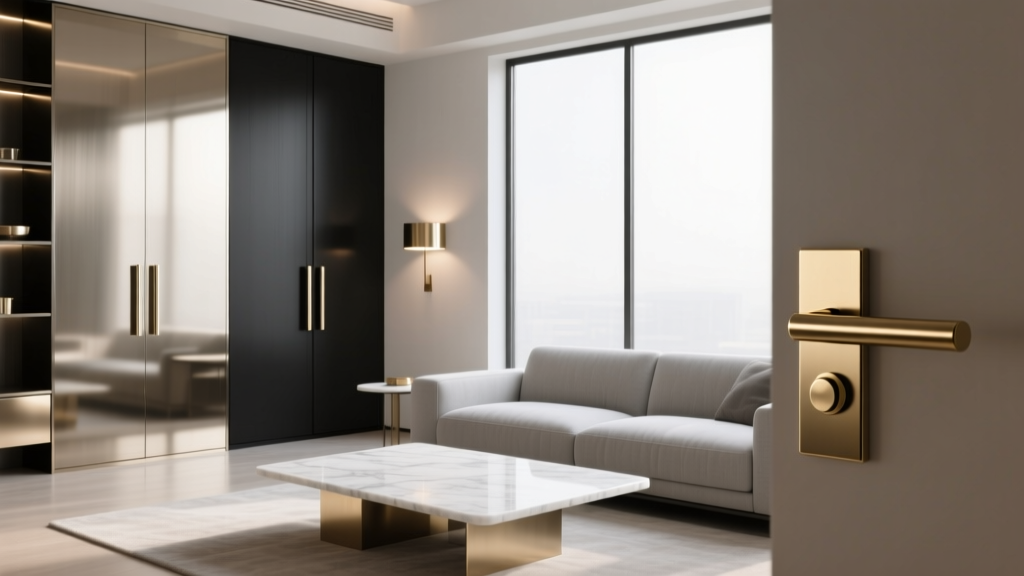
Mix Metal Finishes in Living Room Hardware (2026)
Walk into a well-designed living room and you’ll rarely see every metal finish perfectly matched. Instead, you’ll notice something more interesting: a thoughtful blend of tones that makes the space feel layered, intentional, and lived-in. Mixing metal finishes in living room hardware—think curtain rods, lighting, cabinet pulls, furniture legs, and fireplace accessories—can elevate a room from “nice” to “designer.”
The challenge is that metals are small details with big visual impact. A shiny chrome floor lamp can clash with an oil-rubbed bronze curtain rod, and suddenly the room feels disjointed. The good news: mixing metals is less about strict rules and more about balance, repetition, and choosing a clear anchor.
This guide breaks down exactly how to mix metal finishes in a living room without it feeling chaotic. You’ll learn the best finish combinations, how to choose an overall strategy, measurements that matter for hardware and fixtures, budget-friendly ways to update a room, and the most common mistakes homeowners and renters run into.
Why Mixed Metal Finishes Work So Well in Living Rooms
Living rooms usually include the widest variety of “hard” elements in the home—lighting, media consoles, tables, shelving, fireplace tools, and sometimes built-ins. If you match every metal perfectly, the space can feel flat. Mixing finishes adds depth and gives your room a curated look.
- It creates contrast (warm vs. cool, shiny vs. matte) and makes key pieces stand out.
- It looks more collected over time, which is ideal for renters or anyone decorating gradually.
- It bridges styles—for example, brass reads classic, black reads modern, and nickel reads timeless.
Know Your Metals: Warm, Cool, and Neutral Finishes
Before you start swapping hardware, get clear on what “family” each finish belongs to. This makes it much easier to mix without clashing.
Warm Metals
- Brass (polished, satin, unlacquered)
- Gold-tone finishes
- Copper (often best as an accent)
- Bronze (oil-rubbed bronze, antique bronze)
Cool Metals
- Chrome (high shine, modern)
- Polished nickel (softer than chrome, still reflective)
- Stainless steel
Neutral/Versatile Metals
- Matte black (not a metal, but a “metal-like” finish that pairs with everything)
- Brushed nickel (quiet, adaptable)
- Pewter / aged nickel (great for traditional and transitional rooms)
Trend + timeless takeaway: Matte black and aged brass remain top choices in current living room design trends because they’re bold but still classic when used thoughtfully.
The Easiest Rule: Pick a Dominant Finish + a Supporting Finish
If you want a living room that feels cohesive, choose:
- One dominant finish (about 60–70% of visible metal in the room)
- One secondary finish (about 30–40%)
- Optional accent finish (up to 10%, used sparingly)
This isn’t about counting every screw—it’s about visual weight. A large chandelier in brass carries more “metal presence” than a few small picture frames.
How to Choose Your Dominant Finish
- Start with what’s hardest to change: built-in hardware, a fireplace surround, or large lighting.
- If you’re buying new, choose based on the room’s vibe:
- Warm + inviting: aged brass, bronze, copper accents
- Modern + crisp: matte black, chrome, polished nickel
- Classic + flexible: brushed nickel, aged pewter
Step-by-Step: How to Mix Metal Finishes Without Guesswork
Step 1: Inventory Your Existing Metals
Take five minutes and list what’s already in your living room:
- Lighting (ceiling fixture, lamps, sconces)
- Curtain rod and rings
- Coffee table/end table legs
- Cabinet pulls on consoles or built-ins
- Fireplace screen/tools (if applicable)
- Door handle/hinges (visible from main seating area)
- Decor accents (mirror frames, trays, planters)
Pro tip: Snap a photo from your main seating position. That’s the “metal story” you’re actually seeing day to day.
Step 2: Choose a Finish Pairing That Naturally Complements
These combinations work reliably in living room decor:
- Brass + matte black: high-contrast, modern classic
- Brass + brushed nickel: warm meets neutral, very transitional
- Chrome + matte black: sleek and contemporary
- Oil-rubbed bronze + brass: vintage-leaning, cozy, collected
- Aged nickel + brass: subtle, designer-favorite mix
If you’re unsure, use matte black as a “bridge” finish—it plays well with both warm and cool metals.
Step 3: Repeat Each Finish at Least Twice
Repetition is the secret to making mixed metals look intentional. Aim for each finish to appear in at least two places that are visible from the main area.
- Example: Brass in a floor lamp + picture light
- Example: Matte black in a curtain rod + coffee table legs
Step 4: Mix Sheens, Not Just Colors
A room looks richer when you vary texture:
- Pair polished metal with brushed or matte finishes.
- Use hammered or antiqued finishes to soften contrast.
Quick guide: If your room already has shiny metals (chrome, polished nickel), balance them with at least one matte element (matte black hardware, aged brass, bronze).
Where Metal Finishes Show Up in Living Room Hardware (and What to Do)
Lighting: Your Biggest Metal Statement
Ceiling lights and floor lamps are often the first metal finishes you notice. If you’re updating lighting, prioritize a finish that works with most of your other pieces.
- Living room ceiling fixture sizing: a common rule is (room length + room width) in feet = fixture diameter in inches. Example: a 12’ x 14’ living room suits a 26” diameter fixture.
- Finish tip: If your chandelier is brass, echo brass in a smaller way (lamp base, mirror frame, tray).
Budget ranges:
- Flush mount/semi-flush: $80–$250 (budget), $250–$700 (mid-range)
- Floor lamps: $60–$180 (budget), $180–$600 (mid-range)
Curtain Rods and Rings: Small Swap, Big Payoff
Curtain hardware is an easy place to introduce a second finish. Matte black curtain rods are especially popular in current living room design because they frame windows cleanly and pair with nearly any palette.
- Rod width: extend the rod 6–12 inches beyond the window frame on each side for a larger-looking window.
- Rod diameter: 1 inch for standard curtains; 1 1/4 inch for heavier drapes.
- Finish tip: If you have brushed nickel lamps, a matte black rod can modernize the mix without trying to match exactly.
Budget ranges: $25–$70 (budget sets), $70–$200 (higher quality rods with sturdy brackets).
Cabinet Pulls on Media Consoles or Built-Ins
If your living room includes built-ins, a credenza, or a media console with doors, swapping pulls is one of the fastest ways to change the room’s metal profile.
- Standard pull spacing: common center-to-center sizes include 3”, 3 3/4” (96mm), and 5” (128mm).
- Material recommendation: choose solid brass or stainless steel for longevity; zinc alloy is budget-friendly but can wear faster.
- Finish tip: If you want mixed metals, use the console pulls as the “supporting finish” that repeats elsewhere.
Budget ranges: $3–$10 per pull (budget), $10–$30 per pull (mid-range), $30–$80+ (designer/handcrafted).
Fireplace Hardware and Accessories
For living rooms with fireplaces, the surround, screen, and tool set act like jewelry for the room.
- Matte black fireplace screens are timeless and hide soot well.
- Brass tools or a brass log holder adds warmth—especially in rooms with cool gray or white walls.
Real-World Mixing Metal Scenarios (That Actually Happen)
Scenario 1: The Rental Living Room with “Builder” Brushed Nickel
You have brushed nickel door hardware and maybe a ceiling fan you can’t replace. Instead of fighting it, make brushed nickel your neutral base.
- Dominant: brushed nickel (keep existing)
- Secondary: matte black (curtain rod, frames, coffee table legs)
- Accent: warm brass (a lamp or decorative tray)
This creates a modern, high-contrast look while letting the rental-fixed finishes fade into the background.
Scenario 2: The Traditional Living Room That Feels Dated
If you have lots of bronze or ornate details, adding a cleaner metal can refresh the room without removing character.
- Dominant: oil-rubbed bronze (existing)
- Secondary: aged brass (lighting or mirror frame)
- Tip: choose satin/aged brass, not high-polish, to keep it classic.
Scenario 3: The Modern Living Room That Feels Cold
All chrome and glass can look sleek—but a little sterile. Warm metals add comfort.
- Dominant: chrome or polished nickel (existing lighting/table legs)
- Secondary: brass (floor lamp, picture light, cabinet pulls)
- Tip: repeat brass at least twice so it reads as a design choice, not a random add-on.
Product Recommendations (Finish Choices That Mix Well)
Rather than brand-specific picks that may change seasonally, these are reliable product types and finishes that consistently work in living room decor:
- Matte black curtain rod set with sturdy brackets (pairs with brass, nickel, chrome).
- Aged brass table lamp with an off-white linen shade (adds warmth without glare).
- Brushed nickel or aged nickel cabinet pulls for consoles (a true “bridge finish”).
- Mixed-metal lighting (black + brass, or nickel + brass) for an instant layered look.
- Antiqued mirror frame (aged gold or pewter) to soften a modern room.
Common Mistakes to Avoid When Mixing Metal Finishes
- Using too many finishes at once: Three can work, but only if the third is minimal. If your room already feels busy, stick to two.
- Trying to match metals perfectly: “Almost the same” is often worse than intentionally different. If it’s not an exact match, treat it as a mix and make it look deliberate through repetition.
- Forgetting undertones: Brass can lean yellow, orange, or muted; silvers can be icy or warm. Compare metals in the same lighting before buying.
- Ignoring sheen: A room full of high-gloss metal can feel harsh. Balance shine with matte or brushed textures.
- Not connecting the mix: If brass appears only once, it looks accidental. Repeat it in a second spot (lamp + frame, or pulls + tray).
- Over-accessorizing: Too many small metallic decor items can read as clutter. Choose a few larger, more intentional pieces.
FAQ: Mixing Metal Finishes in Living Room Design
Can you mix chrome and brass in a living room?
Yes, and it’s a popular high-contrast combination. The trick is to repeat each finish at least twice (for example, chrome in a floor lamp and table legs; brass in a ceiling fixture and a mirror frame) and consider adding a matte black element to ground the palette.
How many metal finishes should a living room have?
Two is the easiest and most foolproof. Three can work if one is clearly dominant, one is secondary, and the third is a small accent (around 10% of what you see).
Do door handles and hinges need to match living room hardware?
Not necessarily. If the doors are visible from the main seating area, treat the door hardware as part of your dominant finish or a neutral. If they’re out of sight, you can ignore them and focus on lighting, curtain hardware, and furniture metals.
What metal finish is most timeless for living room fixtures?
Brushed nickel and aged brass are both strong timeless choices. Brushed nickel blends easily with other metals, while aged brass adds warmth and character without feeling overly trendy.
How do I mix metals if I already have a black TV and dark furniture?
Use matte black hardware selectively so it doesn’t feel heavy—think curtain rod or a single black accent table. Then bring in a warmer metal like brass through lighting or cabinet pulls to add brightness and contrast.
What’s the most budget-friendly way to start mixing metals?
Swap a curtain rod, update cabinet pulls on a console, or add one statement lamp in a new finish. These changes typically fall in the $30–$200 range and can shift the whole room’s look without major renovations.
Next Steps: A Simple Plan You Can Do This Weekend
- Take one photo of your living room from the main seating spot and identify the metals you see most.
- Choose your dominant finish (usually existing lighting, a fireplace surround, or built-in hardware).
- Select a supporting finish that complements it (matte black, aged brass, brushed nickel are the easiest).
- Repeat the supporting finish twice—for example, curtain rod + lamp, or pulls + mirror frame.
- Edit the extras so metallic decor looks intentional, not scattered.
Mixing metal finishes in living room hardware is one of those design moves that looks sophisticated when it’s done with purpose—yet it’s totally achievable with a few smart swaps and a clear plan.
Looking for more living room design and decor ideas? Browse the latest inspiration, layout tips, and styling guides on thedecormag.com.
More Articles
 Stylish Room Alternatives for Modern Living Spaces 2026
 Living Room Ideas That Feel Like Home (2026)
 Living Room Tray Ceiling Design Ideas - The Decor Mag
 Living Room Warm vs Cool Tone Balancing - The Decor Mag
 How to Create a Cozy Winter Living Room - The Decor Mag
 Designing a Workspace That Fuels Creativity
 Maximalist Living Room Decor Done Right - The Decor Mag
 Exposed Beams Living Room Decor (2026)
 Bay Window Living Room Decor Ideas (2026)
 How to Create a Living Room Color Story - The Decor Mag