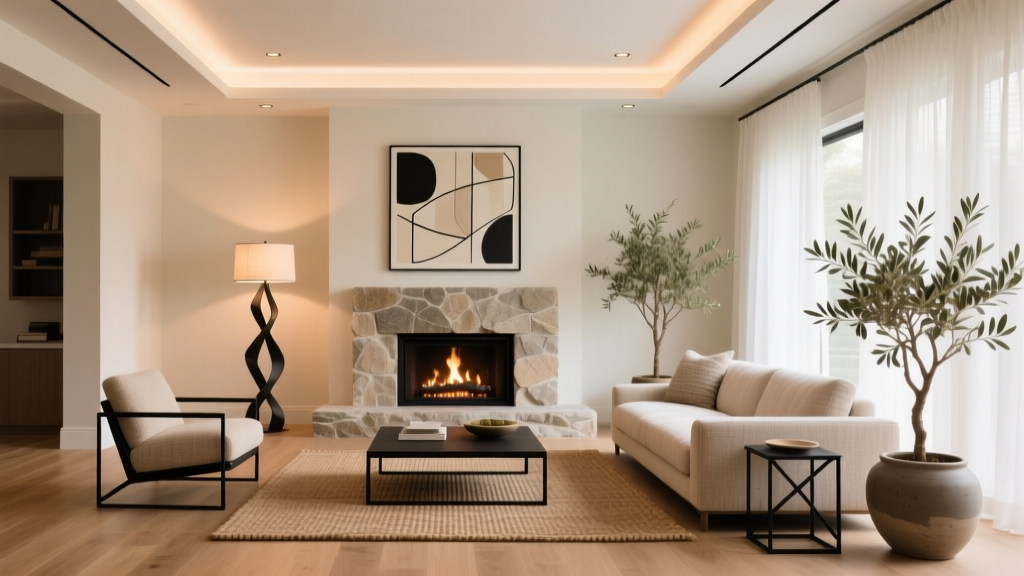
Living Room Fireplace Styling Ideas (2026)
A fireplace has a way of pulling a room together. Even when it’s not lit, it reads as a natural focal point—a built-in “anchor” that can make a living room feel finished, cozy, and intentional. But it can also create tricky layout questions: Where does the sofa go? Do you put the TV above the mantel? How do you balance the visual weight of a big stone surround?
This guide walks you through styling a living room around a fireplace step by step, whether you’re working with a wood-burning classic, a modern linear gas fireplace, or a renter-friendly electric insert. You’ll learn practical measurements, furniture layouts that actually work, mantle and hearth styling tips, and budget-friendly upgrades that make a big difference—plus common mistakes to avoid.
Start with the Fireplace: Identify What Kind of Focal Point You Have
Before moving furniture or shopping for decor, take a quick inventory. The shape, height, and material of your fireplace should influence everything from your seating arrangement to your lighting choices.
Common fireplace types and what they suggest
- Traditional masonry fireplace (brick/stone): Often visually heavy. Balance with lighter furniture silhouettes and layered textiles.
- Modern linear fireplace: Long and sleek. Works beautifully with low-profile seating, minimal mantels, and large-scale art.
- Corner fireplace: Great for cozy conversation zones; layout often benefits from a sectional or angled chairs.
- Double-sided (see-through) fireplace: Treat as a room divider; create two zones with complementary palettes.
- Electric fireplace or insert: Ideal for renters; styling matters most—surround, media console, and wall decor do the heavy lifting.
Measure before you plan
These measurements will guide furniture scale and décor proportions:
- Fireplace width and height: Measure surround and opening.
- Mantel height from floor: Common range is 48–60 inches. A higher mantel can handle taller decor.
- Hearth depth: Typical is 12–20 inches. This affects whether you can use it for occasional seating or styling.
- Clearances: If functional, keep combustibles (drapes, baskets, pillows) away from heat sources. Follow manufacturer guidance for inserts.
Choose Your “Hero” Moment: Fireplace, TV, or Both?
Most living rooms end up negotiating between the fireplace and the television. Decide what you want to visually prioritize and what you realistically use most.
Option A: Fireplace-first (best for conversation-focused rooms)
If you entertain often or want a calm, design-forward space, let the fireplace be the main event. Place seating to face it directly or in a U-shape around it. The TV can live elsewhere (a side wall, a media cabinet, or even a Frame-style TV that reads like art).
Option B: Shared focal point (TV near the fireplace)
When the room layout demands it, you can make both work—without sacrificing style.
- TV over the mantel: Use a mantelmount style bracket if you’re worried about viewing height. Visually soften with a substantial mantel and minimal clutter.
- TV beside the fireplace: Works well when the fireplace is off-center. Balance the opposite side with a tall bookcase, large plant, or floor lamp.
- TV on a console opposite the fireplace: Ideal if the fireplace is decorative and you prefer correct screen height.
Quick comfort guideline for TV height
For everyday viewing, the center of the TV screen typically feels best at about 42 inches from the floor (eye level when seated). Over-mantel TVs are usually higher, so consider a pull-down mount or limit screen size to avoid neck strain.
Furniture Layouts That Work Around a Fireplace (With Measurements)
Good living room design is mostly spacing. Start with the largest pieces and build outward. Below are reliable, real-world layouts that suit common room shapes.
Layout 1: Classic conversation U-shape
Best for: Wider rooms, traditional fireplaces, and hosting.
- Place a sofa facing the fireplace, centered if possible.
- Add two accent chairs opposite each other (or slightly angled) to form a U.
- Center a coffee table on the seating zone.
Spacing targets:
- 30–36 inches walkway clearance behind seating when possible
- 16–18 inches between sofa and coffee table
- 7–10 feet between conversation seats for comfortable talking distance
Layout 2: L-shaped sectional facing the fireplace
Best for: Families, TV-friendly rooms, corner fireplaces, and open-plan spaces.
- Float the sectional so the longer side faces the fireplace.
- Anchor with a large rug and a substantial coffee table or ottoman.
- Add one swivel chair to “close the loop” and improve conversation flow.
Rug sizing tip: For most living rooms, a 9' x 12' rug makes the space feel intentional. Aim to fit at least the front legs of all seating on the rug.
Layout 3: Small living room with a fireplace (apartment-friendly)
Best for: Renters, narrow rooms, and compact seating needs.
- Use a 72–84 inch sofa (rather than a deep sectional).
- Choose armless or slim-arm chairs to reduce visual bulk.
- Swap a big coffee table for a round one (about 30–36 inches diameter) or nesting tables.
Real-world scenario: In a 12' x 14' living room with a centered fireplace, a 78" sofa opposite the hearth, two petite swivel chairs, and a 5' x 8' rug can feel balanced—especially when you keep side tables light and add vertical interest with sconces or tall drapery panels.
Rugs, Lighting, and Color: The Layers That Make the Fireplace Feel Intentional
Rug placement to anchor the hearth zone
- Leave 8–12 inches of floor showing between the rug and the hearth in most rooms.
- If your fireplace wall is heavy (stone, dark brick), choose a rug with warmth and pattern to soften it.
- For modern rooms, a low-pile wool or wool-blend rug keeps it clean and tailored.
Lighting for glow (even when the fire is off)
A fireplace creates ambiance, but it rarely provides functional light. Use layered lighting so the room feels inviting day or night:
- Overhead: A semi-flush, chandelier, or track system for general illumination
- Task lighting: Floor lamp near the sofa, table lamps on side tables
- Accent lighting: Picture lights, sconces flanking the fireplace, or an uplight behind a plant
Trend watch: Warm, brushed metals (antique brass, aged bronze) and sculptural ceramic lamps are showing up everywhere—and they pair beautifully with both traditional and modern fireplaces.
Color palette: match the undertone, not the exact shade
If your fireplace has strong color (red brick, cool gray stone, warm beige tile), don’t try to “match” it. Instead, choose a palette that complements its undertone:
- Warm brick: Cream, camel, olive, terracotta accents
- Cool stone: Soft whites, charcoal, dusty blue, black accents
- Black surround: High-contrast neutrals, walnut wood, deep greens
How to Style the Mantel and Surround (Without Clutter)
When people search for fireplace decor ideas, they often picture the mantel first. The goal is a styled look that still feels breathable.
A simple mantel styling formula
- Start with one anchor: A mirror or large art piece. Aim for about 2/3 the width of the mantel (visually).
- Add height variation: A tall vase, candlesticks, or a sculptural object on one side.
- Layer one or two smaller pieces: A small framed photo, a bowl, or a short stack of books.
- Finish with something organic: Branches, greenery, or a subtle garland (seasonal if you like).
Proportion tips that prevent “mantel chaos”
- Keep decor depth modest: 6–10 inches deep reads tidy on most mantels.
- Use odd numbers (3 or 5 items) for a relaxed, styled feel.
- Leave at least 20–30% of the mantel surface empty for breathing room.
Hearth styling ideas (function-friendly)
- Wood storage: A black metal log holder or built-in niche looks polished.
- Fireplace tools: Choose a matching set in matte black or antique brass.
- Decorative baskets: Great for blankets—just keep them away from active heat.
- One oversized object: A ceramic pot or lantern can look more expensive than many small items.
Product Recommendations and Budget Ranges (High Impact, Realistic)
You don’t have to renovate to get a living room that feels pulled together. These upgrades give the biggest payoff around a fireplace.
Budget-friendly upgrades ($50–$300)
- Oversized round mirror (30–40"): Brightens the room and adds height
- Two matching sconces (plug-in): Renters can use plug-in styles with cord covers
- Fireplace screen: Matte black or aged brass for a timeless look
- Tile decals (renters): For dated tile surrounds—choose heat-safe options and follow brand guidance
Mid-range upgrades ($300–$1,500)
- New mantel shelf: White oak, walnut, or painted MDF (simple profile looks current)
- Area rug (8' x 10' or 9' x 12'): Wool or wool-blend for longevity
- Media console: If your TV isn’t over the fireplace, a long console balances the room
Renovation-level upgrades ($1,500–$8,000+)
- Refacing the surround: Slab-look porcelain, limewash brick, or microcement for modern texture
- Built-ins: Shelving flanking the fireplace creates symmetry and storage
- New insert: Gas or electric for efficiency and ease (professional installation recommended)
Real-World Styling Scenarios
Scenario 1: Off-center fireplace in a rental
If the fireplace is on one side of the room, trying to force symmetry can make the space feel awkward. Instead:
- Float the sofa facing the fireplace and TV (if nearby).
- Balance the opposite side with a tall bookcase or a large plant (6–7 feet tall works well).
- Use a large rug to unify everything and keep the seating group centered on the rug—not the fireplace.
Scenario 2: Heavy stone fireplace that dominates
Lean into contrast and softness:
- Add a light, textured rug (ivory wool, subtle pattern).
- Choose upholstery with softness (bouclé, linen blend) and curved shapes.
- Keep mantel decor minimal: one large art piece + one sculptural vase is enough.
Scenario 3: Modern linear fireplace in an open-plan living room
Modern fireplaces look best with intentional restraint:
- Go low and long with furniture: a 90–100" sofa and a sleek coffee table.
- Repeat clean lines in the decor (rectangular mirror, simple vases).
- Warm it up with wood tones (walnut console, oak side table) and a plush rug.
Common Mistakes to Avoid When Decorating Around a Fireplace
- Pushing all furniture against the walls: Float seating to create a cozy conversation zone centered on the fireplace.
- Choosing a rug that’s too small: A small rug makes the room feel disconnected. When in doubt, size up.
- Overcrowding the mantel: Too many small objects reads cluttered. Prioritize scale and negative space.
- Mounting the TV too high without a plan: If the TV must go above the fireplace, use a pull-down mount or choose seating that reduces neck strain.
- Ignoring asymmetry: Off-center fireplaces are common. Balance the room with furniture and lighting rather than forcing perfect symmetry.
- Using flammable decor too close to heat: Keep textiles, paper, and baskets at a safe distance from active fireplaces and follow clearance guidelines.
FAQ: Styling a Living Room Around a Fireplace
Should my sofa face the fireplace?
If the fireplace is the main focal point and you use it often, yes—placing the sofa facing it is usually the most natural layout. If your household prioritizes TV viewing, angle the sofa to acknowledge both or place the TV at a comfortable viewing height on a nearby wall.
Is it okay to put a TV above the fireplace?
It can be, especially with gas or electric units designed for it, but comfort and heat management matter. Use a mantel or heat deflector if needed, follow manufacturer specs, and consider a pull-down TV mount to improve viewing height.
How do I decorate a fireplace when I don’t use it?
Try a decorative screen, candles in hurricane holders, or a curated stack of logs. If it’s non-functional, you can also fill the firebox with oversized lanterns or a single sculptural object for a clean, modern look.
What size art should go above a mantel?
A good rule is around two-thirds the width of the mantel. For many standard mantels, that lands in the 36–60 inch width range. If you’re using a vertical piece, increase height so it doesn’t feel undersized.
How far should furniture be from a fireplace?
For comfort and safety, many living rooms look and feel best with the main seating about 7–9 feet from the fireplace, adjusting based on room size and heat output. Always follow safety clearances for active fireplaces and inserts.
How can renters update a dated fireplace surround?
Focus on reversible changes: a plug-in sconce pair, peel-and-stick solutions approved for your surface and heat conditions, a substantial mantel-style shelf (if allowed), a large mirror, and upgraded accessories like a modern screen or tool set.
Next Steps: A Simple Plan to Pull Your Fireplace Living Room Together
- Measure your fireplace wall (width, mantel height, hearth depth) and sketch your room.
- Choose your focal priority (fireplace, TV, or shared) before moving furniture.
- Set the layout with spacing targets (16–18" to the coffee table, 30–36" for walkways).
- Anchor with the right rug size (often 8' x 10' or 9' x 12') and layer lighting.
- Style the mantel with restraint using one anchor piece and a few supporting elements.
If you’re ready for more living room design inspiration—layouts, color palettes, fireplace decor ideas, and renter-friendly upgrades—explore more guides and trend roundups on thedecormag.com.
More Articles
 Warm, Sustainable Wood Living Spaces for 2026
 Best Square Living Room Layouts (2026)
 Living Room Layered Rug Ideas - The Decor Mag
 Best Paint Colors for North-Facing Living Rooms (2026)
 Living Room Polished Bohemian Style - The Decor Mag
 Best Wall Art Sizes for Over the Sofa - The Decor Mag
 How to Style a Living Room with Dark Walls - The Decor Mag
 Living Room Bold Color Accent Ideas - The Decor Mag
 Living Room Lighting Ideas (2026) | The Decor Mag
 Cozy Farmhouse Living Room Decor Tips - The Decor Mag