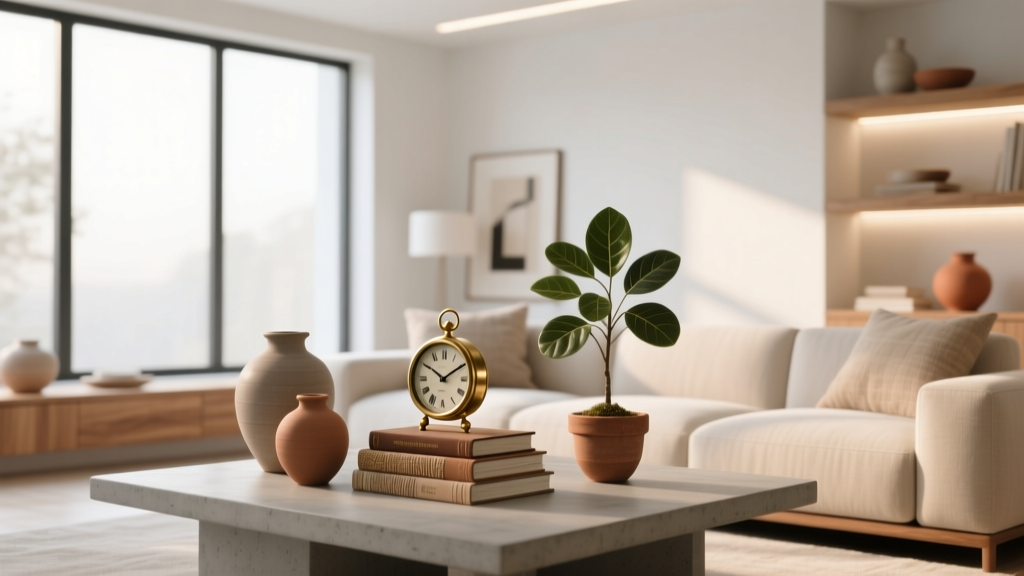
Living Room Curated Collections Display - The Decor Mag
A living room can be beautifully furnished and still feel a little unfinished if it lacks personality. That’s where curated collections come in. A thoughtful display—whether it’s ceramics from your travels, vintage books, framed photos, or a rotating set of art prints—adds the lived-in character that makes a space feel like yours, not a showroom.
The best part: you don’t need a massive budget or a huge home. Curated collections work for renters and homeowners alike because they’re flexible, editable, and often built from what you already own. Done well, a collection becomes a design anchor that ties your living room decor together—color, texture, scale, and story—while also keeping visual clutter in check.
This guide walks you through how to plan, style, and maintain a curated collection display in your living room. You’ll learn where to place collections, how to group items like a pro, the right measurements for shelves and wall art, what materials and lighting work best, plus common mistakes to avoid.
What Counts as a “Curated Collection” (and Why It Works)
A curated collection is a deliberate grouping of objects with a unifying thread—color palette, material, era, theme, or function—arranged with intention. The key word is “curated”: edited, not endless.
Popular curated collection ideas for living rooms
- Books (by color, genre, height, or binding style)
- Ceramics (vases, bowls, handmade pottery)
- Art (gallery wall, print series, photography)
- Collected objects (travel mementos, shells, stones, small sculptures)
- Vintage finds (cameras, brass pieces, apothecary bottles)
- Textiles (framed scarves, woven wall hangings, mini quilts)
- Records and music memorabilia (vinyl + framed album art)
Collections work because they create a focal point and add layered detail—the hallmark of both timeless design and current trends like “quiet luxury,” organic modern, and updated traditional. Even minimalism benefits from a single well-edited vignette that feels personal.
Start Here: Choose Your Collection Theme and Color Story
If your living room currently feels “busy,” the solution isn’t getting rid of everything—it’s choosing a clearer storyline.
A simple method: Theme + Palette + Texture
- Theme: What’s the collection about? (Travel, art, ceramics, books, nature, vintage.)
- Palette: Pick 2–4 main colors that already exist in the room (from rug, sofa, curtains, or art).
- Texture: Mix finishes for depth (matte + glossy, rough + smooth, woven + ceramic).
Quick color-palette shortcuts
- Neutral rooms: Try warm whites + tan + black accents + one muted color (sage, clay, dusty blue).
- Colorful rooms: Keep the collection tighter—pull two colors from the rug and repeat them throughout the display.
- Small spaces: Use tonal styling (multiple shades of the same color) for a calmer look.
Budget note: Curated displays can cost anywhere from $0–$150 if you’re using what you have plus a few styling helpers (frames, risers, bookends). A more substantial built-in shelf refresh may land closer to $300–$1,500+, depending on lighting, hardware, and whether you upgrade shelving.
Where to Display Collections in the Living Room
Placement matters as much as the objects themselves. The goal is to create a cohesive moment that feels integrated with your living room design.
1) Built-in shelves and bookcases
Best for: books, ceramics, framed photos, small art, sculptural objects.
- Shelf depth: 10–12 inches works for most decor pieces and books.
- Vertical spacing: 12–16 inches between shelves allows room for vases and framed art.
- Proportion tip: Leave about 20–30% of shelf space open to avoid a packed, cluttered look.
2) The mantel or media console
Best for: layered art, candleholders, ceramics, a few books, a tray vignette.
- Scale tip: For a console, aim for one main anchor piece (like a large framed print) that’s 2/3 the width of the console, then build around it.
- Cable control: Use adhesive cord clips or a cable raceway to keep the display polished.
3) Coffee table and side tables
Best for: a micro-collection—3 to 7 items max.
- Tray size: Choose a tray about 1/2 to 2/3 the width of your table to “contain” the grouping.
- Functional rule: Keep at least 40% of the surface clear for cups, remotes, or a laptop.
4) Gallery walls and picture ledges
Best for: art collections, family photos, vintage posters, a mix of frames.
- Hanging height: Center of the arrangement at 57–60 inches from the floor (gallery standard).
- Spacing: Keep frames 2–3 inches apart for a cohesive grid; 3–4 inches for an eclectic look.
- Picture ledges: Install at least 4–6 inches above furniture backs to avoid bumps.
How to Style a Curated Collection: A Step-by-Step Formula
If you’ve ever arranged objects and felt like something was “off,” it’s usually one of these: scale, repetition, or lack of negative space. This styling formula solves all three.
Step 1: Pick your anchors (the “tall,” the “wide,” and the “statement”)
- Tall: A vase, lamp, or vertical framed art (roughly 16–28 inches tall depending on surface).
- Wide: A bowl, tray, or horizontal stack of books.
- Statement: Something sculptural or meaningful (a unique thrift find, a travel piece, a bold art object).
Step 2: Build in layers (front-to-back depth)
- Lean art at the back, place medium objects in the middle, and smaller items up front.
- On shelves, stagger objects so not everything sits on the same visual line.
Step 3: Use the “rule of three” (and break it when scale demands)
Groups of 3 or 5 often look most natural. If you’re styling a long shelf, repeat three-item clusters with breathing room between them.
Step 4: Repeat one element across the display
Repetition is what makes a collection feel curated instead of random. Repeat:
- a finish (black metal, brass, warm wood)
- a color (navy, cream, terracotta)
- a shape (round bowls, cylinder vases)
- a material (stone, glass, rattan)
Step 5: Add one “softener” for warmth
Collections can skew hard and shiny. Add one organic element:
- a small plant (pothos, snake plant, olive stem)
- a woven box
- a linen-bound book
- a fabric-covered storage bin
Product Recommendations That Make Collections Look Intentional
You don’t need a shopping spree—just a few support pieces that upgrade the look of what you already have. These are the unsung heroes of stylish living room styling.
Display essentials (with budget ranges)
- Picture ledges (wood or powder-coated metal): $20–$120
- Frames (matched set for cohesion): $8–$40 each; sets often $40–$150
- Decorative trays (wood, lacquer, stone): $20–$150
- Bookends (stone, metal, acrylic): $15–$80
- Risers/pedestals (wood block, marble slab): $15–$70
- Basket or lidded box for hidden clutter: $25–$150
Materials that look elevated (and why)
- Solid wood or wood veneer: warm, timeless, works with nearly any style
- Travertine, marble, or stone: adds weight and sophistication; great for modern organic trends
- Brass (or brushed gold): brings warmth; pairs well with creams, greens, and deep blues
- Black metal: sharpens a soft palette; excellent for modern and industrial touches
- Rattan or cane: softens hard surfaces and fits coastal, boho, and eclectic rooms
Real-World Styling Scenarios (Homeowner and Renter Friendly)
Scenario 1: The renter with blank walls and a small living room
You want personality without patching a dozen nail holes.
- Use two 36–48 inch picture ledges stacked vertically (about 10–12 inches apart).
- Style with 5–7 frames (mix sizes), one small plant, and a candleholder.
- Stick to a tight palette (black + white + one accent color) for a clean, curated feel.
Estimated budget: $80–$250 depending on frames and ledges.
Scenario 2: The family living room that keeps collecting “stuff”
You love your home, but surfaces become drop zones fast.
- Create a tray vignette on the coffee table: 2 books + a bowl + one decorative object.
- Add a lidded box on the media console for remotes and gaming accessories.
- Dedicate one shelf basket to kid-friendly items (cards, small toys) so the room resets quickly.
Estimated budget: $60–$200.
Scenario 3: The homeowner with built-ins that feel busy
Built-ins can look cluttered when every shelf is filled edge-to-edge.
- Remove everything and sort into: keep, relocate, donate.
- Limit decor to 3–4 materials across all shelves (example: wood + white ceramic + black metal + books).
- Use the triangle method: repeat a color at three different heights to guide the eye.
- Leave at least 20% open space per shelf.
Estimated budget: $0–$300 for a refresh; $300–$1,500 if adding lighting, paint, or upgrading hardware.
Lighting Your Collections (The Detail That Changes Everything)
Lighting is a current design trend for a reason—collections look more intentional when they’re gently highlighted.
Easy lighting options
- Battery puck lights for shelves (look for warm 2700K–3000K): $20–$80
- LED strip lighting under shelves or behind a media console: $25–$150
- Picture lights over a gallery wall or single statement artwork: $60–$300
Tip: Avoid bulbs above 3500K in cozy living rooms—they can make collections feel harsh and clinical. Warm light keeps the room inviting.
Common Mistakes to Avoid (and Quick Fixes)
- Mistake: Displaying everything you own.
Fix: Edit down by 25–40%. Rotate seasonally so your favorites get their moment. - Mistake: All items are the same height.
Fix: Add one taller anchor (vase, lamp, vertical art) and vary heights using risers or stacked books. - Mistake: Too many tiny objects.
Fix: Group small items on a tray or in a shallow bowl so they read as one visual unit. - Mistake: No connection to the room’s palette.
Fix: Pull one color from your rug or pillows and repeat it 2–3 times in the collection. - Mistake: Shelves packed to the edge.
Fix: Build in negative space; leave breathing room around statement pieces. - Mistake: Glare and reflections on framed items.
Fix: Use matte frames or anti-reflective acrylic, and angle lighting away from glass surfaces.
FAQ: Living Room Curated Collections Display
How do I make my living room decor look curated and not cluttered?
Use fewer pieces with stronger presence, repeat a color or material, and leave open space. A simple rule: if you can’t describe the theme of the display in one sentence, it needs editing.
How many items should be on a coffee table display?
Aim for 3–7 items total, often grouped as a tray + books + one decorative object. Keep at least 40% of the table clear for everyday use.
What’s the best height to hang a gallery wall in the living room?
Center the overall arrangement at 57–60 inches from the floor. If it’s above a sofa or console, keep the bottom of the frames about 6–8 inches above the furniture.
Should all my frames match?
No, but they should relate. Matching frames look clean and modern; mixed frames feel collected and eclectic. If you mix, repeat at least one element—like all black frames, or all white mats—to keep it cohesive.
What are the best shelf dimensions for displaying decor?
For most living rooms, shelves 10–12 inches deep with 12–16 inches of vertical clearance handle books, framed art, and decor comfortably. Deeper shelves (14 inches) are useful for oversized art books and larger ceramics.
How do I decorate with collections in a rental without damaging walls?
Try leaning art on consoles or shelves, use picture ledges with minimal anchors, and add tabletop displays (trays, stacks of books, decorative boxes). Removable hanging strips can work for lightweight frames—always check weight ratings.
Your Next Steps: Create a Display That Feels Like You
Start small. Choose one surface—your media console, a bookcase shelf, or a coffee table—and build a collection display using what you already own. Edit it down, add one anchor piece for scale, repeat a finish or color for cohesion, and give everything a little breathing room. Once that first display feels right, repeat the same principles elsewhere in the room for a layered, intentional look.
For more approachable, real-home ideas on living room design, living room decor, and styling tips that work in rentals and forever homes, explore more inspiration on thedecormag.com.
More Articles
 Living Room That Feels Collected: Decor Tips
 Mix Wood Tones in Living Room Furniture (2026)
 Living Room Built-In Shelving Ideas - The Decor Mag
 Living Room Statement Piece Furniture Guide - The Decor Mag
 Best Chaise Lounge Placement Ideas - The Decor Mag
 Best Storage Ottoman Picks - The Decor Mag
 How to Decorate a Long Narrow Living Room - The Decor Mag
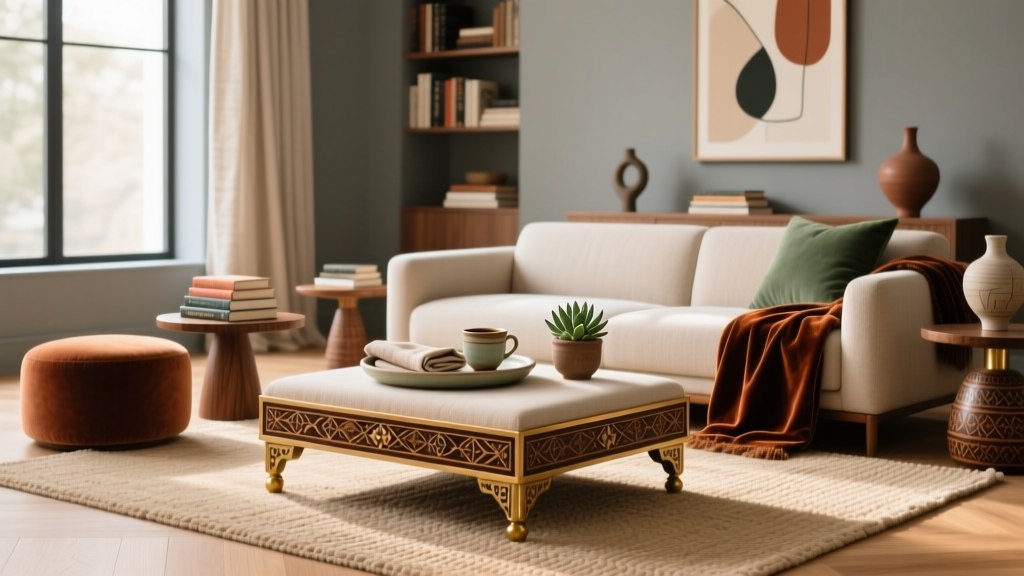 Best Ottoman Coffee Table Combinations - The Decor Mag
 Budget-Friendly Smart Organization Ideas for 2026
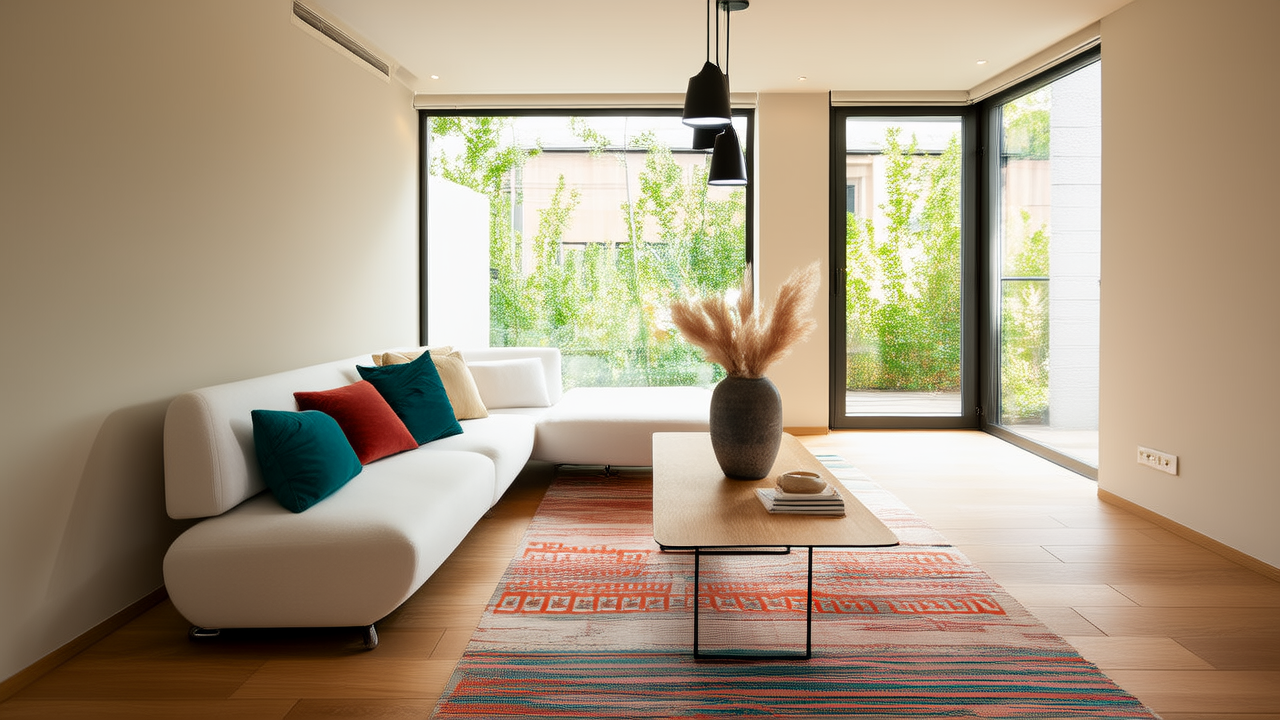 Living Room Foundations: Support, Ergonomics, Comfort