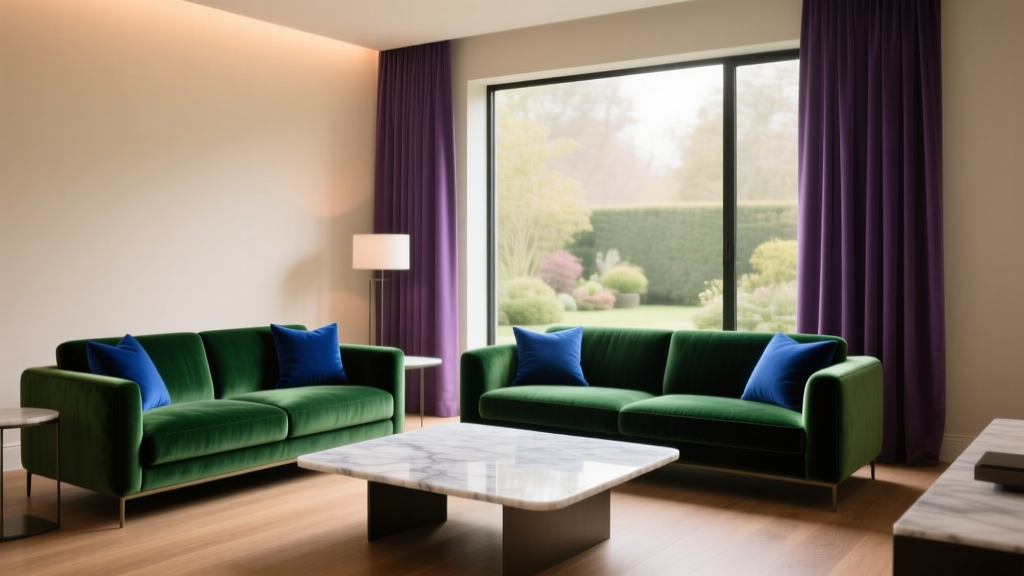
Living Room Jewel Tone Inspiration - The Decor Mag
Jewel tones have a way of making a living room feel instantly richer, warmer, and more “designed”—without needing a full renovation. Think emerald, sapphire, amethyst, ruby, and smoky topaz: saturated hues with depth that play beautifully with light, texture, and everyday wear. They’re dramatic enough to feel special, yet versatile enough to live with year-round.
If you’ve ever worried that bold color will overwhelm a small space (or a rental), jewel tones are the happy medium. They read as sophisticated rather than loud, especially when balanced with the right neutrals and materials. This guide will walk you through how to choose the best jewel tone palette for your living room, where to place color for maximum impact, what materials elevate the look, and how to avoid common pitfalls like mismatched undertones or a room that feels too dark.
You’ll also find practical measurements, budget ranges, renter-friendly strategies, real-world room scenarios, and product recommendations to help you pull everything together confidently.
What Counts as a Jewel Tone (and Why They Work So Well)
Jewel tones are highly saturated colors inspired by gemstones. Unlike neon brights, they have a slightly muted, complex base that feels grounded—perfect for living room decor where you want comfort and longevity.
- Emerald / Forest Green: Luxurious, calming, and a current favorite in modern living rooms.
- Sapphire / Navy / Cobalt: Classic, tailored, and excellent for grounding open-plan spaces.
- Amethyst / Plum: Moody and artistic, ideal with brass accents and warm lighting.
- Ruby / Garnet / Oxblood: Cozy and dramatic, great for traditional or eclectic rooms.
- Topaz / Amber: A warm jewel tone that pairs beautifully with walnut wood and creams.
Trend meets timeless: Jewel tones are showing up in 2025 interiors alongside warmer neutrals (oatmeal, camel, clay) and vintage-inspired silhouettes. They also align with timeless design principles—strong contrast, layered textures, and a clear color story—so they won’t feel dated quickly.
Start Here: Pick a Palette That Matches Your Space
Step 1: Choose Your “Hero” Color
Pick one jewel tone to lead the room, then support it with neutrals and one or two accents. This approach keeps your living room design cohesive.
- For bright rooms: Emerald, cobalt, and ruby look vivid and energetic.
- For low-light rooms: Sapphire, plum, and deep green can work, but balance them with lighter rugs, pale walls, and layered lighting.
- For small living rooms: Use jewel tone in textiles (pillows, curtains, rug) or a single statement piece rather than every surface.
Step 2: Anchor with Neutrals That Make Jewel Tones Shine
Neutrals stop jewel tones from feeling heavy. Choose a base that fits your home’s architecture and your preferred vibe:
- Warm neutrals: ivory, cream, greige, camel, mushroom (excellent with emerald and ruby)
- Cool neutrals: crisp white, cool gray, charcoal (excellent with sapphire and amethyst)
- Earthy neutrals: clay, taupe, sand (excellent with topaz and forest green)
Pro tip: Keep your largest surfaces neutral (walls, main sofa, rug) if you’re nervous. Let jewel tones take the spotlight in medium and small doses.
Step 3: Add One Metallic and One Wood Tone
Material choices are what make jewel tones look expensive rather than costume-like.
- Metal: brass (warm + vintage), polished nickel (cool + modern), blackened steel (moody + industrial)
- Wood: walnut (rich), oak (light + airy), espresso (dramatic)
Where to Use Jewel Tones (Without Overdoing It)
1) The Statement Sofa Route
A jewel tone sofa is the fastest way to transform your living room decor. It becomes the room’s “hero piece,” so everything else can be simpler.
Best upholstery materials:
- Performance velvet: plush look with easier maintenance than traditional velvet
- Mohair or mohair-look blends: luxe texture, great depth of color
- Textured weaves: more casual, excellent for families and pets
Sizing guide:
- Small living room: 72–84" sofa (2–3 seat)
- Medium living room: 84–96" sofa
- Large/open plan: 96–110" sofa or sectional
Budget range: $900–$2,500 for many quality mid-range sofas; $2,500–$6,000+ for premium tailoring and high-performance fabrics.
2) The Accent Chair + Ottoman Formula
If you’re renting, redecorating gradually, or sharing a space with someone color-shy, jewel tone accent seating delivers impact without commitment.
- Try an emerald chair + cream sofa + brass floor lamp.
- Or a plum chair + gray sectional + walnut side table.
Placement tip: Leave 30–36" for primary walkways and aim for 14–18" between a chair and coffee table edge for comfortable legroom.
3) Jewel Tone Walls (Paint, Wallpaper, or a Rental-Friendly Alternative)
Painting a wall jewel-toned can be stunning, especially in rooms with good natural light. If you’re nervous, start with one accent wall behind the sofa or a built-in.
- Best wall finishes: matte or eggshell for a cozy, modern feel; satin for higher durability in high-traffic homes
- Wallpaper: look for jewel backgrounds with metallic or tone-on-tone pattern for depth
- Rental-friendly: peel-and-stick wallpaper, large-scale fabric panels, or removable mural panels
Paint planning: One gallon typically covers 350–400 sq ft. For deep jewel tones, budget for 2 coats (sometimes 3), plus primer if you’re covering a bright color.
Budget range: $50–$120 per gallon for paint; $200–$900 for wallpaper depending on brand and coverage.
4) Rugs, Curtains, and Pillows: The Layered Color Strategy
This is the most flexible way to bring jewel tones into a living room—ideal for renters and anyone who likes to refresh seasonally.
- Rug sizing:
- For most living rooms, choose 8' x 10' or 9' x 12'.
- Front legs of all seating should sit on the rug by at least 6–10".
- Curtain sizing:
- Hang rods 4–6" above the window frame (or closer to the ceiling for height).
- Extend rods 8–12" beyond the window on each side.
- Panels should “kiss” the floor or puddle 1–2" for a luxe look.
- Pillow formula: Use 3–5 pillows per sofa, mixing one solid jewel tone, one pattern, and one texture (like bouclé or linen).
Budget range: $150–$600 for a rug (more for wool and hand-knotted); $80–$250 per curtain panel; $25–$120 per pillow cover.
Real-World Living Room Scenarios (So You Can Picture It)
Scenario A: The Renter’s Living Room with Beige Walls
You can’t paint, the floors are builder-grade, and the room lacks personality. Jewel tones are your shortcut to depth.
- Start with a navy or emerald rug (8' x 10' for most spaces).
- Add two velvet pillow covers in complementary jewel shades (emerald + sapphire is a classic pair).
- Swap in brass-toned lighting (table lamp + floor lamp) for warmth.
- Finish with artwork that includes a touch of your hero color to make the palette feel intentional.
Total budget estimate: $250–$900 depending on rug quality and lighting choices.
Scenario B: The Open-Plan Living Room That Feels “Floaty”
Open layouts can feel undefined. Deep jewel tones visually anchor and zone the space.
- Choose a deep sapphire sectional or a neutral sectional paired with a ruby accent chair.
- Use a 9' x 12' rug to clearly define the seating zone.
- Add a console table behind the sofa (12–16" deep) with a lamp to create a “room within a room.”
Design payoff: The jewel tone becomes a focal point that helps the space feel finished and grounded.
Scenario C: A Small Living Room That Needs More Light
Yes, you can still do jewel tones—just balance them strategically.
- Keep walls a soft warm white and add jewel tone in one chair or curtains.
- Choose a light rug with subtle jewel accents (a bordered Persian-style pattern works well).
- Add a mirror across from a window to bounce light; aim for 30–40" wide for noticeable impact.
Product Recommendations That Make Jewel Tones Look Elevated
You don’t need “designer-only” pieces—just the right categories and materials.
- Upholstery: performance velvet sofa or chair in emerald, navy, or aubergine
- Rugs: wool or wool-blend rugs; vintage-inspired patterns in burgundy/navy/teal are forgiving and timeless
- Coffee tables: walnut veneer, smoked glass, or marble-look tops for contrast
- Lighting: warm LED bulbs (2700K) to prevent jewel tones from reading harsh
- Hardware and accents: brass or aged bronze frames, trays, and curtain rods
Quick shopping strategy: Spend more on the rug and seating (what you touch and see most), save on pillows, throws, and decor accents.
Common Mistakes to Avoid with Jewel Tone Living Rooms
- Using too many jewel tones at once: Limit to one hero color plus one supporting jewel accent. Too many can feel chaotic.
- Ignoring undertones: A cool emerald can clash with warm beige. If your walls lean warm, choose jewel tones with a slightly warm base (like forest green or garnet).
- Skipping texture: Jewel tones need texture—velvet, wool, mohair, linen, wood grain—otherwise they can look flat.
- Lighting that’s too cool: 4000K bulbs can make jewel tones feel sterile. Stick to 2700K–3000K for a cozy living room.
- Too-dark, too-everywhere: If you paint walls deep plum and add a dark rug and dark sofa, the room can shrink visually. Balance with a lighter rug, brighter art, and reflective finishes.
- Decor that doesn’t connect: Tie the palette together by repeating the jewel tone at least 3 times around the room (pillows, art, vase, throw).
FAQ: Living Room Jewel Tone Decor
What jewel tone is best for a living room?
Emerald and navy are the most versatile for living room design because they pair easily with warm or cool neutrals and look great in multiple styles (modern, traditional, transitional, eclectic).
Can jewel tones work in a small living room?
Yes. Use jewel tones in accent pieces (pillows, an ottoman, curtains, art) and keep large surfaces lighter. An 8' x 10' rug with jewel accents can add richness without darkening the room.
What colors go with emerald green in a living room?
Emerald pairs well with cream, camel, warm white, charcoal, blush, and brass. For a bold palette, add a touch of sapphire or burgundy in small doses.
How do I decorate with jewel tones without it looking too formal?
Mix in casual textures like linen curtains, a chunky knit throw, and a textured wool rug. Choose relaxed silhouettes (rounded arms, slipcovered styles) and add natural materials like oak and rattan.
Are jewel tones still on trend?
Yes—especially when paired with warmer neutrals, vintage-inspired forms, and layered lighting. They’re also a timeless color family, so they age better than fast “color-of-the-year” fads.
What’s the easiest jewel tone update for a rental?
Swap in pillow covers, a throw, and a rug featuring your chosen jewel shade, then repeat that shade in artwork or decor. It’s high impact, low commitment, and easy to reverse.
Your Next Steps: A Simple Jewel Tone Game Plan
- Pick one hero jewel tone (emerald, sapphire, amethyst, ruby, or topaz).
- Choose a neutral base for your biggest pieces (walls/sofa/rug).
- Add the jewel tone in 2–3 places (sofa or chair + textiles + art).
- Layer lighting with warm bulbs (2700K–3000K): overhead + table lamp + floor lamp.
- Finish with texture: velvet, wool, wood, metal—at least three different material types for depth.
A jewel tone living room doesn’t have to be intimidating. With a clear palette, balanced neutrals, and a few well-chosen textures, you’ll get a space that feels inviting, personal, and polished—whether you’re styling a first apartment or upgrading a forever home.
Looking for more living room design and decor ideas? Explore the latest inspiration, styling guides, and trend-friendly upgrades at thedecormag.com.
More Articles
 Checklist Alternatives to Studio Living That Fit Your Life
 Living Room Sustainable Decor Choices - The Decor Mag
 Living Room Entertaining: Design Tips (2026)
 Family Living Room Layouts for Movie Night
 Patterned Wallpaper Living Room Styling (2026)
 Living Room for All Ages: Design Tips (2026)
 Living Room Relaxed Sophistication Guide - The Decor Mag
 Cozy Reading Nook Ideas: Soul-Warming Spaces (2026)
 Best Table Lamp Pairings for End Tables - The Decor Mag
 How to Style a Round Coffee Table - The Decor Mag