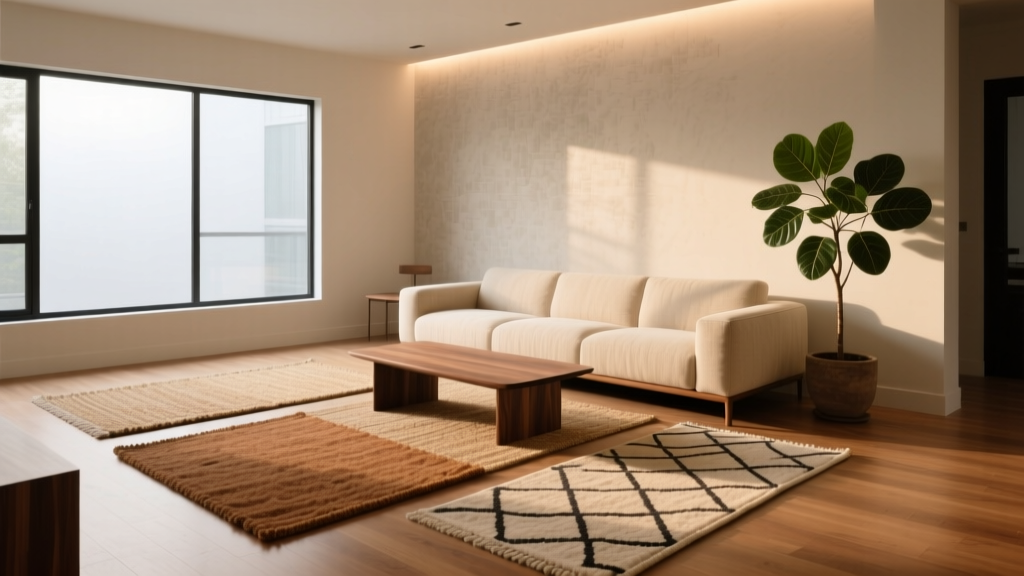
Living Room Layered Rug Ideas - The Decor Mag
A rug can make a living room feel finished—but a layered rug setup can make it feel designed. Layering rugs adds depth, softness, and visual interest in a way a single rug often can’t. It’s also one of the most renter-friendly ways to introduce color, pattern, and texture without committing to paint or new furniture.
Whether you’re working with an open-concept space, trying to define a seating area in a small apartment, or simply want a more collected look, layered rugs offer flexibility. You can soften a hard surface, hide less-than-perfect flooring, and create a custom feel on almost any budget.
This guide covers living room layered rug ideas that actually work in real homes: how to choose sizes, what materials pair well, how to position rugs under furniture, and the most common mistakes to avoid. You’ll also find practical measurements, budget ranges, and scenario-based examples you can copy.
Why Layered Rugs Work So Well in Living Rooms
Layering isn’t just a trend—it’s a design strategy rooted in timeless principles: contrast, scale, and comfort. A base rug establishes structure and anchors the furniture. The top rug adds personality, a focal point, or seasonal style.
- Creates a defined seating zone in open layouts or studio apartments
- Adds texture and warmth (especially on hardwood, tile, or laminate)
- Makes budget decorating easier by pairing an affordable large base rug with a smaller statement rug
- Boosts coziness for family rooms, movie nights, and conversation areas
- Helps hide wear on older rugs or less-attractive floors
Start With the Right Base: Size, Placement, and Proportions
Choose a Base Rug Large Enough to Anchor the Furniture
The biggest layered rug mistake is starting with a base rug that’s too small. In most living rooms, you’ll want the base rug to reach under the front legs of your sofa and chairs at minimum.
Common living room rug sizes (and when they work):
- 5' x 8': Best for small seating areas, apartment living rooms, or a loveseat + two chairs (often too small for full-size sectionals)
- 8' x 10': The most versatile choice for standard living rooms; usually fits under front legs of sofa + chairs
- 9' x 12': Ideal for larger rooms, sectionals, or open-concept spaces where the rug needs to visually “hold” the furniture group
- 10' x 14': Great for expansive great rooms or when you want all furniture legs on the rug
Placement rule of thumb: Aim for 8–12 inches of bare floor between the rug edge and the wall in most rooms. In smaller living rooms, 4–8 inches can still look intentional.
Layering Size Ratio That Looks Balanced
Your top rug should be noticeably smaller so the base rug creates a “frame.” A reliable ratio is:
- Top rug is about 60–75% of the base rug’s width/length
- Leave 6–18 inches of base rug visible around the top rug (more in larger rooms)
Example: If your base rug is 8' x 10', a top rug around 5' x 7' or 6' x 9' often looks right, depending on furniture layout and how much base border you want showing.
Best Rug Material Pairings for Layering
Layered rugs look best when the materials contrast. Mixing textures keeps the stack from looking bulky and helps each rug feel purposeful.
Most Reliable Combinations
- Jute or sisal base + patterned wool top: A go-to for modern farmhouse, coastal, and transitional living rooms
- Low-pile wool base + vintage-style printed top: Great for classic, eclectic, and grandmillennial looks
- Flatweave base + plush shag or tufted top: Adds coziness in minimalist or modern spaces without overwhelming
- Outdoor rug base + soft indoor top: Smart for homes with pets/kids; easy to clean base with a cozy layer on top
Material Notes (Comfort, Durability, and Cleaning)
- Wool: Durable, naturally stain-resistant, and plush underfoot. Mid-to-high price but long-lasting.
- Jute/Sisal: Beautiful texture and budget-friendly for large sizes, but can feel scratchy and doesn’t love moisture.
- Cotton: Soft and often washable in smaller sizes; best as a top layer because it can shift.
- Polypropylene: Great value, very stain-resistant; ideal for busy living rooms and pet owners.
- Viscose: Looks silky but can be high-maintenance; not ideal for high-traffic layered setups.
Living Room Layered Rug Ideas You Can Copy
1) Natural Fiber Base + Vintage Pattern Top (Timeless, Trend-Forward)
This is the layered rug look you see in design magazines for a reason: it works with almost any sofa color and brings in texture without clutter.
How to style:
- Base: 8' x 10' jute under the seating area
- Top: 5' x 7' vintage-style rug centered under the coffee table
- Colors: Pull one accent color from your pillows/throws for cohesion
Real-world scenario: A renter with beige carpet uses a low-profile jute-look polypropylene base to create definition, then adds a muted terracotta-and-ivory printed rug to warm up a gray sofa.
2) Oversized Neutral Base + Bold Graphic Top (Modern Living Rooms)
If your living room feels a little too safe, a bold top rug can introduce personality without overpowering the entire space.
- Base: 9' x 12' solid or subtle texture (cream, oatmeal, warm gray)
- Top: 6' x 9' geometric pattern (black/ivory, navy/cream, or olive/neutral)
- Finish: Keep accessories simple so the rug reads as the statement
Trend tie-in: Graphic patterns and high-contrast neutrals pair beautifully with current modern organic interiors—think rounded coffee tables, warm woods, and linen upholstery.
3) Layer Two Flatweaves for a Low-Profile, Door-Friendly Setup
Need layered rugs in a living room where a door swings close to the floor, or you hate bulky rug stacks? Use two flatweaves.
- Choose a base flatweave with subtle stripe or herringbone texture
- Add a kilim or dhurrie top rug with color and pattern
- Use a thin non-slip rug pad under the base rug for safety
Best for: Small apartments, narrow living rooms, and homes with frequent foot traffic.
4) Sectional-Friendly Layering That Actually Looks Centered
Sectionals can make rugs tricky because the seating footprint is large. Layering can help create a “zone” that feels intentional rather than floating.
Step-by-step layout:
- Choose a base rug that extends at least 12 inches beyond the sectional’s outer edges where possible.
- Place the base rug so the sectional’s front legs sit on it (or all legs if the room allows).
- Center a smaller top rug under the coffee table, aligned with the room or fireplace—not necessarily the sectional’s exact shape.
Example: In a 14' x 18' living room, try a 9' x 12' base and a 6' x 9' top. This keeps the coffee table area cozy and adds visual layering without fighting the sectional’s scale.
5) Cozy Texture-on-Texture: Bouclé, Sherpa, or Shag (Use Sparingly)
Textural top rugs are perfect for making a living room feel softer, especially if your furniture is streamlined.
- Base: flatweave or low-pile in a similar color family
- Top: small plush rug (often 4' x 6' or 5' x 7') near the coffee table
- Palette: keep it tonal (cream on oatmeal, gray on greige) to avoid visual mess
Tip: If you have pets, choose a plush rug with a tighter pile rather than a long shag—easier to vacuum and less likely to trap debris.
Step-by-Step: How to Layer Rugs So They Don’t Slide or Look Crooked
- Start with a clean foundation. Vacuum the floor and rugs so bumps don’t telegraph through.
- Add the right rug pad. Use a pad under the base rug (choose a thickness that won’t block doors). For the top rug, use:
- a thin non-slip pad cut slightly smaller than the top rug, or
- rug tape at the corners (great for flatweaves)
- Square the base rug to the room. Align it with the longest wall or main focal point (fireplace, TV wall, large window).
- Center the top rug with intention. Most living rooms look best when the top rug centers under the coffee table, not necessarily centered within the base rug.
- Check walk paths. Make sure the top rug doesn’t create a trip edge where people commonly walk.
Product Recommendations and Budget Ranges (What to Spend Where)
You can layer rugs beautifully at almost any price point. The smartest approach is to invest where wear is highest and save where style changes most often.
Budget-Friendly (Approx. $150–$500 Total)
- Base: 8' x 10' polypropylene or jute-look synthetic rug ($120–$300)
- Top: 5' x 7' printed vintage-style rug ($50–$180)
- Pad/tape: ($25–$60)
Best for: Renters, first apartments, pet-friendly family rooms.
Mid-Range (Approx. $500–$1,500 Total)
- Base: 8' x 10' wool-blend or higher-quality flatweave ($350–$900)
- Top: 5' x 7' wool or cotton flatweave/kilim ($150–$500)
- Pad: premium felt + non-slip combo ($60–$120)
Investment (Approx. $1,500–$4,000+ Total)
- Base: large hand-knotted wool rug ($1,200–$3,000+)
- Top: vintage or artisan-made statement rug ($500–$2,000+)
Design pro tip: If you’re investing, put the money into the base rug for longevity and choose a more flexible top layer you can swap seasonally.
Real-World Layered Rug Setups (Room-by-Room Scenarios)
Small Apartment Living Room (8' x 10' Room)
- Base: 5' x 8' flatweave tucked under the sofa’s front legs
- Top: 3' x 5' patterned rug under a small coffee table
- Bonus: Choose lighter colors to visually expand the space
Open-Concept Living Room That Needs Definition
- Base: 9' x 12' to clearly zone the seating area
- Top: 6' x 9' to emphasize the conversation center
- Tip: Repeat the top rug’s color in one or two decor items (art, vase, throw)
Family-Friendly Living Room With Kids and Pets
- Base: indoor/outdoor rug (polypropylene) for easy cleanup
- Top: low-pile washable rug where little ones play
- Tip: Choose medium tones and patterns to camouflage everyday life
Common Mistakes to Avoid With Layered Rugs
- Using two high-pile rugs. It looks bulky and can become a tripping hazard. Pair plush with flat, or low-pile with low-pile.
- Clashing patterns at the same scale. If both rugs have busy patterns, vary the scale—one large motif, one smaller or more subtle.
- Ignoring undertones. Warm beige and cool gray can fight. Stick to a shared undertone (warm, cool, or neutral) for a cohesive look.
- Top rug placed too close to the sofa. A top rug that bumps into the sofa edge can look accidental. Keep a visible border of the base rug.
- Skipping grip. Without a rug pad or tape, layers shift. This is especially true on hardwood and tile.
- Going too small on the base rug. If the living room rug doesn’t anchor the seating, layering won’t fix the proportions.
FAQ: Living Room Layered Rugs
Can you layer rugs on carpet in a living room?
Yes—layering rugs on carpet is a smart way to add structure and style. Choose a low-pile or flatweave base so it sits neatly. Use rug tape or a carpet-friendly non-slip underlay to reduce shifting.
What size rug should go under a coffee table in a layered setup?
A 5' x 7' is a common choice for standard living rooms, while 4' x 6' works in smaller spaces. Aim for the top rug to extend at least 6–12 inches beyond the coffee table on all sides for a balanced look.
Do layered rugs have to be the same shape?
No. A rectangular base with a round top rug can look stylish and current, especially in modern organic and eclectic living rooms. Keep the top rug centered and make sure the size feels proportional to the coffee table and seating area.
What’s the best base rug material for layering?
For most living rooms, a flatweave, jute, sisal, or low-pile wool base is easiest. These materials create a stable foundation and keep the layered look from feeling too thick.
How do I stop layered rugs from sliding?
Use a non-slip rug pad under the base rug and either a thin pad or rug tape under the top rug. Make sure the pads are cut slightly smaller than the rugs so edges don’t curl.
Can I layer two patterned rugs?
You can, and it can look amazing. The key is contrast: vary the scale (one bold, one subtle), keep at least one color in common, and make sure one pattern reads as the “lead” while the other supports it.
Next Steps: Build Your Layered Rug Look With Confidence
If you want a living room that feels warmer, more personal, and more pulled together, start by measuring your seating area and choosing a properly sized base rug. Then add a smaller top rug that brings in the color, pattern, or texture your space is missing. Once you’ve layered, take a quick photo—seeing the room on your screen makes it easier to fine-tune alignment and balance.
For more living room design and decor ideas—rugs, layouts, color palettes, and styling tips—explore the latest inspiration on thedecormag.com.
More Articles
 Texture in Minimalist Living Rooms (2026)
 Living Room Lighting Ideas (2026) | The Decor Mag
 Best Ottoman Sizing for Coffee Table Replacement (2026)
 Best Bedroom Layout Ideas 2026: Stylish & Space-Smart
 Living Room Indoor-Outdoor Flow: Summer 2026
 Living Room Earthy Organic Modern - The Decor Mag
 Best Sconce Lighting for Living Room Walls - The Decor Mag
 Living Room Color Guide: Science-Backed Picks for 2026
 Living Room Jewel Tone Inspiration - The Decor Mag
 Stylish Nightstands Under $150 – 2026 Picks