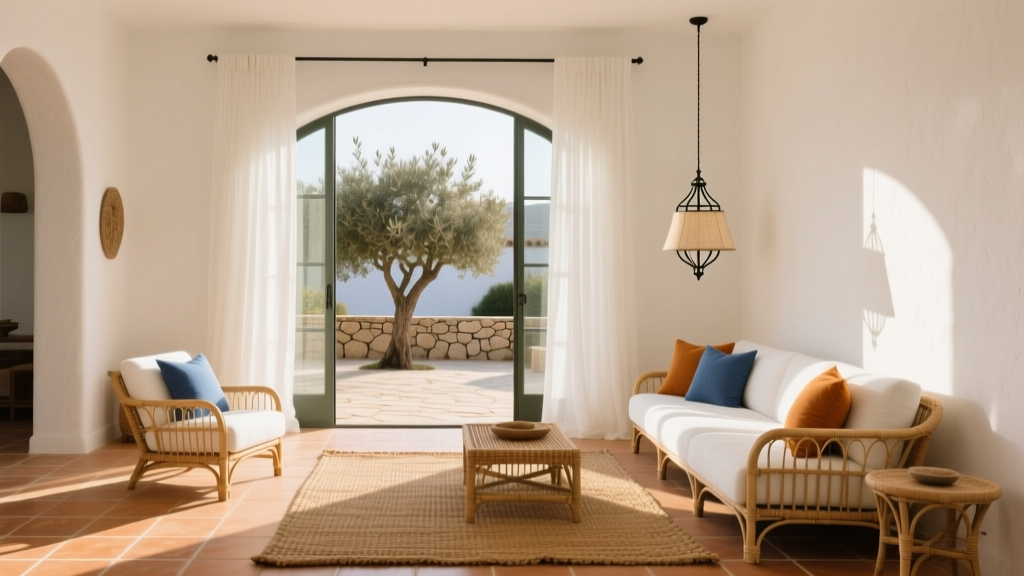
Living Room Mediterranean Design Elements - The Decor Mag
Mediterranean living rooms have a way of feeling both grounded and uplifting—sun-warmed, welcoming, and effortlessly livable. The look is inspired by coastal homes across Spain, Greece, Italy, and the South of France, where architecture and décor are built around light, natural materials, and a relaxed pace of life. For homeowners and renters alike, Mediterranean design offers something rare: a style that’s visually rich yet practical enough for everyday use.
If you’re craving a living room that feels brighter, calmer, and more “collected,” Mediterranean design elements are a smart direction. You’ll learn how to build the palette, choose the right textures, layer lighting, and incorporate signature features like plaster walls, arched shapes, terracotta, and wrought iron—without turning your space into a theme set.
Below you’ll find specific living room design tips, measurements to guide your layout, material recommendations, budget ranges, and real-world scenarios to help you adapt Mediterranean décor to your home (or rental) with confidence.
What Defines Mediterranean Living Room Style?
Mediterranean style is less about matching furniture sets and more about creating a sensory atmosphere: soft daylight, tactile surfaces, and pieces that look like they’ve lived a little. The most successful Mediterranean-inspired living rooms blend timeless architectural cues with modern comfort.
Core Mediterranean Design Elements
- Natural materials: stone, limewash/plaster, clay, wood, rattan, linen, wool
- Warm, sun-baked neutrals: creamy whites, sand, taupe, putty, warm gray
- Coastal accents: sea-glass blues, olive greens, deep indigo, terracotta
- Old-world shapes: arches, curves, carved details, hand-thrown ceramics
- Forged metals: wrought iron, antique brass, aged bronze
- Layered textiles: linen drapery, kilim pillows, flatweave rugs, boucle throws
Start with the Right Mediterranean Color Palette
Color is where Mediterranean living room décor becomes instantly recognizable. The trick is keeping the base light and warm, then adding pigment in controlled, natural-looking doses.
Classic Palettes That Work in Most Living Rooms
- Greek coastal: warm white + crisp blue + natural wood + black iron accents
- Tuscan earthy: creamy beige + terracotta + olive green + aged brass
- Spanish modern Mediterranean: soft white + camel + charcoal accents + textured browns
- Riviera relaxed: warm white + sandy taupe + sea-glass + light oak
Paint and Finish Recommendations
- Walls: warm white in a matte finish for softness; consider limewash for movement and depth.
- Trim: match walls for a seamless, sun-washed look (especially in small rooms).
- Accent colors: introduce through pillows, art, ceramics, and one larger textile like a rug.
Budget range: $50–$120 per gallon for quality interior paint; limewash or specialty mineral paints often run $60–$150 per gallon (plus prep tools).
Texture Is the “Secret Ingredient”
If Mediterranean style had a single rule, it would be this: prioritize texture over clutter. A neutral room can still feel alive when surfaces vary—plaster walls, nubby textiles, rough wood, and handmade ceramics.
Wall Treatments: Plaster, Limewash, and Rental-Friendly Options
- Plaster/limewash look: creates soft tonal variation that reads warm and authentic.
- Venetian plaster accent wall: best behind the sofa or fireplace for a focal point.
- Rental-friendly: removable limewash-look wallpaper or a warm matte paint paired with textured art.
Textiles to Layer (Without Overdoing It)
- Linen or cotton drapery with a relaxed pleat (avoid stiff grommets if possible).
- Wool or cotton flatweave rugs (kilim-style, stripes, subtle geometrics).
- Throw pillows in a mix of solids and small patterns; aim for 3–5 pillows on a standard sofa.
Furniture: Curves, Comfort, and Natural Materials
Mediterranean living room furniture trends are leaning “organic modern”: plush, low-slung seating with rounded silhouettes, paired with rustic woods and artisanal accents.
Key Pieces to Anchor the Room
- Sofa: choose a comfortable profile with soft arms; slipcovered linen or performance fabric works well.
- Coffee table: wood with visible grain, travertine, or a plaster-look drum table.
- Accent chairs: woven leather, rattan, or wood frames with neutral cushions.
Layout Measurements That Make a Living Room Feel Effortless
- Coffee table distance from sofa: 14–18 inches (enough legroom, easy to reach).
- Rug sizing: choose a rug large enough for at least the front legs of all seating to sit on it.
- Typical living room: 8' x 10' or 9' x 12'
- Small space: 6' x 9' can work if it catches the seating zone
- Walkways: keep 30–36 inches clear for main paths through the room.
- TV viewing distance: roughly 1.5–2.5x the TV’s diagonal size for comfort.
Budget range: A well-styled Mediterranean living room can be built in phases. Expect $800–$2,500 for a sofa, $250–$1,200 for a rug, and $200–$900 for a coffee table depending on materials.
Signature Materials: Terracotta, Travertine, Wood, and Iron
Mediterranean décor shines when materials feel honest—stone looks like stone, wood shows its grain, and metals carry a dark, forged weight.
How to Use These Materials in the Living Room
- Terracotta: planters, bowls, lamp bases, and accent tiles. Great for adding warmth to cool neutral rooms.
- Travertine and limestone: coffee tables, trays, bookends; these add an elevated, timeless feel.
- Natural wood: olive-toned woods, oak, walnut, and reclaimed finishes work beautifully.
- Wrought iron: curtain rods, light fixtures, side tables, fireplace tools—use sparingly for contrast.
Product Recommendations (Easy Wins)
- Textured pottery: one oversized terracotta vessel (12–18 inches tall) for a console or hearth.
- Stone tray: a travertine tray (10–14 inches wide) to corral remotes and candles.
- Iron curtain rod: matte black or oil-rubbed bronze, mounted 4–6 inches above the window frame to visually heighten ceilings.
- Jute or seagrass basket: 16–20 inches tall for throws or extra pillows.
Lighting: Warm, Layered, and a Little Romantic
Harsh lighting can undo even the best Mediterranean living room design. Aim for multiple light sources, warm bulbs, and fixtures that feel crafted rather than shiny.
Lighting Plan (Simple and Effective)
- Ambient: ceiling fixture or flush mount with a diffused shade.
- Task: reading lamp by the sofa or chair.
- Accent: table lamps, sconces, or candlelight to create evening glow.
Specs That Make the Room Feel Cozy
- Bulb temperature: 2700K (warm) for living rooms; 3000K if you prefer slightly cleaner light.
- Lumens: 1,500–3,000 total lumens for a typical living room, split across multiple lamps.
- Shades: linen or parchment shades soften light and feel Mediterranean by nature.
Trend watch: Plaster or ceramic pendant lights and scalloped lampshades are having a moment, and they fit Mediterranean interiors perfectly when kept in warm neutrals.
Mediterranean Textiles and Patterns (How to Keep Them Modern)
Pattern is part of the charm—think tile motifs, stripes, and subtle geometrics—but modern Mediterranean style uses pattern as an accent, not a takeover.
Where Patterns Work Best
- Rug: a faded-look kilim or flatweave adds character without making the room busy.
- Pillows: mix solids with one or two patterned pillows (stripes, small geometrics).
- Throws: a simple stripe or waffle weave adds depth.
- Art: coastal photography, sketches, or abstract pieces in sun-washed tones.
Step-by-Step: Bring Mediterranean Design Elements Into Any Living Room
If you want a clear path, this sequence builds the look fast—and prevents expensive missteps.
- Choose your base neutral: warm white or sandy beige on walls and large upholstery.
- Add one grounding piece: a textured rug (start with 8' x 10' for most rooms).
- Bring in natural wood: coffee table or side table with visible grain.
- Layer textiles: linen curtains, a throw, 3–5 pillows in varied textures.
- Add handcrafted décor: 2–3 ceramic pieces, a stone tray, a woven basket.
- Finish with warm lighting: at least two lamps, 2700K bulbs, dimmers if possible.
- Edit: keep surfaces breathable; Mediterranean rooms feel calm because they aren’t overfilled.
Real-World Scenarios: Mediterranean Style in Different Living Rooms
Scenario 1: Small Apartment Living Room (Renter-Friendly)
You have beige carpet, white walls you can’t repaint, and minimal natural light. Mediterranean design can still work—focus on texture and warm tones.
- Use a large rug (at least 6' x 9', ideally 8' x 10') to cover carpet and define the seating zone.
- Add linen-look curtains hung high (4–6 inches above the frame) to elongate the wall.
- Choose terracotta and woven accents: a pot, a basket, a rattan side table.
- Swap bulbs to 2700K and add two table lamps for evening warmth.
Budget plan: $300–$900 total (rug + curtains + two lamps + a few décor pieces).
Scenario 2: Open-Concept Living Room That Feels Echoey
Open layouts often need softness. Mediterranean interiors naturally solve this with textiles and tactile finishes.
- Use a 9' x 12' rug if the seating area is large; get the front legs of all furniture on it.
- Add upholstered seating (a deep sofa, plush chairs) and a substantial wood coffee table.
- Include acoustic softeners: drapery, pillows, a throw, and one large fabric art piece.
Scenario 3: Traditional Home with a Dark Fireplace
A dark fireplace can become a Mediterranean focal point when styled with contrast and organic shapes.
- Hang a large rounded mirror or a simple piece of art above the mantel (aim for 2/3 the mantel width).
- Style with three objects max: a tall ceramic vase, a candleholder, and a small stack of books.
- Add a travertine tray or stone objects nearby to tie in that coastal, earthy feel.
Common Mistakes to Avoid
- Going too themed: too many anchors, fish décor, or “vacation souvenir” pieces can read gimmicky. Choose a few artisanal accents instead.
- Using cool whites and icy grays: Mediterranean palettes prefer warm whites, creamy neutrals, and sun-baked tones.
- Overloading with heavy dark furniture: balance darker pieces with light upholstery and airy textiles.
- Skipping texture: a monochrome room without plaster-like walls, linen, wood grain, or ceramics will feel flat.
- Too many small décor items: Mediterranean style looks best with fewer, larger pieces (one oversized vase beats five tiny knickknacks).
- Wrong scale of rug: a rug that floats under the coffee table alone makes the room feel disjointed.
FAQ: Mediterranean Living Room Design
What are the easiest Mediterranean design elements to add first?
Start with a warm neutral palette, a textured rug, linen curtains, and a few handcrafted ceramics. These deliver the look quickly without renovations.
Can Mediterranean décor work with modern furniture?
Yes—modern Mediterranean style is a popular current trend. Pair clean-lined seating with organic textures (wood, stone, linen) and curved accents like a rounded coffee table or arched mirror.
What flooring looks best in a Mediterranean living room?
Natural materials are ideal: wide-plank wood, stone-look tile, or warm-toned flooring. If you have carpet (especially in a rental), use a large flatweave rug to create that Mediterranean grounded feel.
How do I create a Mediterranean look on a tight budget?
Focus on swaps with high visual impact: warm bulbs (2700K), linen-look curtains, thrifted pottery, woven baskets, and a rug in earthy tones. A realistic starter budget is $300–$800.
What’s the difference between Mediterranean and coastal style?
Coastal style can lean crisp and nautical, while Mediterranean style is earthier and more textural—think plaster walls, terracotta, wrought iron, and warmer neutrals inspired by sun and stone.
Do Mediterranean living rooms have to be white?
No. White is common because it amplifies light, but Mediterranean palettes also include sand, taupe, terracotta, olive, and deep blue. The key is keeping tones warm and natural.
Next Steps: Your Mediterranean Living Room Plan
If you want your living room to feel like a bright, restorative retreat, Mediterranean design elements are a reliable roadmap: warm neutrals, tactile surfaces, natural materials, and a calm, curated approach to décor. Pick one starting point—paint, a rug, or lighting—then build in layers so the room evolves naturally.
- Choose a warm neutral wall color or add a limewash-look texture.
- Size up your rug to properly anchor the seating area.
- Layer linen, wood, terracotta, and a touch of iron for contrast.
- Warm up lighting with 2700K bulbs and multiple lamps.
For more approachable living room design and décor ideas—Mediterranean, modern, traditional, and everything in between—explore the latest inspiration on thedecormag.com.
More Articles
 Living Room Window Seat Ideas - The Decor Mag
 Best Outdoor Furniture for Comfortable Living
 Travel Souvenirs in Living Room Decor (2026)
 How to Style a Round Coffee Table - The Decor Mag
 Living Room Architectural Detail Ideas - The Decor Mag
 How to Decorate a Long Narrow Living Room - The Decor Mag
 Living Rooms Layout Checklist: Room-by-Room Guide
 Scandinavian Living Room Design Essentials - The Decor Mag
 Best Living Room Color Guides for Harmony in 2026
 Living Room Cozy Summer Evening Setup - The Decor Mag