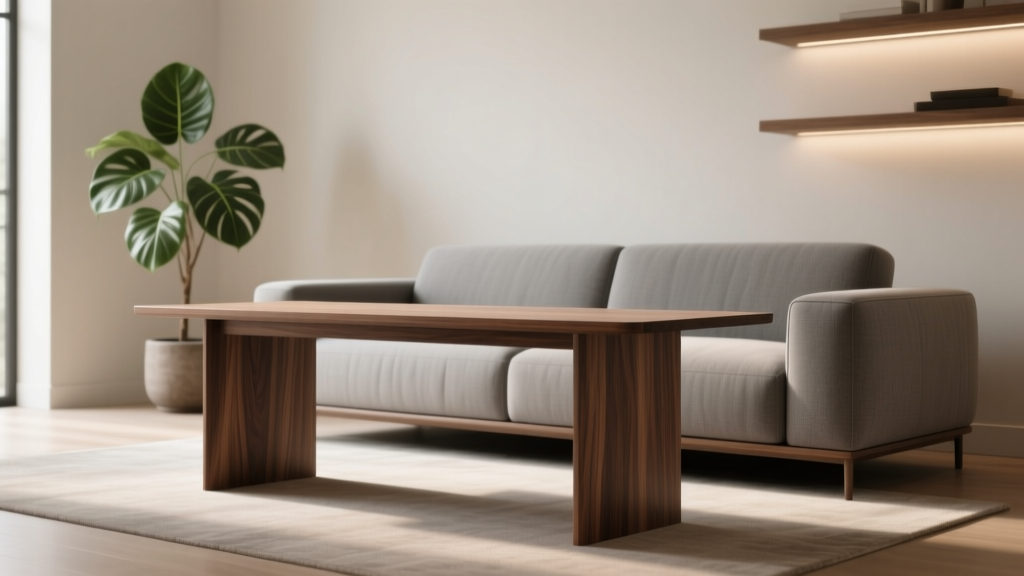
Best Console Table Depth for Behind Sofa - The Decor Mag
A console table behind the sofa can make a living room feel finished—like the space was designed, not just furnished. It’s one of those deceptively simple pieces that can add lighting, storage, styling space, and even a subtle “architectural” divide between seating and open-plan areas. But if the depth is off by just a few inches, it can turn into a constant nuisance: blocked walkways, bumped knees, toppled drinks, or a table that looks like it’s floating too far away to be useful.
Choosing the best console table depth for behind a sofa is really about balance: comfort, circulation, and proportion. In this guide, you’ll learn the most practical depth ranges (with specific measurements), how to measure your room correctly, what to do in tight spaces, and how to pick materials and styles that fit both current design trends and timeless living room principles.
Whether you’re in a compact apartment or a spacious family home, you’ll walk away with a clear plan for selecting (or even DIY-ing) a sofa table that looks intentional, functions beautifully, and improves the flow of your living room.
The Quick Answer: What Depth Works Best Behind a Sofa?
For most living rooms, the sweet spot for a console table behind a sofa is:
- 10–14 inches deep for the majority of standard sofas and layouts
- 8–10 inches deep for tight walkways, apartments, or high-traffic zones
- 14–18 inches deep when the sofa “floats” in the room and you want real landing space (lamps, baskets, charging station), or when there’s generous clearance behind the sofa
Anything deeper than 18 inches often starts to feel like a narrow desk rather than a console table—unless the room is large or the table is doing double duty as a bar/desk zone.
Why Console Table Depth Matters (More Than You Think)
1) It protects your walkway and your daily routine
In living room design, circulation is everything. A gorgeous console table doesn’t help if it forces you to squeeze past it every day. Depth directly affects how easily people move through the room, especially in open-concept living rooms where pathways often run behind the seating.
2) It determines what you can actually place on it
Want lamps? You need enough depth for a stable base and to avoid the shade bumping the wall. Want decor, drinks, or a charging tray? Too shallow and everything feels precarious. Depth controls usefulness.
3) It impacts proportion and visual “fit”
Even if a table technically fits, a depth that’s too large can overwhelm the back of the sofa and make the seating area feel cramped. Too small can look undersized and disconnected—especially with a large sectional or deep sofa.
Measure First: A Simple Step-by-Step Guide
Before you shop, do these quick measurements. This will save you from returns and “almost right” purchases.
-
Measure the clearance behind your sofa.
From the back of the sofa to the nearest obstacle (wall, walkway edge, dining table, door swing). Write down that number. -
Decide your ideal walkway width.
Comfortable clearance behind seating is typically:- 30–36 inches for a main walkway (best for busy homes)
- 24–30 inches for secondary paths or smaller rooms
- 18–24 inches is doable in tight apartments, but will feel snug
-
Calculate maximum console depth.
Available clearance behind sofa minus desired walkway width = maximum depth. -
Confirm sofa back shape and overhang.
If your sofa has a curved back, thick cushions, or a slipcover that “puffs,” leave an extra 1–2 inches so the console doesn’t rub.
Real-world example: You have 48 inches behind your floating sofa to the edge of the dining area. You want a comfortable 32-inch walkway. That leaves 16 inches for a console table depth—perfect for a slightly deeper sofa table with lamps.
Best Console Table Depth by Living Room Layout
Console table behind a sofa against a wall
If your sofa is close to the wall and you’re placing a narrow console in that small gap, depth is constrained by space. In this scenario, you’re often using the console as a styling ledge or to protect the wall from scuffs.
- Best depth: 6–10 inches
- Great for: small living rooms, rentals, tight clearances
- Pro tip: If you can’t fit a table, consider a picture ledge shelf mounted behind the sofa for art and small objects.
Console table behind a floating sofa (open concept)
This is the classic “sofa table” setup and the one most people mean when they search for the best console table depth for behind sofa. The table helps define zones—living area vs. dining/kitchen—while adding function.
- Best depth: 10–16 inches
- Go deeper (14–18 inches) if you want lamps, baskets, or a charging station
- Pro tip: Choose a table with a lower shelf to add hidden storage without increasing visual bulk.
Console table behind a sectional
Sectionals complicate things because the back may be longer, deeper, or interrupted by a chaise. You might use one long console or two smaller consoles to create flexibility.
- Best depth: 10–14 inches (most common)
- If the sectional is extra deep: consider 14–18 inches, as long as circulation stays comfortable
- Pro tip: A waterfall-edge console (clean sides, no legs at corners) feels more streamlined behind bulky seating.
Depth vs. Height: Getting the Proportions Right
Depth matters most for traffic flow, but height is what makes a console table feel “right” behind a sofa.
- Ideal console table height: within 1–3 inches of the sofa back height
- Typical range: 28–34 inches tall
- Rule of thumb: If the table is much higher than the sofa back, it can look awkward and block sightlines. If it’s much lower, it may look like it’s meant for the wall, not the sofa.
Scenario: You have a 33-inch-high sofa back. A 31–34-inch console table will look tailored and intentional. Pair it with a table lamp around 26–32 inches tall (depending on shade size) for balanced lighting.
Design Tips: Make a Behind-the-Sofa Console Look High-End
Choose a depth that matches how you live
- Mostly decorative styling: 8–10 inches is often enough for books, a vase, and a candle
- Everyday function (drinks, remotes, charging): 10–14 inches
- Lighting + storage + family use: 14–18 inches, preferably with a shelf
Use “soft edges” if the walkway is tight
If you’re forced into a narrow passage, a table with rounded corners (or an oval/half-moon profile) helps prevent hip bumps and feels friendlier in smaller spaces.
Try a paired-console look for long sofas
Instead of one very long piece, use two slim consoles side by side. This is a designer trick that:
- makes delivery easier in apartments
- lets you center sections with the sofa
- adds flexibility if you rearrange later
Layer trends thoughtfully (without losing timeless appeal)
Current living room trends lean warm and tactile: light oak, walnut, travertine looks, fluted details, and mixed materials (wood + metal, stone + wood). The timeless anchor is still the same: clean lines, good scale, and durable finishes.
Material Recommendations (What Holds Up Best)
- Solid wood (oak, walnut, acacia): durable, warm, timeless; great for Scandinavian, modern, and transitional living rooms
- Engineered wood with quality veneer: budget-friendly and often stable; look for thick veneer and solid legs
- Metal frames (black, bronze, brushed brass): visually light and great for narrow depths; pairs well with modern and industrial decor
- Stone or faux stone tops (marble look, travertine look): elevated style; choose sealed surfaces for stain resistance
- Glass tops: makes small living rooms feel more open; keep styling minimal to avoid visual clutter
Family- and pet-friendly tip: If you’ll place drinks behind the sofa, choose a finish that’s forgiving: matte or satin over high-gloss, and sealed wood/stone over porous surfaces.
Budget Ranges and What to Expect
- $80–$200: slim metal-frame consoles, basic engineered wood; best for rentals and temporary setups
- $200–$500: sturdier builds, better finishes, often with a shelf; the best value zone for most homeowners
- $500–$1,200+: solid wood, designer details, stone tops, custom sizing; ideal for long-term investment pieces
Product-Style Recommendations (What to Look For While Shopping)
Rather than chasing a single “perfect” model, shop by features that match your depth and lifestyle needs.
- Narrow console (8–10 inches deep): ideal for apartments, tight pass-throughs, or behind a sofa near a door
- Standard sofa table (10–14 inches deep): best all-around choice for most living rooms
- Console with shelf (12–16 inches deep): adds baskets for throws, toys, or extra pillows
- Console with drawers (12–18 inches deep): great for hiding remotes, chargers, and small clutter—especially in a living room that doubles as a media room
- Modular or nesting consoles: flexible for rearranging and moving between homes
Real-World Living Room Scenarios (Depth Choices That Make Sense)
Scenario 1: Small rental living room with a tight walkway
You have a sofa floating slightly off the wall, but the path to the bedroom runs behind it. You don’t want to block traffic.
- Choose: 8–10 inch depth, open metal frame
- Style it with: one slim lamp, a small tray for keys/remote, and a vertical piece (art or mirror) to add height without taking depth
Scenario 2: Open-concept living room where the sofa separates zones
The sofa faces the TV, and behind it is the dining area. You want a polished “room divider” feel.
- Choose: 12–16 inch depth console with a lower shelf
- Add: two matching lamps, baskets below, and a low bowl or books in the center for symmetry
Scenario 3: Family room with kids and frequent entertaining
You need durability and real landing space for snacks, controllers, and charging.
- Choose: 14–18 inch depth with rounded corners, sturdy construction
- Material: sealed wood or a durable faux-stone top
- Extra: cable management clips underneath for chargers
Common Mistakes to Avoid
- Buying too deep for the walkway. A 16–18 inch console sounds great until you’re side-stepping around it every day. Protect at least 24–36 inches of walking space where possible.
- Ignoring sofa overhang and recline. Some sofas have cushions that extend past the back frame. Leave 1–2 inches of breathing room.
- Choosing a flimsy, top-heavy table. Narrow-depth tables can tip if they’re lightweight. Look for solid legs, a wider base, or consider anchoring it if kids/pets are active.
- Styling clutter from end to end. A console table behind the sofa should read as calm and intentional. Use trays and leave negative space.
- Getting the height wildly wrong. If the console is much taller than the sofa back, it can look like a barrier and feel visually heavy.
FAQ: Console Tables Behind Sofas
What is the standard depth of a console table behind a sofa?
Many console tables are made around 12 inches deep, which works well behind most sofas and keeps walkways comfortable. If you’re unsure, 10–14 inches is a reliable range.
How much space should be between the sofa and the console table?
Aim for 1–3 inches of space so the sofa doesn’t rub against the table and you can clean easily. If you’re using it to protect a wall and the sofa is stationary, you can go closer, but avoid constant contact.
Can a console table be deeper than the sofa back?
Yes, as long as your walkway behind it stays comfortable. A deeper console (14–18 inches) can be great for lamps and everyday drop-zone function, especially in open-concept layouts with plenty of clearance.
What if I only have 6–8 inches behind my sofa?
Go with an ultra-slim console (some are 6–8 inches deep) or consider a wall-mounted picture ledge shelf. You’ll still get styling space without crowding the room.
Should the console table be the same length as the sofa?
Not necessarily. A good guideline is two-thirds to nearly the full length of the sofa. For a long sofa or sectional, two consoles side by side can look more balanced than one extra-long piece.
What’s the best console table depth if I want lamps behind the sofa?
Look for 12–16 inches of depth so lamp bases sit securely. If you’re using larger statement lamps, you may prefer closer to 16–18 inches—as long as the room’s circulation allows it.
Next Steps: Choose the Right Depth and Make It Look Intentional
Start with your clearance measurement, protect a comfortable walkway, then choose the depth that matches your daily life. For most homes, a 10–14 inch deep console table behind the sofa is the easiest win—functional, attractive, and friendly to living room flow. If your space is tight, go slimmer; if your room is generous and you want real utility, go a bit deeper and add a shelf or drawers.
Once your console is in place, finish it like a designer: a pair of lamps or one statement lamp, a tray for small essentials, a stack of books, and one taller element (art, branches, or a mirror) to give the setup height and presence.
For more living room design and decor ideas—from layout tips to trend-forward styling—explore the latest inspiration on thedecormag.com.
More Articles
 Best Outdoor Furniture for Comfortable Living
 Living Room Art Placement Guide - The Decor Mag
 Living Room Dramatic Dark Moody Design - The Decor Mag
 Paint Safety Tips for Health & Environment in 2026
 Best Console Tables for Entry Living Rooms - The Decor Mag
 Budget Living Room Furniture 2026: Style & Durability
 Designing a Workspace That Fuels Creativity
 Best Outdoor Furniture for Modern Living Spaces 2026
 Living Room Sustainable Decor Choices - The Decor Mag
 Living Room English Country Cottage Feel - The Decor Mag