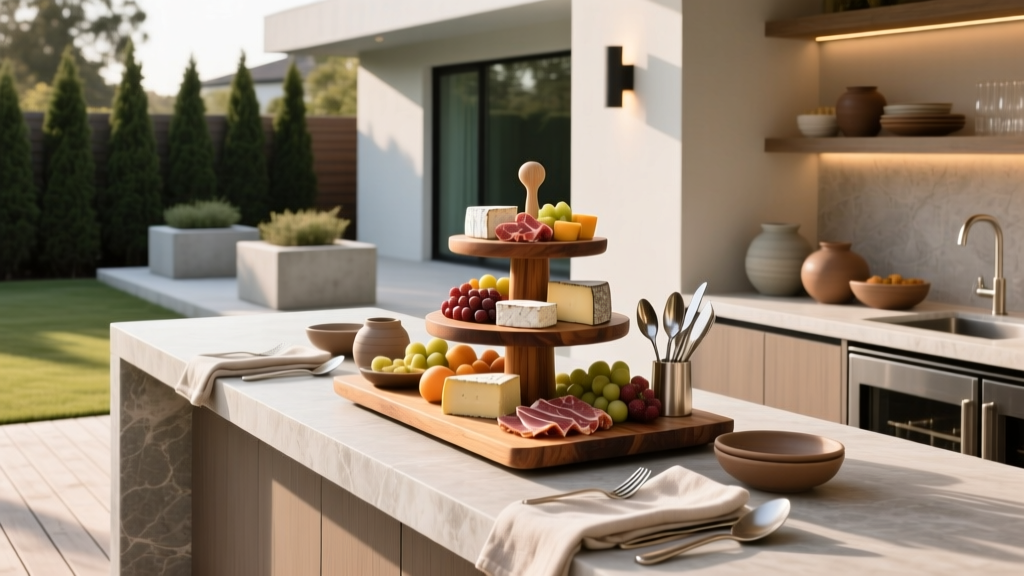
Best Outdoor Bar Charcuterie Station - The Decor Mag
An outdoor bar charcuterie station does more than serve snacks—it turns your patio into a destination. When guests can graze, sip, and mingle without crowding your kitchen, your entire outdoor living space feels more relaxed, intentional, and resort-like. It’s the sweet spot where outdoor kitchen convenience meets effortless entertaining.
Unlike a full outdoor kitchen, a charcuterie-forward bar setup is achievable for most homeowners: it needs smart surfaces, cold storage solutions, a serving layout that flows, and materials that can handle sun, spills, and weather. With the right outdoor design, you’ll create a station that looks styled even on non-party days—and functions beautifully year-round.
This guide covers layouts, furniture, weather-ready materials, plant pairings, maintenance tips, budget ranges, and the common missteps that keep outdoor hosting from feeling easy. Whether you’re upgrading a small patio, building a backyard bar near the pool, or refining a garden terrace, you’ll find practical, designer-level direction here.
What Makes an Outdoor Bar Charcuterie Station “Best”?
The best setups balance five essentials: flow, surfaces, storage, shade, and style. Charcuterie is all about variety and presentation, so your station should support both the “work” (slicing, plating, refilling ice) and the “wow” (a beautiful spread).
The five must-haves
- Two-zone layout: a prep zone (hidden clutter) and a serve zone (guest-facing display).
- Food-safe, weather-ready surfaces: non-porous countertops and easy-clean finishes.
- Cold strategy: mini outdoor fridge, ice well, or cooler drawer to protect cheese and meats.
- Lighting: layered ambient + task lighting so the station works after sunset.
- Landing space: room for plates, napkins, wine, and used-glass staging.
Choose the Right Location: Layouts That Work on Real Patios
Your station should live where people naturally gather, but not where traffic jams happen. Think of it as an “anchor” that pulls guests outward into the yard.
Top layout options
1) Against-the-wall “buffet bar” (best for small patios)
- Place a console, cabinet, or outdoor credenza along an exterior wall or fence line.
- Add a shade element overhead (umbrella, sail, pergola) to protect food.
- Keep at least 36 inches of walking clearance behind seated guests.
2) L-shaped corner bar (best for frequent hosts)
- One leg = drinks and glassware; the other = charcuterie boards and serving pieces.
- Creates natural separation between messy prep and clean display.
- Works well near an outdoor dining area or fire pit seating.
3) Island-style station (best for open yards and pool decks)
- 360-degree access encourages mingling.
- Plan a “service side” facing the kitchen/house and a “guest side” facing seating.
- Allow 42–48 inches clearance around the island for comfortable circulation.
4) Rolling cart + fold-out table (best for renters or flexible spaces)
- Use a durable outdoor cart for bottles, tools, and backup supplies.
- Add a drop-leaf table for extra plating space when entertaining.
- Roll into a covered area during storms or winter.
Furniture + Storage: The Building Blocks of a Great Station
Outdoor entertaining gets easier when everything has a home. Prioritize closed storage for napkins and tools, plus at least one open shelf or rail for quick grabs.
Best furniture choices for outdoor bar + charcuterie
- Outdoor credenza or buffet cabinet: Ideal for concealing clutter. Look for powder-coated aluminum frames or marine-grade polymer.
- Bar-height table with stools: Creates a social “cocktail zone” near the station. Choose stools with quick-dry slings or woven resin.
- Serving cart: Great for staging cheeses indoors, then rolling out to serve.
- Built-in base cabinets: Best for permanent backyard bar plans. Combine with weatherproof doors and adjustable feet.
Storage upgrades that feel high-end
- Drawer organizers for cheese knives, openers, and cocktail tools
- Pull-out trash/recycling (huge for keeping the station tidy)
- Hanging rail for towels and bar tools
- Outdoor-rated mini fridge or beverage cooler (safer than constantly refilling an ice bucket)
Budget ranges (realistic planning)
- $200–$600: rolling cart + outdoor trays + umbrella shade + cooler
- $600–$2,000: credenza/buffet + bar-height seating + upgraded lighting
- $2,000–$8,000+: built-in island, outdoor-rated refrigeration, stone or porcelain top, integrated lighting
Weather-Ready Materials: Surfaces That Handle Sun, Spills, and Heat
Charcuterie stations get messy in the best way: olive oil, wine, citrus, salt, and sticky jams. Choose materials that won’t stain easily and can be wiped down quickly.
Countertop and surface recommendations
- Porcelain slab or sintered stone: Top-tier for outdoor countertops—UV stable, highly stain resistant, low maintenance.
- Granite (sealed): Durable and classic. Select lighter colors in hot climates to reduce heat absorption.
- Concrete (sealed properly): Modern look, but requires periodic sealing and care to avoid stains.
- Stainless steel: Excellent for prep and hygiene; can show fingerprints but cleans easily.
- Teak or ipe: Beautiful for accents and shelving; keep a cutting board on top for food prep and maintain with oil if you want color retention.
Cabinet and frame materials that last
- Powder-coated aluminum: Lightweight, rust-resistant, perfect for coastal areas.
- Marine-grade polymer (HDPE): Extremely weatherproof; great for humid climates and poolside living.
- Stainless steel cabinetry: Sleek and durable; ideal for modern outdoor kitchen aesthetics.
Flooring nearby: keep it safe and cleanable
- Textured porcelain pavers: Slip-resistant and easy to hose off—excellent for patio living.
- Composite decking: Low maintenance; pick a color that won’t show crumbs and water spots.
- Natural stone: Gorgeous but choose finishes with traction and plan for sealing where needed.
Design the Charcuterie “Serve Zone” Like a Pro
The secret to a station that looks magazine-worthy: tiered height, consistent materials, and an intuitive path from plate to snack to drink.
Serve-zone checklist
- Start with plates + napkins first (left-to-right flow works best for most guests).
- Add boards and bowls next (meats, cheeses, crackers, fruit, nuts).
- Finish with beverages (wine, spritz, sparkling water, NA options).
Practical styling tips that also improve function
- Use a tray for “wet items” (olives, marinated artichokes, jams) to contain drips.
- Keep two cutting boards: one for guest display, one hidden for refills and slicing.
- Tier with risers or overturned bowls under a board to add height and prevent crowding.
- Add labeled mini cards for cheeses and allergen notes when hosting groups.
- Plan a “return zone” for used napkins, empty plates, and glass drop-off.
Shade, Lighting, and Comfort: Make It Work Day to Night
Food and beverages don’t love heat or direct sun. Guests don’t either. Shade and lighting are what transform a pretty backyard bar into year-round outdoor living.
Shade options (ranked by performance)
- Pergola with retractable canopy: Best for control and style; add outdoor curtains for wind and privacy.
- Shade sail: Budget-friendly, modern, and effective—choose UV-rated fabric and proper tensioning.
- Market umbrella: Fast and flexible; use a weighted base and position to cover the food surface.
Lighting that feels intentional
- Warm LED string lights overhead for ambiance
- Under-counter LED strip lighting for task visibility and a polished look
- Solar path lights leading to the station for safer circulation
- Rechargeable tabletop lamps for glow on serving surfaces
Plants and Landscaping Around Your Station: Beauty + Privacy + Fragrance
Strategic landscaping makes the bar feel like a destination and helps it blend into your garden design. The best plantings add softness, screen utility areas, and hold up near foot traffic.
Best plants for an outdoor bar area (by purpose)
Fragrant, food-adjacent herbs (great in pots)
- Rosemary: tough, drought-tolerant, smells amazing
- Thyme: low-growing, great in trough planters
- Basil: lush in summer; treat as seasonal and replace as needed
- Mint (container only): invasive in beds; perfect for mojitos and iced tea
Privacy screening for patios
- Clumping bamboo (non-invasive varieties): excellent screen; choose based on your zone
- Podocarpus: clean, modern hedge option in warm climates
- Arborvitae: classic evergreen screen in cooler regions
Hardworking ornamentals that look good year-round
- Lavender: sun-loving, pollinator-friendly, drought-tolerant
- Boxwood (or boxwood alternatives): structure near patios; consider disease-resistant substitutes where boxwood blight is common
- Feather reed grass: architectural, low fuss, great movement
Planter material recommendations
- Fiberstone or fiberglass: lightweight, modern, weather resistant
- Glazed ceramic: beautiful but protect from freeze-thaw cracking in cold climates
- Corten steel: bold look; place carefully to avoid rust runoff staining light paving
Climate + Maintenance Considerations (So It Stays Beautiful)
Hot, sunny climates
- Prioritize porcelain/sintered stone surfaces and UV-stable furniture materials.
- Use light-colored countertops to reduce surface heat.
- Choose drought-tolerant landscaping: lavender, rosemary, agave (where appropriate), ornamental grasses.
Humid or coastal climates
- Choose powder-coated aluminum or marine-grade polymer to avoid corrosion.
- Rinse surfaces periodically to remove salt residue.
- Avoid untreated steel and low-grade hardware; specify stainless fasteners when possible.
Cold or four-season climates
- Look for freeze-thaw rated pavers and seal porous stone.
- Use furniture covers and store cushions indoors in winter.
- If you want year-round use, pair the station with a patio heater or nearby fire pit seating zone.
Quick maintenance routine
- Weekly: wipe surfaces, check for stains, shake out outdoor rugs
- Monthly: clean cabinet fronts, inspect hardware, wash trays and serving bins
- Seasonally: reseal stone/concrete as needed, deep clean pavers, refresh planters and herbs
Common Mistakes to Avoid
- Not enough surface area: Charcuterie spreads grow fast. Aim for 48–72 inches of continuous serving space if possible.
- Skipping shade: Direct sun warms cheese quickly and makes guests uncomfortable.
- Using porous, unsealed materials: Unsealed concrete or natural stone can stain from wine, oil, and citrus.
- No trash plan: Without a discreet bin nearby, clutter piles up and the station feels chaotic.
- Forgetting lighting: A beautiful backyard bar is wasted if guests can’t see the spread after dusk.
- Ignoring wind: Lightweight napkins, crackers, and herbs can blow away. Add weighted napkin holders and lidded containers.
FAQ: Outdoor Bar Charcuterie Station
How big should an outdoor charcuterie station be?
For comfortable hosting, plan for at least 4 feet of serving length. If you entertain often or host larger groups, 6 feet gives you space for boards, plates, and a drink area without crowding.
Do I need an outdoor-rated refrigerator?
If your station sits in true outdoor conditions (heat, cold swings, humidity), an outdoor-rated unit performs more reliably and lasts longer. For occasional use under a covered patio, a high-quality cooler system can work, but you’ll refill ice frequently.
What’s the best countertop material for spills and stains?
Porcelain slab/sintered stone is a top pick for outdoor kitchen and bar countertops because it’s highly stain resistant, UV stable, and easy to clean. Sealed granite is another strong option.
How do I keep bugs away from the charcuterie spread?
Use mesh food covers, keep wet items in lidded containers, and place the station away from standing water and trash. Adding a fan near the serving area can also help deter flying insects.
Can I build a great station on a small patio?
Yes. A wall-mounted or narrow outdoor console paired with a rolling cart is a powerful small-space combo. Focus on vertical storage, tiered serving, and a compact shade solution like a half umbrella.
What’s the best way to make it feel like year-round outdoor living?
Combine the station with all-season lighting, a heat source (patio heater or fire feature nearby), and weather-resistant seating. In shoulder seasons, add outdoor throws and keep hot beverages on the bar for an inviting cold-weather hosting vibe.
Next Steps: Build Your Station This Weekend (or Plan the Dream Version)
Start by choosing your location and layout—wall buffet, L-shape, island, or a flexible cart setup—then invest in the surfaces and shade that protect both food and guests. Add storage to keep hosting effortless, layer in lighting for evening patio living, and finish with herbs and screening plants that make the space feel lush and intentional.
If you’re ready to take action:
- Measure your available patio space and sketch a simple two-zone plan (prep + serve).
- Pick one weather-ready surface upgrade (porcelain top, sealed granite, or stainless prep area).
- Add shade and lighting so the station works for sunny afternoons and cozy nights.
- Style with planters—rosemary, lavender, thyme—and keep your essentials organized in bins.
For more outdoor design inspiration, patio upgrades, landscaping ideas, and backyard entertaining layouts, explore the latest guides on thedecormag.com.
More Articles
 How to Design a Tea Garden - The Decor Mag
 How to Create a Rock Garden - The Decor Mag
 Warm Lighting vs. Lighting Checklists: Why Relying Solely on Lists Compromises Outdoor Ambiance and Safety
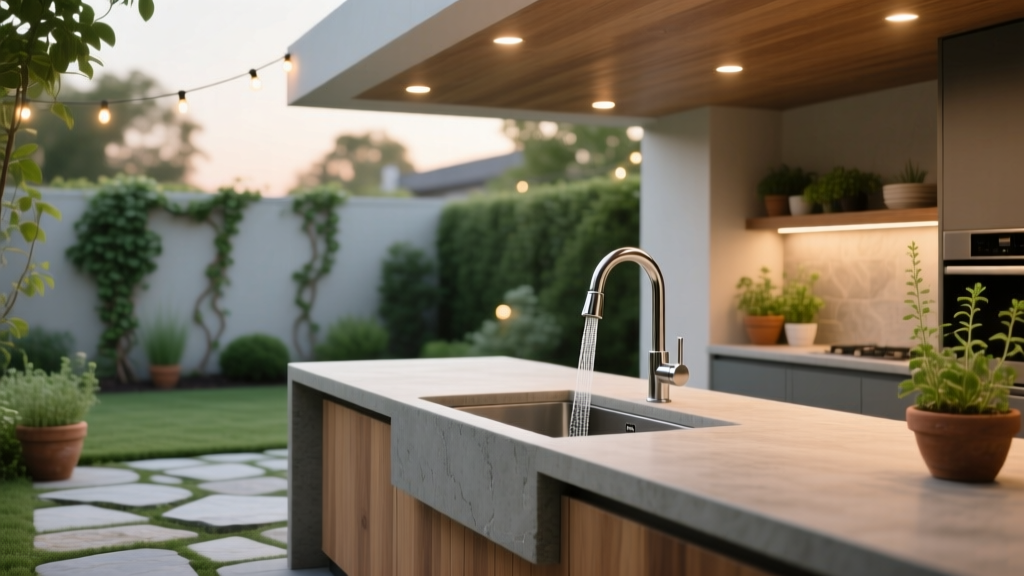 Outdoor Sink and Prep Station Ideas - The Decor Mag
 Outdoor Pavilion Ceiling Fan Wiring - The Decor Mag
 Kid-Friendly Backyard Play Zones: Landscape-Blending Ideas
 Outdoor Pavilion Sound System Setup - The Decor Mag
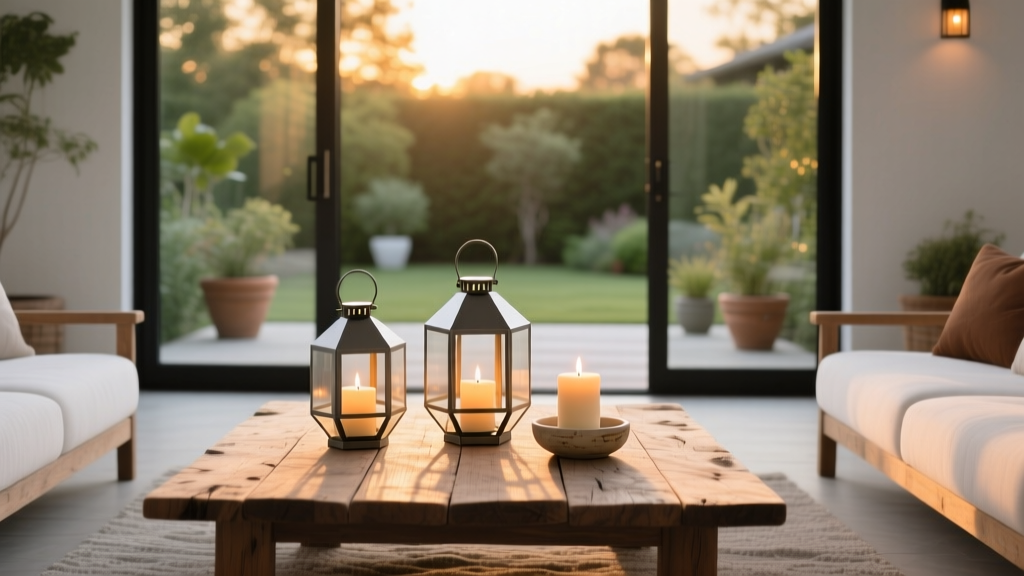 Best Outdoor Lantern and Candle Options - The Decor Mag
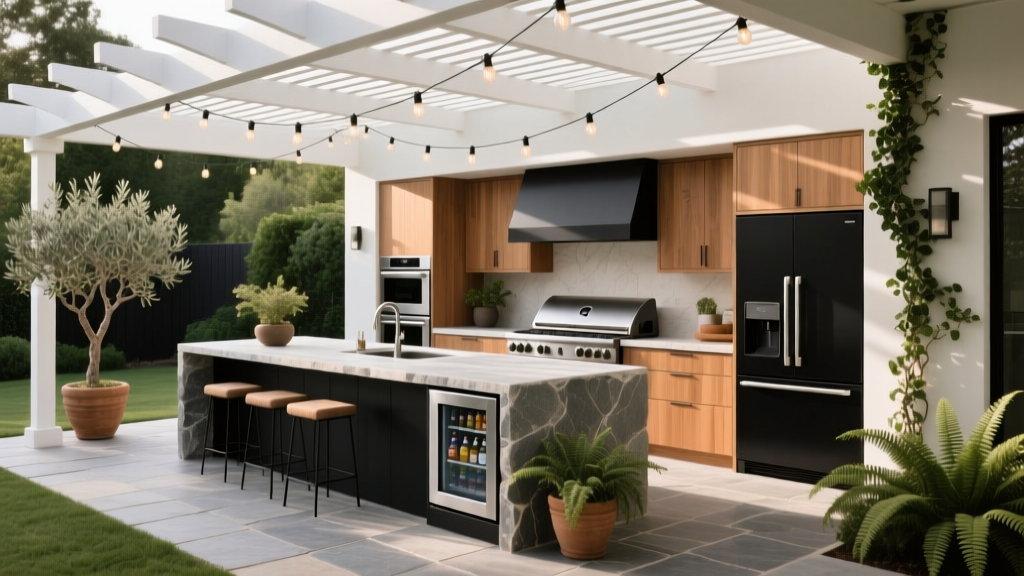 Outdoor Kitchen Design and Planning Guide - The Decor Mag
 Safety vs Living: Reconciling Outdoor Security with Authentic Lifestyle Experience