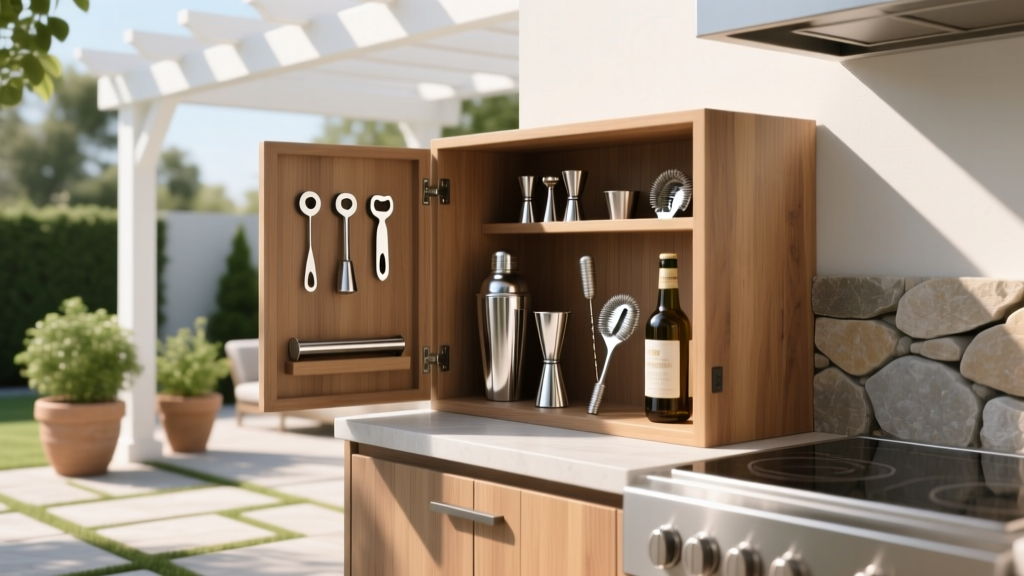
Best Outdoor Bar Tool Storage Ideas - The Decor Mag
An outdoor bar is one of the fastest ways to upgrade patio living—suddenly weeknights feel like vacation, and hosting becomes effortless. But if your bottle opener lives in a kitchen drawer and your shaker “travels” in a tote bag, the outdoor experience never feels finished. Smart outdoor bar tool storage is what turns a nice setup into a true outdoor entertaining zone.
The right storage protects tools from weather, keeps pests away, and makes serving feel smooth and intentional. It also helps your outdoor living space look polished year-round, whether you’re mixing summer spritzes or pouring hot cider beside a fire pit.
Below are the best outdoor bar storage ideas for patios, decks, gardens, and pool areas—complete with practical layouts, material recommendations, plant pairings, climate considerations, and budget ranges that work for everything from compact balconies to full outdoor kitchens.
Plan First: What Should Outdoor Bar Tool Storage Hold?
Before buying cabinets or building a bar wall, take five minutes to define what you actually need to store. Outdoor bar tool storage tends to grow—especially if you host often.
Core tool checklist
- Bar tools: shaker, jigger, muddler, strainer, bar spoon, citrus press, peeler
- Openers: corkscrew, wine key, bottle opener
- Serveware: tray, coasters, cocktail napkins, garnish picks
- Cutting tools: small cutting board, paring knife (store safely), microplane
- Consumables: salt/sugar rim, bitters, simple syrup, shelf-stable mixers
- Cleaning: bar towel, sponge, biodegradable soap, small brush
Decide what should stay indoors
- Fine knives (humidity + safety) unless you have a lockable drawer insert
- High-end spirits if you experience temperature swings or intense sun exposure
- Anything that attracts pests (open sugar, syrups without tight seals)
Best Outdoor Bar Tool Storage Solutions (By Space & Style)
1) Weatherproof cabinet base (the “outdoor kitchen” approach)
If you want a clean, built-in look, use dedicated outdoor base cabinets under a counter. This is the most seamless option for outdoor design and the easiest to keep tidy.
Best for: patios with an outdoor kitchen, covered pergolas, or a permanent bar counter.
- Materials to look for:
- Marine-grade polymer (HDPE) for humid or coastal climates
- 304 stainless steel for most climates; 316 stainless for coastal/salt air
- Powder-coated aluminum for lighter-weight, rust-resistant storage
- Smart interior add-ons: soft-close drawers, removable bins, utensil dividers, pull-out trash/recycling
- Layout tip: Keep tools in a top drawer, mixers in the next, and cleaning items in the bottom—so you’re not reaching over glassware.
Budget range: $800–$4,500+ depending on cabinet count, materials, and countertop.
2) Rolling outdoor bar cart with concealed storage
A bar cart is the most flexible patio living upgrade—perfect for moving from grill area to dining table to fire pit. Choose one with doors, drawers, or lidded compartments to protect tools from sun and dust.
- Best materials: powder-coated steel, teak, eucalyptus, or resin wicker with an aluminum frame
- Look for: locking casters, bottle dividers, a towel bar, and a removable tray top
- Pro tip: Add a slim, weatherproof deck box nearby for overflow items (napkins, backup cups, citronella).
Budget range: $120–$900.
3) Deck box “bar kit” station (high capacity, low visual clutter)
A weatherproof deck box is one of the best outdoor storage ideas for homeowners who want a tidy yard without a full build. Use it as a dedicated bar kit station: tools, unbreakable drinkware, and even small appliances like a blender (in its case).
- Best for: renters, small patios, pool areas, and families who want lockable storage
- Material picks: UV-stabilized resin, HDPE, or powder-coated metal (avoid untreated wood lids in wet climates)
- Organization upgrade: Use labeled, lidded bins inside (one for tools, one for garnishes, one for cleaning).
Budget range: $80–$600.
4) Built-in bar nook with open shelves + hidden dry box
Open shelving looks beautiful, but tools need protection. The winning combo is display shelves for glassware and a hidden “dry box” drawer for metal tools and accessories.
- Best for: covered patios, pergolas, and outdoor rooms with a backsplash wall
- Design approach:
- Upper open shelves for: unbreakable cups, pitchers, stacked trays
- Lower sealed drawer/bin for: tools, bitters, openers, and bar towels
- Add under-shelf LED lighting (warm white) for evening ambiance
- Backsplash materials: porcelain tile, sealed natural stone, or stainless panels for easy wipe-down
Budget range: $300–$3,500+ depending on carpentry and finishes.
5) Vertical wall storage: peg rails, magnetic strips, and slat panels
When counter space is tight, go vertical. A wall-mounted bar tool organizer keeps essentials within reach and makes a small outdoor bar feel professional.
- Best for: compact patios, balcony bars, grill islands, and pool houses
- Material recommendations:
- Stainless peg rails and hooks
- Composite slatwall panels rated for outdoor use
- Teak backer boards (sealed) for a warm, spa-like look
- Safety tip: Avoid exposed knife storage outdoors unless it’s in a lockable sheath or drawer.
Budget range: $50–$450.
6) Outdoor sideboard or buffet with a stone top (stylish and functional)
An outdoor-rated sideboard doubles as a serving station and tool storage, especially when paired with a durable countertop for slicing citrus or staging drinks.
- Best countertop materials: granite, honed quartzite, porcelain slab, or concrete (sealed)
- Cabinet material picks: teak, acacia (well-sealed), marine polymer, or powder-coated aluminum
- Layout idea: Place it between the grill and dining area to reduce traffic and keep hosting flow smooth.
Budget range: $250–$2,500.
Organizing Like a Pro: Inserts, Bins, and Bar Tool “Zones”
Great outdoor bar tool storage isn’t just about the cabinet—it’s about what happens inside. The goal is to set up zones so you can build drinks quickly without hunting.
Use a 3-zone system
- Mix zone: shaker, jigger, strainer, spoon, muddler (top drawer or caddy)
- Garnish zone: citrus tools, picks, rim salts, small cutting board (lidded bin)
- Clean zone: towel, soap, brush, microfiber cloths (separate bin to keep sanitary)
Must-have organization upgrades
- Drawer liners (non-slip, mildew-resistant)
- Stainless or BPA-free plastic caddies with handles (easy to carry inside)
- Silica gel packs or moisture absorbers in humid climates
- Label tape for quick resets after parties
Materials That Hold Up Outdoors (And What to Avoid)
Outdoor design succeeds when materials match the climate. Bar tools are metal-heavy, and storage areas can trap moisture—so choose finishes that won’t rust, swell, or delaminate.
Best materials for outdoor bar storage
- 304/316 stainless steel: ideal for cabinetry, hardware, and wall rails
- HDPE/marine polymer: won’t rot, warp, or peel; great for wet climates
- Teak: naturally weather-resistant; looks high-end with simple maintenance
- Powder-coated aluminum: lightweight, rust-resistant, modern
- Porcelain tile/slab: UV-stable, heat-tolerant, stain-resistant for counters
Materials to be cautious with
- MDF or particleboard: swells quickly outdoors (even under cover)
- Untreated softwoods: can warp and mildew without sealing
- Low-grade stainless: can tea-stain/rust in coastal or humid locations
Climate & Seasonal Considerations for Year-Round Outdoor Living
Hot, sunny climates
- Choose UV-stabilized resin or marine polymer to prevent brittleness and fading.
- Keep bitters, syrups, and juices in an insulated cooler drawer or bring them inside after use.
- Add shade: a pergola, cantilever umbrella, or shade sail protects both you and finishes.
Humid or rainy climates
- Prioritize sealed drawers, gasketed doors, and raised feet to prevent water intrusion.
- Use ventilated storage (small louver panels) to reduce mildew.
- Wipe tools dry before storing; rust often starts in closed, damp drawers.
Cold/snow climates
- Choose freeze-thaw stable surfaces like porcelain or granite for countertops.
- Store liquids indoors in winter; expand/contract cycles can crack bottles.
- Use a “winter bin” system: move your entire bar kit indoors in one tote when storms hit.
Coastal/salt-air climates
- Use 316 stainless whenever possible and rinse hardware periodically.
- Avoid exposed magnets and cheap hinges; they corrode quickly near the ocean.
- Apply a protective marine wax to stainless surfaces for easier upkeep.
Landscaping & Plant Ideas That Make an Outdoor Bar Feel Intentional
The best outdoor entertaining spaces blend storage with soft, welcoming landscaping. Plants can add privacy, fragrance, and a “garden bar” vibe—while also guiding traffic flow.
Best plants for an outdoor bar area
- Herb planters (sun): rosemary, thyme, basil, mint (keep mint in its own pot), sage
- Fragrant accents: lavender, jasmine (warm climates), gardenia (partial shade)
- Privacy screens: clumping bamboo (non-invasive varieties), podocarpus, pittosporum, or tall ornamental grasses
- Low-maintenance containers: dwarf citrus in pots (warm climates), bay laurel, or hardy succulents
Placement tips
- Keep herbs within arm’s reach of the prep area for garnishes.
- Use tall planters to frame the bar and hide storage boxes from view.
- Leave a 36-inch walkway behind the bartender zone for comfortable circulation.
Layouts That Work: Where Storage Should Go
Even a beautiful patio bar can feel awkward if storage is in the wrong place. Think in terms of movement: prep, mix, serve, reset.
Three reliable layout formulas
- Linear wall bar: shelves above + cabinets below; best for narrow patios and outdoor rooms.
- L-shaped bar: one leg for prep/storage, one leg for serving; great for entertaining flow.
- Island bar: storage on the bartender side, seating on the guest side; ideal for pool patios.
Clearance guidelines
- Allow 24 inches of clear counter space for mixing.
- Plan 36–42 inches behind the bar for movement (more if near a grill).
- Keep storage for frequently used tools between waist and shoulder height.
Common Mistakes to Avoid
- Using indoor furniture outdoors: indoor cabinets absorb moisture and fail fast.
- Skipping ventilation: sealed boxes without airflow can create a mildew trap in humid regions.
- Overexposing tools: open storage looks great until dust, pollen, and rain become daily issues.
- Ignoring shade: UV and heat degrade finishes and shorten the life of bar accessories.
- Poor zoning: storing towels with sticky syrups creates a mess that’s harder to reset after guests leave.
- No pest strategy: crumbs, sweet mixers, and citrus peels invite ants—use lidded containers and wipe surfaces nightly.
FAQ: Outdoor Bar Tool Storage
What’s the best material for outdoor bar cabinets?
Marine-grade polymer (HDPE) is the most worry-free for wet or humid climates. Stainless steel (304 or 316) is excellent for a modern look and durability—choose 316 if you’re near the coast.
Can bar tools stay outside all year?
In mild climates, yes—if they’re dry and stored in sealed drawers or bins. In humid, rainy, or freezing climates, store the full bar kit indoors during extreme seasons to prevent rust and damage.
How do I keep outdoor bar storage from getting musty?
Use ventilated storage when possible, add a moisture absorber, and never store damp towels. Wipe tools dry before putting them away, and do a quick “reset” clean after each gathering.
What’s a good budget-friendly outdoor bar storage setup?
A weatherproof deck box ($80–$250) plus a handled bar caddy ($15–$40) is a strong start. Add a small outdoor side table or cart later as your patio living space evolves.
How do I protect bottles and mixers from heat?
Use an insulated cooler drawer, a dedicated ice chest, or a shaded bin. For areas with strong sun, keep spirits and syrups indoors and bring out only what you’ll use that day.
Next Steps: Build a Storage Setup You’ll Actually Use
Start by choosing one primary storage piece—a cabinet base, deck box, or rolling cart—then organize it with a simple three-zone system (mix, garnish, clean). Match materials to your climate, add shade where needed, and use planters or herb pots to make the bar area feel like a natural extension of your landscaping.
Once your tools have a dedicated home outdoors, hosting gets easier, cleanup gets faster, and your outdoor living space looks ready for every season. For more patio design, landscaping ideas, and outdoor entertaining upgrades, explore the latest inspiration on thedecormag.com.
More Articles
 How to Create Privacy in Your Yard - The Decor Mag
 Outdoor Kitchen Countertop Expansion Joints - The Decor Mag
 Pergola vs Awning vs Sail Shade: Best Patio Shade (2026)
 How to Create a Shade Garden - The Decor Mag
 Best Outdoor Glass Storage Cabinet - The Decor Mag
 Outdoor Pergola Integrated Speaker System - The Decor Mag
 How to Create a Three Sisters Garden - The Decor Mag
 Outdoor Kitchen Gas Line Planning - The Decor Mag
 How to Create a Rock Garden - The Decor Mag
 Turn Your Tired Porch into a $100 Summer Oasis (DIY Guide)