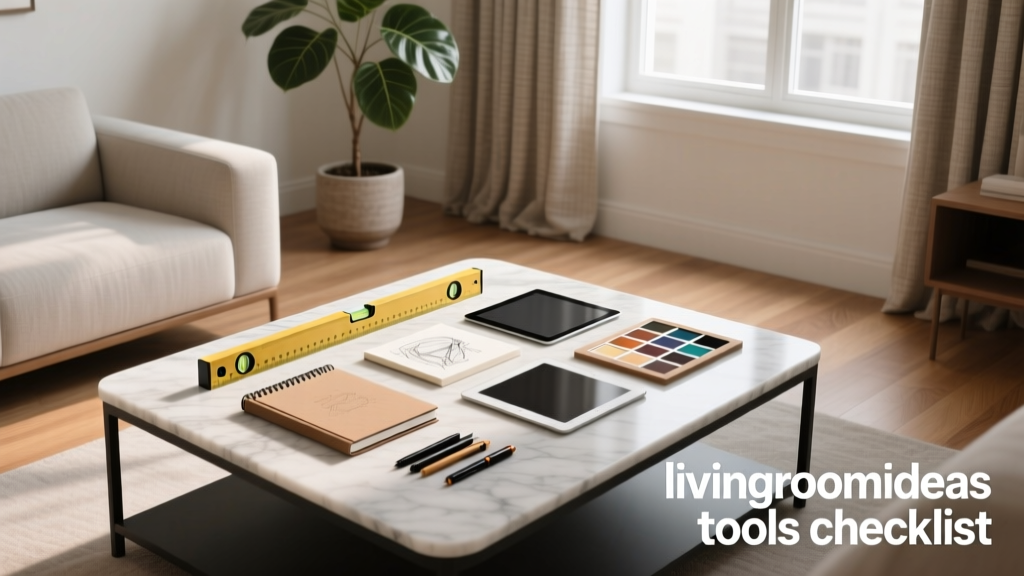
The Outdoor Living Room Tools Checklist: Essential Gear for Designing, Building, and Maintaining Your Backyard Living Space
Designing an outdoor living room requires more than stylish furniture and fire pits—it demands precision, safety, and durability rooted in the right tools. This checklist covers every phase: from initial site survey and layout to framing a pergola, installing low-voltage lighting, burying conduit for weatherproof outlets, calibrating drip irrigation, and maintaining composite decking year after year. We specify exact models—like the Bosch GLM 100C laser distance measurer (±1.5 mm accuracy), DeWalt DCD791D2 20V MAX XR brushless drill (1,850 RPM, 530 UWO), and Hunter PGJ rotor heads (30–50 PSI operating range)—along with critical tolerances: deck joist spacing must not exceed 16" on center for Trex Enhance Naturals (144" max span), and GFCI-protected outdoor circuits require <100 ms trip time per UL 943 Class A standards. Whether you're a certified landscape architect or a hands-on homeowner, this guide delivers actionable tool requirements—not theory.
Site Assessment & Layout Tools
Accurate measurement and topographic understanding form the foundation of any successful outdoor living room. Skipping calibrated tools here leads to costly rework—misaligned pavers, drainage failures, or non-compliant setbacks. Start with digital tools that eliminate tape-measure parallax and human error. The Bosch GLM 100C laser distance measurer offers ±1.5 mm accuracy up to 328 feet and includes Bluetooth connectivity to export measurements directly into CAD platforms like Vectorworks Landmark or SketchUp Pro. Pair it with a rotary laser level such as the Spectra Precision LL300 (±1/8" at 100 feet) to establish true horizontal reference planes across slopes exceeding 5% grade.
For soil analysis—critical before installing patios or foundations—use the FieldScout TDR 300 Soil Moisture Meter (0–100% volumetric water content, ±3% accuracy) and a calibrated pH probe like the Hanna Instruments HI98107 (range: 0.0–14.0 pH, ±0.1 resolution). Record readings at three depths: 2", 6", and 12". If clay content exceeds 35% (verified via jar test per ASTM D422), specify Type II bedding sand (ASTM C33) instead of crusher fines for paver bases. Always verify property lines using a licensed surveyor’s pin locations—not fence posts or neighbor assumptions—and maintain minimum 5-foot setbacks from property boundaries for covered structures per IRC R302.1.
Essential Layout Kit Components
- Bosch GLM 100C Laser Distance Measurer (328 ft range, ±1.5 mm)
- Spectra Precision LL300 Rotary Laser Level (self-leveling, ±1/8" @ 100 ft)
- Stabila 37847 Aluminum Grade Rod (8-ft, machined to ±0.005" flatness)
- Markal PaintStick 3000 Permanent Marking Chalk (UV-resistant, 12-month fade resistance)
- Leica DISTO D2 (slope-corrected area calculation, ISO 16331-1 certified)
Never rely on smartphone apps for grading or elevation checks—they lack NIST-traceable calibration. A single 0.5° error in slope calculation over a 20-foot patio run creates a 2.1-inch elevation discrepancy, violating ADA’s 1:48 maximum ramp slope (2%) and inviting ponding.
Framing & Structural Construction Tools
Outdoor living rooms often include pergolas, covered lounges, or built-in seating—all requiring structural integrity under wind loads (ASCE 7-22 Category II: 90 mph basic wind speed) and snow accumulation (e.g., 40 PSF ground snow load in Denver). Framing tools must deliver repeatable fastener placement, square alignment, and material-specific torque control. The DeWalt DCD791D2 20V MAX XR brushless drill delivers 1,850 RPM and 530 UWO, but its true value lies in the integrated LED worklight and electronic brake—critical when driving GRK RSS #10 x 3-1/4" structural screws into pressure-treated southern yellow pine (SYP) columns rated to UC4B.
For post-to-beam connections, use a Milwaukee M18 FUEL Right Angle Drill (model 2745-20) with a 3/8" hex chuck and 0–550 RPM low-speed setting. This prevents wood fiber blowout when installing Simpson Strong-Tie ABU44Z post bases (load-rated to 11,100 lbs vertical, 4,200 lbs lateral). Always verify joist hanger nail patterns: for 2×10 joists supporting Trex Select decking (max span 16'–0"), use 10d galvanized nails (0.148" dia × 3") driven fully—never partial-set—to achieve the full 675-lb uplift capacity listed in Simpson’s C-C-2023 catalog.
Torque Specifications Matter
Over-torquing stainless steel lag screws compromises corrosion resistance; under-torquing invites racking. Use a calibrated torque wrench: the CDI 2501M (10–250 in-lbs, ±2% accuracy) for 3/8" lags into cedar beams, and the Proto J7020 (25–250 ft-lbs, ±1.5%) for 1/2" anchor bolts securing ledger boards to concrete footings. Per ICC-ES ESR-2270, ledger board bolts require minimum embedment depth of 4-1/2" into 3,000 psi concrete (tested compressive strength per ASTM C39) and 12" minimum edge distance from footing face.
Electrical & Low-Voltage Systems
Outdoor living rooms demand safe, code-compliant power—especially with heaters, audio systems, and smart lighting. All receptacles must be GFCI-protected (UL 943 Class A, 5 mA trip threshold, <100 ms response time) and installed in weatherproof boxes rated NEMA 3R or 4X. For hardwired 240V infrared heaters like the Bromic Tungsten Smart-Heat (5,600W, IP65), use 6 AWG THWN-2 copper conductors in rigid metal conduit (RMC) buried 18" deep per NEC 300.5(D)(3). For low-voltage lighting (12V AC/DC), select a transformer with built-in voltage regulation—such as the Malibu 300-Watt Multi-Tap Transformer (outputs 12V, 13V, 14V, 15V)—and pair it with a Fluke 87V True RMS Multimeter to verify output stays within ±5% under 80% load.
Conduit bending requires precision: use the Greenlee 825 bender with degree markings accurate to ±1°, and always calculate bend radius per NEC Table 1, Chapter 9—minimum 6× conduit diameter for 1/2" EMT. When pulling wire, apply only 30 lbs of tension (per Southwire’s Ampacity Guide) to avoid jacket deformation. Label all circuits at the panel with Legrand Adorne Wire Labels (UL-listed, UV-stable, 20-year print retention).
Low-Voltage Lighting Calibration Steps
- Measure total linear feet of lighting runs using Bosch GLM 100C
- Calculate wattage load: e.g., 30 x Kichler 15772AZ 3W path lights = 90W + 15% safety margin = 103.5W
- Select transformer tap: 103.5W ÷ 12V = 8.6A → choose 12V tap on 300W unit (25A max)
- Verify voltage drop: at farthest fixture, Fluke 87V must read ≥11.4V (5% max drop)
- Adjust tap if needed; never exceed 100 ft run length on 12-gauge wire per Kichler spec sheet
Always install junction boxes with silicone gasket seals (Hubbell WB4220) and use waterproof wire nuts rated to UL 486C (e.g., Ideal Twister W-66). Standard wire nuts fail outdoors within 18 months due to thermal cycling.
Irrigation & Water Feature Integration
Outdoor living rooms increasingly integrate drought-tolerant planting beds and recirculating water features. Irrigation tools must ensure emitter uniformity and prevent overspray onto seating zones. Pressure-compensating drip emitters like the Netafim Techline CV (0.4–2.0 GPH, compensates 10–60 PSI) maintain ±5% flow variation across 100-ft lateral runs—critical for consistent root-zone moisture in raised planter beds lined with Root Barrier 40-mil HDPE.
For water features, use a Pentair IntelliFlo VS variable-speed pump (0.65–3.0 HP, 2,800–5,000 RPM) programmed to cycle at 1,200 RPM for quiet operation (<45 dB(A) at 3 ft) during evening use. Install a Jandy NeverLube 3-way valve (1.5" PVC, 150 PSI rating) to isolate fountain nozzles from main circulation—enabling cleaning without draining the entire system. Always size supply lines per Hazen-Williams: for 30 GPM peak flow, use minimum 1.25" Schedule 40 PVC (C-factor = 150) to limit velocity to <5 fps and prevent erosion-corrosion.
| Component | Minimum Spec | Testing Standard | Max Run Length (12V) |
|---|---|---|---|
| Kichler 15772AZ Path Light | 3W, IP67, 25,000-hr LED | UL 1838, IEC 60598 | 100 ft (12 AWG) |
| Hunter PGJ Rotor | 30–50 PSI, 25–35 ft radius | ASAE S395.2, ANSI/NSF 61 | N/A (line voltage) |
| Netafim Techline CV | 0.4–2.0 GPH, 10–60 PSI comp. | ASAE EP408.4, ISO 9261 | 300 ft (1/2" poly) |
| Malibu Transformer | 300W, multi-tap, 12V–15V | UL 1861, CSA C22.2 No. 222 | 100 ft (12 AWG) |
Pressure-test all PVC glue joints at 150% working pressure (e.g., 75 PSI for 50 PSI-rated pipe) for 2 hours using a Watts Regulator 222-150 test gauge (±0.5 PSI accuracy). Record results on a signed irrigation commissioning log—required by LEED v4.1 WE Credit 3 for outdoor water use reduction.
Lighting & Audio Installation Tools
Effective ambiance relies on precise beam angle control and acoustic clarity. For adjustable path lighting, use a Hilti TE 6-A36 rotary hammer with SDS-plus chuck to drill 3/4" holes in concrete patios for 18" tall Kichler 15772AZ fixtures—depth must be exactly 12" to meet NEC 410.112(G) burial requirements for wet-location luminaires. For recessed deck lighting, a Bosch Colt Palm Router (23,000 RPM, 1/4" collet) with a Whiteside 3/4" flush-trim bit ensures clean, 3/4"-deep pockets for Litton LED strips (IP68, 12V DC, 1,200 lumens/ft).
Audio integration demands signal integrity. Use a Klein Tools VDV501-800 Cable Tester to verify continuity and shorts on 70V line speaker cable (e.g., Belden 9451), then measure impedance with a BK Precision 891 LCR meter. For dual-zone systems (e.g., lounge + dining), terminate at a SpeakerCraft AIM7 Five amplifier (7x70W, 70V/8Ω selectable) with gold-plated binding posts—never aluminum crimps. Mount speakers at ear level (48" AFF) and angle 15° downward for even SPL distribution (target: 72 dB(A) at primary seating per ANSI S3.4-2007).
Maintenance & Seasonal Readiness Tools
A well-designed outdoor living room degrades without proactive upkeep. Composite decking like Trex Transcend requires semi-annual cleaning with a pressure washer set to ≤1,500 PSI and 40° fan tip—higher pressures erode capstock. Use a Kärcher K5 Premium Full Control (1,500 PSI / 1.5 GPM, 1,600-watt motor) with a Surface Cleaner attachment (12" diameter, 2,500 RPM rotation) to remove organic buildup without damaging grain texture. For algae on limestone coping, apply StoneTech Algae & Moss Remover (sodium hypochlorite-based, pH 12.5) with a Chapin 1-gallon sprayer calibrated to 0.5 gal/1,000 sq ft.
Winter prep is non-negotiable in freeze-thaw zones. Drain all irrigation laterals below frost line (e.g., 48" deep in Chicago per IECC 2021 Table R404.1.1). Use a Campbell Hausfeld VT6270 Air Compressor (2.6 SCFM @ 90 PSI) to blow out lines at 50 PSI—never exceed 80 PSI to avoid bursting poly tubing. Store propane tanks upright in ventilated sheds (not garages); check regulator diaphragms annually—Weishaupt WR 120 units fail after 5 years per manufacturer service bulletin SB-2021-04.
Annual Inspection Checklist
- Verify GFCI trip time with a Sperry Instruments GFI6302 tester (<100 ms at 5 mA)
- Inspect Trex fasteners for corrosion: replace any with hidden fasteners showing >10% surface pitting
- Test Hunter PGJ rotors for pattern uniformity: place 12 collection cans in a 20-ft grid; coefficient of uniformity must exceed 0.75 per ASAE EP408.1
- Calibrate thermostat sensors for Bromic heaters: use Fluke 87V with K-type thermocouple probe (±0.5°C accuracy)
- Check conduit seals: Hubbell WB4220 gaskets must show no cracking or compression set >2 mm
Replace all landscape lighting LEDs every 7 years—even if functional—as lumen depreciation exceeds 30% by year 7 (per DOE LM-80 data for Cree XP-G3 emitters). Dimming curves also shift, causing visible color temperature drift between new and aged fixtures. Document every maintenance action in a cloud-based log using Fieldwire software, tagging photos and timestamps for warranty validation.
Tool Storage & Safety Compliance
Organized storage extends tool life and ensures rapid deployment. Use a Husky 72" Wide 6-Drawer Rolling Tool Cabinet (model H726RC) with 3-point locking, 2,000-lb total capacity, and powder-coated steel (ASTM D3003 salt-spray tested to 500 hours). Store lithium batteries separately in a Fireboy Xintex Lithium Battery Safe (UL 2750 certified, 1,200°F 30-min fire containment). All extension cords must be SJTW-rated (14 AWG minimum, 100 ft max length per OSHA 1926.405(a)(2)(ii)(B)) and inspected weekly for jacket cracks using a Klein Tools Insulated Glove Tester (10 kV DC hipot test).
Personal protective equipment (PPE) is mandatory—not optional. Wear Pyramex I-Force Safety Glasses (ANSI Z87.1+ high impact, UV400), hearing protection rated NRR 33 (3M Peltor Optime 105), and cut-resistant gloves (HexArmor 2122, ANSI A5 cut level) when handling stainless steel cables or stone veneer. Never operate rotating tools without side handles—DeWalt drills ship with them for a reason: torque reaction can cause wrist fractures at 1,200 in-lbs of rotational force.
Finally, verify local amendments: California Title 24 mandates all outdoor lighting be fully shielded and ≤3,000K CCT; NYC Zoning Resolution § 23-44 requires covered outdoor living rooms to comply with roof assembly fire ratings (Class A per ASTM E108). Tools alone won’t satisfy code—but without them, compliance is impossible. Prioritize calibration, document everything, and treat every tool as a precision instrument—not just hardware.
The difference between a backyard that functions and one that endures lies in deliberate tool selection. A $120 Bosch laser measurer prevents $2,500 in paver rework. A $220 Fluke multimeter catches a 3% voltage drop before it fries $1,800 in smart lighting controllers. These aren’t luxuries—they’re insurance against failure, inefficiency, and liability. Invest in the right tool for the job, calibrate it quarterly, train your crew on its proper use, and track performance against manufacturer specifications. That’s how outdoor living rooms evolve from seasonal experiments into permanent, livable extensions of the home.
Remember: Trex specifies 16" o.c. joist spacing for Enhance Naturals because deflection beyond L/360 causes perceptible bounce—and that bounce accelerates fastener fatigue. Similarly, Hunter’s PGJ rotors require 30 PSI minimum to fully extend the spray arm; below that, coverage drops 40%. Tools make those thresholds measurable, repeatable, and enforceable. Don’t guess. Measure. Verify. Document.
When installing low-voltage wire, bury it at 6" depth in protected areas (under mulch or gravel) but 18" under driveways per NEC 300.5(D)(4). Use a Gardner Bender 12" Probe Rod to locate existing utilities before trenching—striking a gas line isn’t a ‘learning opportunity’; it’s a federal violation under 49 CFR 196. Keep a copy of the latest National Electrical Code (NFPA 70-2023) and ICC-IRC 2021 on-site, not just on your laptop. Physical copies are required for municipal inspections in 37 states.
Composite decking cleaners matter: Simple Green Pro HD (pH 11.5) is safe for Trex, but vinegar-based solutions degrade capstock polymers. Always rinse with potable water after chemical application—residual salts accelerate corrosion of stainless steel fasteners. And never use abrasive pads on brushed aluminum pergola frames; a 3M Scotch-Brite 7446 pad (non-woven, silicon carbide) is the only approved option per Lindab USA technical bulletin TB-ALU-2023.
For fire pit installations, use a Temco 36" Round Steel Fire Ring (12-gauge steel, ASTM A1011 CS Type B) embedded 2" into pea gravel base. Surround with non-combustible material extending 36" beyond ring diameter—per NFPA 58 and CSA Z240.4.1. Verify clearance to combustibles: 10 ft minimum to vinyl siding, 6 ft to cedar shakes. These distances aren’t arbitrary—they’re derived from radiant heat flux modeling at 1.5 kW/m², the ignition threshold for common claddings.
Finally, keep calibration records traceable to NIST standards. Send your Bosch GLM 100C to Bosch Service Center every 12 months ($89 recalibration fee); log dates in your project management software. An uncalibrated laser is worse than no laser—it provides false confidence. Precision isn’t expensive. It’s essential.
More Articles
 Ultimate Style Guide: Designing Outdoor Living Spaces That Reflect Your Personality and Elevate Everyday Life
 Outdoor Bar Counter Height Guidelines - The Decor Mag
 Outdoor Kitchen Vent Hood Sizing - The Decor Mag
 Container Garden Design Inspiration - The Decor Mag
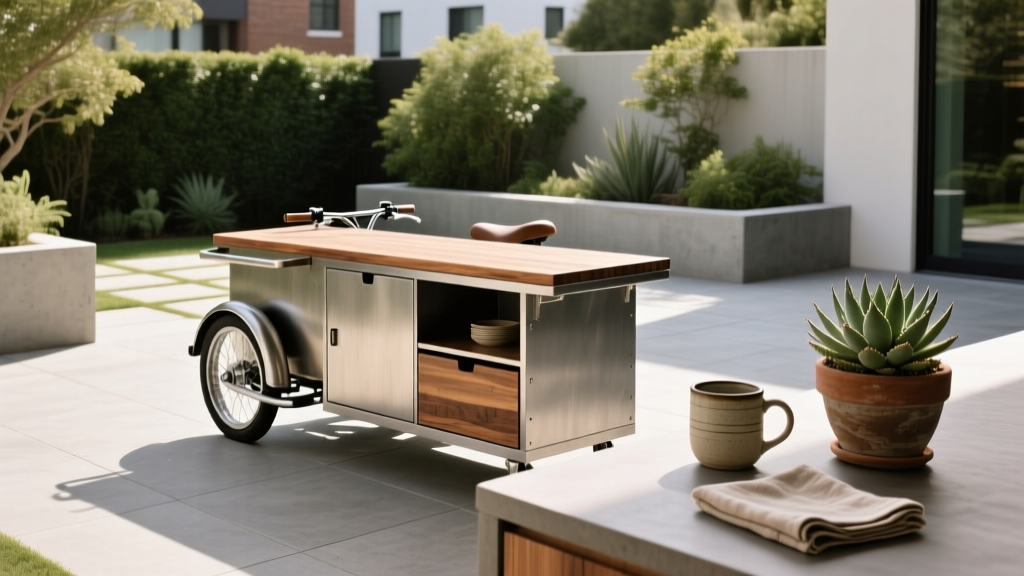 Best Outdoor Side Car Cart Bar Ideas - The Decor Mag
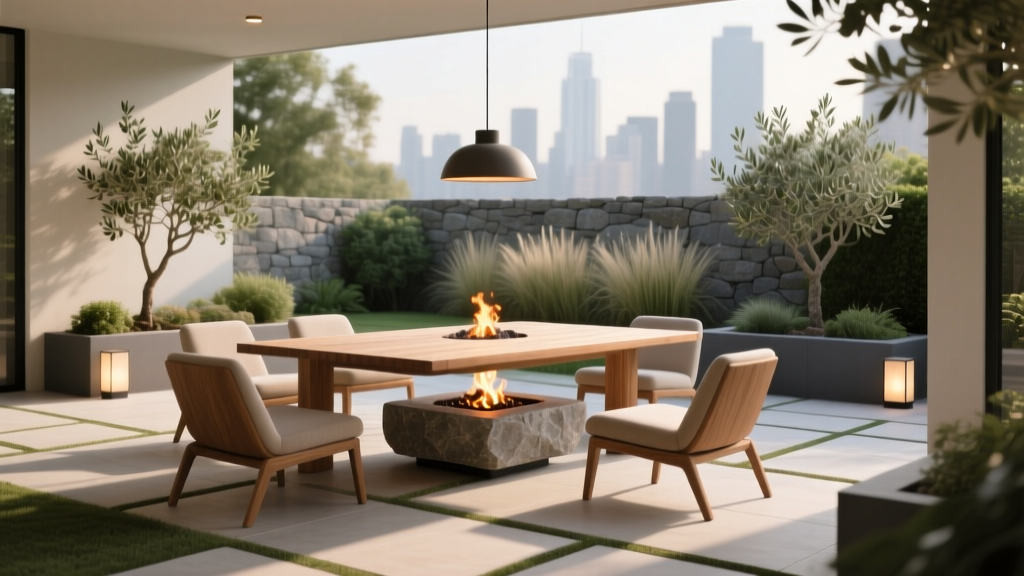 How to Create an Outdoor Dining Area - The Decor Mag
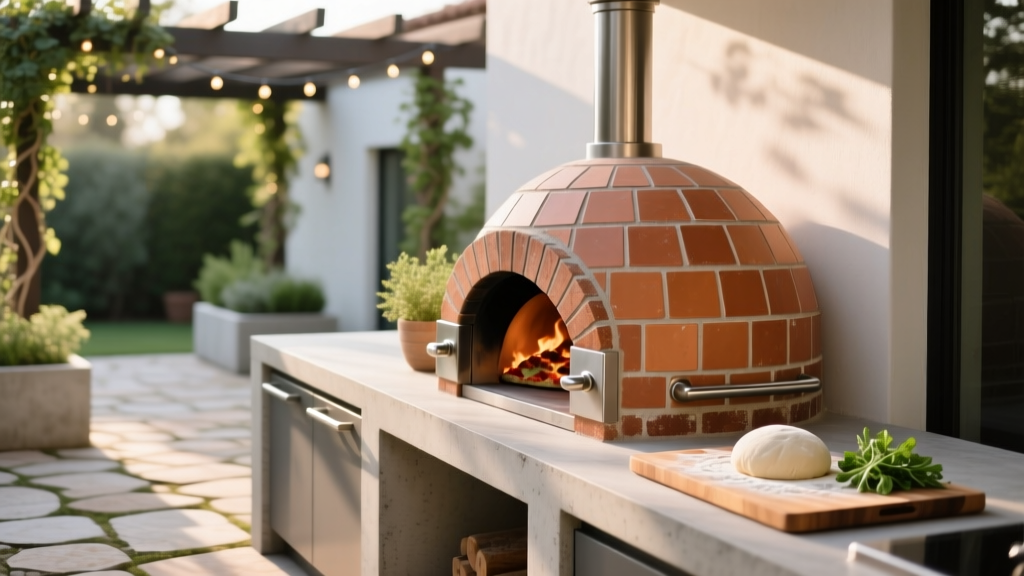 Outdoor Pizza Oven Installation Guide - The Decor Mag
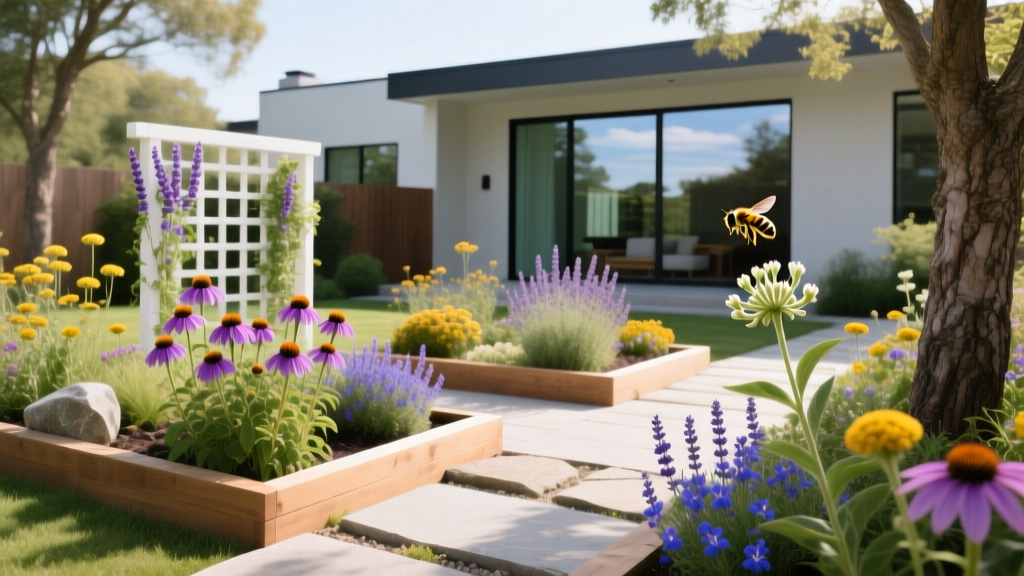 How to Create a Pollinator Garden - The Decor Mag
 Best Bedroom Inspiration for Cozy: Science-Backed Design Strategies That Warm Your Space and Improve Sleep
 Outdoor Kitchen Smoker Box Integration - The Decor Mag