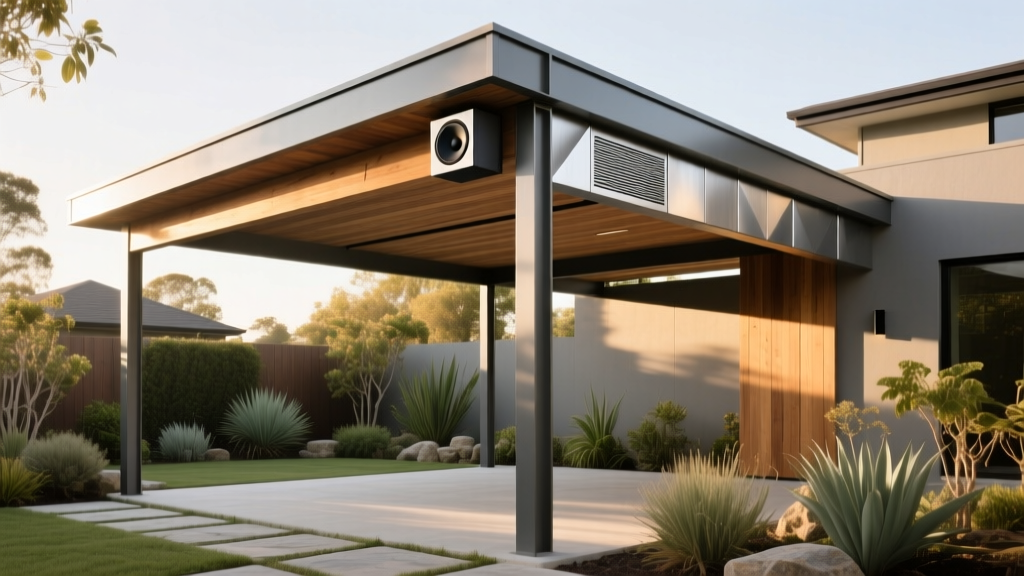
Outdoor Pergola Integrated Speaker System - The Decor Mag
A pergola already changes how a patio feels: it adds architecture, defines “the outdoor room,” and makes even a simple deck feel intentional. Add an integrated speaker system, and the space becomes more than attractive—it becomes usable. Music at the right volume softens traffic noise, makes dinners linger, turns weekend chores into something you actually enjoy, and creates that resort-like mood homeowners chase when upgrading outdoor living spaces.
What makes an outdoor pergola integrated speaker system different from setting a portable speaker on the table is consistency. Thoughtful placement distributes sound evenly so you don’t have to blast one corner to hear it everywhere. Wiring (or a clean wireless plan) keeps the patio safe and clutter-free. When the audio is designed alongside the pergola—lighting, ceiling fan, heaters, and furniture layout included—it feels seamless, elevated, and surprisingly practical for year-round outdoor living.
This guide breaks down speaker types, pergola materials, layouts, and plant pairings that work with outdoor audio—plus budget ranges, climate considerations, and common mistakes to avoid so your backyard upgrade sounds as good as it looks.
Why Integrate Speakers Into a Pergola?
An integrated approach improves both aesthetics and performance. You get better coverage, fewer trip hazards, and a patio that stays “ready” for entertaining without dragging gear out each weekend.
- Even sound coverage: Multiple smaller speakers beat one loud speaker, especially in open-air patios.
- Cleaner design: Concealed wiring and matched finishes keep your pergola and landscaping the focal point.
- Safer outdoor living: Fewer extension cords, fewer water risks, and less clutter around furniture.
- Better neighbor-friendly listening: Proper placement keeps volume comfortable where you sit—without projecting across the yard.
- Higher resale appeal: Outdoor kitchens and covered patios sell; integrated patio lighting and audio are increasingly expected in upgraded homes.
Plan the Pergola First: Layout and Use Cases
Before choosing speakers, decide what your pergola is meant to do. Audio design follows function—and a pergola used for dining has different needs than a pergola used for lounging or a spa area.
Choose Your Primary Zone
Pick one main purpose, then layer secondary uses.
- Dining pergola: Clear conversation is priority. Aim for gentle, even background sound.
- Lounge pergola: Richer sound with a bit more bass is welcome.
- Outdoor kitchen/bar: Speakers should cover prep areas without blasting the dining table.
- Fire pit or spa corner: Think relaxed volume, warm lighting, and weatherproof components.
Design Tip: Use Furniture Placement to “Tune” the Space
- Center a dining table under the pergola so sound can be distributed symmetrically.
- For lounge seating, use an L-shaped sectional or paired sofas to keep listeners within the “sweet spot.”
- Use outdoor rugs and cushions to reduce harsh reflections, especially under aluminum or fiberglass roofing panels.
Pergola Styles and Materials That Pair Well With Integrated Audio
Your pergola material affects how easy it is to run wiring and how sound behaves in the space. It also determines maintenance and longevity—critical in sun, rain, salt air, or freeze/thaw climates.
Wood Pergolas (Cedar or Redwood)
- Best for: Warm, natural outdoor design; gardens with lots of planting; classic patios.
- Audio advantage: Easy to fish wires through beams; wood visually hides small speakers.
- Material recommendations:
- Cedar: Naturally rot-resistant; takes stain well.
- Redwood: Premium look; excellent durability where available.
- Hardware: Use stainless steel screws/bolts outdoors, especially near pools or coastal areas.
- Maintenance: Re-stain or seal every 2–4 years depending on sun exposure; inspect for cracks around mounted brackets.
Aluminum Pergolas
- Best for: Modern patio living, low-maintenance yards, contemporary hardscapes.
- Audio advantage: Clean channels for concealed wiring; stable structure for precise aiming.
- Watch for: Sound reflections if you add solid panels or a hard roof—balance with soft furnishings and plants.
- Maintenance: Rinse pollen and grime seasonally; check cable grommets for UV wear.
Vinyl or Composite Pergolas
- Best for: Low upkeep and consistent appearance.
- Audio advantage: Easy to keep looking crisp; wiring can be concealed with raceways.
- Watch for: Heat expansion and limited structural mounting points—use proper backing plates for speakers.
Speaker Options: What Works Outdoors (and Under a Pergola)
Outdoor audio has one job: survive the elements while sounding great at reasonable volume. Look for weatherproof ratings, UV-resistant materials, and rust-proof hardware.
1) Under-Beam Mounted Patio Speakers
These mount to pergola posts or beams and aim toward the listening area.
- Best for: Dining and lounge pergolas where you want sound focused inward.
- Placement tip: Mount in pairs on opposite beams, angled slightly down toward ear level.
- What to look for: UV-stable enclosures, aluminum grilles, stainless mounting brackets.
2) In-Ceiling Speakers (For Covered Pergolas)
If your pergola has a solid roof or finished ceiling (tongue-and-groove wood, composite panels), in-ceiling speakers create a sleek, built-in look.
- Best for: Covered patios, screened rooms, and pergolas with a finished ceiling plane.
- Sound note: Avoid placing speakers directly above where people talk. Place slightly outside the dining table perimeter for better conversation comfort.
- Moisture tip: Choose marine-grade or “outdoor rated” ceiling models if humidity is high.
3) Landscape Speakers + Pergola Combo
For larger backyards, blend pergola audio with landscape speakers among planting beds to extend sound across the patio, pool deck, and garden paths.
- Best for: Entertaining zones that spill beyond the pergola.
- Design win: Lower volumes spread across more speakers sound more luxurious and reduce neighbor disturbance.
4) Wireless vs. Wired: Practical Guidance
- Wired systems: Most reliable, best sound quality, best for long-term value. Ideal if you’re already building or renovating a pergola or patio.
- Wireless outdoor speakers: Great for renters or quick upgrades, but plan for charging, Wi-Fi range, and potential dropouts.
- Hybrid approach: Wired speakers with a Wi-Fi/Bluetooth amplifier tucked inside the house, garage, or a weather-rated cabinet.
Recommended Layouts for Great Sound (Without Hot Spots)
Sound design is more about placement than power. These layouts work well for common pergola sizes.
Small Pergola (10x10 to 10x12)
- Speaker plan: 2 speakers mounted on opposite beams.
- Furniture layout: Bistro set or small dining table centered; add a bench along one side to keep seating within the coverage zone.
- Plant support: Tall planters at corners soften edges and improve perceived comfort.
Medium Pergola (12x14 to 12x16)
- Speaker plan: 4 speakers, one near each corner beam, angled inward.
- Furniture layout: Define zones: dining on one half, lounge chairs on the other. Keep a clear walkway between.
- Optional add-on: A discreet outdoor subwoofer-style landscape unit placed in a planting bed (only if you truly want fuller bass).
Large Pergola or Multi-Zone Patio
- Speaker plan: Pergola speakers + 2–6 landscape speakers along perimeter plantings.
- Pro tip: Use zones (Dining / Lounge / Yard) so you can turn down areas not in use.
- Entertaining upgrade: Pair with dimmable pergola lighting and a ceiling fan to keep guests comfortable across seasons.
Furniture and Decor That Complements an Audio-Forward Pergola
Integrated speakers are easiest to enjoy when your patio furniture layout supports conversation and movement. Choose pieces that handle weather and help the space feel layered rather than echo-y.
Furniture Recommendations (Practical + Stylish)
- Dining: Powder-coated aluminum table frames with a teak or ceramic top for durability; sling or rope-woven chairs with quick-dry cushions.
- Lounge: Modular outdoor sectional in solution-dyed acrylic fabric (often marketed as fade-resistant performance fabric).
- Shade and warmth: Add outdoor curtains on pergola sides for late-afternoon sun and better acoustics.
- Sound-friendly soft goods: Outdoor rug (polypropylene) + a few oversized cushions to reduce hard-surface “clap back.”
Finishes That Hide Hardware
- Match speaker grilles to pergola color (many outdoor speakers come in white/black; some are paintable).
- Use low-profile cable channels painted to match beams.
- Choose matte finishes for nearby lighting to avoid visual clutter overhead.
Plants That Pair Beautifully With Pergolas (and Play Nicely With Speakers)
Strategic landscaping around a pergola adds privacy, reduces perceived noise from streets, and makes the audio feel immersive. Keep plants clear of speaker cones and avoid constant dripping from irrigation.
Climbing Plants for Pergola Posts and Beams
- Star jasmine: Fragrant, evergreen in many climates; great for a lush outdoor living vibe.
- Clematis: Showy blooms; choose varieties suited to your USDA zone.
- Climbing roses: Classic romance; plan seasonal pruning and train away from fixtures.
- Grapevine: Gorgeous dappled shade; deciduous in many regions—excellent for seasonal sun control.
Planter and Bed Plants for a Polished Patio Perimeter
- Lavender: Drought-tolerant, fragrant, pollinator-friendly; works well near seating.
- Ornamental grasses (e.g., fountain grass): Movement and softness; great for modern pergola designs.
- Boxwood or compact hollies: Structured evergreen backdrop for year-round outdoor living.
- Herbs near an outdoor kitchen: Rosemary, thyme, basil—practical and aromatic.
Climate and Maintenance Considerations
Outdoor speaker longevity depends on climate-smart choices: placement, materials, and routine checks.
Hot, Sunny Climates
- Choose UV-rated speakers and solution-dyed cushions to prevent fading.
- Add pergola shade: slatted roof, retractable canopy, or vines like grapevine for seasonal filtering.
- Check speaker mounts seasonally—heat cycles can loosen fasteners.
Wet or Humid Climates
- Look for marine-grade or high-weather-resistance speaker models.
- Use drip loops in wiring so water doesn’t run into connections.
- Avoid mounting speakers where roof runoff splashes; extend gutters or add a discreet rain diverter.
Cold Winters and Freeze/Thaw Areas
- Use sealed connections and weather-rated junction boxes.
- If you use a wireless amp outdoors, place it in a temperature-stable location (garage/utility space) instead.
- For year-round comfort, consider infrared heaters or a fire feature—music and warmth make shoulder seasons feel usable.
Coastal and Poolside Environments
- Prioritize stainless hardware and corrosion-resistant speaker grilles.
- Rinse exterior surfaces periodically to remove salt or chlorine residue.
Budget Ranges: What to Expect
Costs vary based on pergola size, wiring complexity, and whether you’re expanding into landscape audio zones.
- Entry level ($300–$900): 2 weather-resistant speakers + basic Bluetooth amp; visible but tidy cable management.
- Mid-range ($1,000–$3,500): 4 speakers + zone-capable amp, better mounting, concealed wiring, optional professional installation.
- Premium ($3,500–$10,000+): Multi-zone pergola + landscape speaker system, higher-end amplification, integrated controls, coordinated lighting and possibly TV or projector audio.
If you’re building a new pergola or renovating a patio, running wire during construction typically saves money compared to retrofitting later.
Common Mistakes to Avoid
- Mounting speakers too high and aiming them flat: You’ll lose clarity and crank volume unnecessarily. Angle down toward seating.
- Using indoor-rated equipment outdoors: Moisture and UV exposure will shorten lifespan fast.
- Overloading bass in a small pergola: It can overwhelm conversation and travel farther than you think.
- Skipping zones: If your patio includes a dining area and a lounge area, zone control prevents sound wars.
- Ignoring wiring pathways: Exposed cords look messy and can be unsafe in rainy weather. Plan concealed routes along beams/posts.
- Letting plants block speakers: Vines and shrubs grow quickly—leave clearance and schedule seasonal trims.
FAQ: Outdoor Pergola Integrated Speaker Systems
Do I need professional installation for pergola speakers?
If you’re comfortable mounting hardware and following outdoor electrical best practices, a simple two-speaker setup can be DIY. For in-ceiling speakers, multi-zone systems, or any setup requiring new electrical circuits, hiring a pro is usually worth it for safety, cleaner wiring, and long-term reliability.
What weather rating should outdoor speakers have?
Look for speakers specifically labeled for outdoor use with UV resistance and corrosion-resistant hardware. If you live in a humid, coastal, or heavy-rain climate, choose higher weatherproofing and marine-grade components when available.
How many speakers do I need for a pergola?
Most small pergolas do well with 2 speakers. Medium pergolas often sound best with 4 for even coverage. Large patios benefit from a pergola zone plus landscape speakers to spread sound at lower volumes.
Can I integrate speakers with pergola lighting and smart controls?
Yes. Many homeowners pair pergola speakers with smart dimmers, outdoor-rated Wi-Fi controls, and voice assistants. The best results come from planning power, wiring routes, and control locations together so everything feels intentional.
Will outdoor speakers bother my neighbors?
They can—unless you design for lower, more even coverage. Multiple speakers at lower volume aimed inward typically sound better to you and quieter beyond your property line than one loud speaker.
What’s the best time of year to install an outdoor pergola audio system?
Spring and early fall are ideal for construction and planting around your pergola. If you want year-round outdoor living, plan ahead for winter: weatherproof connections, heater placement, and protected amplifier locations make a big difference.
Next Steps: Turn Your Pergola Into an Outdoor Living Room That Sounds Incredible
Start by defining how you’ll use the space—dining, lounging, cooking, or all three—then sketch your pergola furniture layout. From there, choose a speaker approach (beam-mounted, in-ceiling for covered pergolas, or a pergola-plus-landscape system) and match it to your pergola material for the cleanest installation. Finish with soft furnishings, layered lighting, and privacy planting that makes the patio feel like a true extension of your home.
If you’re ready to move forward, your simplest action plan looks like this:
- Measure your pergola and mark seating zones.
- Select 2 or 4 outdoor-rated speakers and decide wired vs. hybrid control.
- Plan concealed wire routes and choose corrosion-resistant hardware.
- Layer in outdoor lighting, an all-weather rug, and planters for comfort and acoustics.
- Choose low-maintenance plants that support privacy and seasonal beauty.
For more inspiring outdoor design, landscaping ideas, patio living upgrades, and pergola trends, explore the latest guides on thedecormag.com.
More Articles
 Best Outdoor Glass Storage Cabinet - The Decor Mag
 How to Create a Firefly Garden - The Decor Mag
 Outdoor Pizza Oven Installation Guide - The Decor Mag
 Best Outdoor Lantern and Candle Options - The Decor Mag
 Best Outdoor Bar Strainer and Shaker Rack - The Decor Mag
 Best Outdoor Bar Lemon Wedge Bowl - The Decor Mag
 Kid-Friendly Backyard Play Zones: Landscape-Blending Ideas
 How to Design a Pollinator Pathway - The Decor Mag
 Best Outdoor Bar Cheese Board Display - The Decor Mag
 Outdoor Gazebo with Screen Curtains - The Decor Mag