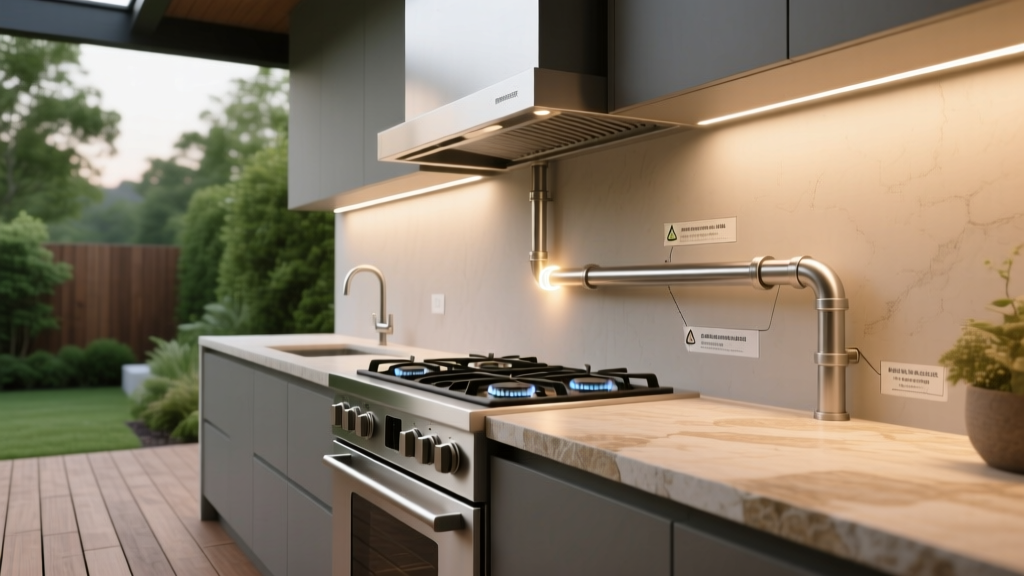
Outdoor Kitchen Gas Line Planning - The Decor Mag
An outdoor kitchen can turn an ordinary patio into the heart of your home’s outdoor living space—where weeknight dinners feel like a getaway and weekends become effortless gatherings. But the feature that makes an outdoor kitchen feel truly “built-in” and reliable year-round is often the least glamorous: a well-planned gas line.
Gas line planning affects everything from where your grill sits and how your traffic flows to whether you can add a pizza oven later or keep a fire feature running on cool evenings. When done right, your outdoor kitchen feels seamless, safe, and ready for four-season patio living. When done poorly, it can lead to expensive rework, awkward layouts, and performance issues that show up right when guests arrive.
This guide walks you through practical, homeowner-friendly steps for planning an outdoor kitchen gas line—paired with design ideas, materials, plant suggestions, seasonal considerations, and budget ranges so your entire backyard hardscape and landscape plan works together.
Start With the Big Picture: How You’ll Use the Outdoor Kitchen
Before you think about pipe routes or BTUs, define your “outdoor lifestyle brief.” The gas line should serve your cooking habits and your patio layout—not the other way around.
Common outdoor kitchen setups (and what they mean for gas planning)
- Grill-only station: Simplest gas run; often a single appliance stub-out.
- Grill + side burner: Adds demand and may require a larger line size or manifold planning.
- Full outdoor kitchen: Grill, power burner, pizza oven, griddle, heater, and/or fire pit—this benefits from a “future-proof” main line with branches.
- Entertainer’s bar kitchen: Gas may be minimal (grill only) but layout is everything—seating, serving, and prep zones should guide the line location.
Quick layout planning checklist
- Where will guests naturally gather—near the cook or away from heat and smoke?
- Do you want the grill under a covered patio, pergola, or open sky?
- How far is the kitchen from the house, the gas meter, and your primary entertaining area?
- Will you add a fire feature or patio heater for shoulder seasons?
Know Your Fuel: Natural Gas vs. Propane (and Why It Changes Everything)
Homeowners often choose gas for convenience and consistent heat. The planning approach depends on whether you’re using natural gas (piped from your home’s supply) or propane (stored in a tank).
Natural gas: best for built-in, year-round outdoor living
- Pros: No tank swaps, consistent supply, great for frequent grilling and all-season patio use.
- Cons: Requires proper permits, sizing, and professional installation; longer runs can increase cost.
Propane: flexible for smaller patios or phased upgrades
- Pros: Easier placement, great for patios far from the meter, works well for modular islands.
- Cons: Tank storage must be safely ventilated; refills; less “permanent” feel.
If you’re investing in a permanent outdoor kitchen island, natural gas typically delivers the most seamless experience—especially for homeowners building an outdoor living space designed for entertaining beyond summer.
Gas Line Sizing and Appliance Planning: Build a “Load List”
The most common gas line planning mistake is treating an outdoor grill like a standalone project. Your outdoor kitchen often grows: a side burner today, a fire pit next year, maybe a patio heater later. Planning for that expansion can save real money.
Create an appliance load list
Write down every gas appliance you want now and might want later, including:
- Built-in grill (BTU rating)
- Power burner / side burner
- Gas pizza oven
- Gas griddle
- Gas fire pit or fire table
- Patio heater(s)
Share this list with your licensed plumber or gas fitter so they can plan line sizing and pressure based on total demand and distance. This is also where a manifold system (a central distribution point with branches) can make future add-ons easier and cleaner.
Tip: plan for future, even if you don’t buy it yet
- Ask for a capped stub-out for a future appliance (like a fire pit) while trenches are open.
- Confirm your chosen grill can be ordered for natural gas or converted properly (many models require a manufacturer-approved conversion kit).
Where the Line Runs: Placement, Routing, and Outdoor Kitchen Layout
Gas routing should work hand-in-hand with your patio design, landscaping, and the way you move through the space.
Best practice layout zones (for comfort and flow)
- Hot zone: grill, burner, pizza oven—keep it away from heavy foot traffic.
- Cold zone: fridge, beverage center, bar seating—where guests naturally linger.
- Prep/landing zone: counter space near the grill for trays and tools.
Smart placement recommendations
- Keep the grill oriented with prevailing wind: Position so smoke blows away from seating, doors, and open windows.
- Prioritize service access: Valves, shutoffs, and connections should be reachable without dismantling cabinetry.
- Plan clearances: Maintain safe distances from combustibles (like wood fencing, privacy screens, and pergola drapes).
- Think about lighting and nighttime use: If you grill year-round, pair gas planning with task lighting and weather-rated outlets.
Design-forward routing ideas
- Under hardscape: Running beneath a paver patio can look clean, but plan it before the patio is installed to avoid costly demo.
- Along the house line: Often the most direct path from the meter; hides routing behind planting beds or a low screen wall.
- Through a landscape zone: If trenching crosses planting areas, choose hardy plants that recover well (suggestions below).
Materials That Make Outdoor Kitchens Feel Premium (and Last Longer)
Great gas line planning pairs with weather-tough materials so your outdoor kitchen holds up through sun, rain, freeze-thaw, and year-round entertaining.
Outdoor kitchen island construction
- Framing: galvanized steel studs (excellent for moisture resistance) or masonry block for a fully permanent build.
- Countertops:
- Concrete: customizable and durable; seal regularly.
- Granite: classic, heat-resistant; choose a honed finish for fewer glare and fingerprints.
- Porcelain slabs: high-end, stain-resistant, UV-stable—great for modern outdoor kitchens.
- Cladding: stone veneer, stucco, or fiber-cement panels for a clean architectural look.
Patio and hardscape surfaces near the grill
- Porcelain pavers: low absorption, easy cleanup, modern finish.
- Concrete pavers: versatile, budget-friendly, easy to repair if access is needed.
- Natural stone (travertine, bluestone): timeless; verify slip resistance and sealing needs.
Outdoor furniture recommendations for the kitchen zone
- Bar seating: powder-coated aluminum stools with sling or all-weather rope—comfortable, rust-resistant.
- Dining set: teak or aluminum table with quick-dry cushions for long dinners.
- Shade: cantilever umbrella or a pergola with adjustable louvers to control heat and glare near the cooking area.
Landscaping Around an Outdoor Kitchen: Plants That Look Great and Behave Well
The best outdoor kitchen landscaping softens hardscape edges, improves privacy, and helps the space feel like a destination. Choose plants that won’t drop excessive debris into your grill zone and that tolerate heat, reflected sun, and occasional foot traffic during parties.
Low-litter plants for cleaner patio living
- Evergreen structure: boxwood, dwarf yaupon holly, inkberry holly (great for year-round form)
- Ornamental grasses (use thoughtfully): little bluestem, fountain grass (select low-shedding varieties)
- Perennials: lavender, salvia, daylilies (hardy, pollinator-friendly, low fuss)
- Groundcovers: creeping thyme (fragrant near stepping stones), sedum (drought tolerant)
Edible landscaping that makes the kitchen feel intentional
- Herbs in pots: rosemary, thyme, basil, chives—place near prep space for easy snipping.
- Heat-tolerant edibles: peppers in containers; compact citrus in warm climates.
Privacy and wind management
- Screening shrubs: podocarpus (warm climates), viburnum, arborvitae (colder climates—choose hardy cultivars)
- Layering tip: mix one evergreen layer + one flowering layer + one groundcover layer for a designed look from every angle.
Climate and Maintenance Considerations for Year-Round Outdoor Living
Outdoor kitchens live outside. Your gas line plan should anticipate your climate, seasonal habits, and how you’ll maintain the space.
Cold climates and freeze-thaw regions
- Choose materials that handle freeze-thaw: porcelain pavers, quality concrete pavers, and properly installed natural stone.
- Use weather-rated access doors and keep shutoff access clear even after snow storage shifts around the patio.
- If you grill through winter, add:
- a windbreak (privacy wall or evergreen hedge)
- infrared heater under a covered patio (if allowed/compatible)
- task lighting for early sunsets
Hot, sunny climates
- Prioritize shade: pergola, shade sail, or large cantilever umbrella near seating.
- Select UV-stable surfaces: porcelain slab counters and powder-coated furniture perform well.
- Plan for ventilation if cooking under a roof; keep the cooking zone comfortable and smoke-managed.
Humid and coastal areas
- Use marine-grade stainless hardware where possible; keep metal surfaces clean to prevent corrosion.
- Choose aluminum furniture over iron for rust resistance.
- Rinse salt spray and pollen from surfaces routinely—your outdoor kitchen will look newer longer.
Permits, Shutoffs, and Safety: What Homeowners Should Expect
Most outdoor kitchen gas line installations require a permit and inspection. That’s a good thing—these steps protect your home, your guests, and your investment.
Key safety elements to plan for
- Dedicated shutoff valve: accessible, clearly located, and easy to reach quickly.
- Pressure testing: a standard part of professional installation and inspection.
- Proper connectors and fittings: rated for outdoor use and appropriate for the appliance.
- Ventilation for enclosures: especially relevant for propane storage and for built-in islands with enclosed cavities.
Work with a licensed professional familiar with local code. Gas line work is not a DIY project—your role is planning, design coordination, and making smart selections.
Budget Ranges: What Outdoor Kitchen Gas Line Planning Typically Costs
Costs vary widely based on distance from the meter, trenching complexity, patio demolition (if any), appliance count, and local labor rates. Use these ranges as a starting point when budgeting your outdoor kitchen project.
- Basic natural gas stub-out (short run, easy access): $500–$1,500
- Moderate run with trenching under landscaping/hardscape edges: $1,500–$3,500
- Long run + multiple appliance branches/manifold: $3,500–$7,500+
- Patio demolition and re-installation (if required for routing): add $1,000–$6,000+ depending on size/material
Budget-smart strategy: If you’re rebuilding a patio or adding a new hardscape, schedule gas line work before pavers or concrete go in. That timing can save thousands and keeps your outdoor living space looking polished.
Common Mistakes to Avoid
- Planning for one appliance only: leaving no capacity for a future side burner, fire pit, or heater.
- Putting the grill in the wrong spot: smoke blowing into seating areas, or a hot zone blocking traffic flow.
- Forgetting service access: burying valves behind fixed panels or tight corners.
- Skipping coordination with hardscape: installing a new paver patio, then cutting it open later for gas routing.
- Choosing high-litter plants nearby: messy leaf drop and seeds end up in your cooking and dining zones.
- Underestimating seasonal use: no lighting, no wind protection, and no cold-weather comfort features—so the kitchen sits unused half the year.
FAQ: Outdoor Kitchen Gas Line Planning
Do I need a permit to run a gas line to an outdoor kitchen?
In many areas, yes—especially for natural gas lines. Permits and inspections help ensure safe installation, correct sizing, and leak-free operation. Your contractor can confirm local requirements.
Can I convert my propane grill to natural gas?
Sometimes. Many grills require a manufacturer-approved conversion kit, and some models are not convertible. Check your grill’s specifications before buying so you don’t get stuck with the wrong fuel type.
Where should the gas shutoff valve go?
It should be easy to access quickly and not hidden behind permanently fixed finishes. Many homeowners place the shutoff in an access panel on the island or in a nearby service location recommended by the installer and local code.
How far can a gas line run to an outdoor kitchen?
It can run a significant distance, but longer runs may require larger pipe sizing and careful pressure calculations. Distance, appliance load, and existing gas system capacity all factor into the design.
Is it better to place the outdoor kitchen close to the house?
Often yes for convenience and lower installation cost, but not always. The best placement balances entertaining flow, smoke management, views, and how the kitchen fits into your patio design and landscaping.
What’s the easiest way to “future-proof” an outdoor kitchen?
Plan a manifold or extra capped stub-outs while trenches are open, and leave space in the island design for an additional appliance bay or access panel. It’s one of the simplest ways to support future upgrades without tearing up your patio.
Next Steps: A Simple Plan to Move Forward
- Sketch your outdoor kitchen layout (hot zone, cold zone, prep zone) and mark likely seating locations.
- Build your appliance wish list with BTU specs for now and later.
- Schedule a site visit with a licensed gas professional to discuss routing, shutoff placement, and permitting.
- Coordinate with your patio and landscaping plan so trenching happens before new pavers, planting beds, or lighting go in.
- Choose durable, climate-smart materials and low-litter plants that keep the space beautiful in every season.
Your outdoor kitchen should feel effortless—designed for sizzling summer cookouts, crisp fall gatherings, and winter grilling when you want comfort and convenience outdoors. Thoughtful gas line planning is what makes that kind of year-round outdoor living possible.
Looking for more patio design, landscaping ideas, and outdoor living inspiration? Explore more guides and style-forward backyard upgrades on thedecormag.com.
More Articles
 Outdoor Pergola Fairy Light Draping Guide - The Decor Mag
 Best Outdoor Adirondack Chair Styles - The Decor Mag
 Best Outdoor Bar Herb Garden Planter - The Decor Mag
 How to Design a Rain Garden - The Decor Mag
 Outdoor Bar Top Material Comparison - The Decor Mag
 Best Outdoor Bar Condiment Caddy Ideas - The Decor Mag
 How to Design a Dragonfly Garden - The Decor Mag
 How to Create a Three Sisters Garden - The Decor Mag
 Outdoor Daybed and Cabana Ideas - The Decor Mag
 Best Outdoor Cocktail Cart Picks - The Decor Mag