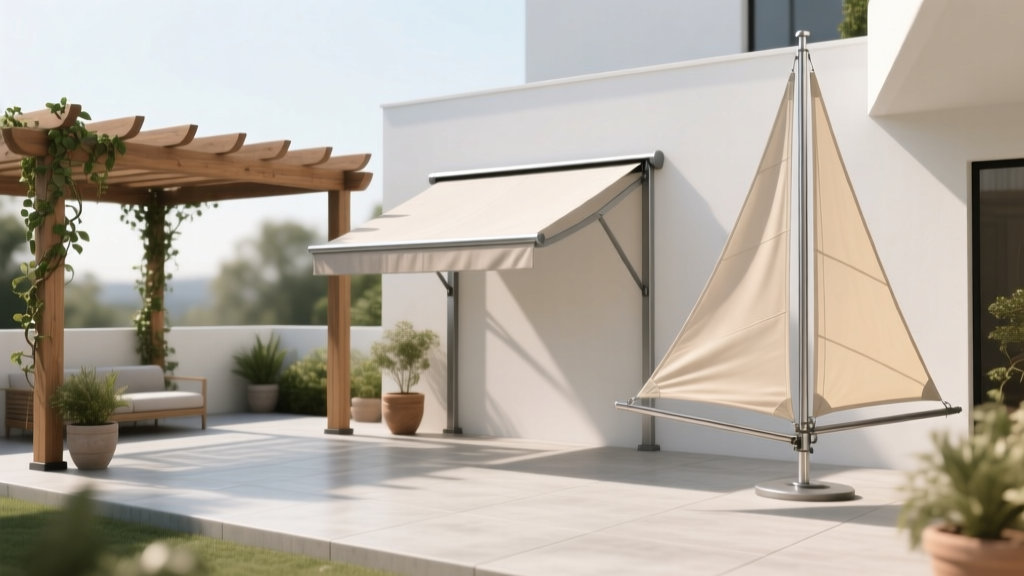
Pergola vs Awning vs Sail Shade: Best Patio Shade (2026)
Shade That Actually Works—Without Sacrificing Style or Sanity
As summer heat climbs and UV indexes spike, your dream patio can quickly become an unshaded no-man’s-land. You’re not just choosing shade—you’re choosing how you’ll live outdoors for the next 5–15 years. Pergolas, awnings, and sail shades each promise relief, but they deliver wildly different experiences in cost, upkeep, weather resilience, and visual impact. We cut through the marketing fluff with real-world data—from $299 DIY kits to $18,000 custom builds—to help homeowners make a confident, climate-smart choice.
Head-to-Head: Pros, Cons & Real-World Performance
Pergolas: Architectural Presence with Customizable Coverage
Pros: Timeless curb appeal (especially cedar or powder-coated aluminum), structural versatility (add retractable canopies, string lights, or climbing vines), and strong resale value—Remodeling Magazine’s 2023 Cost vs. Value Report notes aluminum pergolas recoup 72% of their cost at sale. Modern louvered models (like those from Lumina Outdoor or StruXure) offer tilt-adjustable slats for dynamic sun control and rain runoff.
Cons: Fixed-roof versions provide only partial shade; louvered systems cost 3–4× more than basic builds. Not inherently waterproof—unless engineered with integrated gutters and pitch (e.g., Hardtop Pergolas by Gazebo.com, starting at $6,495).
Awnings: Instant, Adjustable Shade—With Limitations
Pros: Fast deployment (motorized models like SunSetter Motorized XL extend in under 20 seconds), excellent for windows, doors, or narrow patios up to 16' wide, and high UV blockage (up to 98% with solution-dyed acrylic fabrics like Sunbrella Horizon). Retractable units self-stow before wind gusts hit 20 mph (per ASTM standards).
Cons: Vulnerable to snow load and high winds (>35 mph)—not ideal for coastal or mountain regions without reinforced mounting. Fabric replacement every 7–10 years adds long-term cost. Requires solid wall or ledger attachment; unsuitable for freestanding decks without structural reinforcement.
Sail Shades: Lightweight, Sculptural & Surprisingly Effective
Pros: Highly affordable entry point, modern minimalist aesthetic, and excellent airflow—ideal for hot-humid climates (think Florida or Texas). High-density polyethylene (HDPE) sails like ShadeFX Pro Series block 90–95% UV while allowing breezes to pass. Easy to reposition seasonally or replace individually.
Cons: Requires at least three sturdy anchor points (trees, posts, or walls) with proper tension—poor installation causes sagging, flapping, or premature fabric fatigue. Not rain-rated unless specifically labeled ‘water-shedding’ (e.g., Coolaroo Waterproof Sails), and most won’t handle >30 mph winds without removal.
Cost Comparison: From Weekend DIY to Full-Service Build
Prices vary widely—but here’s what homeowners actually pay (2024 national averages, including materials + labor where applicable):
| Shade Type | DIY Kit Range | Professional Installation (Basic) | Premium/Custom Options |
|---|---|---|---|
| Pergola | $1,299–$3,495 (e.g., Backyard Discovery Cedar Kits) |
$4,200–$8,900 (12'x16', pressure-treated wood or aluminum) |
$12,000–$18,000+ (motorized louvers, integrated lighting, built-in speakers) |
| Awning | $299–$895 (manual crank, 10' span, Advantage Awning Co.) |
$1,800–$4,100 (motorized, 12–16' width, Sunbrella fabric) |
$5,200–$9,500 (full-cassette design, wind/rain sensors, custom graphics) |
| Sail Shade | $89–$349 (3–5m triangular HDPE, hardware included) |
$650–$2,300 (multi-sail layout, stainless steel hardware, professional tensioning) |
$2,800–$5,000 (custom shapes, waterproof fabric, architectural-grade anchors) |
Durability, Weather Resistance & Climate Fit
Your local climate isn’t just background noise—it’s the deciding factor. In Phoenix (110°F summers, monsoon winds), a louvered aluminum pergola outperforms fabric awnings that degrade under intense UV. In Seattle (cool, drizzly, 30+ inches of annual rain), a waterproof sail or hardtop pergola prevents mildew and pooling. Coastal areas demand marine-grade stainless steel hardware and non-corrosive frames—awnings with coated aluminum arms and solution-dyed acrylic hold up best. And if snow is common (Denver, Buffalo), avoid sails and standard awnings entirely—opt for pitched pergolas rated for 30+ psf snow load (Gazebos Direct Snow Load Certified Models start at $7,200).
Aesthetics, Space & Installation Reality Check

Aesthetics are deeply personal—but function shapes form. A 400 sq. ft. covered patio suits a 14'x20' pergola with ambient lighting and ceiling fans. A compact 8'x10' balcony? A 10' motorized awning delivers maximum coverage without visual bulk. Sail shades shine in irregular spaces—draping over a corner fire pit or wrapping around mature trees—but require height differential (at least 3' drop between anchor points) for proper tension and water runoff.
Installation complexity matters: DIY pergola kits assume moderate carpentry skills and a weekend + help lifting 100-lb beams. Most awnings need secure wall anchoring into studs or masonry—renting a masonry bit and torque wrench isn’t optional. Sail shades look simple, but improper tension causes dangerous fluttering—and misaligned anchors lead to fabric tearing. Professional installers charge $75–$150/hr, but often include site assessment, wind-load calculations, and 5-year workmanship warranties.
Maintenance & Long-Term Ownership
- Pergolas: Wood requires annual sealing/staining; aluminum needs only biannual hose-down and bolt-tightening check. Louvered motors benefit from yearly lubrication and firmware updates.
- Awnings: Fabric should be cleaned twice yearly with mild soap + soft brush; inspect arms and springs for corrosion. Motorized units need capacitor checks every 3 years.
- Sail Shades: Rinse monthly in dusty areas; deep-clean annually with diluted vinegar solution. Replace nylon ropes every 2–3 years; inspect stainless fittings for micro-pitting near saltwater.
How to Choose—Without Overthinking It
Ask yourself three questions:
- What’s your priority? If it’s resale value + all-season usability, lean toward a pergola. If it’s instant, adjustable shade for a small space, choose an awning. If it’s budget-friendly, breezy, sculptural flair, go sail.
- What’s your patio footprint? Under 100 sq. ft.? Awnings or single-sail solutions win. Over 250 sq. ft. with defined zones (dining, lounging, cooking)? Pergolas scale beautifully—and allow layered shading (e.g., fixed roof + retractable canopy over dining area).
- What’s your maintenance tolerance? Low-effort owners love low-maintenance aluminum pergolas or cassette awnings. Hands-on gardeners enjoy refreshing sails seasonally or training vines over pergola rafters.
Finally: get local. Consult your HOA for height restrictions (many cap pergolas at 10'), check municipal permits (awnings often require them if >12' projection), and verify wind/snow load specs—not marketing claims—with manufacturer engineering docs. Your perfect shade isn’t the trendiest—it’s the one that keeps you outside, comfortably, all summer long.
More Articles
 Outdoor Gazebo Design Inspiration - The Decor Mag
 Best Outdoor Bar Menu Board Display - The Decor Mag
 Best Outdoor Pouf and Ottoman Choices - The Decor Mag
 Cheap vs Premium Outdoor Living: A Data-Driven Checklist for Smart Investment Decisions
 How to Design a Permaculture Garden - The Decor Mag
 Best Outdoor Bar Grapefruit Wedge Bowl - The Decor Mag
 Rooms vs Headboard: Understanding the Critical Distinction in Outdoor Living Design
 How to Choose the Best Patio Furniture Set - The Decor Mag
 How to Design a No Dig Garden - The Decor Mag
 Outdoor Living Style Buying Guide: Matching Aesthetics, Function, and Climate for Lasting Impact