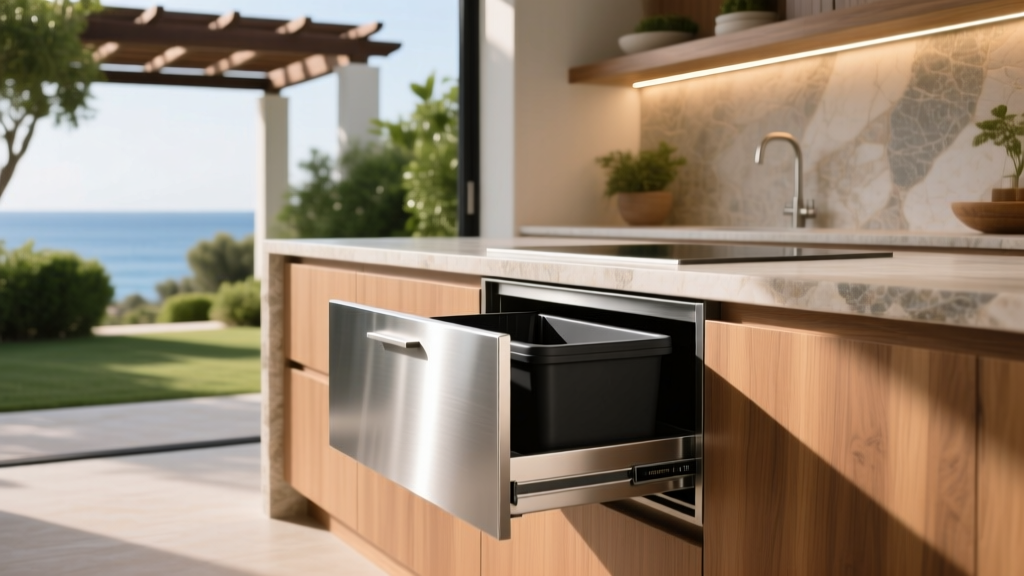
Outdoor Kitchen Trash Pull Out Drawer - The Decor Mag
An outdoor kitchen is at its best when it feels as functional as your indoor one—easy to cook in, easy to clean, and easy to enjoy. Yet many beautiful patio kitchens fall short in one everyday area: trash. Bags hanging from cabinet doors, exposed bins tucked beside the grill, and recycling piled on a counter can turn a polished outdoor living space into a cluttered, inconvenient mess.
An outdoor kitchen trash pull out drawer solves this in a way that’s both practical and design-forward. It keeps waste contained, concealed, and close at hand while you prep food, entertain, and reset the space. If you’re investing in a grill island, outdoor cabinetry, or a full backyard kitchen, a pull-out trash system is a small detail that delivers a big upgrade in cleanliness, odor control, and overall patio living comfort—season after season.
Whether you’re planning a new outdoor kitchen layout or retrofitting an existing island, this guide covers what to buy, where to place it, what materials hold up in your climate, and the common mistakes homeowners make (so you won’t).
What Is an Outdoor Kitchen Trash Pull Out Drawer?
An outdoor kitchen trash pull out drawer is a dedicated cabinet drawer (or full-height pull-out) that houses one or more trash bins—often trash + recycling. You pull the drawer out like a standard cabinet drawer, toss scraps or packaging, and push it back in. The best systems are designed for exterior conditions with corrosion-resistant hardware and durable, washable bins.
Why Homeowners Love Pull-Out Trash in Outdoor Kitchens
- Cleaner counters: No more packaging and scraps lingering during prep.
- Better entertaining flow: Guests can discreetly dispose of items without asking “Where’s the trash?”
- Fewer odors and pests: Contained waste helps discourage flies, ants, raccoons, and neighborhood cats.
- More cohesive design: Keeps your patio kitchen looking intentional and uncluttered.
- Easy cleanup: Pull out, bag, wipe, done.
Planning the Perfect Placement in Your Outdoor Kitchen Layout
Placement is the difference between “nice feature” and “why didn’t we do this sooner?” Think like a chef and a host: trash should be close to where waste is created—prep, plating, and serving—without interrupting cooking safety.
Best Locations (Most Functional to Least)
- Next to the prep zone: Ideal for veggie scraps, packaging, and paper towels.
- Near the sink: Great for rinsing and quick tosses, but avoid soaking the cabinet area.
- At the end of the island (guest-accessible): Helps entertaining; keeps traffic out of the cook’s path.
- Near the beverage center: Convenient for cans and bottles—pair with a recycling bin.
Clearance and Traffic Tips for Patio Kitchens
- Allow at least 36 inches of walkway behind the drawer so it can open without blocking guests.
- If your island faces seating, consider a location that opens away from bar stools.
- Keep trash away from direct grill heat and grease zones to reduce odors and fire risk.
- For tight patios, choose a single-bin pull-out rather than a wide dual-bin configuration.
Choosing the Right Pull-Out: Sizes, Configurations, and Features
Outdoor kitchens vary from compact grill carts to full masonry islands with outdoor cabinetry. The right trash drawer depends on your cabinet system, daily habits, and how you entertain.
Common Configurations
- Single bin (13–20 gallons): Best for smaller patios, couples, or light outdoor cooking.
- Dual bin (trash + recycling): The go-to for families and frequent hosting.
- Triple sort (trash + recycling + compost): Perfect for serious outdoor cooks and eco-conscious households.
Recommended Features Worth Paying For
- Soft-close slides: Prevent slamming; helps keep odors contained.
- Full-extension heavy-duty glides: Easier bag removal and cleaning.
- Removable bins with handles: Simplifies weekly washing.
- Integrated bag ring or bag hooks: Keeps liners in place during use.
- Gasketed or tight-fitting front panel: Helps with smell control and keeps insects out.
Materials That Actually Hold Up Outdoors
Outdoor living means sun, rain, humidity, and temperature swings. A trash pull-out drawer is opened constantly, exposed to drips, and sometimes overlooked during storms—so durability matters.
Best Materials for Outdoor Kitchen Trash Drawers
- 304 stainless steel: The gold standard for outdoor kitchens. Resists rust and cleans easily. Ideal for coastal and humid climates.
- 316 stainless steel: A premium upgrade for salty coastal air; more corrosion resistant than 304.
- Marine-grade polymer bins: Won’t absorb odors as easily; easy to sanitize.
- Powder-coated aluminum (for frames/hardware): Lightweight and corrosion-resistant, but confirm it’s exterior-rated.
Materials to Avoid (or Use Carefully)
- Indoor-rated cabinet slides: They corrode quickly and start sticking.
- Unsealed wood interiors: Can swell, warp, and hold odors unless designed for outdoor cabinetry.
- Low-grade stainless: Often marketed as “stainless” but spots and rusts outdoors—especially near pools or ocean air.
Design Ideas: Making the Trash Drawer Look Seamless (Not Like an Afterthought)
The best outdoor kitchens feel like an extension of your home—cohesive with your landscaping, patio materials, and outdoor furniture. Your trash pull-out should disappear into the design.
Matching the Drawer to Your Outdoor Cabinetry Style
- Modern patios: Flat-panel stainless fronts, clean reveals, minimal hardware.
- Mediterranean or rustic outdoor kitchens: Use a masonry island with a stainless drawer panel; pair with stone veneer and warm lighting.
- Coastal outdoor living: Opt for 316 stainless; surround with light-toned pavers, teak furniture, and salt-tolerant plantings.
Smart Add-Ons to Elevate Everyday Use
- Under-counter task lighting: Helps guests find the trash at night; makes cleanup faster.
- Countertop overhang near the drawer: Creates a “landing zone” for plates during parties.
- Built-in paper towel holder: Place near trash to streamline wiping and tossing.
Pairing with Patio Furniture, Surfaces, and Landscaping
Trash is functional—but the surrounding choices determine whether your outdoor kitchen feels like a luxury retreat or a utility corner.
Surface Materials That Make Cleanup Easy
- Countertops: Leathered granite, sintered stone, or concrete with a high-quality sealer. Budget-friendly option: outdoor-rated porcelain slabs.
- Flooring: Textured porcelain pavers, sealed concrete, or natural stone with good slip resistance.
- Backsplash (if applicable): Porcelain tile or stainless for easy wipe-down near prep areas.
Plant Suggestions to Frame the Outdoor Kitchen (Without Attracting Pests)
Choose plants that soften hardscape edges and complement outdoor design—without dropping excessive fruit or sticky sap near the trash zone.
- Herb borders (useful and beautiful): rosemary, thyme, oregano (best in sunny, well-drained beds).
- Low-litter evergreens: dwarf boxwood (milder climates), podocarpus (warm climates), compact junipers (cold-tolerant).
- Ornamental grasses for modern patios: blue fescue (cooler climates), fountain grass (warmer climates; check invasiveness locally).
- Pollinator-friendly accents away from the trash: lavender, salvia, catmint—place these a bit farther from the drawer to reduce insect interest.
Climate Considerations for Year-Round Outdoor Living
Your outdoor kitchen trash pull out drawer will perform differently in Arizona heat than in a snowy Midwest backyard or a coastal Florida patio. Plan for your weather and you’ll get years of smooth operation.
Hot, Sunny Climates
- Choose UV-stable bins and exterior-rated gaskets to prevent cracking.
- Locate the trash drawer on the shadier side of the island if possible to reduce odor buildup.
- Use deodorizing liners and empty more frequently during summer.
Humid or Coastal Climates
- Prioritize 316 or 304 stainless with sealed corners and high-quality welds.
- Rinse stainless periodically to remove salt residue; dry with a microfiber cloth.
- Keep bins clean to reduce fruit flies—humidity accelerates odor and pests.
Cold, Freeze-Thaw Climates
- Pick heavy-duty drawer glides rated for outdoor use; cold can stiffen lubricants.
- In shoulder seasons, avoid leaving liquids in the bin that can freeze and crack plastic.
- Consider a weather cover for the entire kitchen island in winter to protect finishes and hardware.
Maintenance Checklist (Fast, Realistic, and Worth It)
A trash drawer is one of the most-used parts of your outdoor kitchen. A few simple habits keep it fresh, smooth, and guest-ready.
- Weekly: Wash bins with mild dish soap; dry fully before replacing.
- Monthly: Wipe stainless fronts with a stainless cleaner (follow the grain) and check for sticky residue around edges.
- Seasonally: Vacuum crumbs inside the cabinet cavity; inspect glides and fasteners for corrosion.
- Before big gatherings: Start with empty bins and a fresh liner; place a small deodorizer tab beneath the bin if desired.
Budget Ranges: What to Expect (and Where to Spend)
Costs vary widely depending on whether you’re adding a simple pull-out inside existing cabinets or installing a dedicated stainless drawer unit as part of a full outdoor kitchen build.
- Budget ($80–$200): Basic pull-out kits (often indoor-rated). Only consider if your drawer is protected from weather and you’re okay with shorter lifespan.
- Mid-range ($250–$700): Better glides, sturdier frames, improved bins. A solid choice for covered patios and semi-exposed outdoor kitchens.
- Premium ($800–$1,800+): Purpose-built outdoor stainless drawer units (304/316), soft-close, pro-grade construction. Best for year-round outdoor living and open-air exposure.
Where to invest: prioritize stainless grade (304/316), glide quality, and a drawer front that matches your outdoor cabinetry for a seamless look.
Common Mistakes to Avoid
- Placing the trash too far from the prep zone: You’ll end up using a countertop bowl or leaving scraps out—exactly what you’re trying to avoid.
- Buying indoor hardware for an outdoor kitchen: Corrosion leads to sticking drawers and premature replacement.
- Ignoring ventilation and odor control: Tight drawers help, but you still need frequent emptying in warm months.
- Blocking walkways with the open drawer: Check clearances before installation—especially on smaller patios.
- Skipping recycling (or compost) if you entertain often: Dual bins keep your outdoor space tidy and sustainable.
- Installing without a plan for pests: If raccoons are common in your area, choose a drawer with a firm latch and keep food waste bagged.
FAQ: Outdoor Kitchen Trash Pull Out Drawer
What size trash pull-out is best for an outdoor kitchen?
Most homeowners do well with a 13–20 gallon bin for trash. If you host often, a dual-bin setup (trash + recycling) is typically the sweet spot for patio living.
Is stainless steel really necessary?
For exposed outdoor kitchens, yes—304 stainless is the most reliable for rust resistance and easy cleaning. In coastal climates, consider 316 stainless for better corrosion protection.
Can I add a pull-out trash drawer to an existing outdoor kitchen island?
Often, yes—if you have a suitable cabinet bay and enough clearance for the slides. Measure the opening carefully and confirm the system is rated for outdoor use, especially the drawer glides and fasteners.
How do I keep odors down in summer?
Use thick, well-fitting liners, empty more frequently, rinse bins weekly, and place the drawer on a shadier side of the island if possible. Avoid letting meat packaging sit overnight—bag and remove it after cooking.
Will a pull-out trash drawer attract pests?
Any outdoor trash can attract pests, but a tight-fitting drawer front, frequent emptying, and sealed bags help significantly. In areas with raccoons, look for drawers with a secure latch and avoid leaving food scraps unbagged.
What’s the best spot for recycling in an outdoor kitchen?
Near the beverage center is ideal for cans and bottles, but placing a dual-bin unit near prep also works well. Choose what matches your hosting habits and traffic flow.
Next Steps: Make Your Outdoor Kitchen Cleaner, Smarter, and More Enjoyable
If your outdoor kitchen feels cluttered during cookouts or you’re tired of hauling a freestanding bin across the patio, a trash pull-out drawer is a straightforward upgrade with daily payoff. Start by measuring your available cabinet space, deciding whether you want trash-only or trash + recycling, then choose outdoor-rated materials that match your climate and your cabinetry style.
Once it’s installed, take the final step that makes outdoor living feel effortless: add task lighting, keep liners and cleaning wipes nearby, and landscape the kitchen zone with low-litter, patio-friendly plants. You’ll cook more, host more, and spend less time dealing with mess.
For more outdoor kitchen ideas, patio design inspiration, and landscaping tips for year-round outdoor living, explore the latest guides on thedecormag.com.
More Articles
 How to Design a Japanese-Inspired Garden - The Decor Mag
 Outdoor Living Project Checklist: A Practical, Step-by-Step Workflow for Landscape Professionals
 Best Outdoor Bar Salt and Spice Station - The Decor Mag
 Best Outdoor Drink Tray Cart Ideas - The Decor Mag
 Outdoor Pergola Wind Light Lantern Hooks - The Decor Mag
 Outdoor Kitchen Storage Cabinet Guide - The Decor Mag
 Outdoor Kitchen Rotisserie Attachment Guide - The Decor Mag
 How to Design a Bog Garden - The Decor Mag
 Outdoor Pergola Integrated Speaker System - The Decor Mag
 Best Outdoor Lantern and Candle Options - The Decor Mag