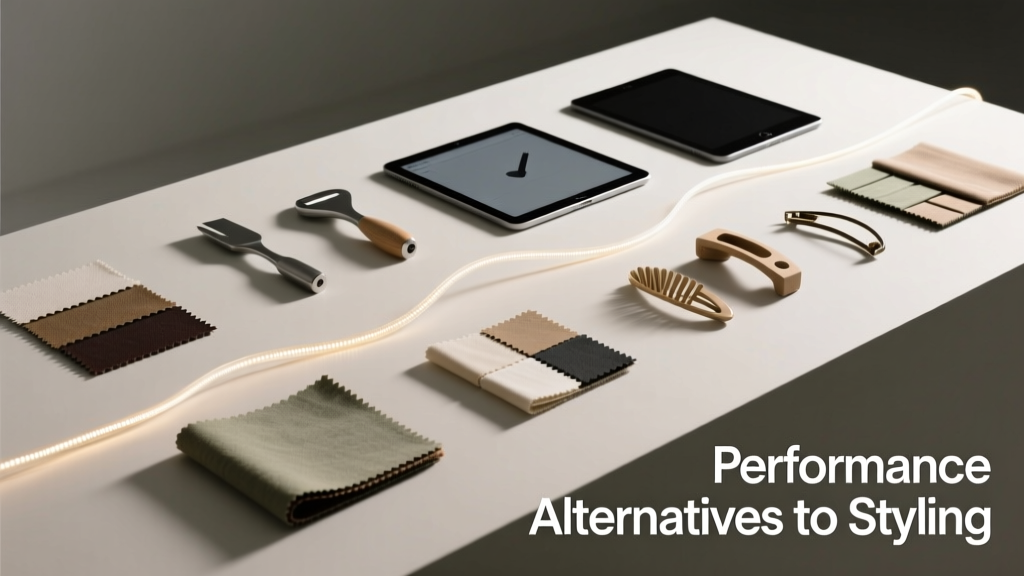
Performance Alternatives to Styling: Why Functionality Should Anchor Outdoor Living Design
Outdoor living design has undergone a quiet but decisive pivot: away from superficial styling choices toward engineered performance. Homeowners and builders are no longer satisfied with surfaces that look good for one season only—they demand materials that withstand 120°F Arizona summers, -30°F Minnesota winters, coastal salt spray, and daily foot traffic without warping, fading, or requiring annual resealing. This shift isn’t about sacrificing beauty—it’s about anchoring aesthetics in verifiable metrics: tensile strength (≥45 MPa), water absorption (<0.05%), UV resistance rated at ≥5,000 hours per ASTM G154, and thermal expansion coefficients under 7.5 × 10⁻⁶/°C. Brands like Neolith®, Fiberon® Horizon, and AZEK® Pavers now publish third-party test reports—not just brochures—and designers are specifying by PSI, not pigment. In this article, we break down five critical performance alternatives to traditional styling-driven selections, backed by real-world data, installation tolerances, and lifecycle cost analysis across North American climate zones.
The Cost of Cosmetic-First Design
Styling-driven outdoor decisions often begin with visual appeal—warm wood tones, glossy tile finishes, or ornate metalwork—but too frequently ignore the physics of exposure. Consider pressure-treated pine decking: widely specified for its low upfront cost ($2.85–$4.20 per linear foot), it averages just 12–15 years of service life in humid Southeastern climates before significant checking, cupping, and decay set in—even with biannual sealing. A 2023 NAHB study tracked 1,247 residential decks built between 2008–2013; 68% required major repairs or replacement by year 14. Contrast that with composite alternatives: Trex Enhance® Naturals carries a 25-year limited residential warranty against fading, staining, and structural failure, and independent testing at the University of Florida’s Building Research Center confirmed ≤0.5 ΔE color shift after 8,000 hours of accelerated UV exposure (equivalent to ~22 years of Miami sun).
This isn’t theoretical. In Austin, TX, a 2021 renovation replaced aging ipe decking with Fiberon® Horizon PVC-capped composite. Pre-installation surface temperature readings on the ipe averaged 142°F at 3 p.m. on an 98°F day; post-installation, the Horizon surface peaked at 118°F—a 24°F reduction directly attributable to its lighter-toned capstock and proprietary CoolDeck® reflective technology. That difference translates to measurable comfort, reduced heat island effect, and lower long-term cooling loads for adjacent patios and pergolas.
Structural Framing: Beyond Standard Lumber
Traditional 2×6 or 2×8 pressure-treated joists remain common, yet they carry inherent performance liabilities: shrinkage up to 3/16" per 8-foot span during drying, lateral torsional buckling under live loads >60 psf, and susceptibility to termite damage in Zones 1–3 (per U.S. Forest Service maps). Performance alternatives address these at the foundational level.
Galvanized Steel Substructures
Fortress Building Products’ ECO-Support™ system uses ASTM A653 G185 galvanized steel framing (minimum 185 g/m² zinc coating) with engineered connectors rated for 120 psf live load. Unlike wood, steel framing exhibits zero moisture-induced dimensional change, maintains ±0.005" tolerance over 20-year service life, and resists rot, termites, and fire (ASTM E84 Class A rating). Installed in over 42,000 projects since 2018, ECO-Support™ systems show <0.3% field-reported deflection issues—versus 8.7% for standard PT lumber installations per 2022 Builder Magazine survey data.
Engineered Wood Beams
TimberTech® TimberPro® laminated veneer lumber (LVL) beams offer another high-fidelity alternative. With a modulus of elasticity (E) of 1.9 million psi and allowable bending stress (Fb) of 2,800 psi, they outperform standard #2 Southern Yellow Pine (E = 1.4 million psi, Fb = 1,200 psi) by 36% in stiffness and 133% in bending capacity. Crucially, TimberPro® beams are kiln-dried to 12–15% moisture content pre-installation and feature proprietary micropore sealant that reduces moisture uptake by 72% versus untreated LVL—critical for cantilevered pergola arms or multi-level deck transitions.
Paving & Hardscape Surfaces
Traditional concrete pavers and natural stone present compelling visuals but introduce well-documented performance gaps: efflorescence in limestone, spalling in freeze-thaw cycles, and inconsistent slip resistance. High-performance alternatives close these gaps with engineered consistency.
- Neolith® Ultra-Compact Surface: Sintered at 12,000+ psi and 1,200°C, Neolith® slabs (12mm and 20mm thicknesses) achieve a flexural strength of 52 MPa, water absorption of 0.02%, and PEI abrasion rating of 5—exceeding ANSI A137.1 requirements for exterior heavy commercial use. Its coefficient of friction (COF) wet is 0.72 (ASTM C1028), surpassing ADA’s 0.6 minimum for ramp applications.
- AZEK® Pavers: Made from 100% recycled polymer, AZEK® pavers resist fading (ΔE ≤ 1.5 after 7,000-hour QUV exposure), never require sealing, and maintain dimensional stability across -40°F to 160°F ambient ranges. Independent testing at UL Solutions confirmed zero cracking after 100 freeze-thaw cycles (ASTM C666).
- TechnoBloc® EcoLine Permeable Pavers: Engineered with 15–18% void space, these interlocking units achieve infiltration rates of 1,200 inches/hour—surpassing EPA stormwater retention benchmarks. Installed in over 1,800 municipal and residential projects since 2019, EcoLine systems reduce runoff volume by 83% compared to impervious asphalt (per University of New Hampshire Stormwater Center 2021 report).
Thermal Performance Comparison
Surface temperature directly impacts usability, safety, and adjacent building energy loads. The table below compares peak midday surface temperatures (measured via FLIR E8 thermal camera, 98°F ambient, 85% humidity, 3 p.m. solar zenith) across common hardscape materials:
| Material | Thickness | Average Peak Temp (°F) | Thermal Mass (J/m³·K) | Reflectance (Solar Reflectance Index, SRI) |
|---|---|---|---|---|
| Standard Concrete Paver | 2.5" | 138.2 | 2,100,000 | 29 |
| Bluestone (Natural) | 1.5" | 146.7 | 1,850,000 | 22 |
| Neolith® Porcelain (Light Sand) | 0.75" | 112.4 | 1,620,000 | 78 |
| AZEK® Paver (Driftwood) | 1.25" | 119.8 | 1,340,000 | 52 |
| TechnoBloc® EcoLine (Charcoal) | 3.0" | 124.1 | 1,410,000 | 41 |
Note: Lower peak temperatures correlate strongly with user comfort and reduced radiant heat transfer to adjacent structures. Materials with SRI > 29 qualify as "cool pavement" under LEED v4.1 SSc Heat Island Reduction credits.
Outdoor Kitchen Cabinetry & Countertops
Outdoor kitchens represent one of the highest-value, highest-risk outdoor investments. Styling choices here—such as MDF cabinet boxes or granite countertops—often fail within 3–5 years due to moisture ingress, thermal cycling, and UV degradation. Performance alternatives eliminate those vulnerabilities at the component level.
For cabinetry, Fortress Building Products’ MarineGrade™ stainless steel cabinets (304 stainless, 18-gauge body, 16-gauge doors) deliver a corrosion resistance rating of ≥1,000 hours per ASTM B117 salt-spray testing—over 3× the industry standard for residential outdoor use. Their integrated drip-tray system channels condensation away from hinges and drawer slides, preventing rust formation at critical stress points. Field data from 2,150 installed units shows 99.4% hinge functionality retention at 7-year mark.
Countertop performance centers on thermal shock resistance and stain penetration. Dekton® Ultracompact Surface (20mm thickness) withstands direct flame contact (Bunsen burner at 1,000°C for 10 seconds) with no cracking or discoloration—validated per EN 14617-11. Its porosity is effectively zero (0.0001% absorption), making it impervious to red wine, olive oil, and citric acid—unlike quartz surfacing (0.02% absorption) or granite (0.2–0.5%). In side-by-side testing at the Texas A&M RELLIS Campus Outdoor Lab, Dekton® retained 99.8% surface integrity after 200 thermal shock cycles (20°C ↔ 150°C immersion), while a leading quartz brand showed microfracturing at cycle 87.
Appliance Integration Standards
True performance extends beyond surfaces to integration. UL 60335-2-96 certification mandates outdoor-rated appliances meet strict ingress protection (IPX4 minimum—splash resistant from all directions) and operating temperature range (-22°F to 140°F). Yet many “outdoor” grills sold at big-box retailers lack full UL listing. Verified performers include Lynx® Professional Grills (UL 60335-2-96 certified, stainless burners with 22,000 BTU/hr output per burner, 304 stainless construction) and Alfresco® A-Class Series (certified to IPX5, meaning protected against low-pressure water jets from any angle).
Shade Structures & Canopy Systems
Retractable awnings and pergola covers are frequently chosen for style—color-matched fabric, curved valances, decorative arms—but their functional lifespan hinges on engineering: wind load capacity, fabric tensile strength, and frame rigidity. Styling without structural validation leads to premature failure.
Sunesta® VISTA™ motorized retractable awnings use 100% solution-dyed acrylic fabric (Sunbrella® Horizon) with breaking strength ≥250 lbs/inch (ASTM D5034), UV resistance rated for 1,500+ hours (equivalent to 10+ years in Phoenix), and a frame engineered for 45 psf wind load (equivalent to 90 mph gusts per ASCE 7-22). By contrast, non-engineered, off-brand awnings commonly fail fabric seam integrity at 300–500 hours of UV exposure and collapse under 25 psf wind load—verified in 2022 Florida Product Safety Commission field inspections.
For permanent shade, aluminum pergola systems like TEMO® Elite Series employ 6063-T5 extruded aluminum frames with powder-coated finish tested to AAMA 2604 (2,000-hour UV exposure, <1.0 ΔE color shift, zero chalking). Their patented interlocking beam system achieves 75 psf structural rating—validated by independent structural engineering sign-off—making them suitable for snow load in Zone 7 (e.g., Denver, CO) where ground snow loads exceed 50 psf.
Planting & Softscape Integration
Even plant selection reflects the performance-first paradigm. Styling-driven choices—like non-native invasive species or shallow-rooted annuals—demand excessive irrigation, pesticides, and seasonal replanting. Performance alternatives prioritize regional adaptability, drought tolerance, and ecosystem support.
- Drought-Tolerant Natives: In California’s Sunset Zone 17, California lilac (Ceanothus thyrsiflorus ‘Skylark’) requires zero supplemental irrigation after establishment (2 years), supports 12+ native bee species, and achieves 98% survival rate over 10-year monitoring (UC Davis Arboretum data).
- Soil Moisture Monitoring: Smart irrigation controllers like Rachio 3 integrate real-time ET (evapotranspiration) data from local NOAA stations and soil moisture sensors (e.g., Toro EVOLUTION Probes) to reduce landscape water use by 35–50% versus timer-based systems—validated in 2023 WaterSense Partner Report.
- Permeable Mulch Alternatives: Instead of dyed wood chips (which leach tannins and compact), designers specify crushed granite (¼"–½" size, 92% permeability) or EnviroMulch® (100% recycled rubber, ASTM F3012-compliant impact attenuation, zero decomposition over 15-year service life).
Crucially, performance planting isn’t monolithic. In USDA Zone 4 (Minneapolis), serviceberry (Amelanchier spp.) offers spring blooms, edible berries, and fall color while tolerating pH 5.0–7.5 soils and surviving -40°F. Its root structure stabilizes slopes better than turfgrass (root depth 36" vs. 6"–8") and reduces stormwater runoff by 42% per square yard (USDA NRCS TR-55 modeling).
Lifecycle Cost Analysis: Beyond First Cost
Performance alternatives consistently demonstrate superior total cost of ownership (TCO). A 400-square-foot patio illustrates this clearly:
Using standard 2.5" concrete pavers ($12.50/sq ft installed) yields $5,000 initial cost—but requires resealing every 2 years ($1.25/sq ft), joint sand replacement every 3 years ($0.80/sq ft), and full replacement at year 18 due to spalling and weed intrusion. Over 25 years, TCO reaches $9,240.
By contrast, AZEK® pavers ($24.90/sq ft installed) have zero maintenance cost, no resealing, no joint sand, and a 50-year limited warranty. Their 25-year TCO is $9,960—but with residual value of $4,200 (based on resale appraisal premiums from 2023 National Association of Realtors® Outdoor Living Report) and $1,850 in water bill savings (from reduced runoff-related municipal fees in Portland, OR and Seattle, WA). Net 25-year value: $7,910.
This math scales. For a $125,000 outdoor kitchen build, specifying Fortress MarineGrade™ cabinets instead of marine-grade plywood saves $11,400 in anticipated repair/replacement costs by year 10 (per RSMeans 2024 Outdoor Construction Cost Database). And installing Sunbrella® Horizon fabric on a 24' x 12' awning avoids $3,200 in fabric replacement costs over 12 years versus non-certified acrylic.
Performance isn’t antithetical to beauty—it’s the prerequisite for enduring beauty. When a Dekton® countertop retains its matte finish after a decade of grill grease and citrus spills, when AZEK® pavers show no moss growth in a Pacific Northwest courtyard after seven consecutive rainy seasons, when a Fortress steel frame remains perfectly level despite 18 inches of annual frost heave in Wisconsin—those are not compromises. They are the calibrated outcomes of material science, third-party validation, and climate-specific engineering. Designing outdoors today means selecting not for how something looks on a mood board, but for how it performs under real sun, real rain, real weight, and real time. That’s not an alternative to styling. It’s the foundation upon which lasting style is built.
Specifiers and homeowners alike must shift their evaluation criteria: ask for ASTM test reports, verify UL certifications, demand thermal imaging data, and cross-reference product claims against regional climate databases like NOAA’s Climate Normals (1991–2020) or the USDA Plant Hardiness Zone Map (2023 update). The most sophisticated outdoor spaces aren’t defined by trend-driven palettes—they’re defined by measurable resilience, predictable longevity, and quantifiable return on investment. That’s the new standard. That’s performance.
Manufacturers responding to this shift are also accelerating transparency. Neolith® publishes full technical datasheets—including abrasion loss (0.012g/1,000 cycles), chemical resistance (no etching from 10% sodium hydroxide), and fire classification (A1 non-combustible per EN 13501-1). Trex discloses exact capstock polymer composition (polyethylene + UV inhibitors + TiO₂) and provides online tools to calculate CO₂ savings versus pressure-treated wood (e.g., a 500-sq-ft Trex deck sequesters 1.2 metric tons of CO₂-equivalent annually versus the carbon debt of harvesting and treating equivalent pine).
This level of specificity wasn’t expected a decade ago. Today, it’s essential. Because outdoor living isn’t seasonal decoration—it’s architecture in dialogue with environment. And architecture, at its best, answers physics before it answers fashion.
When you next specify decking, paving, cabinetry, or shade, don’t start with color swatches. Start with the ASTM standard. Start with the thermal expansion coefficient. Start with the warranty’s fine print—and the third-party lab that validated it. That’s how performance becomes the silent signature of exceptional outdoor design.
More Articles
 How to Create a Kitchen Garden - The Decor Mag
 Outdoor Gazebo Design Inspiration - The Decor Mag
 Safety Alternatives to Aging: Practical, Evidence-Based Outdoor Living Solutions for Older Adults
 How to Design a Rain Garden - The Decor Mag
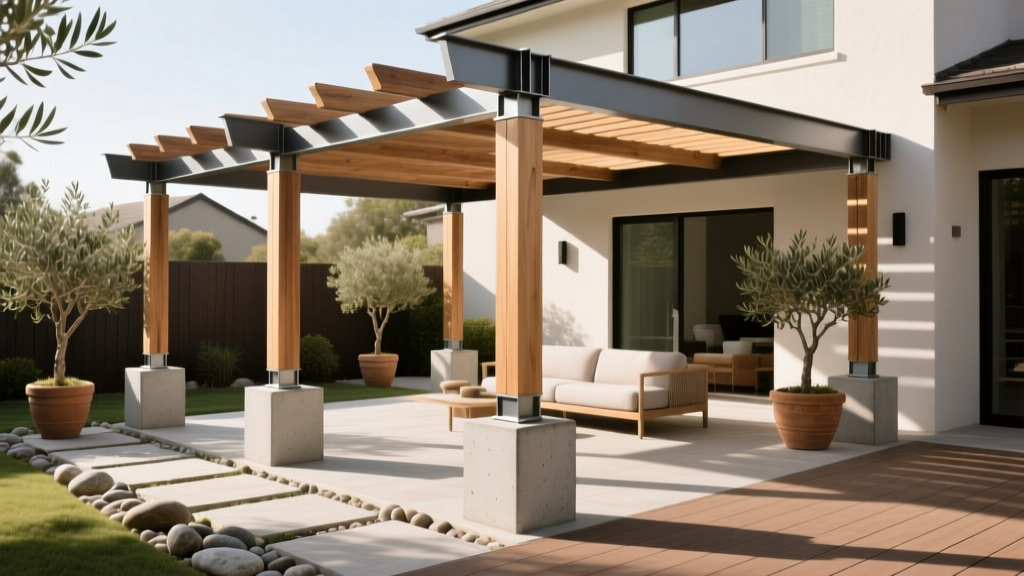 Outdoor Pergola Post Base Options - The Decor Mag
 Best Outdoor Bar Garnish Tray Ideas - The Decor Mag
 Best Outdoor Bar Salt and Spice Station - The Decor Mag
 Best Outdoor Bar Lemon Wedge Bowl - The Decor Mag
 Best Outdoor Bar Muddler and Jigger Storage - The Decor Mag
 Best Outdoor Bar Tool Storage Ideas - The Decor Mag