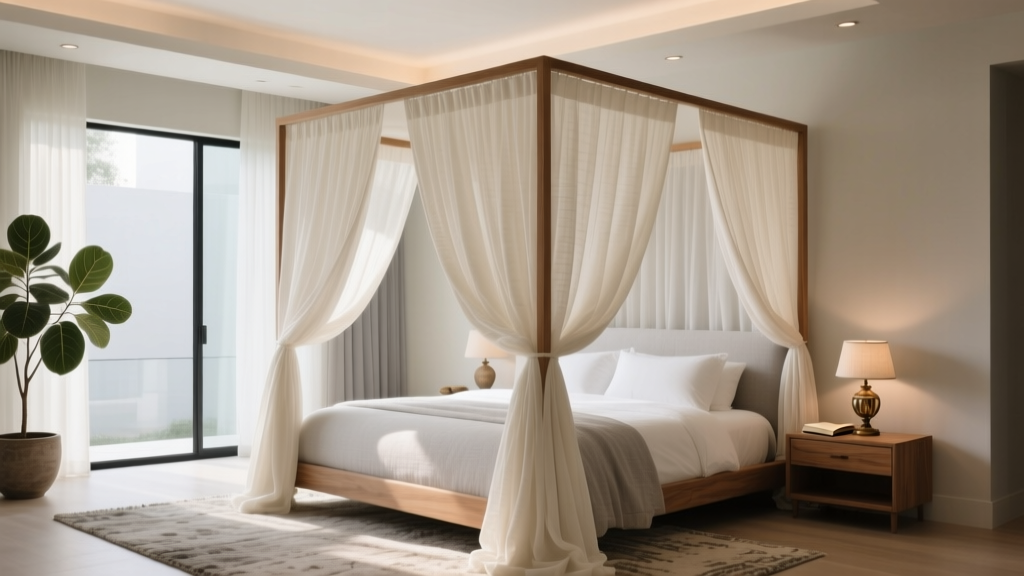
Bedroom Canopy Draping Techniques - The Decor Mag
A canopy can change the way a bedroom feels in a single afternoon. Done well, it adds softness, visual shelter, and a gentle sense of “arrival” at bedtime—exactly the kind of environmental cue that supports deeper rest. Beyond aesthetics, canopy draping influences how your sleep space functions: it can help filter light, reduce visual clutter, and create a calmer focal zone around the bed.
For homeowners and renters alike, canopy drapes are one of the most flexible bedroom design tools available. You can go airy and minimal with sheer panels, lean romantic with layered fabrics, or create a modern “room-within-a-room” effect using ceiling tracks. The key is choosing a draping technique that matches your layout, ceiling height, and sleep needs—then selecting fabrics and hardware that feel good, hang well, and stay safe.
This guide breaks down practical bedroom canopy draping techniques, sleep-friendly material choices, and common pitfalls, with budget ranges and styling suggestions that work in real homes.
Why Canopy Drapes Support a Better Sleep Environment
The brain responds to environmental signals. When your bedroom design clearly communicates “rest happens here,” your nervous system tends to downshift more easily. Canopy drapes help by shaping the sensory atmosphere around the bed.
- Visual calm: Drapes soften sharp lines and reduce “busy” sightlines, helping your bed feel like a dedicated sleep zone.
- Light control: Layering sheers with heavier panels can reduce early morning glare and streetlight spill (especially helpful in apartments).
- Perceived coziness: A canopy creates gentle enclosure without closing the room off, which many people find relaxing.
- Sound softening: Fabric won’t soundproof, but it can slightly dampen echoes in rooms with hard surfaces.
When paired with supportive bedding, warm lighting, and a clutter-light layout, canopy draping becomes part of a well-rounded sleep environment.
Before You Start: Measure, Plan, and Choose Your Canopy Style
Quick measuring checklist
- Ceiling height: Low ceilings (under ~8 ft) benefit from lighter fabrics and higher mounting to avoid a “compressed” feel.
- Bed size: Twin, full, queen, king—panel widths and track lengths should match the bed footprint plus extra for drape.
- Clearances: Leave breathing room around nightstands, lamps, ceiling fans, and air vents.
- Wall type: Drywall, plaster, concrete—hardware choices depend on what you can anchor into.
Pick a canopy approach that fits your space
- Traditional four-poster: Great for homeowners, statement bedrooms, and classic decor.
- Ceiling-mounted track canopy: Sleek, renter-friendly when installed with proper anchors (or used with tension systems where possible).
- Hoop or crown canopy: Soft, romantic, ideal for small rooms and minimal hardware.
- Wall-to-wall “bed alcove” drape: Best for studio apartments or shared rooms where zoning matters.
Essential Hardware Options (With Budget Ranges)
Your canopy will only look as good as it hangs. Stable hardware prevents sagging, uneven drape, and late-night swaying.
- Ceiling curtain track: Smooth glide, modern look, excellent for layered drapes.
- Budget range: $30–$150 (basic to heavy-duty)
- Best for: Creating a “hotel canopy” effect with straight lines
- Curtain rods (wall or ceiling brackets): Simple installation; choose sturdy brackets.
- Budget range: $25–$120
- Best for: Corner canopy, U-shape around the bed
- Hoop/crown canopy ring: A single focal point; drape fabric evenly around.
- Budget range: $15–$80
- Best for: Soft, airy canopies in small bedrooms
- Four-poster canopy frame: All-in-one solution; most stable.
- Budget range: $200–$1,500+ depending on material and design
- Best for: Long-term investment, large rooms, dramatic styling
- Tension rods (limited use): Works for light fabric in narrow spans; not ideal for full canopies.
- Budget range: $10–$40
- Best for: Small accent drapes or partial privacy panels
Bedroom Canopy Draping Techniques (Step-by-Step)
1) The Classic Four-Poster Drop (Elegant and Balanced)
This is the traditional canopy look: fabric drops from each top corner with optional top panels across the frame.
- Choose panels: Use 2–4 curtain panels depending on fullness (more panels = softer and more luxurious).
- Mount securely: If using a frame, ensure it’s level and tightened; if retrofitting, use ceiling anchors rated for the load.
- Create “kissing corners”: Let panels meet gently at corners, then tie back loosely with fabric ties.
- Add a top layer (optional): A single wide panel across the top adds a cocoon feel and diffuses overhead light.
Sleep-friendly tip: Keep fabric off your face and away from bedside lamps. A small tieback at chest height prevents nighttime tangling while maintaining softness.
2) The Ceiling-Track Hotel Canopy (Clean, Modern, and Functional)
Ceiling tracks create straight, tailored lines and allow you to open/close drapes like a room divider.
- Plan the rectangle: Position the track perimeter a few inches wider than the bed frame for a floating effect.
- Use two layers: Sheer inner layer + heavier outer panels for light control.
- Hang high: Mount tracks close to the ceiling to visually lift the room.
- Train the folds: After hanging, gently “train” pleats by tying panels loosely for 24–48 hours.
- Best fabrics: Linen blends, cotton voile (sheer), velvet or blackout-lined cotton (outer layer)
- Ideal for: Apartment bedrooms with streetlights or early sunrise exposure
3) The Hoop (Crown) Canopy (Soft, Romantic, Space-Saving)
A canopy hoop mounted above the headboard creates a dreamy waterfall of fabric without a bulky frame.
- Center the hoop: Place it above the headboard, 12–24 inches forward from the wall for graceful drape.
- Use one long panel: Drape a single extra-long piece through the hoop for even distribution.
- Control volume: For low ceilings, keep fabric lightweight and avoid heavy top layering.
Wellness note: If you’re sensitive to dust, choose tightly woven washable cotton and wash regularly. Avoid overly textured fabrics that trap lint.
4) The Corner Canopy (Minimal Hardware, Maximum Effect)
For renters or tight layouts, a corner canopy uses two rods (or tracks) to create an L-shape around the bed.
- Install rods/track: One along the headboard wall, one along the side wall.
- Hang two panels: Let them overlap at the corner for a seamless look.
- Tie back for airflow: Use soft tiebacks or magnetic curtain holds to keep the bed accessible.
- Best for: Bedrooms where the bed is tucked into a corner, studios, shared spaces
- Budget range: $40–$200 depending on rods/tracks and panel quality
5) The Wall-to-Wall Bed Alcove (Studio-Friendly Zoning)
This technique creates a sleep “niche” using ceiling track across a wider section of the room—great for separating sleep from work.
- Define the zone: Run a straight ceiling track several feet beyond the bed width.
- Choose semi-opaque fabric: Light-filtering drapes provide privacy without feeling heavy.
- Keep the floor clear: Hem panels to hover about 1/2 inch above the floor to reduce dust pickup.
Sleep environment benefit: This is one of the most effective decor moves for keeping the bed visually separate from a desk, exercise gear, or living area—helpful for winding down.
Fabric and Material Recommendations (Comfort, Care, and Light Control)
Fabric choice affects not only the look, but also the way the bedroom feels at night—temperature, airflow, light spill, and maintenance.
- Cotton voile (sheer): Airy, softens light, easy to wash. Great inner layer.
- Linen or linen-blend: Relaxed drape, breathable, naturally textured. Expect some wrinkling (often part of the charm).
- Cotton twill or canvas: More structure, better light reduction, durable for daily opening/closing.
- Velvet (use thoughtfully): Excellent for blocking light and adding warmth; can trap dust and feel heavy in small rooms.
- Blackout lining: Add to existing curtains if you need darkness without changing your decor style.
Budget guide for curtain panels:
- $20–$60 per panel: Basic cotton/sheer synthetics; check stitching and header strength.
- $60–$150 per panel: Better cotton/linen blends, improved drape and durability.
- $150–$400+ per panel: Premium linen, velvet, custom lengths, higher-end linings.
Design Pairings: Bedding, Lighting, Color, and Layout
Furniture and layout recommendations
- Choose a stable bed frame: Upholstered or solid wood frames anchor the softness of canopy drapes.
- Keep pathways clear: Leave at least 24 inches around the bed where possible so drapes don’t become an obstacle.
- Use slim nightstands: If the canopy adds volume, opt for narrower nightstands to reduce visual crowding.
Bedding that matches a canopy’s calming feel
- Breathable sheets: Cotton percale for crisp coolness, sateen for smoother warmth, linen for temperature regulation.
- Layered texture, not clutter: A duvet + one throw + 2–4 pillows is usually enough for a serene look.
- Color harmony: Match canopy fabric to either your bedding or wall color for a cohesive sleep space.
Lighting tips for a softer sleep environment
- Warm bulbs: Aim for 2200K–2700K for bedside lamps to support melatonin-friendly evening light.
- Layered lighting: Combine overhead (dimmable if possible), bedside task lighting, and a low glow (like a small table lamp across the room).
- Avoid fabric near hot bulbs: Use lamp shades and keep drapes clear of direct heat.
Colors that work especially well with canopy drapes
- Soft neutrals: Warm white, oatmeal, sand, greige—reduce visual noise.
- Restful hues: Muted sage, dusty blue, clay rose, warm taupe—calming without feeling cold.
- High-contrast (use sparingly): Charcoal or deep navy can be cozy, especially with lighter bedding to balance the weight.
Sleep-Friendly Canopy Tips (Wellness Meets Decor)
- Prioritize airflow: If you sleep warm, use sheers and keep panels tied back at night. Avoid heavy top draping that traps heat.
- Reduce allergens: Wash canopy panels every 4–8 weeks (more often if you have pets or allergies). Vacuum floors and baseboards regularly.
- Keep scents gentle: Strongly fragranced fabric sprays can irritate airways. If you want a calming cue, consider subtle lavender sachets stored in a drawer, not sprayed on drapes.
- Make it easy to use: If opening/closing feels fussy, you’ll stop doing it. Tracks with smooth gliders and simple tiebacks encourage consistency.
Common Mistakes to Avoid
- Hanging panels too short: Short drapes can look abrupt and reduce the canopy’s calming effect. Aim for just kissing the floor or hovering slightly above it.
- Choosing fabric that’s too heavy for the hardware: Sagging tracks and bowed rods create constant visual clutter. Match fabric weight to load-rated hardware.
- Overcrowding the bed zone: Canopies add volume. Balance it by simplifying bedside decor and keeping surfaces clear.
- Ignoring safety around fans and heaters: Keep fabric away from moving blades, radiators, candles, and hot bulbs.
- Too many competing patterns: If your canopy fabric is patterned, keep bedding mostly solid (or vice versa) to maintain a restful bedroom design.
- Skipping washability: Delicate, dry-clean-only fabric can become a hassle. For most bedrooms, machine-washable panels are the most practical.
FAQ: Bedroom Canopy Draping Techniques
How many curtain panels do I need for a canopy bed?
Most setups use 2 to 4 panels. For a fuller, more luxurious drape (especially on queen/king beds), plan for 4 to 6 panels or extra-wide panels. More fabric creates softer folds, which reads calmer and more intentional.
What’s the best fabric for a sleep-friendly canopy?
Cotton voile (for sheers) and linen or cotton (for outer layers) are the most breathable and comfortable. If you need darkness, add a blackout lining to cotton panels rather than choosing a stiff, less breathable fabric.
Can renters install a canopy without damaging walls?
Many renters use corner canopy rods with minimal anchoring, or a hoop canopy that uses fewer mounting points. Damage-free adhesive hooks typically aren’t strong enough for full drapery weight; if you install hardware, use proper anchors and plan to patch small holes when moving out.
Will a canopy make my bedroom feel smaller?
It can if the fabric is heavy or hung low. To keep the room airy, mount hardware close to the ceiling, choose lighter colors, and use sheers or linen blends. Keeping panels tied back during the day also maintains openness.
How do I keep canopy drapes from looking messy?
Use sturdy hardware, steam or lightly iron panels, and “train” folds by loosely tying panels for a day or two. Matching panel lengths and using simple tiebacks at the same height on both sides helps the canopy look calm rather than chaotic.
Do canopy drapes help with light and noise?
They can help reduce light, especially with layered fabrics and blackout lining. For noise, fabric may slightly soften echoes, but it won’t replace true soundproofing. Pair canopy drapes with a white noise machine or soft fan sound for better sleep support.
Next Steps: Create a Canopy That Feels Like a Nightly Exhale
Start by choosing one goal for your canopy: softer ambiance, better light control, or a cozier sleep zone. Measure your bed and ceiling, pick hardware that won’t sag, then choose a fabric that matches your sleep preferences—breathable and washable for most homes, layered with blackout lining if light is the main issue.
Try this simple plan:
- Decide on a technique (ceiling-track hotel canopy, hoop canopy, corner canopy, or four-poster drop).
- Choose a calm color palette that supports rest (warm neutrals or muted greens/blues).
- Use warm, dimmable lighting and keep drapes clear of bulbs and airflow hazards.
- Maintain your sleep environment by washing panels regularly and keeping the bed zone uncluttered.
For more calming bedroom design ideas, sleep-friendly decor tips, and practical guides for renters and homeowners, explore the latest inspiration on thedecormag.com.
More Articles
 Best Bedroom Eye Mask Storage - The Decor Mag
 Bedroom Natural Stone Bedside Tray - The Decor Mag
 Bedroom Lighting Ideas for Soothing Ambiance (2026)
 Transitional Bedroom Design Guide - The Decor Mag
 How to Choose Bedroom Euro Sham Size - The Decor Mag
 Bedroom Organic Linen Curtain Draping - The Decor Mag
 Best Bedroom Meditation Corner Setup - The Decor Mag
 Best Bedroom Handbag Storage Solutions - The Decor Mag
 Bedroom Curved Nightstand Design Trend - The Decor Mag
 Best Bedroom Essential Oil Diffuser Spot - The Decor Mag