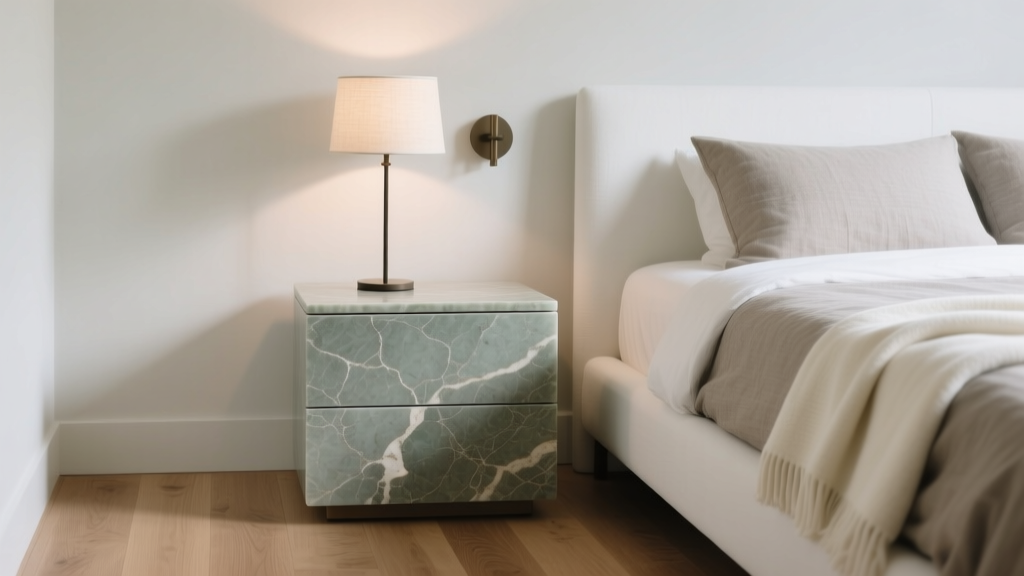
Bedroom Natural Stone Nightstand Top - The Decor Mag
Your nightstand is one of the most used pieces of furniture in the bedroom. It holds the last things you see at night—your book, water glass, lamp glow—and the first things you reach for in the morning. Because it sits so close to your bed (and your senses), small design decisions here can have an outsized effect on how restful your bedroom feels.
A natural stone nightstand top brings a quiet sense of stability to the sleep environment. The cool, grounded look of marble, travertine, granite, quartzite, or soapstone can make the bedside feel calmer and more intentional. It also adds practical benefits: easy wipe-downs, a sturdier surface for a lamp, and a more durable top than many wood veneers—especially useful if you keep skincare, tea, or a carafe of water nearby.
When bedroom design supports sleep quality, your nervous system gets the message that it’s safe to slow down. The right bedside setup reduces visual clutter, softens lighting, and keeps nighttime essentials within easy reach. A stone-topped nightstand can be a beautiful anchor for those choices—if you select the right stone, finish, height, and styling.
Why a Natural Stone Nightstand Top Works for the Sleep Environment
It creates a “grounded” visual cue
Bedrooms that promote rest often share a few traits: fewer sharp contrasts, less visual noise, and a mix of natural materials. Natural stone naturally supports that mood. Even in a modern bedroom, stone adds a subtle, spa-like cue that can help the room feel more settled at night.
It’s practical for real bedtime routines
A stone top is a hardworking surface. It’s generally more resistant to heat than wood and easier to wipe clean. For people who:
- Keep a bedside water glass or carafe
- Use nightly skincare or hand cream
- Like a candle (used safely and never left unattended)
- Charge devices (ideally away from the bed)
…a stone surface can feel more forgiving than wood veneer or lacquer that shows rings, smudges, and dents quickly.
It supports healthier bedroom organization
Sleep-friendly bedroom design often hinges on one simple rule: reduce friction. If you can keep essentials tidy and reachable—without piling items on your mattress or floor—you’re more likely to follow a calming bedtime routine. A stone-topped nightstand pairs well with drawers, shelves, and trays that keep the top surface serene.
Choosing the Right Natural Stone: What to Know Before You Buy
Not all stone behaves the same way. Understanding porosity, durability, and finish will help you choose a nightstand top that looks good and stays low-stress.
Best stone options for a bedside table
- Marble: Classic and luminous, but porous. It can etch from acids (citrus, vinegar, some skincare ingredients). Choose marble if you love its look and are comfortable using coasters and a tray.
- Travertine: Soft, warm, and calming with a natural texture. Often filled and honed. Great for organic modern and Mediterranean bedroom decor. Needs sealing to prevent staining.
- Granite: Durable and less porous than marble. A good choice if you want natural stone with fewer worries and more resistance to stains.
- Quartzite: Often mistaken for marble visually, but typically harder and more resilient. A strong “best of both worlds” option for a luxury bedroom feel without as much maintenance.
- Soapstone: Smooth, matte, and moody. Naturally more stain-resistant and forgiving. Excellent for a soft, minimal bedroom aesthetic.
- Slate: Dark, tactile, and modern. It can chip at thin edges, so look for a thicker slab or eased edges.
Finish matters: polished vs. honed vs. leathered
- Polished: Reflective and bright. Shows fingerprints and water spots more easily. Works well in glam or contemporary bedroom design.
- Honed: Matte and velvety. A sleep-friendly favorite because it reduces glare from bedside lighting and feels calmer visually.
- Leathered: Slight texture, low sheen, hides smudges. Great for renters and busy households because it looks good with minimal fuss.
Edge profile: a small detail that affects safety and comfort
Bedrooms are low-light spaces. Avoid sharp edges that can feel harsh or cause bumps at night. Look for:
- Eased edges (slightly softened)
- Rounded edges
- Beveled edges (subtle angle, still comfortable)
Size, Height, and Layout: Getting the Nightstand Right for Rest
Ideal nightstand height for sleep comfort
A practical guideline: the nightstand top should sit within 1–2 inches of your mattress height (or slightly higher). This keeps your shoulders relaxed when reaching for water, a lamp switch, or an alarm.
Best top dimensions for a stone surface
Stone is visually “weighty,” so proportions matter. Consider these ranges:
- Small spaces: 14–18 in wide, 12–16 in deep (works with a slim lamp and a tray)
- Standard bedrooms: 18–24 in wide, 16–20 in deep
- Oversized beds: 24–30 in wide (helps the nightstand feel balanced next to a king bed)
Layout tips that support a calmer bedroom
- Keep pathways clear: Leave enough space to walk around the bed without brushing the nightstand corner.
- Use matching height on both sides: Even if nightstands differ, similar height reduces visual tension.
- Anchor with a rug: A soft rug under the bed reduces morning noise and makes the bedside feel warmer, balancing the coolness of stone.
Furniture Pairings: Bases and Styles That Make Stone Feel Right at Home
The nightstand base determines whether the stone top reads modern, classic, airy, or substantial.
Best base materials for a stone-topped nightstand
- Solid wood (oak, walnut, ash): Warms up the stone and supports a cozy, sleep-friendly bedroom.
- Wood veneer with quality construction: Budget-friendly, but look for thick edging and sturdy joinery.
- Metal base (black, bronze, brushed nickel): Creates a lighter visual footprint. Great for smaller bedrooms.
- Upholstered or cane-front drawers: Adds softness and texture, which can make the bedside feel less “hard.”
Styles that pair well with natural stone
- Organic modern: Honed travertine + light oak + linen bedding
- Minimalist: Soapstone or dark slate + slim black base + concealed storage
- Classic: Marble top + warm walnut + traditional lamp silhouette
- Coastal calm: Pale stone + whitewashed wood + soft blue-gray walls
Styling a Stone Nightstand Top Without Adding Clutter
A stone surface looks best when it has breathing room. The goal is a bedside setup that feels visually quiet while still supporting your routine.
A simple, sleep-friendly styling formula (the “3-part bedside”)
- Light: A lamp or sconce with warm, dimmable output
- Hydration: A covered water carafe or glass on a coaster
- Containment: A tray for small items (lip balm, hand cream, earplugs)
Best accessories for a natural stone top
- Tray: Wood, leather, or matte ceramic to reduce “cold-on-cold” and prevent scratching
- Coasters: Felted wool, cork, or leather for quiet, soft contact
- Book stack limit: Keep it to 1–2 bedtime books to avoid visual clutter
- A small plant (optional): Choose low-pollen, low-fragrance options; skip anything that sheds soil or needs frequent watering at the bedside
What to keep off the nightstand for better sleep
- Work items (laptop, mail, to-do lists)
- Bright digital clocks facing the bed
- Strong fragrances that can trigger headaches or allergies
- Overly reflective decor that bounces lamp light into your eyes
Lighting Recommendations: Warm, Low Glare, and Easy to Control
Lighting strongly influences melatonin and your brain’s “time to wind down” signals. Because stone can reflect light (especially polished surfaces), choose bedroom lighting that feels soft and warm.
Best lighting choices for a stone-topped nightstand
- Dimmable bedside lamp: Aim for warm color temperature (around 2700K) to support a relaxing sleep environment.
- Wall sconces: Free up nightstand space and reduce clutter. Choose shades that direct light downward for reading.
- Smart bulbs or dimmers: Set a “wind-down” scene for the last 30–60 minutes before bed.
Practical placement
- Keep the lamp switch reachable from bed without stretching.
- If your nightstand is small, choose a lamp with a narrower base or use a sconce.
- Avoid bare bulbs or clear glass shades that create harsh glare on stone.
Color and Bedding Pairings That Make Stone Feel Softer
Stone can read cool, even when it’s warm-toned. Bedding and wall color help balance it so the room stays cozy and sleep-forward.
Bedroom color palettes that complement natural stone
- Warm neutrals: Cream, oatmeal, soft taupe (excellent with travertine and marble)
- Muted earth tones: Clay, sand, olive (pairs well with granite, soapstone, slate)
- Dusty cool tones: Blue-gray, misty sage (works beautifully with white or gray-veined stone)
Bedding and textile recommendations
- Linen or cotton percale sheets: Crisp and breathable for temperature regulation
- A plush throw or quilt: Adds softness to counterbalance the stone’s sleekness
- Wool or cotton rug: Reduces echo and makes nighttime steps quieter
Maintenance and Durability: Keeping Stone Bedroom Decor Stress-Free
Sealing and care basics
- Porous stones (marble, travertine): Ask whether the top is sealed. If not, use a stone-safe sealer and reapply as recommended.
- Daily cleaning: Use a soft cloth with water or a pH-neutral stone cleaner.
- Avoid: Vinegar, bleach, abrasive scrubbers, and acidic cleaners that can dull or etch stone.
Noise and comfort hacks (stone can be “clacky”)
- Add felt pads under lamps, trays, and decor.
- Choose a leather or cork tray to soften sound.
- Use a fabric-lined drawer organizer so items don’t rattle at night.
Budget Ranges and What You Can Expect
- Budget-friendly ($120–$300): Look for nightstands with a stone-look top (sintered stone, ceramic, or laminate) or small accent tables with real stone inserts. Great for renters who want the vibe with minimal commitment.
- Mid-range ($300–$800): Many well-made options appear here, including genuine marble or travertine tops with wood or metal bases. Check for sealed surfaces and sturdy drawer hardware.
- Premium ($800–$2,000+): Thicker slabs, higher-grade stone, custom sizing, and refined joinery. Ideal for primary bedrooms and long-term homes.
Renter-friendly tip: If replacing furniture isn’t an option, consider adding a removable stone slab (or a stone tray) on top of an existing nightstand. Use a protective liner beneath to prevent scratches.
Sleep-Friendly Wellness Tips for the Nightstand Zone
- Create a “landing spot” for the mind: Keep a small notebook for worries or reminders, then close it and place it in a drawer.
- Reduce blue light exposure: Store your phone in a drawer or across the room; use an analog alarm clock if needed.
- Support nasal breathing: If your room is dry, consider a quiet humidifier placed away from the stone top to avoid condensation.
- Keep air calm: Avoid heavy fragrance at bedtime; choose fresh air and clean textiles instead.
Common Mistakes to Avoid
- Choosing polished stone with bright lighting: Glare can feel stimulating at night. Honed or leathered finishes are often more sleep-friendly.
- Skipping coasters and trays: Even durable stone benefits from protection—especially with skincare and beverages.
- Nightstand too low or too high: Awkward reaching can subtly increase bedtime tension and disrupt comfort.
- Over-styling: A crowded nightstand becomes visual noise. Keep only what supports rest.
- Sharp corners in tight layouts: In a dark bedroom, softened edges are safer and more comfortable.
- Placing noisy items on bare stone: Keys, jewelry, and chargers can clatter. Use a lined tray or drawer organizer.
FAQ: Natural Stone Nightstand Tops
Is a natural stone nightstand top cold or uncomfortable in a bedroom?
Stone can feel cool to the touch, but it’s usually not an issue because you’re not resting on it. If you dislike the cool feel, add a wood or leather tray where your hands land most often, and choose warm textiles nearby (rug, throw, upholstered headboard).
Which stone is easiest to maintain for a bedside table?
Granite, quartzite, and soapstone are generally easier to live with than marble. For the most low-fuss look, choose a honed or leathered finish and use coasters.
Will marble stain or etch from skincare products?
It can. Many skincare products contain acids or oils that may etch or darken marble. A sealed surface, a tray, and quick wipe-ups help. If you want the marble look with fewer worries, consider quartzite or a high-quality stone-look ceramic top.
Can renters add a stone top without buying a new nightstand?
Yes. A small stone slab, stone tray, or removable top panel can give you the natural stone nightstand feel. Use a non-slip, protective liner underneath and confirm weight capacity of the existing furniture.
What’s the best lighting to pair with a stone-topped nightstand for better sleep?
Warm, dimmable lighting is ideal. Look for a 2700K bulb, a shaded lamp or downward sconce, and an easy-to-reach switch. This reduces glare on the stone and supports a calmer wind-down routine.
How do I keep the stone top from looking cluttered?
Use a tray to contain small items, limit decor to one calming object (like a small vase), and keep the rest in drawers. Aim for 50–70% of the surface to remain clear.
Next Steps: Build a Nightstand Setup That Helps You Sleep
Start with one decision that improves both function and calm: choose a natural stone nightstand top (or add a stone tray) that fits your lifestyle, then pair it with warm, dimmable lighting and a simple bedside organization system. Keep the surface clear, the palette soft, and the items intentional—your bedroom decor will look better, and your sleep environment will feel more supportive night after night.
For more soothing bedroom design ideas, sleep-friendly layouts, and decor guides, explore the latest inspiration on thedecormag.com.
More Articles
 Coastal Bedroom Decor Inspiration - The Decor Mag
 How to Choose Bedroom Mattress Topper - The Decor Mag
 Bedroom Limewash Ceiling Treatment Idea - The Decor Mag
 Bedroom Boucle Fabric Furniture Trend - The Decor Mag
 Best Bedroom Sleep Hygiene Essentials - The Decor Mag
 How to Create a Bedroom That Feels Grounded - The Decor Mag
 How to Choose the Right Bed Frame - The Decor Mag
 Bedroom Leather Pull Nightstand Handles - The Decor Mag
 Three-Layer Bedroom Lighting: Calm & Functional (2026)
 Bedroom Fluted Headboard Panel Design - The Decor Mag