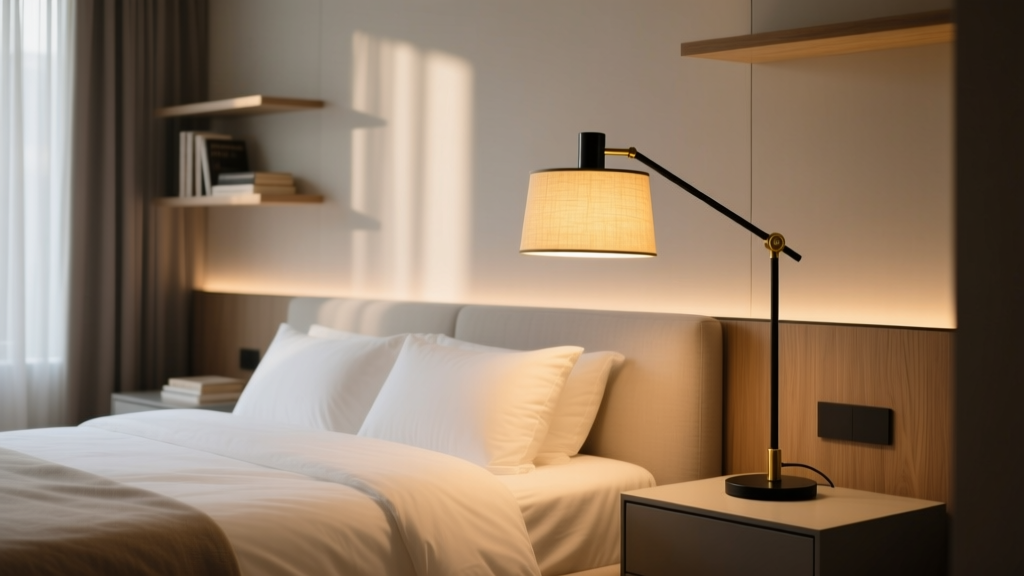
Best Bedroom Reading Light Options - The Decor Mag
A good bedroom reading light does more than help you finish a chapter—it shapes how your body and mind transition into sleep. The wrong lighting can feel harsh, keep your brain alert, and spill glare across the room. The right light supports a calm sleep environment: it’s bright enough to read comfortably, focused enough to avoid waking a partner, and warm enough to protect your evening wind-down.
Bedroom design and sleep quality are closely linked because light is one of the strongest cues for your circadian rhythm. If your bedroom lighting is too cool (blue-leaning) or too bright at night, it can nudge your body toward “daytime mode,” making it harder to fall asleep. A sleep-friendly bedroom setup uses layered lighting—ambient for getting ready, task lighting for reading, and low-level accent lighting for nighttime navigation—so your space stays restful while still being practical.
Below are the best bedroom reading light options, how to choose the right one for your layout, and small design decisions (placement, bulb color temperature, shades, and dimmers) that make a noticeable difference in comfort and sleep.
What Makes a Bedroom Reading Light “Good”?
Reading in bed should feel easy on your eyes and gentle on your nervous system. Look for lights that deliver enough illumination on the page, without flooding the entire room.
Key specs to look for
- Warm color temperature: Aim for 2200K–2700K for a cozy, sleep-friendly glow. Avoid 4000K+ in the bedroom at night.
- Brightness and control: A dimmer is ideal. If not, choose a bulb around 450–800 lumens for most bedside reading (you’ll adjust based on shade and distance).
- Directional light: Adjustable arms, swiveling heads, or focused shades reduce glare and keep light on your book, not your partner’s pillow.
- Glare reduction: Shades made from linen, fabric, frosted glass, or opal glass soften harsh points of light.
- Flicker-free LEDs: Quality LEDs (often labeled “flicker-free” or “eye comfort”) feel calmer for longer reading sessions.
- Switch placement: A switch you can reach while lying down prevents the “get up, reset, repeat” loop that disrupts sleepiness.
Sleep-friendly lighting rule of thumb
In the last 60–90 minutes before bed, keep lighting warm, dim, and localized. This supports melatonin production and creates a calming bedroom atmosphere without sacrificing functionality.
Best Bedroom Reading Light Options (With Pros, Cons & Budget Ranges)
1) Bedside Table Lamps: The Versatile Classic
Bedside lamps are one of the easiest upgrades for bedroom decor and function. They’re renter-friendly, require no wiring changes, and can enhance your bedroom design with texture and color.
- Best for: Traditional nightstands, flexible styling, shared bedrooms
- Ideal features: Dimmer or 3-way switch, linen shade, stable base, warm LED bulb
- Budget range: $30–$200+ (designer options can be more)
Materials that feel calming: ceramic, matte glass, natural wood, rattan, linen shades. These diffuse light softly and suit cozy bedroom decor styles.
Placement tip: For best comfort, the bottom of the lampshade should sit roughly at shoulder height when you’re sitting up in bed. This helps prevent bulb glare.
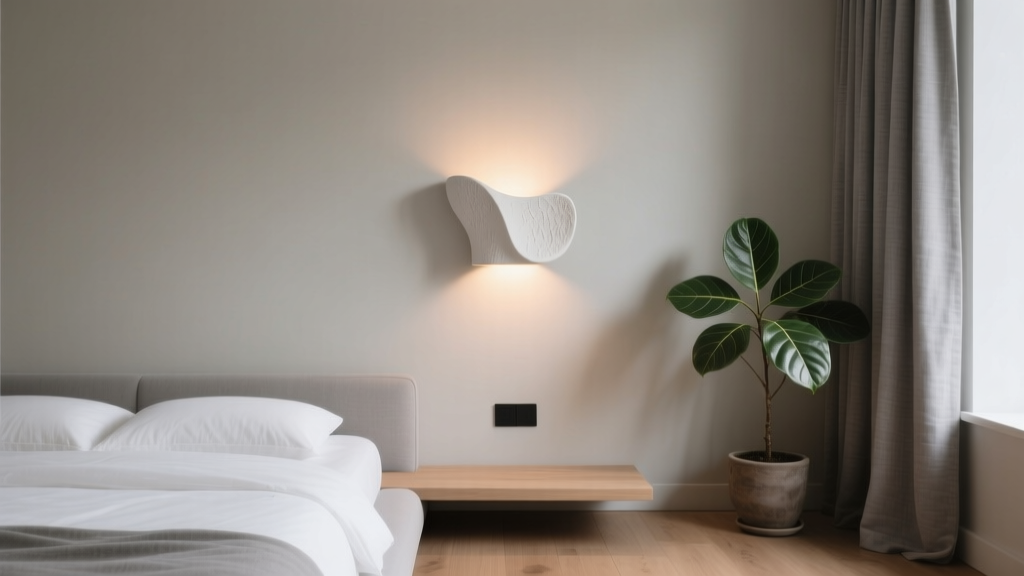
2) Wall-Mounted Sconces: Space-Saving and Polished
Wall sconces free up nightstand space and create a tidy, hotel-like bedroom layout. They’re excellent for small bedrooms where every inch counts.
- Best for: Small rooms, minimal nightstands, symmetrical bedroom design
- Ideal features: Swing arm or adjustable head, built-in dimmer, warm LED
- Budget range: $50–$350+
Hardwired vs. plug-in sconces:
- Plug-in: Great for renters; visible cord can be styled or covered with a paintable cord channel.
- Hardwired: Cleanest look; best for homeowners or long-term setups.
Mounting height: A comfortable guideline is 50–60 inches from the floor to the center of the fixture, or slightly above shoulder height when seated in bed. Adjust based on headboard height and reading position.
3) Clip-On Reading Lights: Budget-Friendly and Adjustable
Clip-on lights attach to a headboard, shelf, or bed frame and direct light precisely where you need it. They’re a smart option for renters, dorms, and frequent bedroom rearrangers.
- Best for: Tight budgets, temporary setups, highly directional reading light
- Ideal features: Warm LED settings, dimmer levels, stable clip, flexible gooseneck
- Budget range: $15–$60
Wellness tip: Choose a model with multiple warmth settings and use the warmest mode at night. Cooler modes can feel stimulating late in the evening.
4) Headboard-Integrated Lights: Built-In Convenience
Some upholstered or wooden headboards include built-in reading lights (often small spotlights). This keeps your nightstand clear and creates a streamlined bedroom setup.
- Best for: Modern bedroom design, small bedrooms, couples who read at different times
- Ideal features: Independent switches (one per side), warm LEDs, adjustable head
- Budget range: $200–$1,200+ (depending on headboard style and materials)
Design note: Upholstered headboards in linen, performance fabric, or bouclé add softness visually and acoustically—helpful for a more cocooning sleep environment.
5) Floor Lamps with Adjustable Arms: Great for Corner Layouts
If you don’t have matching nightstands or your bedroom layout is asymmetrical, an adjustable floor lamp beside the bed can work beautifully.
- Best for: Bedrooms with one nightstand, corner beds, multipurpose rooms
- Ideal features: Articulating arm, dimmer foot switch, warm bulb, stable base
- Budget range: $60–$300+
Safety tip: Keep cords tucked behind furniture or in a cord cover to avoid nighttime trips—especially important if you get up often.
6) Pendant Lights Over Nightstands: Elevated and Airy
Pendants free up surface space and add a boutique-hotel feel. They can be surprisingly practical if you choose the right shade and hang height.
- Best for: Minimalist bedroom decor, narrow nightstands, statement lighting
- Ideal features: Dimmer, opaque or softly diffusing shade, warm LED
- Budget range: $80–$400+ (plus installation if hardwired)
Hang height guideline: Many bedrooms look best with the pendant bottom about 28–36 inches above the nightstand, adjusted to prevent glare when lying down.
7) Smart Bulbs and Smart Dimmers: A Sleep-Friendly Upgrade
If you already like your fixtures, a smart bulb can turn basic bedroom lighting into a circadian-supportive system. You can schedule the light to warm and dim automatically as bedtime approaches.
- Best for: People building a consistent bedtime routine, tech-friendly homes
- Look for: “Warm dim” features, low minimum brightness, reliable app control
- Budget range: $15–$60 per bulb or $25–$100+ for dimmers
Sleep routine tip: Program a nightly scene: 2200K–2700K, 10–30% brightness for reading, then fade lower after 20–30 minutes as a cue to put the book down.
How to Choose the Right Reading Light for Your Bedroom Layout
Match the light to your nightstand and bed height
- Short nightstand + tall lamp can create glare and visual clutter.
- Tall bed + low lamp can feel dim and awkward to reach.
- For most setups, choose a lamp height that keeps the bulb out of direct sight when sitting up in bed.
Consider shared sleep spaces
If you share a bed, prioritize directional, controlled light:
- Swing-arm sconces
- Clip-on lights with narrow beams
- Bedside lamps with shades and dimmers
Think in layers for a calmer sleep environment
- Ambient light: Soft overhead fixture on a dimmer, or a floor lamp for gentle room light.
- Task light (reading): Focused light aimed at the page.
- Low-level night light: Motion-sensor plug-in light or a very dim lamp setting for safe midnight movement.
Sleep-Friendly Bedroom Design Pairings (Lighting + Decor Choices)
A reading light works best when the rest of the bedroom design supports relaxation. Small decor choices help reduce harsh contrasts and visual noise.
Best bedroom colors to complement warm lighting
- Warm whites: creamy ivory, soft beige
- Muted earth tones: clay, sand, soft terracotta
- Calming cools (kept gentle): dusty blue, sage green (avoid icy, bright tones near bedtime)
- Moody neutrals: warm taupe, charcoal (pair with warm bulbs to avoid a cave-like feel)
Bedding and materials that reduce “visual glare”
- Matte, textured bedding: cotton percale, washed linen, cotton voile quilts
- Soft headboard upholstery: linen blend, performance fabric, velvet (in muted shades)
- Avoid overly shiny finishes right next to your reading light (high-gloss nightstands, mirrored surfaces) if you’re sensitive to reflections.
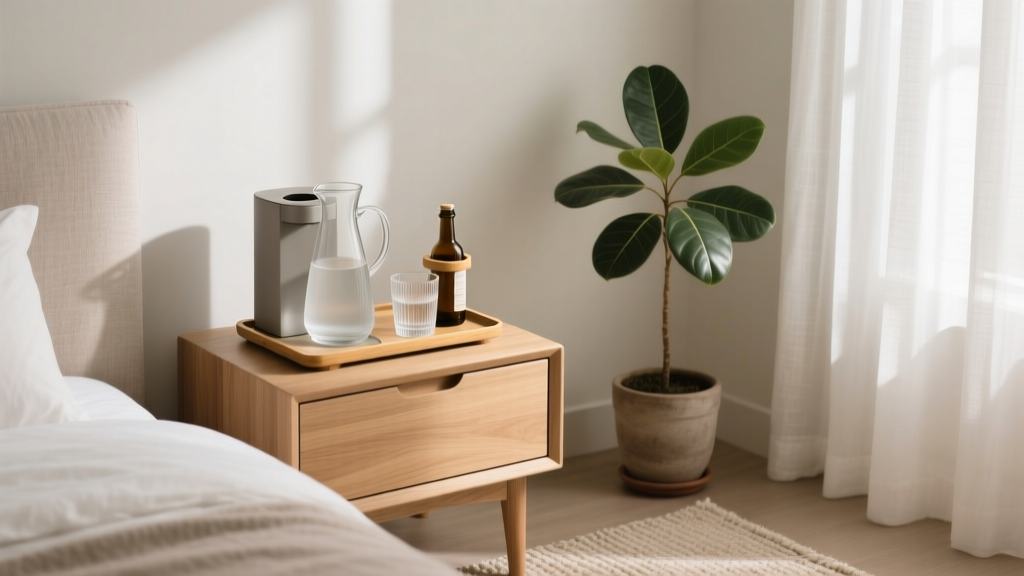
Nightstand setup for easier winding down
Keep your bedside area simple so your brain reads it as a rest zone:
- A lamp or sconce with reachable switch
- A small tray for glasses, lip balm, or earplugs
- A drawer or basket for clutter control (charging cables, lotions, book stack)
- A coaster or covered water glass to prevent spills
Wellness Tips for Reading in Bed Without Disrupting Sleep
- Use the “warm + dim” combo: Warm bulbs at lower brightness reduce alerting effects.
- Aim the beam correctly: Angle light to hit the page from the side, reducing shadow and eye strain.
- Try a 20–30 minute reading window: Consistency helps your brain associate the routine with sleepiness.
- Limit blue-rich light: Avoid cool LEDs and bright overheads late at night.
- Keep screens out of the reading zone: If you read on a tablet, use warm/night mode and lower brightness; consider an e-ink reader for less stimulating light exposure.
Common Bedroom Reading Light Mistakes to Avoid
- Choosing cool white bulbs (4000K–6500K): They can feel clinical and may interfere with melatonin signals.
- Skipping dimmers: One brightness level rarely suits both reading and winding down.
- Exposed bulbs near eye level: Bare bulbs create glare and visual stress.
- Over-lighting the whole room to read: Overhead lighting can keep the space feeling “active.”
- Poor placement: Lights mounted too high cause glare; too low can cast shadows and strain your eyes.
- Ignoring your partner’s sleep: Unshielded light spills across the bed and disrupts shared rest.
FAQ: Bedroom Reading Lights
What is the best light color for reading in bed?
For a sleep-friendly bedroom, choose warm light around 2200K–2700K. It’s comfortable for reading and gentler in the evening than cooler white light.
How bright should a bedside reading light be?
Many people do well with a bulb in the 450–800 lumen range, depending on shade opacity and distance from the book. A dimmer is the simplest way to fine-tune brightness without changing fixtures.
Are wall sconces better than table lamps?
Sconces are excellent for small bedrooms and for keeping nightstands clear. Table lamps offer more flexibility if you rearrange furniture often or want a softer decorative element. Both can be great for sleep quality if they’re warm, dimmable, and glare-free.
What’s the best reading light if I share a bed?
Look for a directional option with tight control: a swing-arm wall sconce, a clip-on gooseneck, or a shaded lamp with a dimmer. Aim the light at your pages and away from your partner’s face.
Do smart bulbs help with sleep?
They can. Smart bulbs that dim low and shift to warmer tones in the evening support a calmer bedroom lighting plan. Scheduling lights to gradually dim can also reinforce a consistent bedtime routine.
Can I use a floor lamp as a bedside reading light?
Yes—choose one with an adjustable arm or focused reading head and a stable base. Position it so the light reaches your book without shining into your eyes.
Next Steps: Build a Calmer Bedroom Lighting Plan
Start by choosing one reading light option that fits your space and habits: a dimmable bedside lamp for flexibility, wall sconces for a clean layout, or a clip-on light for a budget-friendly upgrade. Pair it with a warm bulb (2200K–2700K), aim the light to reduce glare, and keep the rest of the bedroom lighting soft and layered.
For more calming bedroom design ideas, sleep-friendly decor tips, and lighting inspiration, explore the latest guides on thedecormag.com.
More Articles
 Bedroom Leather Pull Nightstand Handles - The Decor Mag
 Best Bedroom Tie and Belt Storage - The Decor Mag
 Best Bedroom Shoe Storage Solutions - The Decor Mag
 How To Clean Actually: A Bedroom Comfort Specialist’s No-Nonsense, Science-Backed Protocol
 Bedroom Fabric Wrapped Headboard Ideas - The Decor Mag
 Best Bedroom Eye Mask Storage - The Decor Mag
 Best Bedroom Aromatherapy Diffuser Blend - The Decor Mag
 Bedroom Plaster Sconce Wall Application - The Decor Mag
 Best Bedroom Bedside Hydration Station - The Decor Mag
 Bedroom Layout Common Mistakes: What 92% of Homeowners Get Wrong (And How to Fix Them)