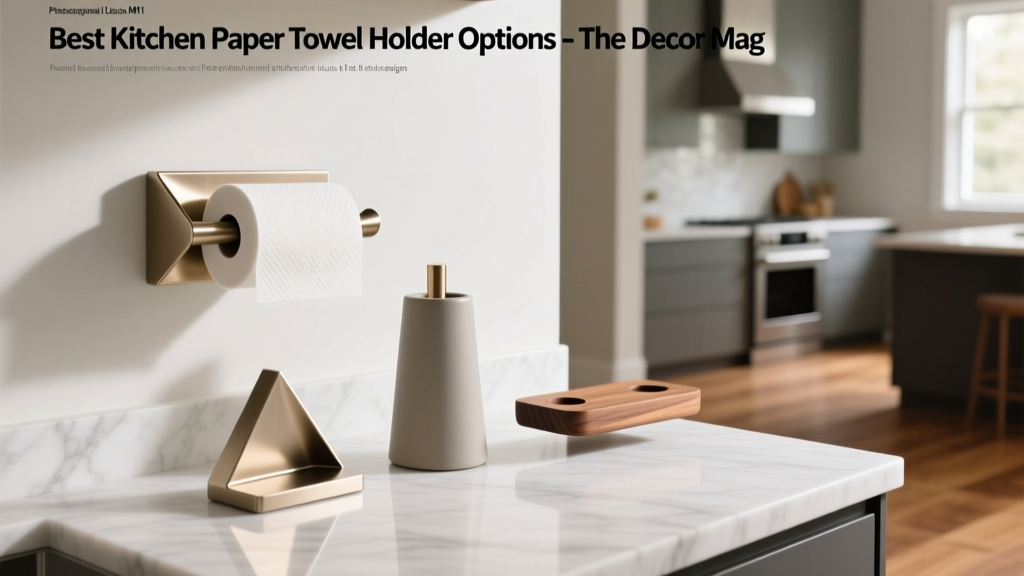
Best Kitchen Paper Towel Holder Options - The Decor Mag
Paper towels aren’t the most glamorous part of a kitchen renovation, yet they’re one of the most used. The right kitchen paper towel holder keeps clean-up quick, prevents soggy rolls from sitting near the sink, and reduces countertop clutter—small details that add up to a kitchen that feels calmer and more functional day to day.
With today’s kitchen design trends leaning toward streamlined surfaces, hidden storage, and “everything has a place” organization, a paper towel holder can either support that look or fight it. Whether you’re remodeling or simply upgrading accessories, choosing a holder that fits your layout, habits, and finishes is a practical win—and a surprisingly easy way to make your kitchen feel more intentional.
This guide covers the best paper towel holder options for modern kitchen design, including wall-mounted, under-cabinet, countertop, and built-in solutions. You’ll also find measurements to plan placement, material comparisons, cost ranges, and common mistakes to avoid—so your next roll is always within reach, without sacrificing style.
How to Choose the Right Paper Towel Holder for Your Kitchen
Start with Placement: Where Will You Reach for It Most?
The best holder is the one that matches your real kitchen workflow. Think about your main “clean-up zones”:
- Prep zone: near cutting boards, oils, and mixing bowls for quick wipes.
- Sink zone: for drying hands and grabbing towels during dishwashing (but not so close that it gets splashed).
- Cooking zone: near the range for grease splatters and quick grabs.
Practical spacing guidelines:
- Keep the holder 12–18 inches from the sink edge to reduce water spray.
- Aim for 36–54 inches above the floor for wall-mounted holders (depending on counter height and comfort).
- For under-cabinet mounting, allow at least 13 inches of vertical clearance from the underside of the cabinet to the counter so you can change rolls easily and avoid knuckle bumps.
Match Your Kitchen Style (Without Overthinking It)
Paper towel holders should blend with your hardware and fixtures. For timeless cohesion:
- Match to your cabinet pulls: brushed nickel, matte black, polished chrome, unlacquered brass, or bronze.
- If your kitchen is minimalist or contemporary, choose a holder with clean lines and hidden hardware.
- If your kitchen leans warm or traditional, wood accents and softer profiles look more intentional.
Prioritize One-Hand Tearing
This is the difference between “looks good” and “works well.” Many homeowners regret a holder that spins freely. Look for:
- Weighted bases (countertop models)
- Spring-tension rods or ratcheting mechanisms
- Center-post stoppers or friction arms
Best Paper Towel Holder Types (Pros, Cons, and Best Uses)
1) Countertop Paper Towel Holders
Countertop holders are the most popular choice because they’re easy to install (no drilling) and easy to move when you rework your kitchen organization.
Best for: renters, quick upgrades, kitchens with limited cabinet mounting options, and homeowners who want flexibility.
Pros:
- No installation required
- Easy to reposition for different tasks
- Wide range of materials and styles
Cons:
- Uses counter space (a key concern in smaller kitchens)
- Cheaper models may tip or unravel
What to look for:
- Base diameter: 6–8 inches is typically stable without being bulky.
- Height: 12–14 inches fits most standard rolls.
- Non-slip base (silicone or rubber ring) to protect stone countertops.
Cost range: $15–$80 (premium weighted stainless and designer models can exceed $100).
2) Under-Cabinet Paper Towel Holders
Under-cabinet mounting is a smart renovation-friendly option: it keeps towels accessible while freeing countertop space—ideal for clean, modern kitchen design.
Best for: small kitchens, minimalist counters, and homeowners focused on kitchen organization.
Pros:
- Frees counter space
- Creates a more streamlined look
- Usually easy to install with screws (or heavy-duty adhesive in some cases)
Cons:
- Can interfere with under-cabinet lighting or appliance garages
- Placement must account for roll changes and cabinet doors
Installation tip: Position the holder so the roll clears cabinet face frames and doesn’t collide with knobs/pulls. If you have under-cabinet LED strips, mount the holder slightly back to avoid casting shadows on the counter.
Cost range: $15–$60 (higher if using premium finishes or integrated tension systems).
3) Wall-Mounted Paper Towel Holders
Wall-mounting can look intentional and “designed,” especially in kitchens with open shelving, a pantry wall, or a dedicated prep zone away from upper cabinets.
Best for: kitchens with limited upper cabinets, galley layouts, or households that want the holder off the counter and away from splash zones.
Pros:
- Off-counter, out of the way
- Can be placed at the perfect ergonomic height
- Works well near a pantry or coffee station
Cons:
- Requires drilling into drywall/tile (anchors often needed)
- More visually prominent—style matters
Cost range: $20–$100 (tile-friendly, concealed-mount designer options can be higher).
4) Built-In or Integrated Paper Towel Dispensers (Cabinet or Drawer)
For higher-end kitchen renovations, integrated dispensers are the ultimate clutter-free option. These are installed inside cabinetry, a drawer, or a pull-out, sometimes paired with trash/recycling pull-outs for an efficient clean-up station.
Best for: full remodels, custom cabinetry, and homeowners who love hidden organization.
Pros:
- Completely eliminates countertop visual clutter
- Protects the roll from splashes and grease
- Pairs beautifully with modern and transitional kitchen design trends
Cons:
- Higher cost and more planning
- Requires cabinet space and proper ventilation to avoid humidity buildup
Planning measurements:
- Standard roll width is about 11 inches; allow 11.5–12 inches internal clearance for easy loading.
- Allow 5.5–6.5 inches depth depending on the dispenser design.
Cost range: $50–$200 for add-on dispenser hardware; $200–$600+ when built into a custom pull-out system (plus cabinetry costs).
Best Materials and Finishes (What Holds Up in Real Kitchens)
Stainless Steel
- Look: clean, modern, professional
- Durability: excellent; resists rust when quality is good
- Maintenance: wipe with microfiber; use stainless cleaner if needed
- Watch for: fingerprints on polished finishes—brushed hides smudges better
Powder-Coated Metal (Matte Black/White/Color)
- Look: trendy and architectural; great with matte black hardware
- Durability: very good; can chip if banged hard
- Maintenance: mild soap and water; avoid abrasive scrubbers
- Watch for: cheap coatings that scratch easily
Wood (Bamboo, Oak, Walnut)
- Look: warm and timeless; complements organic modern and Scandinavian kitchens
- Durability: good if sealed; vulnerable near sinks
- Maintenance: wipe dry; occasionally condition with food-safe mineral oil if unfinished
- Watch for: swelling or staining from moisture
Stone/Marble/Concrete Bases
- Look: elevated, designer feel; adds visual weight
- Durability: excellent, but can chip if dropped
- Maintenance: keep sealed if porous (marble/concrete); wipe spills quickly
- Watch for: etching on marble from acidic cleaners
Kitchen Layout Recommendations: Where a Holder Works Best
Galley Kitchens
- Choose under-cabinet or wall-mounted to keep narrow counters clear.
- Mount near the primary prep counter, not the range wall where heat and grease are higher.
L-Shaped and U-Shaped Kitchens
- A countertop weighted holder works well if you have a “dead corner” area.
- Consider a dedicated clean-up zone with trash pull-out + paper towel access.
Kitchen Islands
- If you prep on the island, avoid clutter by using an under-counter/overhang mount or integrated drawer dispenser.
- Keep rolls off the island surface when entertaining—integrated solutions shine here.
Product and Design Approach Recommendations (By Budget)
Budget-Friendly ($15–$35)
- Weighted countertop metal holder with non-slip base
- Basic under-cabinet rod (screw-mounted for stability)
- Powder-coated steel in matte black or white for a modern look
Best approach: prioritize stability and one-hand tearing over decorative details.
Mid-Range ($35–$90)
- Stainless steel tension/ratcheting models designed for one-handed tear
- Wood + metal combo for warmer, trend-forward kitchens
- Concealed-mount under-cabinet holders that look built-in
Best approach: match your faucet/hardware finish for a cohesive renovation look.
High-End ($90–$300+)
- Integrated cabinet or drawer dispensers
- Designer stone-based countertop holders
- Custom pull-out solutions paired with trash/recycling for a complete clean-up station
Best approach: treat paper towel storage as part of your kitchen organization plan—especially if you’re investing in custom cabinetry.
Maintenance and Longevity Tips
- Keep it dry: If your holder lives near the sink, wipe the base weekly to prevent water rings, rust spots, or wood swelling.
- Avoid harsh cleaners: Skip bleach sprays on coated metal and wood; use mild dish soap and warm water.
- Check mounting screws: For wall/under-cabinet holders, tighten screws every few months—kitchens vibrate more than you’d think (drawer slams and cabinet doors).
- Protect stone counters: Choose holders with a silicone base or add a clear protective pad to prevent micro-scratches.
Common Mistakes to Avoid
- Placing it too close to the sink: Constant splashes lead to soggy rolls and messy tearing.
- Buying for looks only: If you can’t tear a sheet one-handed, it becomes a daily annoyance.
- Forgetting roll size: Mega rolls can be taller/wider; confirm your holder’s clearance (aim for 12–13 inches height and ~12 inches width clearance).
- Mounting under cabinets without testing: Open the cabinet door, turn on under-cabinet lights, and simulate changing the roll before drilling.
- Ignoring visual clutter on islands: A countertop holder can interrupt clean sightlines—consider hidden or under-mount options.
FAQ: Kitchen Paper Towel Holder Options
What’s the best paper towel holder for small kitchens?
An under-cabinet paper towel holder is usually the best choice because it frees up valuable counter space while keeping towels within easy reach.
Are adhesive-mounted holders strong enough?
Some are, but performance depends on surface type and adhesive quality. Adhesives bond best to smooth, clean surfaces (painted drywall, sealed tile, glass, metal). For textured tile, brick, or areas near heat/steam, screw-mounted is more reliable.
How high should a wall-mounted paper towel holder be?
A comfortable range is 36–54 inches from the floor, depending on whether it’s above a counter, on a pantry wall, or used by multiple family members. If mounting over a counter, aim for 8–12 inches above the countertop.
What finish looks most timeless in a renovated kitchen?
Brushed stainless steel and brushed nickel read classic and pair well with many faucets and cabinet hardware styles. Matte black is still a strong trend and works especially well in modern, high-contrast kitchens.
How do I keep a countertop holder from tipping?
Choose a model with a weighted base (6–8 inches wide) and a non-slip bottom. If it still shifts, add a thin silicone pad under the base.
Is a built-in dispenser worth it during a kitchen renovation?
If you’re already investing in cabinetry and want a cleaner counter look, a built-in dispenser can be a great upgrade—especially near a trash/recycling pull-out to create an efficient clean-up station.
Next Steps: Pick the Holder That Supports Your Kitchen Routine
Start by identifying your most-used clean-up zone, then choose the holder type that protects your counter space and matches your kitchen design. For quick wins, a stable countertop or under-cabinet model delivers immediate organization benefits. If you’re mid-renovation, consider integrating paper towel storage into cabinetry for a streamlined, modern finish.
- Measure your available space (height, width, and clearance for changing rolls).
- Match materials and finishes to your faucet and cabinet hardware.
- Prioritize one-hand tearing and easy roll changes for everyday ease.
For more renovation-ready kitchen organization ideas, layout tips, and timeless decor inspiration, explore the latest guides on thedecormag.com.
More Articles
 Kitchen Leathered Finish Granite Guide - The Decor Mag
 Best Kitchen Food Storage Container Systems - The Decor Mag
 Best Kitchen Lighting for Function & Style (2026)
 Statement Kitchen Lighting Design (2026)
 How To Clean Fluted: A Practical, Step-by-Step Guide for Stainless Steel, Copper, and Cast Iron Cookware
 How to Design a Kitchen Work Triangle - The Decor Mag
 How to Plan a Kitchen Renovation on a Budget - The Decor Mag
 Kitchen Island Prep Stations: Summer Party Command Center
 How to Incorporate Color in a White Kitchen - The Decor Mag
 Kitchen That Inspires Cooking: Design Ideas (2026)