Kitchen Textured Backsplash Tile Trends - The Decor Mag
A kitchen backsplash does more than protect your walls from splashes and splatters—it sets the mood of the entire room. As homeowners lean into warmer, more layered interiors, textured backsplash tile has become a top kitchen design trend because it adds depth, light play, and character without requiring a full remodel.
Texture also solves a practical challenge in renovation planning: many kitchens are packed with smooth, reflective surfaces (quartz counters, glossy cabinets, stainless appliances). A textured backsplash introduces contrast, making the space feel more intentional and “finished.” Whether you’re updating a builder-grade kitchen or refining a high-end renovation, today’s textured tile options make it possible to get a custom look at a wide range of budgets.
Why Textured Backsplash Tile Is Trending in Kitchen Renovations
Textured tile is one of the easiest ways to elevate a kitchen because it combines visual interest with everyday function. Current kitchen design trends emphasize:
- Soft movement and dimension (fluted, ribbed, and wave-like surfaces)
- Handmade character (zellige-inspired edges, slight color variation)
- Natural materials (stone, clay, terracotta looks)
- Organic modern palettes (creamy whites, warm greiges, muted greens)
- Timeless layouts with a twist (classic subway, stacked, vertical orientation)
Textured tiles can also help hide minor wall imperfections—especially in older homes—though proper prep still matters (more on that below).
Top Textured Backsplash Tile Trends to Watch
1) Fluted and Ribbed Tiles (Linear Texture)
Fluted tile is one of the most requested looks in modern kitchen renovations. The vertical grooves create a tailored, architectural feel that pairs beautifully with slab cabinet doors, minimalist hardware, and warm wood tones.
Best for: Modern, Japandi, organic modern, contemporary kitchens.
Layout recommendations:
- Vertical stack to emphasize ceiling height (great for smaller kitchens)
- Full-height backsplash behind open shelving or a feature range wall
Practical tip: For heavily textured ribbed tiles, choose a grout color that blends (not contrasts). Contrasting grout can look busy because it outlines every groove and joint.
Typical costs: $12–$40 per sq. ft. for tile; installed $30–$80+ per sq. ft. depending on region and complexity.
2) Zellige-Look Tiles (Handmade or Handmade-Style)
Zellige-inspired tiles remain a favorite because the surface variation and irregular edges create instant warmth. True Moroccan zellige is hand-cut and naturally uneven; many manufacturers also offer zellige-look ceramic tiles with easier installation and maintenance.
Best for: Transitional, Mediterranean, modern farmhouse, eclectic kitchens.
Design approach:
- Use a 5x5 or 4x4 square tile for a classic zellige feel.
- Choose creamy white, soft sage, or warm greige for a timeless base.
- Pair with unlacquered brass or matte black hardware for a trend-forward finish.
Maintenance note: Glossy zellige-look ceramics wipe clean easily. True zellige can be more porous and may require sealing depending on finish and manufacturer guidance.
Typical costs: Zellige-look ceramic $8–$20 per sq. ft.; authentic handmade zellige often $25–$60+ per sq. ft. Installed costs typically run $25–$100+ per sq. ft.
3) Textured Stone and Stone-Look Porcelain
Stone adds organic depth—especially honed or lightly textured finishes. However, many homeowners choose stone-look porcelain for easier upkeep and stain resistance while keeping the natural vibe.
Best for: Organic modern, rustic, coastal, traditional kitchens.
Material comparison (quick guide):
- Natural stone (marble, limestone, travertine): authentic variation; may etch/stain; often needs sealing.
- Porcelain stone-look: low maintenance; highly durable; consistent thickness; fewer sealing concerns.
Timeless layout idea: A 2x8 or 3x12 stone-look tile in a vertical stack creates height and looks clean with modern cabinets.
Typical costs: Porcelain $6–$25 per sq. ft.; natural stone $12–$40+ per sq. ft. Installed $25–$90+ per sq. ft.
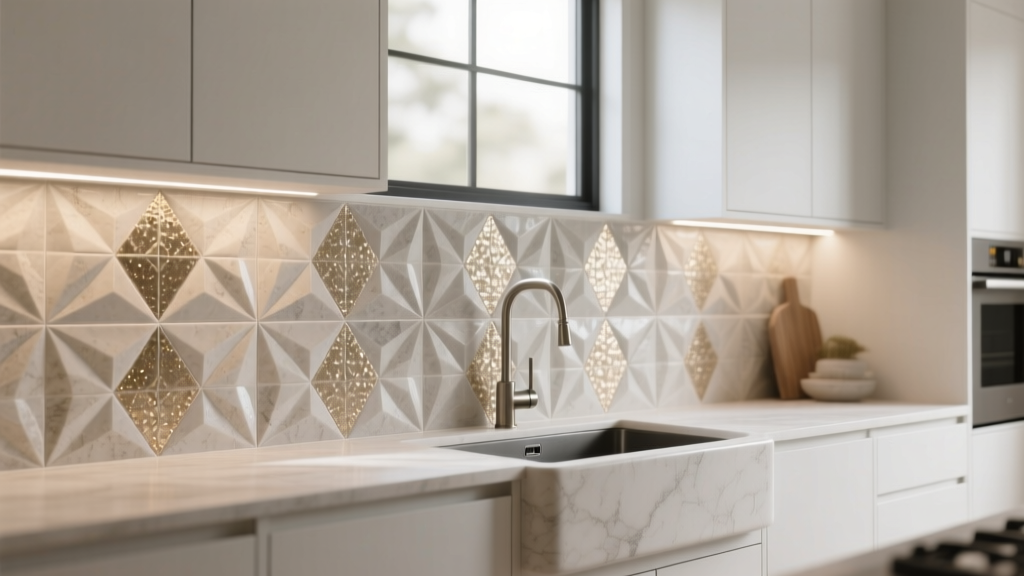
4) 3D Geometric Tiles (Sculptural, Patterned Texture)
3D geometric backsplash tiles bring drama, but the most current versions are subtle—think matte whites, sand tones, and low-relief shapes that read as texture first, pattern second.
Best for: Contemporary kitchens, statement range walls, monochrome palettes.
Where to use it:
- As a feature backsplash behind the range (especially with a simple hood)
- On a bar wall or coffee station where it becomes a focal point
Lighting tip: Under-cabinet LED lighting (3000K warm white is widely flattering) enhances shadows and makes relief tile look more high-end.
Typical costs: $15–$50 per sq. ft. for tile; installed $40–$100+ per sq. ft. due to alignment and cutting.
5) Matte Textured Subway Tiles (A Timeless Base with an Update)
Subway tile isn’t going anywhere, but today’s trend is matte, slightly rippled, or satin finishes rather than glossy, perfectly flat surfaces. This is a smart choice if you want a renovation that feels current without becoming dated.
Best for: Classic, transitional, modern farmhouse, Scandinavian-inspired kitchens.
Layout recommendations:
- Vertical subway for a modern refresh
- Stacked horizontal for clean lines (especially with flat-panel cabinets)
- Traditional running bond if you want timeless and forgiving alignment
Typical costs: $4–$15 per sq. ft. for tile; installed $18–$45+ per sq. ft.
Choosing the Right Textured Tile: Materials, Finishes, and Practical Performance
Best Materials for Kitchen Backsplashes
- Ceramic: budget-friendly, easy to cut, great for zellige-look and matte textures.
- Porcelain: dense and durable, excellent stain resistance, ideal for stone-look texture.
- Glass: easy to wipe clean, but heavy texture can show grout lines and may feel dated in some kitchens.
- Natural stone: beautiful and timeless; requires more maintenance; choose finish carefully.
Glossy vs. Matte vs. Satin: What Works Best in Real Kitchens?
- Glossy: reflects light, brightens small kitchens; shows smudges more readily but wipes clean.
- Matte: soft, modern look; can hold onto grease if heavily textured—choose a wipeable glaze and plan for regular cleaning.
- Satin: a balanced option; often the easiest to live with while still feeling elevated.
Layout and Measurement Tips for a Professional-Looking Backsplash
Standard Backsplash Heights
- 4-inch backsplash (often matches countertop): functional but can look dated; better for tight budgets or temporary updates.
- Countertop to cabinets: typically 18 inches high (measure your own; it can range 16–20 inches).
- Full-height backsplash: countertop to ceiling for a premium look—great behind a range or open shelves.
Recommended Grout Joint Sizes (General Guidelines)
- Rectified porcelain: 1/16"–1/8" (check manufacturer requirements)
- Handmade-look and zellige-style: often 1/8"–3/16" to accommodate variation
- True handmade zellige: can vary significantly; work with an experienced installer
How to Plan Cuts and Focal Points
- Start with the most visible wall (often the range wall) and center your layout there.
- Avoid tiny slivers at the ends—aim for cuts at least 2–3 inches wide when possible.
- Dry lay a few rows to preview how texture and variation read from standing height.
Budget and Cost Ranges: What to Expect
Backsplash pricing depends on tile selection, prep work, and complexity. Use this as a planning baseline:
- Budget-friendly upgrade: $300–$900 (simple ceramic tile, standard height, straightforward layout)
- Mid-range renovation: $900–$2,500 (higher-end ceramic/porcelain, textured styles, more outlets/cuts)
- Premium/custom look: $2,500–$6,000+ (full-height install, handmade tile, detailed layout, range wall feature)
How to control costs without sacrificing style:
- Use textured tile as a feature wall behind the range, and choose a simpler tile elsewhere.
- Pick a larger-format textured tile to reduce labor time (fewer grout lines).
- Keep the layout stacked rather than intricate patterns that increase cutting and installation time.
Maintenance and Cleaning Advice for Textured Backsplashes
Texture is beautiful, but it can trap grease and dust if you don’t choose the right finish—or if it’s installed in the wrong location.
Daily/Weekly Cleaning (Most Kitchens)
- Wipe with a soft microfiber cloth and a mild, pH-neutral cleaner.
- For cooking grease, use warm water with a small amount of dish soap, then rinse and dry.
- Avoid abrasive scrubbers on glossy or specialty glazes to prevent dulling.
Sealing: When It’s Needed
- Porcelain and glazed ceramic: typically do not require sealing.
- Natural stone: often requires sealing (and periodic resealing) to reduce staining.
- Cementitious grout: may benefit from sealing; epoxy grout is more stain resistant but costs more.
Pro tip for range areas: If you cook frequently with oil, choose a glazed tile finish (even if it’s matte/satin) and keep texture moderate near the cooktop for easier wipe-down.
Common Mistakes to Avoid with Textured Backsplash Tile
- Choosing extreme texture behind a high-splatter range: deep grooves can collect grease and require frequent scrubbing.
- Ignoring lighting: texture looks best with under-cabinet lighting; without it, the backsplash can read flat and dark.
- Skipping proper wall prep: uneven drywall telegraphs through tile—especially stacked layouts.
- Picking the wrong grout color: high-contrast grout can overwhelm textured tile and make the wall look busy.
- Not planning outlet placement: outlets in textured tile can look messy if covers don’t sit properly; use box extenders when needed.
- Over-trending the whole kitchen: if cabinets, counters, and backsplash all “compete,” the room loses cohesion. Let one element lead.
Specific Design Recommendations That Work in Most Kitchens
Timeless + Trend-Forward Combinations
- Warm white ribbed tile + light oak cabinets + brushed nickel hardware
- Soft greige zellige-look tile + white cabinets + warm brass pulls
- Stone-look porcelain + mushroom/greige cabinets + matte black faucet
- Matte textured subway tile (vertical) + quartz counters with subtle veining
Smart Product/Design Approaches to Ask For
- Mesh-backed mosaics for intricate textures—ask to see a full sheet installed to evaluate grout lines.
- Factory bullnose or trim pieces (or metal edge profiles) for clean ends and window returns.
- Epoxy grout in light colors if you want maximum stain resistance with minimal upkeep.
FAQ: Textured Kitchen Backsplash Tiles
Are textured backsplash tiles harder to clean than flat tile?
Moderate texture is usually easy to maintain with regular wiping. Deeply grooved or highly sculptural tiles can collect grease near the range, so they’re better on a coffee station wall or used as a feature away from heavy splatter zones.
What grout works best with textured tile?
A grout color that blends with the tile typically looks more seamless and hides inconsistencies. For stain resistance, consider epoxy grout—especially with white or very light grout lines in busy kitchens.
Should I run the backsplash to the ceiling?
Full-height backsplashes look high-end and work especially well on range walls or behind open shelving. If budget is a concern, you can go full-height in one feature area and keep standard height elsewhere.
Is zellige tile a good idea for a busy family kitchen?
Zellige-look glazed ceramic is often a great choice: it delivers the handmade feel with easier cleaning. True handmade zellige can be more variable and may need sealing depending on the finish—work with a knowledgeable installer and follow the manufacturer’s care instructions.
What’s the most timeless textured backsplash option?
A lightly textured subway tile (matte or satin) in a warm white or soft neutral is one of the safest long-term choices. It nods to current texture trends while staying rooted in classic kitchen design.
How do I keep my backsplash from looking too busy?
Limit strong movement to one surface. If your countertop has bold veining or your cabinets have prominent grain, choose a simpler texture and a quiet grout color. If your kitchen finishes are very minimal, you can go bolder with 3D or ribbed tile.
Next Steps: How to Choose the Right Textured Backsplash for Your Kitchen
- Collect 2–3 tile samples and view them in your kitchen morning and night (lighting changes everything).
- Decide your priority: easiest cleaning, maximum texture impact, or a timeless resale-friendly look.
- Confirm measurements (especially the typical 18-inch space between countertop and cabinets) and map outlets before ordering.
- Choose grout and edge finishing at the same time as the tile for a cohesive, professional result.
If you’re planning a kitchen renovation, textured backsplash tile is one of the most practical upgrades you can make—high impact, highly personal, and adaptable to nearly any budget. For more kitchen design trends, renovation tips, and organized kitchen ideas, explore the latest inspiration on thedecormag.com.
More Articles
 Kitchen Matte Black Fixture Trends - The Decor Mag
 How to Design a Kitchen with a Breakfast Bar - The Decor Mag
 Kitchen Statement Range as Focal Point - The Decor Mag
 Professional Kitchen Design: Tips for 2026
 How to Choose the Right Kitchen Hood Vent - The Decor Mag
 Wood and Colors Compared: How Species, Finishes, and Pigments Shape Kitchen Design Decisions
 Kitchen Terrazzo Floor Tile Guide - The Decor Mag
 Best Kitchen Colander Storage Solutions - The Decor Mag
 Best Kitchen Flooring Options for Durability - The Decor Mag
 Kitchen Backsplash Pattern Scale: How to Choose (2026)