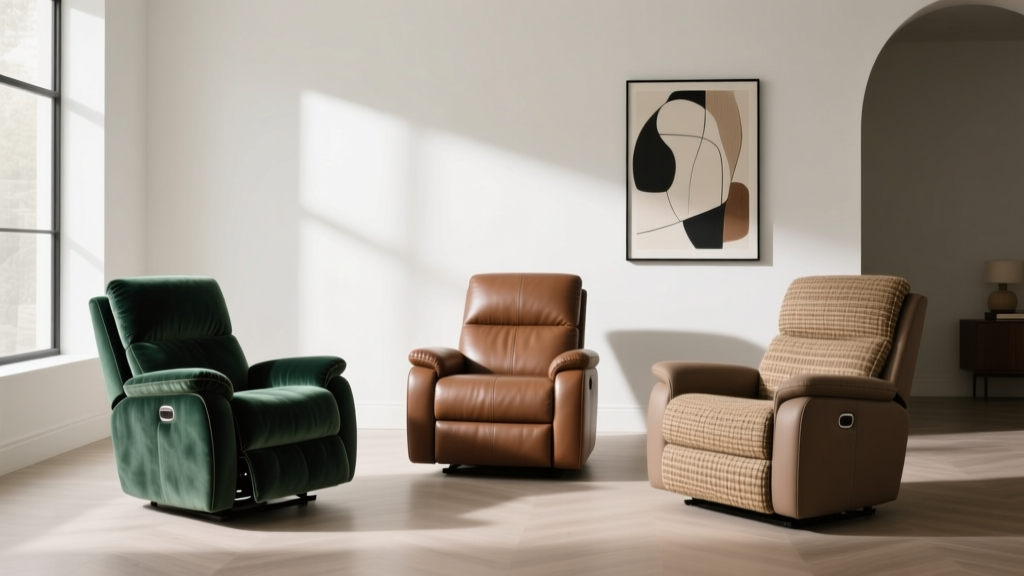
Best Recliner Chairs That Look Stylish - The Decor Mag
A recliner has a reputation problem. For years, the word “recliner” brought to mind bulky silhouettes, overstuffed arms, and a piece that looked like it belonged in a den—not a beautifully styled living room. The good news: modern recliner chairs have had a serious glow-up. Today’s best models blend comfort engineering with clean lines, tailored upholstery, and design-forward details that can hold their own next to a sofa you love.
If you’re a homeowner or renter trying to make your living room feel more elevated (without giving up your nightly Netflix comfort), a stylish recliner can be a smart investment. This guide breaks down what to look for, how to choose the right size and material, which styles work best with popular living room design trends, and which recliner types consistently look polished. You’ll also get layout tips, real-life scenarios, mistakes to avoid, and a quick FAQ to make shopping easier.
What Makes a Recliner Look Stylish (Not “Lazy-Boy-Like”)
A stylish recliner isn’t about being less comfortable—it’s about better proportions, thoughtful details, and finishes that match the rest of your living room decor. Look for these design cues when comparing options:
1) Slim arms and tailored silhouettes
- Track arms or gently sloped arms read more modern than pillow-top arms.
- Tight backs (minimal tufting, structured cushions) look cleaner than overstuffed backs.
- Boxed cushions and crisp seams add a “sofa-like” feel.
2) A higher leg or visible base
Recliners that sit directly on the floor can look heavy. A visible base creates visual lift.
- Look for metal or wood legs with at least 3–5 inches of clearance if possible.
- If you prefer a swivel recliner, choose a low-profile disc base in black, brushed steel, or warm wood.
3) Discreet mechanisms
- Push-back recliners hide their functionality best—no visible lever.
- Power recliners can still look refined if the buttons are tucked on the inside arm and cords are managed.
4) Elevated upholstery
- Performance fabric (poly blends designed for durability) looks tailored and resists staining.
- Top-grain or semi-aniline leather gives a luxe look and ages beautifully.
- Bouclé and textured weaves tap into current living room design trends while staying timeless.
Measure First: The Dimensions That Make or Break Your Layout
The most common reason a recliner feels out of place is scale. A beautiful chair can still look awkward if it overwhelms the room or blocks circulation. Use these practical measurement guidelines before you buy:
Key recliner measurements to check
- Overall width: Stylish recliners often range from 28–36 inches. Extra-plush models can be 40–44 inches wide.
- Depth (upright): Typically 34–40 inches.
- Depth (reclined): Often 60–72 inches. This is the number that surprises people.
- Seat height: 17–20 inches suits most adults and pairs well with standard sofa heights.
- Seat depth: 20–22 inches is a comfortable sweet spot for lounging without feeling swallowed.
Clearance rules of thumb
- Plan at least 12–18 inches between the recliner and a coffee table when upright.
- Allow 36 inches for primary walkways in a living room layout (minimum 30 inches in tight apartments).
- For wall-hugger recliners, you may only need 4–6 inches behind the chair; traditional recliners often need 12–18 inches.
Best Styles of Recliner Chairs That Look Great in Real Living Rooms
Instead of shopping by brand first, start with a style category that matches your living room decor. These are the most reliably “stylish” recliner types right now.
Modern push-back recliners (best for minimalist spaces)
These look the most like a standard accent chair—perfect if you want a recliner that blends in with modern living room furniture.
- Design details to look for: thin arms, tight back, welted seams, tapered wood legs.
- Best upholstery: tweed, performance linen-look fabric, or semi-aniline leather.
- Typical budget range: $350–$1,200.
Real-world scenario: In a 650-square-foot apartment, a slim push-back recliner in a warm gray performance fabric can replace a bulky armchair and still allow a clean walkway between the sofa and balcony door.
Swivel recliners (best for open-concept living rooms)
Swivel recliners are incredibly functional: face the TV, turn toward conversation, pivot toward the kitchen—all without dragging furniture. They’re also one of the most popular living room design trends because they support multi-use spaces.
- Design details to look for: sculpted barrel back, matte black disc base, tailored channel stitching.
- Best upholstery: bouclé (for a cozy, high-design look) or performance velvet (for a rich, durable finish).
- Typical budget range: $600–$2,000.
Real-world scenario: In an open-plan living room, a swivel recliner placed near the rug’s edge can act like a “bridge” between the seating area and dining zone—stylish and practical for hosting.
Wall-hugger recliners (best for small living rooms)
If you’re short on space, wall-huggers keep the footprint tighter while still giving you a true recline.
- Design details to look for: compact arms, a taller back that still looks streamlined, hidden controls.
- Best upholstery: performance fabric in a solid neutral; leather if you want a sleek, apartment-friendly finish.
- Typical budget range: $500–$1,800.
Power recliners with hidden tech (best for daily lounging)
Power doesn’t have to look clinical. Newer models integrate USB ports and headrest adjustments more discreetly, making them ideal for everyday comfort without sacrificing style.
- Design details to look for: low-profile buttons, minimal seams, slim arms, matte hardware.
- Best upholstery: top-grain leather or durable performance fabric (especially if kids or pets are involved).
- Typical budget range: $900–$3,500.
Mid-century-inspired recliners (best for timeless character)
Mid-century modern living room decor pairs beautifully with recliners that feature warm wood tones and simple geometry.
- Design details to look for: walnut-finish legs, tufted back (subtle, not overdone), clean side profile.
- Best upholstery: caramel leather, oatmeal tweed, or textured microfiber that mimics wool.
- Typical budget range: $700–$2,500.
Material Recommendations: What Looks Good and Wears Well
Upholstery choice affects both the style and longevity of your recliner. Here’s a practical breakdown for real living rooms.
Performance fabric (the crowd-pleaser)
- Best for: families, pets, everyday use.
- Look: tailored, matte, “designer sofa” vibes.
- Tip: Choose a fabric with at least 30,000 double rubs for durability if the brand shares testing info.
Leather (sleek, timeless, easy to wipe)
- Best for: contemporary living rooms, homes with spills, anyone who loves patina.
- Look: elevated and architectural.
- Tip: Aim for top-grain or semi-aniline for a natural look. Avoid very shiny “bonded leather” if you want upscale style.
Bouclé and textured weaves (trend-forward but still classic)
- Best for: cozy, layered living room design; Scandinavian and modern organic styles.
- Look: soft, sculptural, editorial.
- Tip: Keep the silhouette simple so the texture reads intentional, not busy.
How to Style a Recliner So It Looks Intentional
A recliner looks most stylish when it feels like part of a curated living room layout—not an add-on. Use these design moves to make it blend seamlessly.
1) Anchor it with the right rug size
- Ideally, at least the front legs of the recliner sit on the rug.
- For most living rooms, a 8' x 10' rug works well; in smaller spaces, try 6' x 9'.
2) Add a side table at the right height
- Choose a table that’s within 1–2 inches of the recliner’s arm height.
- Round tables soften the look of recliners with boxy arms.
3) Use lighting to create a “reading corner” feel
- A floor lamp with a 58–64 inch height generally works well beside a chair.
- Warm bulbs (2700K) make the corner feel cozy and upscale.
4) Repeat materials already in the room
- If your coffee table is black metal, echo that with a recliner base or lamp finish.
- If your sofa has warm wood legs, choose a recliner with a similar wood tone.
5) Style with a throw and a small pillow (but keep it tailored)
- One textured throw is enough—drape it neatly over the arm or back.
- A lumbar pillow in a coordinating fabric can make the recliner feel “decorator-finished.”
Product Recommendation Guide: What to Shop for at Different Budgets
Instead of listing specific model names that change constantly, use these shopping targets to find a stylish recliner chair at your price point.
Under $500: Best value finds
- Look for a push-back recliner with track arms and a neutral performance fabric.
- Avoid overly plush pillow arms—these are the quickest “dated” tell.
- Expect simpler mechanisms and fewer color options, but you can still get a clean silhouette.
$500–$1,200: The sweet spot for style + comfort
- Swivel recliners and compact wall-huggers become more available here.
- Prioritize spring support or a reputable foam density for better longevity.
- Look for upgraded details: channel stitching, better leg finishes, more structured backs.
$1,200–$3,500+: Investment pieces
- Best range for top-grain leather, power recline, and high-end ergonomics.
- Often includes options like adjustable headrests and smoother, quieter mechanisms.
- Ideal if the recliner is your everyday seat and you want it to look like a designer lounge chair.
Common Mistakes to Avoid When Buying a Stylish Recliner
- Buying too large for the room: If the recliner’s reclined depth pushes into walkways, it will always feel awkward. Measure reclined depth and mark it out on the floor with painter’s tape.
- Ignoring the back view: In open layouts, the recliner may be visible from the kitchen or entry. Choose one with a clean back (no exposed fabric panels or bulky mechanisms).
- Mismatching seat heights: If the recliner seat is much higher than the sofa, the set looks visually uneven. Aim for seat heights within 1–2 inches of each other.
- Choosing trendy color without a plan: A bold recliner can be gorgeous, but it needs support—repeat the color in art, pillows, or a rug so it looks intentional.
- Forgetting cord management: Power recliners look messy fast if cords are visible. Plan an outlet location or use a cord cover that matches the baseboard.
Putting It All Together: Two Easy Living Room Scenarios
Scenario A: The small rental living room (modern, light, airy)
You have a compact sofa, a small media console, and limited space between the coffee table and TV.
- Choose a wall-hugger recliner in a light performance fabric (cream, oatmeal, soft gray).
- Keep width to 30–34 inches and confirm the recline works with 4–6 inches wall clearance.
- Style it with a 20–22 inch round side table and a slim floor lamp.
Scenario B: The family living room (cozy, durable, polished)
You want a “main character” chair that can handle everyday lounging and still look elevated.
- Choose a power recliner with a tailored silhouette and hidden controls.
- Opt for top-grain leather in saddle, caramel, or warm brown, or a high-quality performance fabric in a mid-tone neutral.
- Ground it with an 8' x 10' rug and add a textured throw to soften the look.
FAQ: Stylish Recliner Chairs for Living Rooms
What is the most stylish type of recliner?
A modern push-back recliner is usually the most visually discreet and looks closest to a standard accent chair. If you want extra function in an open layout, a swivel recliner is both stylish and practical.
How much space do I need behind a recliner?
It depends on the mechanism. Many wall-hugger recliners need about 4–6 inches behind the chair, while traditional recliners may need 12–18 inches. Always confirm the manufacturer’s clearance recommendation.
Are leather recliners still in style?
Yes—especially in warmer tones like caramel and saddle, and in matte finishes rather than shiny ones. Leather pairs well with modern, mid-century modern, and rustic-modern living room decor.
What’s the best fabric for a recliner if I have pets or kids?
Performance fabric is usually the easiest choice for stain resistance and durability. For leather, look for top-grain with a protective finish and avoid delicate aniline leathers if spills and scratches are a concern.
How do I make a recliner match my sofa?
Match the undertones (warm vs. cool), keep the chair’s style in the same design family (modern, traditional, mid-century), and repeat at least one element—like leg finish, metal tone, or fabric texture—somewhere else in the room.
Is a recliner okay for a small living room?
Absolutely. Look for a compact wall-hugger or a slim push-back recliner, keep the width around 28–34 inches, and verify the reclined depth won’t block your main walkway.
Your Next Steps: Choose Comfort Without Sacrificing Style
Start by measuring your space (especially the reclined depth), then pick a silhouette that suits your living room design—push-back for minimalism, swivel for open-concept flexibility, wall-hugger for small spaces, or power recline for everyday luxury. Finally, tie it into your decor with a well-sized rug, a properly scaled side table, and lighting that turns the chair into an intentional, inviting moment.
If you’re ready for more ways to elevate your living room—smart layouts, timeless color palettes, and furniture picks that feel both livable and beautiful—explore more living room ideas on thedecormag.com.
More Articles
 How to Style a Living Room with a Large Rug - The Decor Mag
 7 Living Space Design Mistakes to Avoid
 Budget Living Room Furniture 2026: Style & Durability
 Living Room Refined Rustic Charm - The Decor Mag
 Living Room Entertainment Center Hideaway Ideas (2026)
 2026 Bedroom Design Toolkit: Practical Planner
 Mid-Century Modern Living Room Must-Haves - The Decor Mag
 Living Room Foundations: Support, Ergonomics, Comfort
 Living Rooms Layout Checklist: Room-by-Room Guide
 How to Mix Old and New in Living Room Decor - The Decor Mag