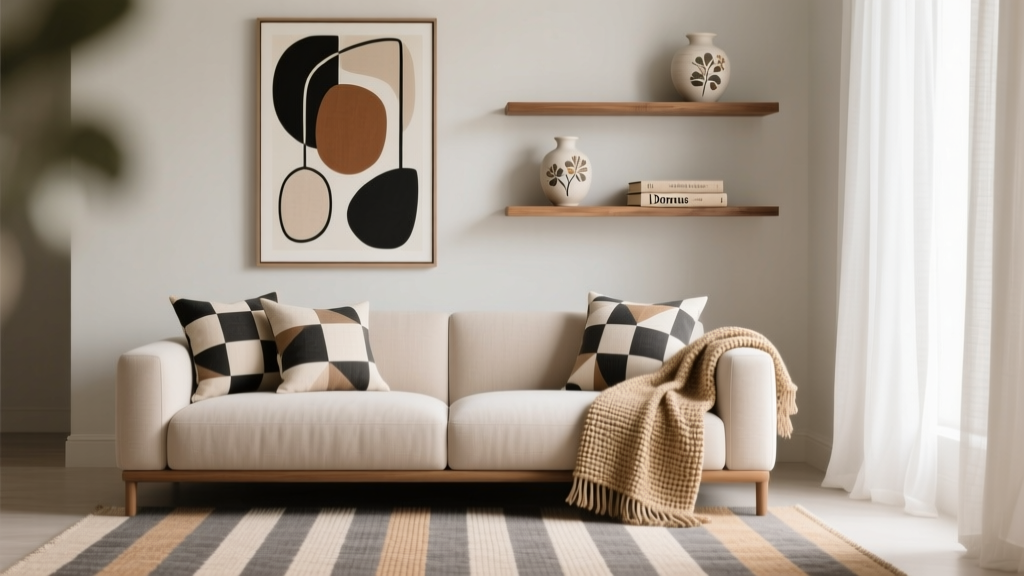
How to Mix Patterns in Living Room Decor - The Decor Mag
Mixing patterns can take a living room from “fine” to finished—layered, personal, and visually rich. It’s also one of the fastest ways to make a space feel styled without buying all new furniture. The catch? Patterns can go from curated to chaotic if the scale, color, and placement aren’t intentional.
Whether you’re decorating a rental with limited changes or refreshing a forever home, learning to mix prints gives you more freedom: you can keep the sofa you love, add a few new textiles, and suddenly the room feels designed. This guide breaks down a clear, repeatable method for mixing patterns in living room decor, with real-world examples, measurements, budget ranges, and the common pitfalls that trip people up.
You’ll learn how to choose a color palette, combine different pattern types (stripes, florals, geometrics), balance scale, and layer textures so the room feels warm—not busy.
Why Pattern Mixing Works (and Why Living Rooms Need It)
The living room is usually the most “public” space in a home—where you entertain, lounge, binge-watch, or host family. Pattern mixing helps it feel welcoming and intentional because it adds:
- Depth: Multiple prints create visual layers, even in neutral rooms.
- Energy: A striped pillow or graphic rug can wake up a plain sofa instantly.
- Personality: Patterns are where your style shows up—classic, coastal, modern, maximalist, or somewhere in between.
Current design trends lean toward rooms that feel collected over time: vintage-inspired motifs, artisan textiles, checkerboard accents, and subtle pattern-on-pattern neutrals (think tonal stripes on a linen sofa). The timeless principle underneath all of it is balance—color, scale, and breathing room.
Start with a Simple Formula: Anchor + Support + Accent
If you’ve ever wondered how designers make patterns look effortless, this is often the structure behind it. Choose:
- One anchor pattern (largest visual impact)
- One or two supporting patterns (secondary, coordinating)
- One accent pattern (small, punchy, or high-contrast)
What can be the “anchor” in a living room?
- Area rug (most common anchor)
- Statement curtains
- Large wallpapered wall (if you’re allowed to in a rental, removable wallpaper works well)
- Oversized art with a patterned motif
Tip: If you’re pattern-shy, make your rug the anchor and keep upholstery solid. If you love bold decor, you can anchor with patterned curtains and add a subtle patterned rug underneath.
Choose a Color Palette That Does the “Heavy Lifting”
Color is the glue that makes mixed patterns feel cohesive. A reliable approach is a 60-30-10 palette:
- 60% dominant color (walls, large sofa, large rug background)
- 30% secondary color (curtains, accent chairs, rug pattern)
- 10% accent color (pillows, throws, small decor)
Easy living room palettes that mix well
- Warm neutral + black + camel: cream sofa, black-and-ivory stripe pillow, tan leather chair
- Sage + ivory + terracotta: botanical prints + clay-colored accents
- Navy + white + brass: classic and crisp, great for stripes and geometrics
- Greige + charcoal + dusty blue: modern, calm, renter-friendly
Practical tip: When shopping online, screenshot patterns you like and drop them into a single album. If they share at least one common color (ideally two), they’ll be easier to mix.
Master the Scale Mix: Large + Medium + Small
Scale is what keeps patterned living room decor from looking like everything is “fighting.” Aim for three distinct sizes:
- Large-scale pattern: big florals, wide stripes, oversized geometric shapes
- Medium-scale pattern: classic plaids, mid-size geometrics, painterly motifs
- Small-scale pattern: ditsy florals, pinstripes, tiny checks, subtle dots
Where each scale works best
- Large: area rug, curtains, one statement chair
- Medium: two to three throw pillows, ottoman, lampshade
- Small: one pillow, throw blanket, woven basket pattern, small accent upholstery
Measurement guide: In most living rooms, keep the boldest, largest-scale pattern on an item that sits at least 5’ x 7’ (like a rug). Smaller items (like a 20” pillow) can look cluttered if the print is huge and high contrast—unless it’s used as a deliberate “wow” accent.
Mix Pattern Types Like a Designer
A foolproof way to mix patterns is to vary the pattern category. When everything is floral or everything is geometric, the room can feel flat or overly themed.
Pattern categories to combine
- Geometric: trellis, chevron, triangles, checkerboard
- Organic: florals, botanical leaves, watercolor motifs
- Stripes: pinstripe, cabana, ticking stripe
- Plaids & checks: gingham, windowpane, tartan
- Global/heritage: ikat, block print, mudcloth-inspired, Persian-style
- Abstract: brushstroke, speckled, modern art-inspired prints
Quick combo formula: One organic + one geometric + one stripe is a reliable trio for living room textiles.
Step-by-Step: Pattern Mixing for a Living Room (Room-by-Room Method)
Step 1: Pick your anchor (usually the rug)
For most homes, the area rug is the easiest place to start because it defines the seating area. Choose a rug that includes at least 2–3 colors you can repeat elsewhere.
Size guidelines (so the room doesn’t feel “floating”):
- 8’ x 10’: works for many standard living rooms; front legs of sofa and chairs on the rug
- 9’ x 12’: ideal for larger rooms; fits all key seating pieces
- 5’ x 8’: best for small apartments; ensure at least the front legs of the sofa are on it
Budget range: $150–$400 for durable synthetics; $400–$1,200 for wool; $1,200+ for designer/vintage-inspired wool or silk blends.
Step 2: Choose two pillow patterns + one solid
A polished sofa styling approach is 5 pillows (for a standard 84–96” sofa):
- Two 22” pillows in a medium pattern
- Two 20” pillows in a coordinating pattern (different scale)
- One lumbar (about 12” x 20”) in a stripe or subtle texture
Insert tip: Use pillow inserts that are 2” larger than the cover (22” insert in a 20” cover) for a fuller, designer look.
Budget range: $15–$40 per cover (mass retailers), $40–$120 (boutique/handmade), $15–$35 per insert depending on down-alternative vs. feather/down.
Step 3: Add a throw that introduces texture (not just another print)
Texture prevents the room from feeling overly “printed.” Look for:
- Linen (relaxed, breathable, coastal-modern)
- Wool or wool blend (warm, structured, timeless)
- Cotton knit (casual, family-friendly)
- Mohair-style acrylic (soft look at a lower cost)
Practical sizing: Aim for a throw around 50” x 60” minimum; 50” x 70” drapes better on sectionals.
Step 4: Repeat a pattern once (so it looks intentional)
Designers repeat key motifs so the room feels cohesive. If you use a stripe on a pillow, echo it subtly with:
- a striped ceramic vase
- a picture frame with a thin banded detail
- a roman shade or curtain with a ticking stripe
Repeating doesn’t mean matching perfectly. It means the eye recognizes a rhythm.
Real-World Pattern Mixing Scenarios
Scenario 1: Small rental living room with beige carpet
Goal: Add personality without painting or replacing flooring.
- Anchor: 5’ x 8’ vintage-style rug (rust/cream/ink) layered over carpet for definition
- Supporting patterns: two ikat-style pillows + one thin ticking stripe lumbar
- Accent: one small check pattern in a throw or ottoman tray liner
- Solids: keep sofa and curtains solid (warm white or oatmeal)
Why it works: The rug introduces color and pattern, while textiles do the rest—easy to take with you when you move.
Scenario 2: Open-plan living room that already feels busy
Goal: Mix patterns without adding visual clutter.
- Choose a low-contrast rug (tone-on-tone geometric)
- Use two patterned pillows max and make the rest solid textured (bouclé, linen, velvet)
- Add pattern through artwork rather than more textiles
Why it works: Low contrast reads calmer, and texture adds depth without noise.
Scenario 3: Family-friendly living room with pets and kids
Goal: Durable, forgiving, stylish.
- Performance fabric sofa in a solid mid-tone (heathered gray, oatmeal, or camel)
- Rug: patterned synthetic or washable rug to hide crumbs and fur
- Pillows: mix of stripes + small geometrics (they hide wear better than large florals)
- Materials: polypropylene rugs, cotton pillow covers, indoor/outdoor fabrics
Budget-smart move: Spend more on the rug pad and washable covers; keep “trend” patterns in pillows that are easy to swap.
Product Recommendations That Make Pattern Mixing Easier
- Washable patterned rugs: great for rentals, kids, pets; look for non-slip backing or add a quality rug pad
- Block-print style pillows: bring artisan character; pair with a simple stripe
- Velvet solids: a solid velvet pillow can “quiet” bolder prints while still feeling elevated
- Linen curtains in a solid: if your rug and pillows are patterned, solid linen curtains balance the room
- Removable wallpaper panels: use on a single wall behind the sofa for a controlled pattern statement
Rug pad recommendation: Choose a pad about 1–2 inches smaller than your rug on all sides. For comfort in living rooms, a 3/8” thickness is a sweet spot; for low-clearance doors, go thinner.
Common Mistakes to Avoid When Mixing Patterns
- Using the same scale everywhere: five medium-scale patterns look unintentionally busy. Vary the sizes.
- Too many high-contrast prints: if everything is black-and-white, the room can feel harsh. Add a softer mid-tone or texture.
- Ignoring undertones: warm ivory and cool bright white can clash. Match whites (creamy with creamy, crisp with crisp).
- Overloading every surface: patterns need negative space. Keep at least one major element solid (sofa, curtains, or walls).
- Buying “sets” of matching pillows: it often looks flat. Curate a mix with a shared palette instead.
- Forgetting texture: pattern + pattern + pattern without texture can feel printed rather than layered.
FAQ: Mixing Patterns in Living Room Decor
How many patterns should be in a living room?
Aim for 3–5 patterns in total, especially if you’re newer to decorating. That could be a rug, two pillow patterns, a subtle stripe, and a small accent (like an ottoman or artwork). More can work in maximalist spaces, but it requires stronger color discipline and more solids.
Do patterns have to match exactly?
No—matching can actually make the room feel less designed. Patterns should coordinate through shared colors and complementary scales. Think “related,” not identical.
What’s the easiest pattern to mix with anything?
Stripes are the easiest. A ticking stripe or cabana stripe pairs well with florals, geometrics, and heritage prints and adds structure to softer motifs.
Can I mix patterns if my sofa is already patterned?
Yes. Treat the sofa as your anchor and keep the next layers simpler:
- Choose a rug that’s either more subtle or significantly different in scale
- Use mostly solid pillows with one small-pattern accent
- Repeat one color from the sofa elsewhere (art, curtains, decor)
How do I mix patterns in a neutral living room without adding bright colors?
Use tone-on-tone patterns and texture. Try an ivory rug with a subtle geometric weave, pillows in beige stripe and taupe check, and a nubby linen or bouclé throw. The variety comes from material and scale rather than color.
What patterns are trending right now for living rooms?
Home decor trends still favor comfort and character: checkerboard accents, heritage prints (block print, vintage-inspired florals), tonal stripes, and soft geometrics. The timeless approach is balancing these with solids and natural materials like linen, wool, leather, and wood.
Your Next Steps: A Simple Pattern-Mixing Checklist
If you want quick progress without overthinking, follow this checklist the next time you shop your space or add new decor:
- Choose a 3-color palette (plus one neutral).
- Pick an anchor pattern (usually the rug).
- Add two supporting patterns in different categories (floral + stripe, for example).
- Vary the scale: one large, one medium, one small.
- Balance with solids and texture (linen, velvet, wool, rattan).
- Repeat one motif or color at least twice so it feels intentional.
Pattern mixing is a skill you can build room by room—start with pillows and a rug, live with it for a week, then adjust. Swap one piece, change the scale, or soften the contrast until it feels like you.
Want more living room design and decor ideas? Explore more inspiration, styling guides, and trend updates on thedecormag.com.
More Articles
 Best Seating Options for Entertaining - The Decor Mag
 Bay Window Living Room Decor Ideas (2026)
 Living Room Earth Tone Color Palettes - The Decor Mag
 How to Create a Living Room Focal Point - The Decor Mag
 Patterned Wallpaper Living Room Styling (2026)
 Cocktail Table vs Coffee Table: Key Differences (2026)
 Living Room Quiet Luxury Aesthetic - The Decor Mag
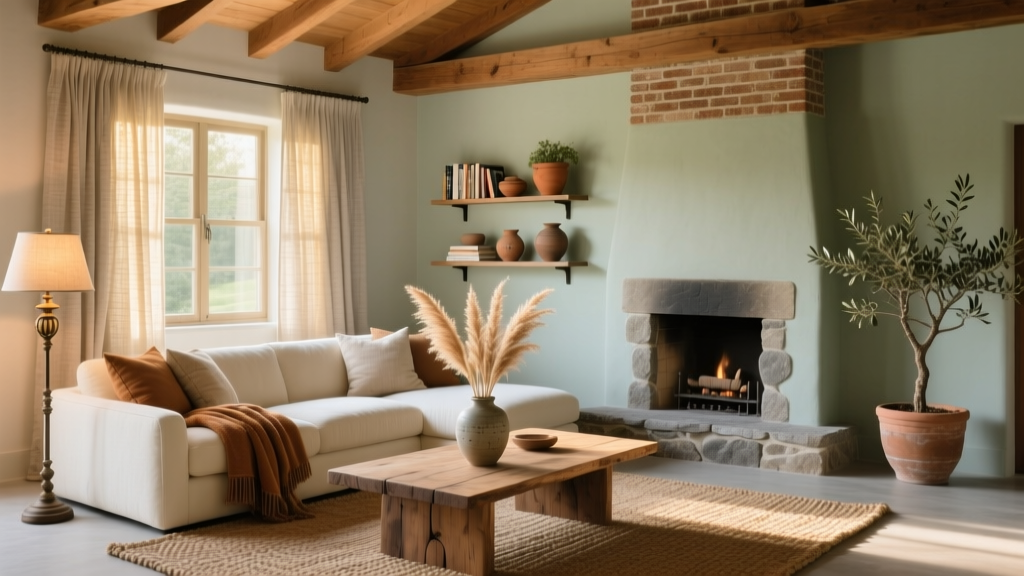 Cozy Farmhouse Living Room Decor Tips - The Decor Mag
 Functional Bedroom Ideas 2026: Smart Layouts & Storage
 Best Slipcover Sofa Picks - The Decor Mag