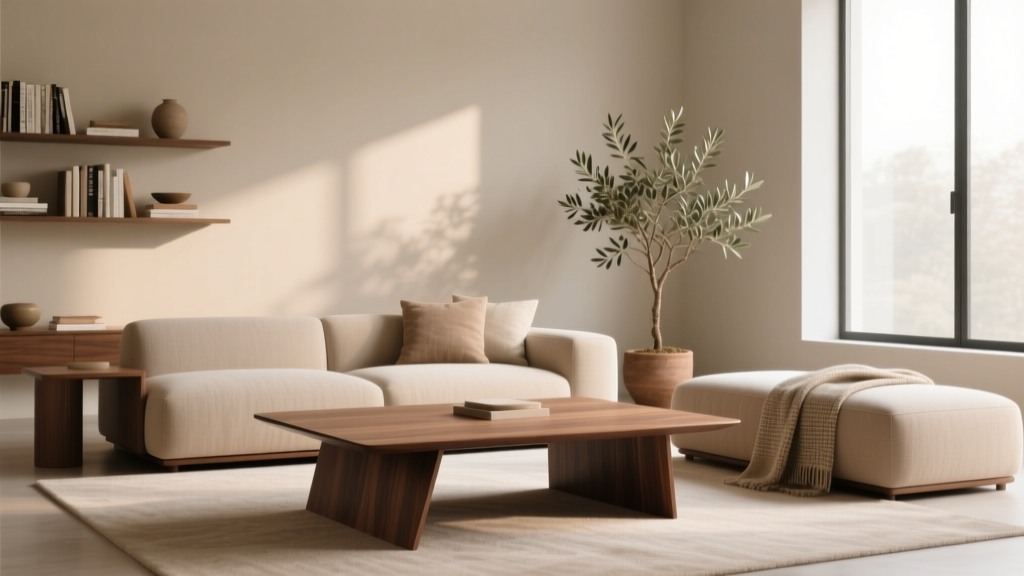
Best Ottoman Sizing for Coffee Table Replacement (2026)
Replacing a traditional coffee table with an ottoman is one of those living room upgrades that looks effortless—until you try to shop for one. Too small and it floats awkwardly in the middle of the seating area. Too large and you’re squeezing past it like an obstacle course. The right size ottoman can make your space feel more comfortable, more flexible, and (yes) more polished.
Why does this topic matter so much? Because the coffee table zone is the “center of gravity” in most living rooms. It affects how you walk through the room, where you put a drink, how you lounge, and how the whole layout reads. Get the proportions right, and your living room feels intentional. Get them wrong, and even beautiful furniture can look mismatched.
This guide breaks down the best ottoman dimensions for replacing a coffee table, plus spacing rules, material choices, style ideas, and real-world scenarios for everything from small apartments to family rooms. You’ll also find common mistakes to avoid, budget ranges, and a quick FAQ to make shopping easier.
Why an Ottoman Works as a Coffee Table Replacement
An ottoman does more than “stand in” for a coffee table. It changes how the room functions:
- Comfort-first living: It encourages putting your feet up and relaxing.
- Soft edges: Great for homes with kids, pets, or tight walkways.
- Flexible styling: Add a tray for drinks, books, and decor—remove it for lounging.
- Extra seating: A sturdy ottoman can act like a casual perch when guests come over.
- Storage potential: Many styles include lift-top storage for blankets, toys, or games.
Design trend-wise, oversized upholstered ottomans and “table ottomans” (ottomans designed specifically to function as a coffee table) are strong right now—especially in performance fabrics, warm neutrals, and textured materials like bouclé, chenille, and leather. Timeless principle: the ottoman should relate to your sofa scale and the room’s circulation paths.
The Core Sizing Rules (Use These First)
1) Length: Aim for 1/2 to 2/3 of Your Sofa Width
For most living rooms, the best ottoman length is 50% to 66% of the sofa’s width. This keeps the seating area balanced without overwhelming it.
- 72" sofa → ottoman length around 36"–48"
- 84" sofa → ottoman length around 42"–56"
- 96" sofa → ottoman length around 48"–64"
Pro tip: If your room is open concept and your sofa “floats,” you can go slightly larger (closer to 2/3) to help anchor the seating zone.
2) Height: Match or Sit 1–2 Inches Lower Than the Seat
Ottoman height should generally be the same height as your sofa seat cushion or up to 1–2 inches lower. This keeps it comfortable for feet and functional with a tray.
- Typical sofa seat height: 17"–19"
- Great ottoman height range: 16"–18"
If you want it to function more like a true coffee table (especially for dining on the sofa), a slightly taller ottoman can work—but be careful. Too tall looks clunky and feels awkward to reach over.
3) Clearance: Keep 14"–18" Between Seating and Ottoman
This is one of the most common living room layout rules for a reason. Leave 14"–18" between the edge of the sofa (or chairs) and the ottoman.
- 14"–16": cozy and lounge-friendly (great for smaller rooms)
- 16"–18": balanced for most spaces
- 18"+: better for high-traffic walkways or larger rooms
Also consider the outside perimeter: if the ottoman is in a main path, try for 24"–30" of walking clearance around it.
Choosing the Best Ottoman Shape for Your Layout
Rectangular Ottoman: Best for Standard Sofas
A rectangular ottoman is the easiest swap for a coffee table because it mirrors the proportions of most sofas and sectionals.
- Ideal size range: 40"–60" L × 20"–30" W × 16"–18" H
- Best for: three-seat sofas, long rooms, streamlined modern spaces
Square Ottoman: Best for Sectionals and Symmetry
Square ottomans look especially at home with sectionals or seating arrangements that feel “wrapped” around the center.
- Ideal size range: 30"–42" square × 16"–18" H
- Best for: L-shaped sectionals, family rooms, casual cozy layouts
Round Ottoman: Best for Tight Spaces and Kid-Friendly Flow
Round ottomans soften a room full of straight lines and make it easier to move around—no sharp corners to navigate.
- Ideal size range: 30"–40" diameter × 16"–18" H
- Best for: apartments, rooms with lots of foot traffic, homes with kids
Two Ottomans (or Poufs): Best for Flexibility
If you’re styling a smaller living room or want maximum versatility, two smaller ottomans can replace one large piece.
- Ideal size range (each): 18"–24" W × 18"–24" D × 16"–18" H
- Best for: renters, multipurpose rooms, entertaining
Step-by-Step: Measure Your Space Like a Designer
- Measure your sofa width (arm to arm). Multiply by 0.5 and 0.66 to find your ottoman length range.
- Measure your sofa seat height (floor to top of cushion). Choose an ottoman at the same height or 1–2 inches lower.
- Tape out the footprint on the floor using painter’s tape. Include the 14"–18" clearance from seating.
- Walk your pathways. If you bump the taped area while walking naturally, reduce the size or consider a round ottoman.
- Decide how “table-like” it needs to be (tray styling, firm top, or plush lounge surface).
Quick test: Sit on your sofa and reach forward as if placing a drink. If you’re stretching, the ottoman is too far. If your knees feel crowded, it’s too close or too large.
Materials and Construction: What Works Best for Coffee Table Use
Best Upholstery for Real Life
- Performance fabric (poly blends, Crypton-style fabrics): Top choice for spills, pets, and daily use.
- Leather and faux leather: Wipes clean easily and looks better with age (especially warm cognac tones).
- Velvet: Stylish and cozy, but choose performance velvet if you want it to last in a busy family room.
- Bouclé / textured weaves: Very on-trend and inviting, but consider snag risk with pets.
Firmness Matters More Than People Expect
If you’ll use the ottoman like a coffee table, look for:
- High-density foam or a firm top that won’t sag under a tray.
- Solid wood internal frame for stability.
- Wide legs or a sturdy base, especially if people might sit on it.
Tray Styling: Make It Function Like a Coffee Table
A tray is the bridge between “soft ottoman” and “practical coffee table.” Choose one that’s scaled to the ottoman:
- Tray size: about 1/2 to 2/3 of the ottoman’s width
- Best materials: wood, rattan, metal with handles
- Everyday setup: coasters + a small catchall bowl + a candle or short vase
Real-World Sizing Scenarios
Scenario 1: Small Apartment Living Room (Sofa: 76")
You want extra comfort and a soft edge to keep the space feeling open.
- Recommended size: 38"–48" L × 20"–26" W × 16"–18" H
- Best shape: rectangular or round (30"–34" diameter if walkways are tight)
- Design move: choose legs that show a little floor to keep it visually lighter
Scenario 2: Family Room with Sectional (115" x 90" L-shape)
You need a center piece that can handle feet, snacks, and extra seating.
- Recommended size: 36"–42" square or 48"–60" L × 28"–36" W
- Best features: performance fabric, storage, firm top
- Design move: use a large tray plus a stack of books for height and structure
Scenario 3: Formal-leaning Living Room (Two Sofas Facing Each Other)
You want softness, but still need the room to feel tailored and elegant.
- Recommended size: 48"–60" L × 24"–30" W
- Best material: leather or a tight-weave textured fabric
- Design move: pick a tufted ottoman for a classic, “designed” look
Product Recommendations (Types + Budget Ranges)
Rather than one-size-fits-all picks, shop by category and lifestyle. Here are reliable options that work as a coffee table replacement:
1) Upholstered Storage Ottoman (Best for Small Spaces)
- Why it works: hides clutter, doubles as a coffee table with a tray
- Ideal size: 36"–50" L × 20"–26" W
- Budget range: $150–$450 (mid-range quality), $450–$1,200 (designer fabrics and better construction)
2) Oversized Square “Table Ottoman” (Best for Sectionals)
- Why it works: anchors the room, great for trays, games, and extra seating
- Ideal size: 36"–42" square
- Budget range: $300–$900 (mid-range), $900–$2,500+ (custom upholstery, premium fill)
3) Leather Ottoman (Best for a Timeless Living Room)
- Why it works: durable, easy to wipe clean, looks elevated
- Ideal size: 40"–55" L × 22"–30" W
- Budget range: $400–$1,200 (genuine leather varies), $1,200–$3,000+ (top-grain, handcrafted)
4) Two Coordinating Ottomans (Best for Renters and Entertainers)
- Why it works: can separate into extra seating, push together as a table surface
- Ideal size (each): 20"–24" wide
- Budget range: $200–$700 for the pair, depending on upholstery and frames
Common Mistakes to Avoid
- Choosing an ottoman that’s too tall: If it towers over the sofa seat, it feels awkward and blocks sightlines.
- Ignoring clearance: Even a beautiful ottoman becomes annoying if you can’t move around it comfortably.
- Going too small for a large sofa: A tiny ottoman in front of a long sofa looks like a placeholder, not a design choice.
- Using delicate fabric in a high-traffic room: Silk-like blends and loose weaves can stain or snag quickly.
- No tray plan: If you want coffee-table function, commit to a tray (or choose a firmer “table ottoman”).
- Overstyling the top: Leave room for real life—feet, a board game, a laptop. One tray setup is usually enough.
FAQ: Ottoman Coffee Table Sizing and Styling
What size ottoman replaces a standard coffee table?
Most standard coffee tables fall around 48" L × 24" W × 16"–18" H. For an ottoman replacement, a similar footprint works well: 40"–55" long, 20"–30" wide, and 16"–18" high, adjusted for your sofa size and room clearance.
How far should an ottoman be from the sofa?
Keep 14"–18" between the sofa edge and the ottoman. Choose the tighter end for small rooms and the wider end for easier movement.
Can you put drinks on an ottoman?
Yes—with a sturdy tray. Look for a firm ottoman top and use coasters. If you entertain often, consider leather or performance fabric for easier cleanup.
Is a round ottoman better than a rectangular one?
A round ottoman is great for tight walkways, kid-friendly rooms, and softening a boxy layout. A rectangular ottoman usually looks more “classic coffee table” and pairs naturally with a standard sofa.
Should an ottoman match the sofa?
Not necessarily. Matching can look seamless, but contrast often feels more designer. Try:
- a neutral sofa with a leather ottoman for warmth
- a solid sofa with a patterned or textured ottoman for depth
- keeping undertones consistent (warm with warm, cool with cool) for cohesion
What’s the best ottoman for kids and pets?
Choose a performance fabric or leather, a rounded shape if possible, and a firm, durable build. Darker mid-tones, heathered textures, and subtly patterned weaves hide wear better than flat light solids.
Next Steps: Find Your Perfect Fit
Start with three numbers: your sofa width, your seat height, and the clearance you can realistically maintain. Then decide whether you want an ottoman that’s primarily for lounging, primarily for tray styling, or a true hybrid that can handle both.
If you’re shopping this week, here’s a simple checklist to bring along:
- Ottoman length: 1/2–2/3 of sofa width
- Ottoman height: 0–2" lower than sofa seat
- Spacing: 14"–18" from seating; 24"–30" for walkways
- Fabric: performance upholstery or leather for daily life
- Plan for a tray if you’ll use it like a coffee table
For more living room design and decor ideas—layout guides, trend updates, and shopping tips—explore the latest inspiration on thedecormag.com.
More Articles
 The Best Accent Chairs for Living Rooms - The Decor Mag
 How to Mix Upholstery Patterns Successfully - The Decor Mag
 Global Living Room Decor: Stylish Ideas (2026)
 Travel Souvenirs in Living Room Decor (2026)
 2026 Living Room Bathroom Ideas: Smart & Stylish Hybrids
 Living Room for All Ages: Design Tips (2026)
 Living Room Layered Rug Ideas - The Decor Mag
 Living Room French Provincial Inspiration - The Decor Mag
 Best Slipcover Sofa Picks - The Decor Mag
 Living Room Timeless Design Elements - The Decor Mag