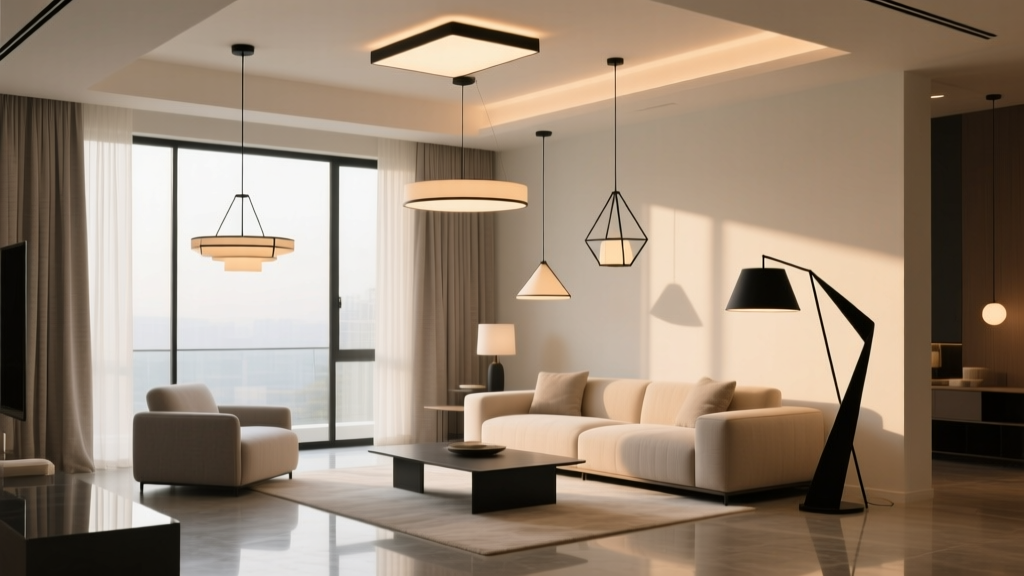
Best Lighting Fixtures for Living Rooms - The Decor Mag
Living room lighting does far more than help you see. It sets the mood for movie nights, makes your sofa area feel inviting, helps artwork look its best, and can even make a small room feel larger and more polished. When a living room feels “off,” the culprit is often lighting that’s too harsh, too dim, or all coming from one spot.
The good news: you don’t need a full renovation to get it right. With the right lighting fixtures—layered thoughtfully—you can upgrade your living room design, improve comfort, and create that magazine-worthy glow. This guide walks you through the best lighting fixtures for living rooms, how to choose sizes and bulb types, where to place them, and what mistakes to avoid. You’ll also find real-world scenarios, budget ranges, and practical measurements you can use immediately.
By the end, you’ll know exactly which fixtures to consider (from chandeliers to floor lamps), how to combine them like a designer, and how to tailor your lighting plan to your space—whether you own a home or rent an apartment.
Start with a Lighting Plan: The “Layered Light” Formula
Designers rely on layered lighting because one overhead light can’t do everything well. Aim for three layers:
- Ambient lighting (overall illumination): ceiling fixtures, semi-flush mounts, recessed lights
- Task lighting (focused, functional light): reading lamps, swing-arm sconces, desk lamps
- Accent lighting (drama and depth): picture lights, wall washers, LED strips, spotlights
A balanced living room typically needs at least 2–4 light sources, depending on size. Even a small living room benefits from one ceiling fixture plus two lamps and a subtle accent.
How bright should a living room be?
A practical target is 1,500–3,000 lumens total for an average living room, then add accent lighting for sparkle. For larger open-plan spaces, you may need 4,000+ lumens. Dimmers make these ranges flexible for entertaining vs. relaxing.
Best Ambient Lighting Fixtures (Your Foundation Layer)
1) Chandeliers & Statement Pendants
A chandelier isn’t just for formal dining rooms anymore. In living rooms, it becomes a centerpiece that anchors the seating area, especially in open layouts. Current design trends favor:
- Sculptural silhouettes (asymmetrical arms, organic forms)
- Soft brass and aged bronze finishes (warmer than chrome)
- Natural textures (rattan, linen shades, wood beads) for cozy, modern interiors
Size guide: Add your room’s length and width (in feet) and convert to inches for an ideal fixture diameter. Example: a 12' x 14' living room = 26" diameter chandelier/pendant.
Hanging height:
- Standard 8' ceiling: bottom of fixture about 7' from the floor
- Over a coffee table: aim for 30–36 inches above the tabletop (adjust for sightlines)
Budget ranges:
- Budget: $80–$250 (simple metal frames, smaller sizes)
- Mid-range: $250–$800 (better finishes, larger scale)
- Investment: $800–$3,000+ (designer pieces, artisan materials)
Real-world scenario: In a rental with a basic “boob light,” swapping to a plug-in swag pendant or a lightweight statement pendant (if your lease allows) instantly modernizes the room. Pair it with warm bulbs and a dimmer switch (or smart bulbs) for a layered glow.
2) Semi-Flush & Flush Mount Ceiling Lights
If your ceiling height is under 8 feet—or your living room has ceiling fans, beams, or a tight walkway—flush and semi-flush mounts are your best friends. They deliver clean, even ambient light without the visual drop of a chandelier.
What to look for:
- Diffused glass or acrylic to reduce glare
- Wide diameter (15–24") for better light spread
- Warm metal finishes for a more inviting living room vibe
Material tip: Opal glass gives a soft, timeless look. Clear glass looks chic but can expose bulbs and create harshness unless you choose frosted bulbs.
3) Recessed Lighting (When You Want Clean and Minimal)
Recessed lights work beautifully for modern living rooms and open-concept spaces—especially when you want the ceiling to “disappear.” The key is spacing and beam control.
Spacing rule of thumb: Place recessed lights about 4–6 feet apart, and keep them about 2–3 feet from walls to avoid harsh scallops.
Best use: Pair recessed lighting with lamps. Recessed alone often feels flat, like a showroom.
Best Task Lighting Fixtures (For Reading, Working, and Comfort)
4) Floor Lamps: The Living Room MVP
Floor lamps are one of the easiest upgrades for renters and homeowners because they require no wiring and instantly add layered light. They’re also great for corners that feel dark and empty.
Top styles to consider:
- Arc floor lamps for lighting over a sectional or coffee table
- Tripod floor lamps for a warm, design-forward look
- Torchieres (best with dimmers) to bounce light off the ceiling
- Adjustable pharmacy lamps for dedicated reading spots
Placement tip: Put a floor lamp near the “reading shoulder.” Ideally, the bottom of the shade sits around 42–48 inches from the floor next to a sofa, with the light source slightly behind or beside your head to reduce glare.
Budget ranges:
- Budget: $40–$150
- Mid-range: $150–$400
- Investment: $400–$1,200+
5) Table Lamps: Instant Warmth and Symmetry
Table lamps add softness at eye level—exactly what many living rooms lack. They also help rooms feel “finished,” especially on console tables, end tables, or built-ins.
Proportion guide:
- End table lamps: typically 24–32 inches tall
- Console table lamps: typically 26–34 inches tall
Shade sizing: The shade diameter should be roughly 2/3 the height of the lamp base, and the shade should be wide enough to hide the bulb from most angles.
Real-world scenario: If your living room has one overhead light and feels cold at night, add two matching table lamps on either side of a sofa (or one table lamp plus one floor lamp). Use the same bulb temperature in both to avoid a mismatched glow.
6) Wall Sconces: Space-Saving and Stylish
Wall sconces are having a moment—especially plug-in versions that don’t require hardwiring. They’re ideal for small living rooms, narrow layouts, or anywhere you want a high-end look without taking up table space.
Where sconces shine:
- Flanking a fireplace or TV wall (choose glare-controlled shades)
- Beside a reading chair
- Over a console, bar cart, or built-in shelves
Mounting height: A common guideline is 60–66 inches from the floor to the center of the sconce, adjusting based on ceiling height and furniture placement.
Trend watch: Picture-light-inspired sconces, warm brass finishes, and pleated fabric shades are blending timeless traditional charm with modern living room decor.
Best Accent Lighting Fixtures (For Mood, Texture, and Drama)
7) Picture Lights and Art Lighting
If you’ve invested in art—or even just framed prints—lighting them elevates your entire living room design. Picture lights create a gallery-like focal point and add layered warmth.
Size tip: Choose a picture light that’s about 1/2 to 2/3 the width of the artwork frame.
Color temperature tip: Aim for 2700K–3000K for a warm, flattering glow that suits most living rooms.
8) LED Strip Lighting (The Subtle Game-Changer)
LED strips add modern, ambient glow without visual clutter. Use them to highlight architectural details and make the room feel more expensive.
Best placements:
- Behind a TV (reduces eye strain and softens contrast)
- Under floating shelves
- Inside built-ins or bookcases
- Along a ceiling cove (if you have one)
Choose the right spec: Look for high-quality strips with 90+ CRI (better color accuracy) and a warm setting around 2700K–3000K.
9) Portable Rechargeable Lamps
Portable lamps are a practical trend for flexible living. They’re perfect for renters, coffee table styling, or adding light where outlets are scarce.
Where they work:
- On a coffee table during entertaining
- On bookshelves for a cozy glow
- In a reading corner where cord management is tricky
Budget range: $25–$150 depending on materials and battery life.
Choosing Bulbs Like a Designer (Brightness, Warmth, and CRI)
The fixture matters, but the bulb choice can make or break the atmosphere. For living room lighting, focus on these three specs:
- Color temperature (Kelvin): For cozy living rooms, choose 2700K. For a slightly brighter, modern feel, go 3000K. Avoid 4000K+ unless you love a crisp, office-like look.
- Brightness (Lumens): Table lamps often look best with 450–800 lumens each. Floor lamps can go 800–1,600 lumens depending on shade diffusion.
- CRI (Color Rendering Index): Choose 90+ CRI when possible so skin tones, textiles, and wall colors look rich and true.
Designer shortcut: Use the same Kelvin temperature across the room for a cohesive glow—mixing 2700K and 5000K in one space usually looks accidental.
Step-by-Step: A Simple Living Room Lighting Setup That Works
If you want a straightforward plan you can copy, use this sequence:
- Pick your ambient anchor: chandelier/pendant, semi-flush, or recessed lighting.
- Add two task lights: one floor lamp near seating + one table lamp on an end table or console.
- Finish with an accent: picture light, LED behind the TV, or a small lamp on a shelf.
- Put key lights on dimmers: either wall dimmers, plug-in dimmers, or smart bulbs.
Example layout for a typical apartment living room (about 11' x 13'):
- 1 semi-flush ceiling light (ambient)
- 1 floor lamp at the chaise end of the sofa (task)
- 1 table lamp on a small side table (task)
- LED strip behind TV or a rechargeable lamp on a shelf (accent)
Material and Finish Recommendations (Trendy Meets Timeless)
Want lighting fixtures that still look good years from now? Mix current trends with classic materials:
- Aged brass / satin brass: warm, flattering, and versatile with modern or traditional decor
- Matte black: crisp contrast in contemporary and industrial living rooms
- Bronze / oil-rubbed finishes: great for cozy, classic interiors
- Glass (opal, ribbed, seeded): diffuses light beautifully; ribbed glass is especially on-trend
- Linen shades: softens brightness and adds texture (ideal for warm living room lighting)
- Rattan and woven shades: perfect for relaxed, organic modern and coastal styles
Common Living Room Lighting Mistakes to Avoid
- Relying on one overhead light: This creates harsh shadows and a flat, uninviting room.
- Choosing bulbs that are too cool: 4000K+ can make living rooms feel sterile and highlight clutter.
- Skipping dimmers: Lighting should flex for daytime, entertaining, and winding down.
- Picking a fixture that’s too small: Undersized chandeliers and pendants look skimpy and don’t provide enough spread.
- Glare in the TV zone: Avoid bare bulbs and shiny shades facing the screen; use diffused shades and side lighting.
- Ignoring scale with furniture: A tiny lamp next to a large sectional will feel out of proportion—go taller or wider.
FAQ: Living Room Lighting Fixtures
What’s the best lighting for a living room with no ceiling fixture?
Use a layered floor-and-table-lamp plan: one torchiere or arc floor lamp for ambient light, one table lamp near seating, and an accent light (LED strip behind the TV or a small lamp on a shelf). Choose higher-lumen bulbs and add plug-in dimmers.
How do I choose the right chandelier size for my living room?
Add the room’s length and width in feet, then use that number in inches as your fixture’s diameter. A 12' x 14' room suggests around a 26" chandelier or pendant.
Should living room lights be warm or cool?
Warm is usually best. Aim for 2700K for cozy and flattering light, or 3000K if you prefer a slightly brighter, more modern feel. Keep the Kelvin consistent across fixtures.
How many lamps do I need in my living room?
Most living rooms feel balanced with 2–3 lamps plus an overhead or ambient source. For larger rooms, add a fourth light source or multiple zones (sofa area, reading corner, and shelves).
Are plug-in wall sconces worth it?
Yes—especially for renters. Plug-in sconces add that built-in designer look, free up table space, and create beautiful eye-level light. Look for cord covers to keep things tidy.
What’s the best lighting to make a small living room look bigger?
Use multiple soft sources rather than one bright center light. Bounce light off walls and ceilings with a torchiere, add a mirror near a lamp to reflect glow, and choose diffused shades (opal glass or linen) to reduce harsh shadows.
Your Next Steps: Upgrade Your Living Room Lighting This Weekend
If you want the fastest improvement with the biggest payoff, start by adding two warm light sources at different heights—for example, a floor lamp by the sofa and a table lamp on a console. Then decide whether your ceiling fixture should be a quiet supporting player (semi-flush) or a statement piece (chandelier/pendant). Finish with one accent layer—art lighting or subtle LEDs—to give the room depth and that evening glow everyone loves.
For more living room decor inspiration, layout ideas, and trend-forward lighting tips, explore more guides and room makeovers on thedecormag.com.
More Articles
 Bedroom FAQ: Science-Backed Design Advice
 Best Ottoman Sizing for Coffee Table Replacement (2026)
 Living Room Warm vs Cool Tone Balancing - The Decor Mag
 Sofa for Small Spaces: Best Picks (2026)
 Floating Shelves Living Room Styling (2026)
 Best Wall Sconce Wiring Options - The Decor Mag
 Warm, Budget-Friendly Living Spaces in 2026
 Antique Living Room Decor: Modern Mix Ideas (2026)
 Best Console Tables for Entry Living Rooms - The Decor Mag
 Cocktail Table vs Coffee Table: Key Differences (2026)