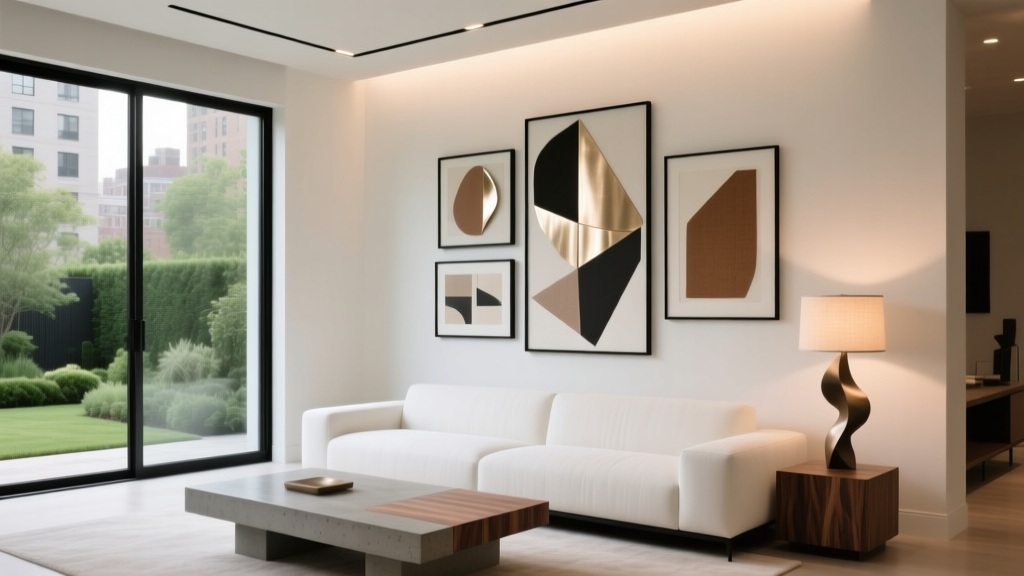
Living Room Contemporary Art Display - The Decor Mag
Contemporary art has a way of making a living room feel finished—more personal, more intentional, and often more “you” than any throw pillow ever could. Whether you’re renting a city apartment, styling a suburban family room, or refreshing a condo living space, the right art display can elevate your entire living room design without a full renovation.
The challenge is that contemporary art can feel intimidating: sizing, spacing, lighting, and choosing frames (or going frameless) quickly turns into a guessing game. This guide breaks it down into practical, doable steps. You’ll learn how to pick the right scale for your wall, hang art at the correct height, design a gallery wall that feels curated (not chaotic), and blend contemporary pieces with your furniture, color palette, and decor.
Along the way, you’ll get measurements, budget ranges, styling formulas, real-world room scenarios, and a list of common mistakes that can make even great art look “off.”
What Counts as Contemporary Art (and Why It Works in Living Rooms)
Contemporary art generally refers to work created from the late 20th century to now. In living rooms, it often shows up as:
- Abstract paintings (gestural, color-field, geometric)
- Graphic prints (typography, illustration, line art)
- Photography (architectural, landscape, street, portrait)
- Textural pieces (mixed media, plaster art, textile art)
- Sculptural wall objects (metalwork, wood reliefs)
Contemporary art works especially well in living room decor because it complements modern furniture lines, adds color and contrast, and gives you a focal point that doesn’t rely solely on a fireplace or TV wall. It also plays nicely with current design trends like warm minimalism, biophilic design, and curated maximalism—while still feeling timeless when you follow classic principles like scale, balance, and repetition.
Step 1: Choose the Right Wall (and the Right Role for Art)
Before you buy anything, decide what the art needs to do in your living room. Think of art as a “job role.” Common roles include:
- Primary focal point: Art becomes the first thing you notice (great above a sofa or on a large blank wall).
- Color connector: Art ties together rug, pillows, curtains, and upholstery.
- Conversation starter: Bold, quirky, or meaningful pieces that invite questions.
- Softener: Textural or tonal art that calms a busy room.
Best Places for Contemporary Art in a Living Room
- Above the sofa (most common and most impactful)
- Over a console table or credenza
- On a feature wall (painted, paneled, or wallpapered)
- In a reading nook (paired with a chair and floor lamp)
- On the TV wall (to reduce “black rectangle” dominance)
Step 2: Get Scale Right with Simple Measurements
Scale is the difference between “gallery-worthy” and “floating stamp on a wall.” Use these designer-approved measurements to guide your living room art display.
Above-the-Sofa Art Sizing
- Width target: Art (or the total gallery width) should be about 2/3 to 3/4 the width of the sofa.
- Spacing above sofa: Hang the bottom edge of the frame about 6–10 inches above the sofa back.
- Eye-level rule: The center of the art should land around 57–60 inches from the floor (adjust slightly if you have very high ceilings or tall furniture).
Over a Console or Credenza
- Width target: Art should be 1/2 to 3/4 the width of the surface below.
- Gap: Keep 4–8 inches between the top of the console and the bottom of the frame.
Gallery Wall Spacing That Looks Intentional
- Between frames: 2–3 inches for a tight, modern look; 3–4 inches if pieces are large or ornate.
- Visual boundary: Keep the entire gallery within a clean “box” or silhouette (even if the art sizes vary).
Step 3: Pick a Display Style That Matches Your Room
Contemporary art doesn’t have to mean one giant canvas (though it can). Choose a display style based on your wall space, budget, and how often you like to change things up.
Option A: The Oversized Statement Piece
Best for: minimalist living rooms, open-plan spaces, or anyone who wants maximum impact with minimal effort.
- Ideal sizes: 40" x 60", 48" x 72", or larger if your wall allows
- Material suggestions: stretched canvas, framed canvas, aluminum print for photography, or textured plaster art
- Budget range: $150–$600 for large prints; $500–$2,500+ for original art
Option B: The Curated Gallery Wall
Best for: eclectic decor lovers, renters who want flexibility, or rooms where one large piece feels too heavy.
- Easy formula: 1 hero piece (largest) + 4–8 supporting pieces
- Keep cohesion with: consistent frame finish (all black, all oak, or all white) or a consistent color palette in the artwork
- Budget range: $120–$500 for prints and frames; $500–$1,500 for a mix of limited editions and custom framing
Option C: The Picture Ledge (Low-Commitment, High Style)
Best for: renters, frequent redecorators, and anyone nervous about measuring.
- Recommended ledge depth: 3–5 inches so frames sit securely
- Height tip: Place the ledge so the art’s center still lands near 57–60 inches
- Style trick: Layer 3–6 frames (vary heights) and add one small sculptural object
- Budget range: $25–$120 per ledge + frames
Option D: A Diptych or Triptych (Instant “Designer” Energy)
Best for: above a sofa, especially in contemporary and transitional living room design.
- Gap between panels: 2–4 inches
- Why it works: symmetry feels calm, while contemporary imagery keeps it fresh
Step 4: Coordinate Art with Color, Texture, and Furniture
The goal isn’t to match art to your sofa perfectly—it’s to make the whole room feel connected. Here are simple ways to do that.
Use the 60–30–10 Color Rule (with Art as the “10” or “30”)
- 60%: dominant room color (walls, large rug)
- 30%: secondary (sofa, curtains, accent chairs)
- 10%: accent (often where art shines)
If your living room is neutral (cream walls, beige sofa, natural rug), contemporary art is the easiest way to introduce a strong accent color—cobalt, rust, chartreuse, or black-and-white contrast—without committing to bold furniture.
Pair Art Style with Furniture Silhouette
- Curvy, plush furniture: balances well with geometric or graphic art
- Boxy, modern sofa: looks great with expressive abstracts or soft tonal photography
- Traditional pieces: feel updated with contemporary art in classic frames (thin black, brass, or warm wood)
Texture Is a Trend That Sticks
Textured contemporary art is having a moment—plaster, linen-wrapped canvases, mixed-media, and sculptural wall art. It’s also timeless because it plays beautifully with the materials already popular in living room decor:
- bouclé and performance fabrics
- oak and walnut finishes
- limewash and matte paint
- stone, travertine, and microcement accents
Step 5: Lighting Your Art Like a Pro
Art that looks flat at night is usually a lighting issue, not an art issue. Aim for soft, intentional illumination.
Best Lighting Options for Contemporary Art Displays
- Picture lights: Battery or hardwired; choose a width that’s about 1/2 to 2/3 of the frame width.
- Adjustable wall sconces: Great for gallery walls and reading nooks.
- Track lighting: Ideal for open-plan living rooms; lets you aim light at multiple pieces.
- Floor lamp with swivel head: Budget-friendly option for renters.
Lighting Specs to Look For
- Color temperature: 2700K–3000K for warm, home-friendly light
- CRI (color accuracy): 90+ so art colors look true
- Glare control: Use matte frames or anti-reflective acrylic if glare is an issue
Product Recommendations (Smart, Practical Choices)
Rather than chasing one “perfect” brand, focus on pieces that look elevated and solve common living room design problems.
Frames and Glazing
- Thin metal or thin wood frames (black, brass, white oak): modern, flexible, and trend-resistant
- Mat boards (white or off-white): instantly makes prints look more premium; consider a 2–4 inch mat on medium-to-large pieces
- Acrylic glazing for large frames: lighter and safer than glass (especially in homes with kids or pets)
Hanging Hardware
- Monkey hooks or picture hooks for drywall (strong hold with small holes)
- Heavy-duty anchors for oversized art (check weight rating)
- Velcro-style picture hanging strips for small frames in rentals (follow weight limits carefully)
Art Sources by Budget
- $30–$150: downloadable prints + local print shop; emerging artists’ open editions
- $150–$600: large-format prints, photography prints, small original works
- $600–$2,500+: original paintings, limited editions, custom framing
Real-World Living Room Scenarios (What to Do in Your Space)
Scenario 1: Small Apartment Living Room with a 72" Sofa
Goal: Make the room feel bigger and more intentional without clutter.
- Choose a single piece around 48"–54" wide (or two pieces that total that width).
- Hang it 6–8 inches above the sofa to keep the eye moving upward.
- Pick art with a lighter background or airy composition to avoid visual heaviness.
Scenario 2: Open-Plan Living Room with High Ceilings
Goal: Prevent art from looking “lost” on tall walls.
- Go larger: consider 60"–72" tall art or a substantial gallery wall.
- Add a picture light or track lighting so the display reads as a feature.
- Anchor the wall with a console, tall plant, or floor lamp to create a complete vignette.
Scenario 3: A Family-Friendly Living Room (Kids, Pets, Real Life)
Goal: Contemporary style that’s durable and low-stress.
- Use acrylic glazing instead of glass.
- Choose frames with rounded edges or slim wood for softer impact.
- Hang valuable originals slightly higher, or place them in less “traffic” zones.
- Try a ledge system so you can swap pieces as your needs change.
Common Mistakes to Avoid
- Hanging art too high: If the center is above 60–62 inches for most rooms, it often feels disconnected from furniture.
- Choosing art that’s too small: One 16" x 20" frame above a large sofa will look undersized unless it’s part of a larger grouping.
- Ignoring lighting: Great art can look dull without proper illumination—especially in the evening.
- Too many competing focal points: If your rug, pillows, wallpaper, and art are all shouting, the room feels busy. Let one element lead.
- Overmatching: Buying art that perfectly matches the sofa color can feel flat. Aim for coordination, not duplication.
- Uneven gallery spacing: Random gaps can make the wall feel accidental. Measure and mark your layout first.
Step-by-Step: Hang a Contemporary Gallery Wall (Without Regret)
- Collect your pieces first. Include frames, mats, and any 3D items so you’re designing with the real sizes.
- Make paper templates. Trace each frame on kraft paper/newspaper, cut out, and tape to the wall.
- Set your anchor point. Usually the largest piece, centered above the sofa or console.
- Keep spacing consistent. Aim for 2–3 inches between frames.
- Step back often. View from the main seating position; adjust for balance.
- Hang with the right hardware. Use anchors or rated hooks for heavier frames.
- Add one unifier. A consistent frame finish or a repeat color in the artwork ties everything together.
FAQ: Living Room Contemporary Art Display
How high should I hang contemporary art in my living room?
A reliable rule is to place the center of the artwork 57–60 inches from the floor. If hanging above a sofa, keep the bottom edge about 6–10 inches above the sofa back.
Should my art match my rug and pillows?
It should coordinate, not match perfectly. Pull one or two colors from your rug or textiles, and let the art introduce a new accent tone for depth.
What size art looks best above a couch?
Aim for art (or the total width of multiple pieces) that’s about 2/3 to 3/4 the width of the sofa. For a 90-inch sofa, that’s roughly 60–68 inches of art width.
Are canvas prints too casual for a modern living room?
Not at all. Large canvas prints can look elevated when the image is high quality and the scale is right. For a more polished look, choose a gallery-wrapped canvas or add a thin float frame in black, walnut, or oak.
How do I decorate a TV wall with contemporary art?
Try placing 1–2 framed pieces beside the TV (not above it), or create a balanced gallery that includes the TV as part of the arrangement. Keep frames simple and spacing consistent so the wall feels cohesive rather than cluttered.
What’s the most renter-friendly way to display art?
Picture ledges and removable hanging strips are renter favorites. For heavier frames, use small-hole picture hooks (often easier to patch than large anchor holes) and always follow weight ratings.
Your Next Steps: A Simple Plan for This Weekend
- Measure your main wall (especially the sofa width and the wall height).
- Choose one display style: oversized piece, gallery wall, ledge, or diptych/triptych.
- Pick a color direction that supports your living room decor (tone-on-tone calm or bold contrast).
- Plan lighting so your art looks as good at night as it does during the day.
- Hang at the right height and keep spacing consistent.
A well-planned contemporary art display can turn an everyday living room into a space that feels curated, welcoming, and distinctly yours—whether you’re working with a blank rental wall or designing a forever home.
Looking for more living room design and decor ideas? Explore fresh inspiration, practical guides, and trend-forward styling tips on thedecormag.com.
More Articles
 How to Create a Living Room Color Story - The Decor Mag
 Effortless Living Room Styling: Tips & Ideas
 Living Room Home Office Combo Ideas - The Decor Mag
 Living Rooms Layout Checklist: Room-by-Room Guide
 Living Room Refined Elegance Tips - The Decor Mag
 Coffee Table Height & Sofa Relationship (2026)
 Maximalist Living Room Decor Done Right - The Decor Mag
 Best Table Lamp Pairings for End Tables - The Decor Mag
 Living Room Serene Zen Space Ideas - The Decor Mag
 Small Living Room Storage Solutions - The Decor Mag