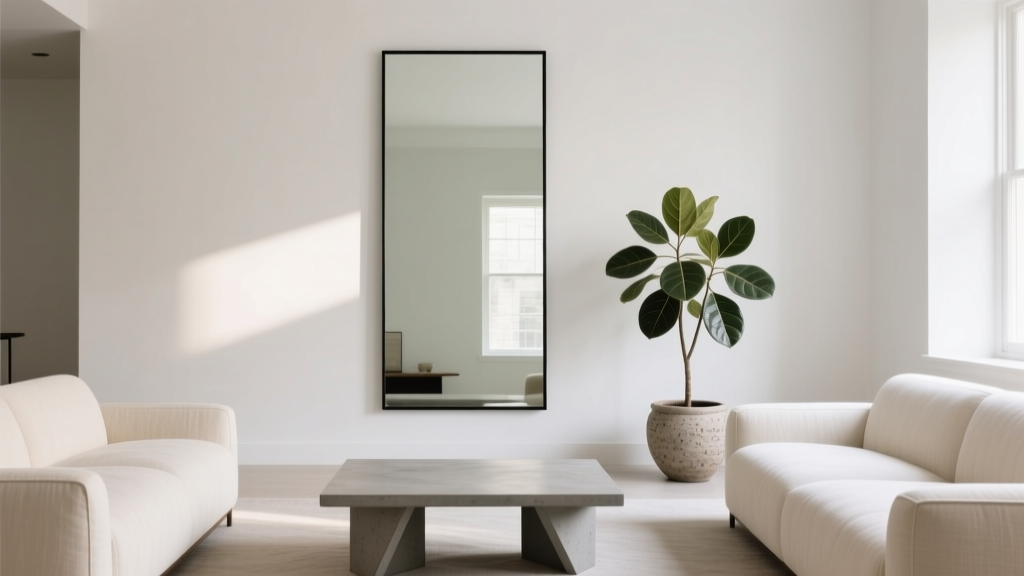
Living Room Mirror Placement and Styling - The Decor Mag
A well-placed mirror can change the way your living room feels almost instantly. It can brighten a dim corner, make a tight space feel larger, and add a polished, designer finish—often for less than the cost of a new rug. The catch is that mirrors don’t just “go anywhere.” Because they reflect light, color, and clutter, a mirror can either elevate your living room design or unintentionally highlight the very things you’d rather hide.
This guide breaks down living room mirror placement and styling with practical, room-by-room logic. You’ll learn where to hang a mirror for the best light and sightlines, how high to mount it (with specific measurements), what frame materials work for different decor styles, and how to style mirrors in a way that looks intentional—not like an afterthought. You’ll also get real-world scenarios, common mistakes to avoid, and a quick FAQ for the most-asked mirror questions.
Why Mirrors Are a Living Room “Power Piece”
Mirrors are one of the most versatile tools in home decor because they solve multiple design problems at once:
- Light amplification: A mirror can double the impact of natural light when positioned opposite or adjacent to a window.
- Visual expansion: Strategic reflection creates depth—especially useful in apartments, narrow living rooms, and open-plan spaces.
- Focal-point styling: A mirror can function like wall art, anchoring a sofa wall, fireplace, or console with presence and proportion.
- Balance and symmetry: Mirrors add structure to asymmetrical layouts and can “finish” a wall that feels empty.
From a trend standpoint, we’re seeing continued love for arched mirrors, antique-inspired frames, warm metals (brass, champagne gold), and organic silhouettes that soften boxy architecture. At the same time, timeless principles still apply: good scale, correct hanging height, and thoughtful reflections always win.
Start Here: What Do You Want the Mirror to Do?
Before you choose a size or placement, decide the mirror’s primary job. One mirror can do multiple things, but clarifying the priority prevents awkward positioning.
Mirror goals (choose one main role)
- Brighten the room: Place to reflect daylight or a lamp glow.
- Make the room feel larger: Position to reflect an open area, not a crowded corner.
- Create a focal point: Hang above a fireplace mantel, console table, or sofa.
- Add style/texture: Use a statement frame (wood, metal, rattan, plaster) as decor.
- Improve function: Add a full-length mirror near an entry zone within the living room.
Living Room Mirror Placement: The Best Spots (and Why They Work)
1) Above the Sofa: The Classic Statement Placement
Hanging a mirror above the sofa can replace oversized wall art and gives a clean, elevated look—especially in living rooms that need more light.
Best practices:
- Height: Hang so the mirror’s center sits about 57–60 inches from the floor (gallery standard). If your sofa is tall, you may inch slightly higher, but avoid floating too high.
- Spacing: Leave 6–10 inches between the top of the sofa and the bottom of the mirror.
- Width: Aim for the mirror to be 2/3 to 3/4 the width of the sofa. For an 84-inch sofa, look for a mirror around 56–63 inches wide (or a grouped arrangement that fills similar visual width).
Real-world scenario: If you rent a small apartment and your living room window is off to one side, a mirror above the sofa can reflect that light across the room. Choose a thin black metal frame for modern interiors or a warm wood frame for a cozy, transitional look.
2) Over a Console Table: The Easiest Designer Look
A console with a mirror creates a natural vignette: grounded furniture below, reflective focal point above, and styling in the middle. This placement works beautifully for living rooms that share space with an entryway.
Measurements to follow:
- Console-to-mirror gap: Leave 4–8 inches between the console top and mirror bottom.
- Width rule: Mirror should be 2–6 inches narrower than the console on each side (generally 60–90% of console width).
- Mirror height: For standard 30–34 inch console heights, a mirror in the 30–45 inch tall range often looks balanced.
Styling tip: If you want a brighter room at night, flank the mirror with two sconces or place two table lamps on the console. The reflection doubles the glow and reads instantly “high-end.”
3) Above the Fireplace Mantel: Balanced and Architectural
A mantel mirror is timeless, especially in traditional, modern farmhouse, and transitional living room decor. It emphasizes the fireplace as the anchor of the room.
How to size it:
- Width: Choose a mirror that is 2–8 inches narrower than the mantel on each side (avoid going wider than the mantel).
- Height above mantel: Hang or lean the mirror so the bottom is about 3–6 inches above the mantel surface.
Trend-forward option: An arched mirror over a boxy fireplace softens the hard lines and brings in an architectural shape that feels current without being fleeting.
4) Opposite or Adjacent to a Window: Best for Natural Light
If your living room feels dim, mirror placement near a window is one of the most effective upgrades. The goal is to reflect daylight while avoiding glare.
- Opposite a window: Maximizes brightness and makes the room feel more open.
- Adjacent to a window: Adds light bounce with less direct glare—great if the sun is intense.
Quick check: Stand where you sit most often. If the mirror reflects harsh sun directly into your eyes, shift it a few feet or angle it slightly.
5) Leaning Floor Mirror: Rental-Friendly and Spacious
A full-length mirror leaning against the wall is ideal for renters (no drilling required) and for living rooms that need height and depth. It also works beautifully in corners that feel empty.
Recommended sizes:
- Small spaces: Around 58–65 inches tall by 18–24 inches wide.
- Medium to large living rooms: Around 70–80 inches tall by 28–40 inches wide.
Safety note: If you have kids, pets, or live in an earthquake-prone area, secure leaning mirrors with anti-tip straps (budget-friendly and often invisible once installed).
Choosing the Right Mirror Size, Shape, and Frame Material
Size: Scale is Everything
Mirrors should look proportional to the furniture and wall they sit with. If a mirror looks “stuck on,” it’s usually too small.
- For a large blank wall: Consider a mirror at least 30–40 inches wide, or go larger if the wall can handle it.
- For a sofa wall: Aim for 2/3 sofa width (or a set of mirrors that reads as one large visual).
- For a narrow wall slice: A vertical mirror 16–24 inches wide can add height without crowding.
Shape: Match the Room’s Architecture
- Arched mirrors: Great for softening modern lines; stylish over mantels and consoles.
- Round mirrors: Perfect for breaking up angular layouts (sectionals, rectangular coffee tables, grid windows).
- Rectangular mirrors: Best for classic symmetry and larger reflections; works above sofas and long consoles.
- Organic/irregular shapes: Ideal for contemporary and Scandinavian-inspired living rooms; use as art.
Frame Materials: What Works Where
- Black metal: Modern, industrial, minimalist; pairs well with clean-lined sofas and monochrome palettes.
- Brass or champagne gold: Warm, elevated; complements warm neutrals, traditional and contemporary spaces alike.
- Natural wood (oak, walnut): Cozy and timeless; great with earthy color schemes and layered textures.
- Rattan or woven frames: Casual, coastal, boho; adds texture and softness.
- Antique or distressed finishes: Traditional, vintage, European-inspired; adds character instantly.
Styling Mirrors Like a Designer (Step-by-Step)
Method 1: The Console Vignette Formula
- Anchor: Place a console table or low cabinet beneath the mirror.
- Light: Add a table lamp (or two for symmetry). Ideal lamp height is typically 24–32 inches depending on console height.
- Vertical element: Add a vase with branches or a tall sculpture to create height variation.
- Grounding pieces: Stack 2–3 coffee table books or a decorative box.
- Organic touch: Finish with a small plant or bowl to soften the look.
Budget range: $150–$600 can create a strong console setup if you shop smart (mirror + lamp + a few accessories). A higher-end version with a quality console and oversized mirror often lands around $800–$2,500.
Method 2: The Mantel Mirror Layer
- Lean vs. hang: Leaning a mirror on the mantel feels relaxed and is easy to swap seasonally. Hanging looks crisp and permanent.
- Layering: Pair the mirror with one piece of art slightly overlapping in front (works best with thick frames and eclectic decor).
- Keep it edited: 3–5 mantel items are usually enough. Too many small objects read as clutter in the reflection.
Method 3: Pairing Mirrors with Art (the “Balance Trick”)
If your living room has a TV wall or large sectional, balance is key. Try:
- One large mirror on one side of the wall and a gallery of art on the other
- Two matching mirrors flanking a focal point (like a fireplace or large artwork)
- A mirror in a gallery wall mix (use one mirror for every 4–6 frames for breathing room)
Product Recommendations and Budget-Friendly Options
You don’t need a custom piece to get a designer look. Here are mirror categories that tend to deliver great results:
- Oversized arched mirror (metal frame): A go-to for modern living rooms. Budget: $180–$450; mid-range: $500–$1,200.
- Round brass mirror (30–40 inch): Works over consoles and in smaller living rooms. Budget: $90–$250; mid-range: $300–$800.
- Wood-framed rectangle (36–60 inch wide): Warm, timeless, renter-friendly styling. Budget: $140–$400; mid-range: $500–$1,500.
- Antique-look ornate mirror: Adds character in traditional or eclectic spaces. Budget: $120–$350 (reproductions); vintage: $250–$1,500+ depending on size and age.
Material tip: If you want a lighter mirror for easier hanging, look for frames in aluminum or resin that mimic wood or carved details. For longevity and a richer look, solid wood and steel frames tend to feel more substantial.
Real-World Mirror Placement Scenarios
Scenario A: Small Living Room with One Window
Challenge: The room feels dim and tight.
Solution: Place a 30–40 inch round mirror adjacent to the window to bounce light without harsh glare. Add a slim console beneath it to create a functional landing area.
Scenario B: Open-Plan Living Room That Needs Definition
Challenge: The living area blends into dining/kitchen zones.
Solution: Use a large rectangular mirror above a console behind the sofa (if you have a “sofa back” facing the entry). This creates a defined moment and helps the living room feel intentional.
Scenario C: Long, Narrow Living Room
Challenge: The space feels like a hallway.
Solution: Add a tall leaning mirror at the far end to create depth. If you can hang, a series of 2–3 vertical mirrors along one wall can visually widen the room.
Common Mirror Mistakes to Avoid
- Hanging too high: If the mirror is near the ceiling, it disconnects from the furniture. Use the 57–60 inch center guideline.
- Choosing a mirror that’s too small: A tiny mirror over a large sofa looks undersized. Go bigger or group multiples.
- Reflecting clutter: Mirrors amplify what they face. Don’t point them at messy shelves, cables, or a crowded drop zone.
- Glare and awkward reflections: Avoid reflecting harsh sunlight directly onto seating or reflecting a TV screen if it creates distracting bounce.
- Ignoring frame style: A sleek modern mirror in a traditional living room can feel off. Match frame material to your existing finishes (wood tones, metals, textures).
- Weak hanging hardware: Oversized mirrors need proper anchors. If it’s heavy, use a stud or rated drywall anchors and follow manufacturer hardware guidance.
Quick Checklist: Mirror Placement and Styling
- Decide the mirror’s main job: light, space, focal point, or function
- Choose a size that fits furniture scale (aim for 2/3 width over sofas)
- Hang with the center around 57–60 inches from the floor
- Leave 6–10 inches above sofa backs; 4–8 inches above consoles
- Check reflections from your main seating spot (light + clutter + TV glare)
- Style with a simple formula: light + height + grounding objects + organic touch
FAQ: Living Room Mirror Placement and Styling
Where should a mirror go in a living room for the most light?
Place it opposite a window if you want maximum brightness, or adjacent to a window if you want softer light bounce with less glare. If your living room gets intense afternoon sun, adjacent placement often feels more comfortable.
How high should I hang a mirror above a sofa?
Keep the mirror’s center around 57–60 inches from the floor, and leave about 6–10 inches between the sofa back and the mirror’s bottom edge. Adjust slightly based on ceiling height and sofa back height.
Should a mirror be wider than the console table?
Usually no. A mirror that’s slightly narrower looks most balanced. Aim for the mirror to be about 60–90% of the console width, leaving a few inches of breathing room on both sides.
Is it okay to put a mirror facing the TV?
It can be, but test for glare. If the mirror reflects the TV screen from your seating position, you may notice distracting movement. In that case, shift the mirror to reflect a window, artwork, or a calmer view.
What mirror shape is best for a modern living room?
Modern living rooms look great with thin metal frames (black or warm metallics), arched shapes, and oversized rectangles. If the room has lots of sharp angles, a round or arched mirror adds welcome softness.
What’s the best way to use mirrors in a rental?
Go for a leaning floor mirror or use renter-friendly hanging solutions rated for the mirror’s weight. A tall leaning mirror plus an anti-tip strap offers a polished look with minimal wall damage.
Next Steps: Make Your Mirror Work Harder
Pick one wall in your living room that feels either too dark, too empty, or too tight—and let a mirror solve that specific problem. Start with the right size for your furniture, hang it at a comfortable viewing height, and be intentional about what the mirror reflects. A few small styling touches (a lamp, a stack of books, a textured vase) will make the setup feel finished and personal.
For more living room decor ideas, layout help, and trend-forward styling guides, explore the latest inspiration on thedecormag.com.
More Articles
 Living Room Decor with Hardwood Floors (2026)
 Living Room Furniture That Lasts: 2026 Picks
 Living Room Paint Undertones: Choose Right (2026)
 Best Furniture for First Home in 2026: Smart & Sustainable
 Drapery Hardware for Living Rooms (2026)
 Warm, Sustainable Wood Living Spaces for 2026
 Living Room Window Treatments for Privacy (2026)
 Living Room TV Stand Styling Tips - The Decor Mag
 Budget-Friendly Living Room Makeover Ideas - The Decor Mag
 Best Bench Options at the End of a Sofa - The Decor Mag