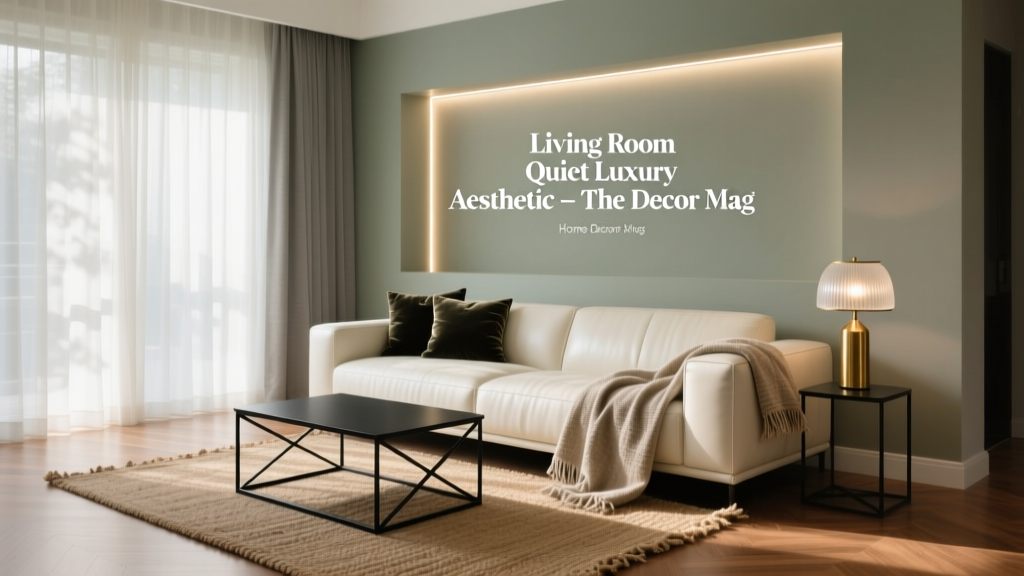
Living Room Quiet Luxury Aesthetic - The Decor Mag
Quiet luxury is the living room aesthetic that feels expensive without shouting about it. Think refined materials, impeccable fit, intentional styling, and a calm palette that lets texture and proportion do the talking. It’s not about filling your space with “designer-looking” items—it’s about choosing fewer things, choosing them well, and arranging them with breathing room.
This approach matters because the living room is where daily life happens: streaming nights, conversations with friends, weekend naps, work-from-home overflow. Quiet luxury design creates a space that supports those routines while looking polished year-round. It’s also one of the most renter-friendly “high-end” looks because it relies heavily on textiles, lighting, and layout—not permanent renovations.
Below, you’ll learn what defines quiet luxury in a living room, how to build the look step-by-step, what materials and measurements work best, product recommendations at different budgets, real-world scenarios, and common mistakes that can make a room feel flat or fussy.
What “Quiet Luxury” Means in a Living Room
Quiet luxury interior design is rooted in timeless principles: quality over quantity, restraint, and an emphasis on touchable, natural materials. It’s aligned with current design trends—like warm minimalism, organic modern, and “anti-trend” decorating—while staying classic enough to outlast any cycle.
The Core Elements
- Subtle palette: warm whites, soft taupes, greige, mushroom, stone, and muted charcoals.
- Natural materials: linen, wool, cotton, leather, solid wood, travertine, marble, ceramic, rattan used sparingly.
- Quiet patterns: tone-on-tone stripes, micro-checks, herringbone, bouclé texture—nothing too loud or busy.
- Thoughtful negative space: fewer objects, better spacing, calm sightlines.
- Tailored shapes: clean-lined sofas, well-scaled coffee tables, structured drapery, classic silhouettes.
Quiet Luxury vs. Minimalism
Minimalism can feel sparse; quiet luxury feels complete. The difference is the layering: plush textiles, warm woods, soft lighting, and art that looks curated rather than mass-produced. You can have a quiet luxury living room with plenty of comfort—deep seating, thick rugs, oversized throws—without visual clutter.
Start With the Foundation: Layout, Scale, and Flow
If you want a living room to feel high-end, start with proportion and spacing. The most luxurious rooms aren’t always bigger—they’re better planned.
Key Measurements for a Polished Layout
- Rug sizing: Aim for at least the front legs of all seating on the rug. For most living rooms, a 8' x 10' is the minimum; larger rooms often need 9' x 12' or 10' x 14'.
- Coffee table distance: Keep 14–18 inches between the sofa and coffee table for comfortable reach.
- Traffic paths: Maintain 30–36 inches for main walkways.
- TV height: The center of the screen should be roughly 42 inches from the floor (adjust for sofa height).
- Ceiling-to-floor drapery: Hang rods 4–8 inches above the window frame (or just below crown molding) and let panels kiss the floor or “break” by ½–1 inch.
Step-by-Step: A Quiet Luxury Layout Plan
- Anchor with the rug first—choose the right size before buying side chairs.
- Place the sofa to face the focal point (fireplace, view, or TV wall). Float it if needed; it often looks more elevated than pushing everything against walls.
- Add two “supporting” seats (chairs or a loveseat). Symmetry reads luxe, but perfect symmetry isn’t required.
- Layer lighting (overhead + table + floor lamp). Quiet luxury relies on glow, not glare.
- Finish with a restrained edit of décor—no filling every surface.
Choose a Quiet Luxury Color Palette (That Still Feels Warm)
The best quiet luxury living room palettes look effortless but are carefully chosen. You want depth without contrast shouting for attention.
Three Easy, Timeless Palettes
- Warm neutral: creamy white walls + oatmeal sofa + walnut wood + black accents (thin frames, lamp hardware).
- Stone and charcoal: soft greige walls + stone-colored rug + charcoal lounge chair + brass or bronze details.
- Soft tonal color: dusty olive or muted clay as an accent (pillows, art, a single chair), paired with ivory and warm wood.
Paint and Finish Tips
- Wall finish: matte or eggshell reads sophisticated; avoid high-gloss on large wall areas.
- Trim: a clean, crisp white works, but a slightly warmer white keeps the room from feeling clinical.
- Ceiling: standard white is fine; for extra cocooning, tint the ceiling 10–20% lighter than the wall color.
Materials That Instantly Read “Quiet Luxury”
Materials do more heavy lifting than décor. If your sofa fabric, rug pile, and wood tones feel good and look substantial, the room will automatically feel elevated.
Upholstery: What to Look For
- Linen or linen-blend: airy, tailored, and beautiful with slight texture. Great for slipcovered sofas.
- Wool blends: durable and refined; excellent for chairs and performance needs.
- Velvet (matte): adds depth without flash. Choose cotton velvet or performance velvet in muted tones.
- Leather: caramel, saddle, or chocolate leather in a classic silhouette ages well (avoid overly shiny finishes).
Wood, Stone, and Metal Finishes
- Woods: walnut, white oak, ash—prefer matte or satin finishes over glossy.
- Stone: travertine and honed marble feel quiet; polished stone can feel too “blingy” for this look.
- Metals: unlacquered brass, antique brass, bronze, or matte black in small doses.
Rugs: The Unsung Hero
A quiet luxury living room almost always has a substantial rug. Look for:
- Wool (best all-around for durability and softness)
- Wool/jute blend (texture-forward, slightly more casual)
- Low-contrast pattern like tonal geometric, faded Persian, or subtle stripe
Budget range: For an 8' x 10' wool rug, expect $400–$1,500 depending on brand and construction. Hand-knotted rugs often start around $1,800+ but can be worth it in high-traffic homes.
Furniture That Feels Elevated (Not Trendy)
Quiet luxury furniture choices are classic, comfortable, and proportionally correct. Avoid anything overly sculptural unless the room is otherwise very restrained.
What to Prioritize
- A great sofa: The sofa is the investment piece. Look for a solid frame, high-quality cushions, and a fabric that suits your lifestyle.
- One statement piece: A travertine coffee table, a vintage wood console, or a beautifully made lounge chair.
- Storage that disappears: Closed cabinets, low media consoles, and baskets that look intentional.
Product Recommendations (By Budget)
- Under $500 upgrades:
- Textured linen-look curtains (2–4 panels) + proper rod and rings
- Oversized wool-blend throw + 2–3 high-quality pillow covers (linen, bouclé, or wool)
- Large neutral art print in a thin wood or matte black frame
- $500–$2,500 investments:
- 8' x 10' or 9' x 12' wool rug
- Solid wood coffee table or a vintage piece
- Upholstered accent chair with a tailored silhouette
- $2,500–$8,000+ anchor pieces:
- High-quality sofa in performance linen or wool blend
- Custom drapery (especially if you have large windows or high ceilings)
- Large-scale lighting (a refined chandelier plus layered lamps)
Lighting: The Fastest Way to Make a Living Room Feel Luxurious
If your living room lighting is one overhead fixture, the room will struggle to feel soft and expensive. Quiet luxury is all about a layered glow.
A Simple Lighting Recipe
- Overhead: a flush mount or chandelier that’s scaled to the room
- Task: a floor lamp near a reading chair or sofa corner
- Ambient: two table lamps (matching or coordinated) on side tables or a console
Bulb and Shade Tips
- Color temperature: choose 2700K (warm) for living rooms.
- Shades: linen, parchment, or woven textures soften light beautifully.
- Dimmers: if you can add one upgrade, make it dimmers—renters can use plug-in dimmers for lamps.
Textiles and Styling: How Quiet Luxury Gets Its Depth
A neutral room without texture can feel bland. The quiet luxury aesthetic depends on layering tactile materials in a controlled palette.
The “3-Texture Rule” for Sofas
Style a sofa with three different textures, keeping colors within the same family:
- 1 smooth: cotton or linen pillow in a solid neutral
- 1 nubby: bouclé or wool pillow for dimension
- 1 soft: brushed throw or cashmere-blend throw
Coffee Table Styling That Looks Curated
- One stack of books (2–3 large-format) in neutral covers
- One sculptural object (ceramic bowl, stone orb, vintage piece)
- One organic element (a branch in a vase, a small plant, or a low arrangement)
Keep the table at least 50% clear so it stays functional—and looks calmer.
Real-World Scenarios: Quiet Luxury in Different Living Rooms
Scenario 1: A Small Apartment Living Room (Rental-Friendly)
You’re working with a 12' x 14' living room, beige carpet, and builder-grade lighting. Quiet luxury is absolutely doable:
- Use a 8' x 10' wool-blend rug to cover and unify the space.
- Hang ceiling-height drapes in an oatmeal linen-look fabric to visually lift the room.
- Swap the overhead bulb for warm 2700K and add two lamps for glow.
- Choose a low-profile media console in walnut tone to warm up the carpet.
- Stick to a palette of cream, taupe, and matte black accents.
Estimated budget: $800–$2,500 depending on rug and lighting choices.
Scenario 2: A Family Living Room With Kids and Pets
Quiet luxury can be family-proof when you choose the right materials:
- Pick a performance fabric (performance linen, performance velvet, or tightly woven wool blend).
- Choose a medium-tone rug with a subtle pattern to hide daily life.
- Add a large lidded basket for throws and toys—instant calm.
- Use washable pillow covers in textured neutrals (zip closures help).
Estimated budget: $1,500–$6,000 depending on sofa and rug.
Scenario 3: An Open-Plan Living Room That Feels “Echoey”
Open plans often feel cold or unfinished. Quiet luxury solves that with softness and definition:
- Define the living area with a 9' x 12' (or larger) rug—go bigger than you think.
- Add two upholstered pieces beyond the sofa (chairs or an ottoman) to break up hard surfaces.
- Use drapes even if you have blinds; they soften acoustics and add architecture.
- Consider two matching armchairs to create a “room within the room.”
Common Mistakes to Avoid
- Going too monochrome without texture: All beige everything can read flat. Add wool, linen, wood grain, and ceramic.
- Buying a rug that’s too small: A tiny rug makes furniture look like it’s floating awkwardly. Size up whenever possible.
- Over-accessorizing: Quiet luxury styling is edited. If every surface has décor, the room loses its calm.
- Using shiny finishes everywhere: Too much chrome, mirrored décor, or glossy lacquer can feel loud. Prefer matte and honed finishes.
- Ignoring lighting layers: One bright overhead light will make even beautiful furniture look harsh.
- Chasing trends too literally: Quiet luxury isn’t a checklist. It’s restraint, quality, and a cohesive palette.
FAQ: Living Room Quiet Luxury Aesthetic
What colors work best for a quiet luxury living room?
Warm neutrals are the easiest: creamy white, oatmeal, taupe, mushroom, stone, and soft charcoal. If you want color, use muted tones like dusty olive, deep taupe-rose, or slate blue in small amounts.
How can I get a quiet luxury look on a budget?
Focus on the “big visual impact” items first: properly sized rug, ceiling-height curtains, and warm layered lighting. Then upgrade pillow covers and add one substantial decor piece (like a ceramic vessel or framed art). A realistic starter budget is $300–$1,200, depending on rug and drapery choices.
What materials look expensive but still feel relaxed?
Linen, wool, matte wood finishes (oak or walnut), honed stone (travertine), and ceramics are the sweet spot. They bring richness without looking flashy.
Is quiet luxury a good style for renters?
Yes—quiet luxury is very renter-friendly because it relies on textiles, lighting, art, and furniture placement. Use plug-in sconces, adhesive hooks for art, and invest in curtains and a rug you can take with you.
How do I make my living room look luxurious without making it feel cold?
Add softness and warmth: a plush rug, textured throws, warm-toned wood, and layered lighting at 2700K. Keep contrast gentle and avoid sterile bright whites unless the room has lots of natural warmth.
What’s the best couch style for quiet luxury?
A tailored sofa with clean lines, high-quality upholstery, and comfortable proportions. Look for neutral performance fabric, a structured silhouette, and cushions that hold their shape. Skip overly trendy shapes unless you’re balancing them with classic pieces.
Your Next Steps: A Quiet Luxury Living Room Plan You Can Start This Week
- Edit first: clear surfaces, remove extra décor, and keep only pieces you truly like.
- Fix the scale: upgrade to a larger rug and hang curtains higher and wider.
- Layer lighting: add at least two lamps with warm bulbs (2700K).
- Upgrade touchpoints: replace pillow covers, add a quality throw, and choose one substantial coffee-table object.
- Unify finishes: keep metals and wood tones consistent (or intentionally mixed in a restrained way).
Quiet luxury is a long game—in the best way. Each thoughtful upgrade makes your living room calmer, richer, and more “you,” without ever feeling overdone. For more living room design and decor ideas—from layouts to lighting to timeless styling—explore the latest guides at thedecormag.com.
More Articles
 Stylish Room Alternatives for Modern Living Spaces 2026
 Best Living Room Focal Point Ideas for 2026
 Comfortable Seating for Aging Bodies: Sofas & Chairs (2026)
 Art in Living Room Design: Ideas & Tips (2026)
 Living Room Home Office Combo Ideas - The Decor Mag
 Mix Metal Finishes in Living Room Hardware (2026)
 Palette vs Paint: Color Systems vs Surface Finishes 2026
 Living Room Art That Makes a Statement (2026)
 Curtains for Living Rooms: Best Choices (2026)
 Best Living Room Designs for 2026: Stylish & Human-Centered