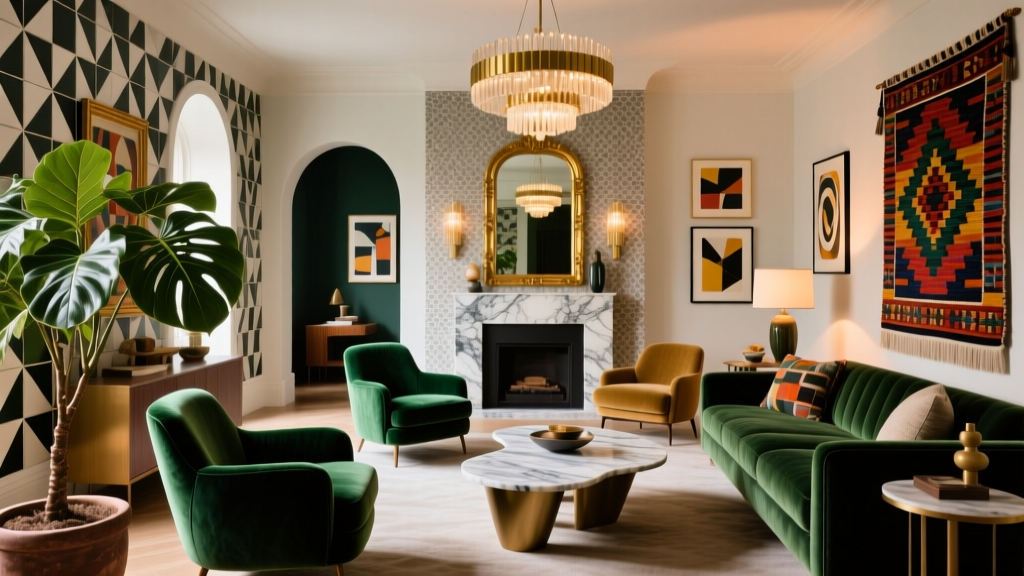
Maximalist Living Room Decor Done Right - The Decor Mag
Maximalism gets a bad rap. People hear “more is more” and picture clutter, mismatched colors, and a living room that feels chaotic rather than curated. But done right, maximalist living room decor is one of the most welcoming, personal, and design-forward ways to decorate. It’s the style that lets you show your life—your travels, your art, your favorite colors, your inherited pieces—without watering everything down to beige.
Whether you’re a homeowner ready to make a bold design statement or a renter craving character without major renovations, maximalism offers something rare: permission. Permission to mix patterns, layer textures, and build a room that looks collected over time. The goal isn’t to fill every inch; it’s to create intentional abundance.
This guide breaks down how to do maximalist living room decor with confidence: how to choose a cohesive color story, layer patterns like a pro, balance visual weight, and select furniture and lighting that keep the room functional. You’ll also get practical measurements, budget ranges, real-world scenarios, and a short list of mistakes that derail even the best maximalist intentions.
What “Maximalist” Really Means (and What It Doesn’t)
Maximalism is curated richness—layers of color, pattern, texture, and objects that tell a story. It’s not random. The best maximalist living rooms feel energized and expressive, but also comfortable and livable.
Maximalism is:
- Layering: textiles, art, lighting, decor, and finishes working together
- High personality: collected pieces, conversation starters, sentimental items
- Bold contrast: mixing eras, materials, and motifs intentionally
- Comfort-first: inviting seating, cozy lighting, practical surfaces
Maximalism is not:
- Clutter with no editing
- Every trend at once (you still need a thread that ties it together)
- Ignoring function (your living room still needs to work day-to-day)
Start with a “Cohesive Chaos” Plan
The fastest way to make maximalism look intentional is to set a simple framework before you start piling on layers. Think of it as your room’s design rules—light enough to allow play, strong enough to prevent visual noise.
Step 1: Choose a color story (3–5 colors)
Pick a palette you love and repeat it throughout the room in different shades and materials. A reliable formula:
- 1 dominant color (walls, rug, or sofa)
- 1–2 secondary colors (curtains, accent chairs, art)
- 1–2 accent colors (pillows, lampshades, small decor)
Example palettes that work for maximalist living rooms:
- Emerald + navy + warm white + brass + blush accents
- Terracotta + olive + cream + black + cobalt accents
- Mustard + teal + chocolate brown + ivory + cherry red accents
Paint tip: If you’re nervous, start with a warm white (like creamy off-white) and go maximalist through textiles and art. If you’re ready to commit, deep, saturated paint colors (ink blue, forest green, aubergine) are a current trend that also reads timeless when paired with classic materials like wood and brass.
Step 2: Pick a “pattern hero” and build around it
Choose one major patterned piece to anchor the room:
- A bold area rug (Persian-style, geometric, checkerboard, floral)
- Statement wallpaper on one wall
- A patterned sofa or oversized curtain fabric
Then layer 2–4 supporting patterns in different scales. The secret is varying scale—a large floral, a medium stripe, a small geometric, and a solid texture (like velvet) for relief.
Furniture: Make the Big Pieces Do the Heavy Lifting
Maximalist decor feels best when the furniture layout is strong. If the foundation is wobbly, all the styling in the world won’t fix it. Prioritize comfort, generous proportions, and enough surfaces for real life.
Smart layout measurements (use these as guardrails)
- Walkways: Aim for 30–36 inches of clearance in main paths (24 inches can work in tight apartments).
- Coffee table distance: 14–18 inches from the sofa edge for comfortable reach.
- Rug sizing: Ideally, the rug should be large enough for at least the front legs of all seating to sit on it. Common sizes:
- 8' x 10' for many standard living rooms
- 9' x 12' for open-plan or larger rooms
- 6' x 9' for small spaces (pair with careful placement)
- Art height: Center artwork around 57–60 inches from the floor (gallery walls can flex, but keep the “center of gravity” consistent).
Product recommendations that suit maximalist living rooms
- Sofas: Performance velvet or performance woven fabrics (excellent for pets/kids); look for removable cushion covers if possible.
- Coffee tables: Wood with character (walnut, oak), stone tops (marble-look quartz for lower maintenance), or lacquered finishes for shine.
- Accent chairs: One sculptural chair (curved silhouette) + one patterned chair is a strong combo.
- Storage: Closed storage (sideboards, credenzas, cabinets) is the maximalist’s best friend—display the best, hide the rest.
Budget ranges (typical):
- Area rug: $150–$600 (synthetic) | $600–$2,500+ (wool/hand-knotted)
- Sofa: $900–$2,500 (mid-range) | $2,500–$6,000+ (investment)
- Lighting: $80–$250 (table/floor lamps) | $250–$1,200+ (statement fixtures)
- Art: $30–$200 (prints) | $200–$2,000+ (originals)
Layering Like a Pro: Texture, Materials, and Shine
One reason maximalist living room design looks elevated is the mix of finishes. Even if your color palette is loud, the room feels grounded when materials are thoughtful.
Go-to material mix for a rich look
- Soft: velvet, bouclé, linen blends, mohair-style throws
- Hard: wood (warm), metal (brass/blackened steel), stone (marble, travertine-look)
- Natural: rattan, cane, jute (use sparingly if you’re already pattern-heavy)
- Reflective: mirrors, lacquer, glossy ceramic lamps, framed glass
Trend watch: 2025-forward maximalist spaces are leaning into high-gloss accents (lacquer tables, glossy painted trim), color drenching (walls + trim in the same hue), and patterned ceilings (painted or wallpapered) in rooms that can handle the drama.
Walls That Tell a Story: Art, Wallpaper, and Gallery Styling
If you want maximalist decor that feels intentional, focus on your walls. Art creates the “collected” feel—and it’s renter-friendly when done with removable hooks.
Gallery wall formula (easy, flexible, looks curated)
- Pick a unifier: matching frames (all black, all brass) or a consistent mat color (white/cream).
- Start with 1–2 anchors: one larger piece (24" x 36" or bigger) plus a second medium piece.
- Fill in with variety: mix photos, prints, textiles, and small paintings for texture.
- Keep spacing consistent: 2–3 inches between frames looks polished.
Wallpaper and paint: bold without regret
- Rental option: peel-and-stick wallpaper on one focal wall or inside a bookcase/back of shelves.
- Timeless option: classic patterns (stripes, botanicals, damask-inspired motifs) in modern colors.
- Pro move: paint trim a contrasting color (e.g., deep green walls with warm white trim, or warm white walls with inky trim) for graphic impact.
Lighting: The Secret to Making Maximalism Feel Luxurious
Maximalist rooms need layered lighting or they can feel heavy. Plan for at least three light sources in a typical living room.
Layered lighting checklist
- Ambient: overhead fixture or semi-flush mount (especially in small rooms)
- Task: floor lamp near a reading chair, or a table lamp on an end table
- Accent: picture lights, sconces (plug-in versions are renter-friendly), or LED strip lighting in shelving
Bulb tip: Use warm bulbs (2700K–3000K) for a cozy glow that flatters bold colors and makes patterns feel inviting rather than harsh.
Real-World Maximalist Living Room Scenarios
Scenario 1: Small apartment living room (under 250 sq ft)
You want maximalist style, but the room can’t handle bulky furniture or too many tiny decor items.
- Do: one statement rug (6' x 9' or 8' x 10' if it fits), a compact sofa, and one bold accent chair.
- Do: go vertical—tall bookcase, stacked art, curtains hung high (2–3 inches below ceiling) to elongate the room.
- Avoid: lots of small knickknacks on every surface; choose fewer, bigger accessories (one large vase, one sculptural lamp).
Scenario 2: Open-plan living room that feels bland
Open layouts can swallow decor. Maximalism helps define zones and add warmth.
- Do: anchor the seating with a 9' x 12' rug and a large coffee table (48"–54" long for many sectionals).
- Do: create a “moment” behind the sofa—console table + lamps + layered art.
- Try: a bold paint color in the living area only, or wallpaper in a niche to visually carve out space.
Scenario 3: Family-friendly maximalism (kids + pets)
You can have pattern and durability at the same time.
- Choose: performance fabrics, tight weaves, washable slipcovers, and rugs with pattern (they hide stains better).
- Use: rounded-edge tables or ottomans for safety.
- Plan: one closed cabinet for toys and charging cords to keep the room from tipping into clutter.
Maximalist Styling: A Step-by-Step Formula That Works
If you’re staring at a room and don’t know where to start, use this order of operations. It keeps decisions logical and prevents impulse buys that don’t fit.
- Lock in the big anchor: rug or sofa first.
- Add your statement layer: bold art, wallpaper, or standout curtains.
- Bring in secondary textiles: 2–4 throw pillows (mix sizes like 20" + 22" + lumbar), plus a textured throw.
- Style surfaces in clusters of 3–5: a stack of books, a tray, a candle, a small sculpture, a plant.
- Repeat materials: if you have brass in a lamp, echo it in frames or hardware.
- Edit: remove 10–15% of what you added. Maximalism needs breathing room.
Common Mistakes to Avoid
- No negative space: If every wall and surface is full, nothing feels special. Leave at least one quieter zone (a blank wall, a calmer corner, or a simpler shelf).
- Too many small items: Lots of tiny decor reads as clutter. Mix in oversized pieces—large art, a big lamp, a substantial vase.
- Patterns all the same scale: Vary scale or the room will look busy in the wrong way.
- Ignoring function: If there’s nowhere to set a drink, store a blanket, or charge a phone, the room won’t feel comfortable.
- Harsh lighting: Cool bulbs and single-source overhead lighting flatten a maximalist room. Layer lighting for warmth and depth.
- Over-trending: A room made only of “of-the-moment” pieces can feel dated quickly. Mix in timeless shapes, vintage items, and natural materials.
FAQ: Maximalist Living Room Decor
How do I make a maximalist living room feel cohesive?
Use a limited color palette (3–5 colors), repeat at least two materials (like wood + brass), and vary pattern scale. Cohesion comes from repetition, not restraint.
Can maximalism work in a small living room?
Yes—small rooms can look incredible with maximalist decor. Focus on one strong hero (rug or art), keep furniture scaled appropriately, and choose fewer, larger accessories instead of many small ones.
What’s the best rug material for a maximalist living room?
For everyday durability, a wool rug is a top choice (naturally resilient and hides wear). For tighter budgets or high-traffic homes, quality synthetic rugs can mimic the look while being easier to clean.
How many patterns is “too many”?
There’s no hard limit, but a practical rule is one hero pattern plus 2–4 supporting patterns, then add solids and textures to give the eye a break.
What are renter-friendly maximalist decor ideas?
Try peel-and-stick wallpaper, plug-in sconces, oversized art leaned on consoles, removable hooks for gallery walls, and dramatic curtains hung high to transform the room without permanent changes.
How do I keep maximalism from looking messy?
Build in closed storage, style in intentional groupings (trays help), and edit regularly. Maximalism looks best when the “extras” are curated, not accumulated.
Your Next Steps: Bring Maximalism Home
Pick one starting point this week: a bold rug, a deep paint color, or a gallery wall plan. From there, layer in pattern and texture with intention—mix scales, repeat your palette, and make sure the room still supports real life (comfortable seating, reachable surfaces, smart storage). If you’re unsure, take a photo of the room; visual “noise” is much easier to spot in a picture than in person.
When maximalist living room decor is done right, it doesn’t feel like a showroom. It feels like you—collected, expressive, and welcoming. For more ideas on living room design, color palettes, and decor trends, explore more inspiration on thedecormag.com.
More Articles
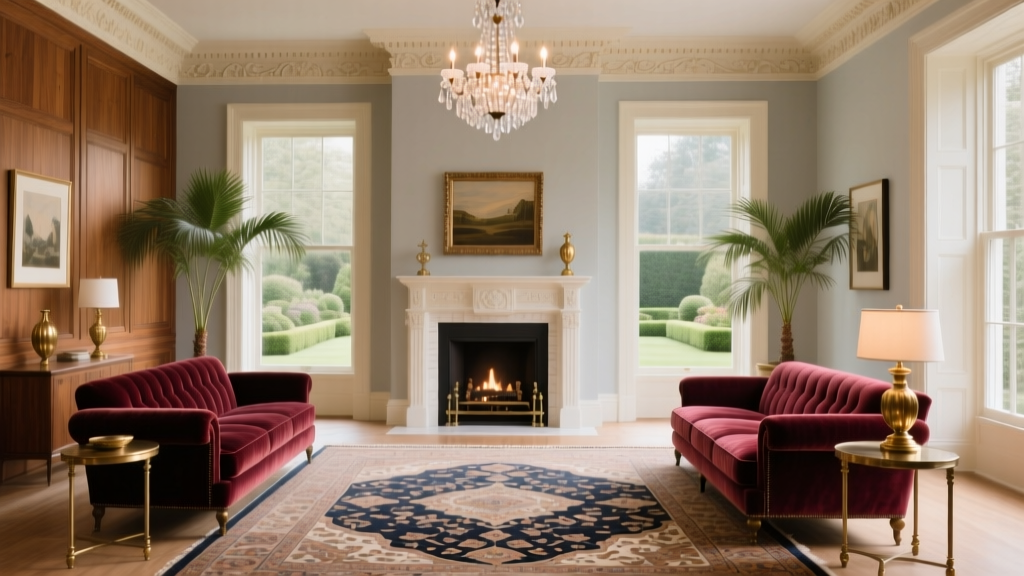 Elegant Traditional Living Room Ideas - The Decor Mag
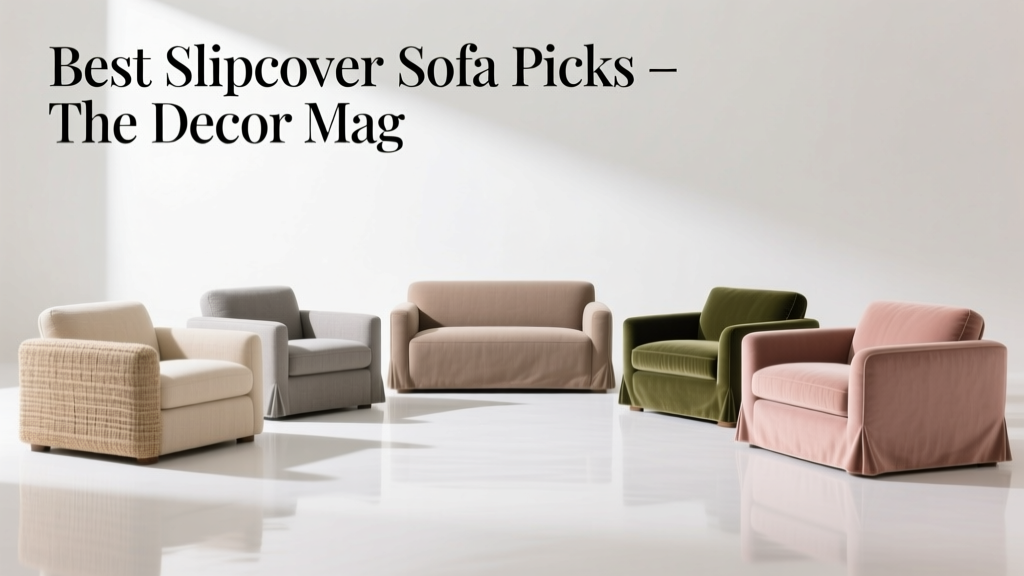 Best Slipcover Sofa Picks - The Decor Mag
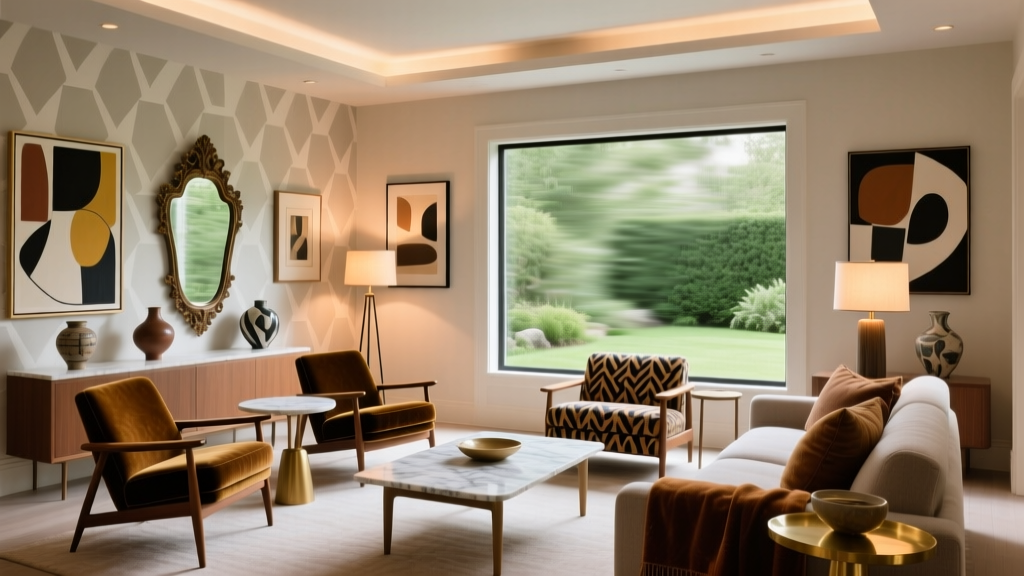 Eclectic Living Room Decor Tips - The Decor Mag
 Stylish Room Alternatives for Modern Living Spaces 2026
 The Best Accent Chairs for Living Rooms - The Decor Mag
 Best Side Table Height Next to Sofa Arm - The Decor Mag
 How to Style a Living Room with Dark Walls - The Decor Mag
 Cat Trees for Living Rooms: Stylish & Seamless (2026)
 How to Mix Old and New in Living Room Decor - The Decor Mag
 Budget-Friendly Smart Organization Ideas for 2026