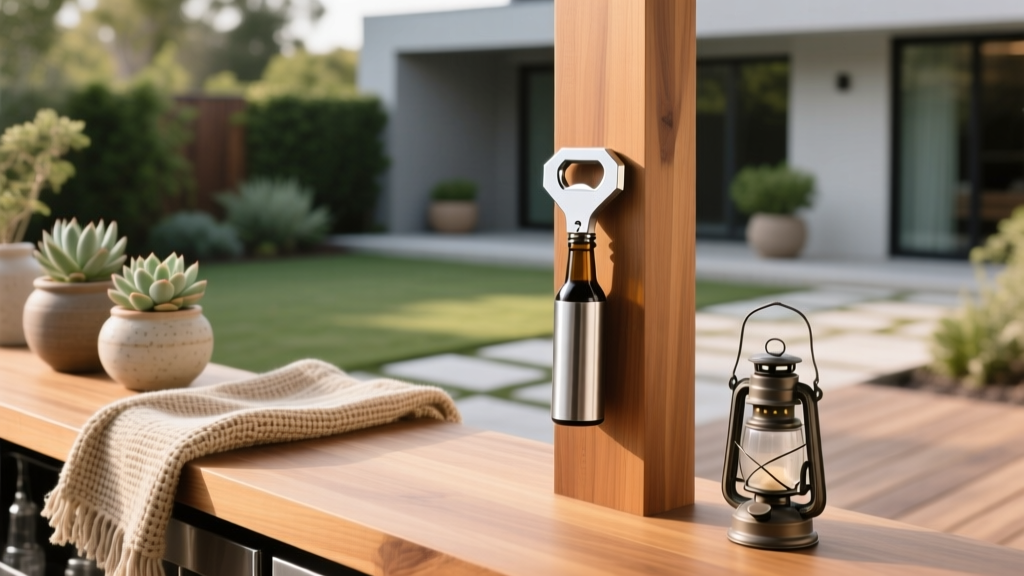
Best Outdoor Bar Bottle Opener Mount - The Decor Mag
Outdoor living is all about flow—easy movement between the grill, the table, and the conversation zone. When you’re hosting on a patio or relaxing by the fire pit, the last thing you want is a scavenger hunt for a bottle opener. A dedicated outdoor bar bottle opener mount is one of those deceptively simple additions that instantly makes your backyard feel more intentional, more functional, and more “finished.”
It’s also a design detail. The right mounted opener can match your outdoor kitchen hardware, echo the style of your pergola, and even become a charming accent on a fence or bar facade. Pair it with smart placement, a tidy cap-catcher, and weather-ready materials, and you’ve just elevated the entire outdoor entertaining experience.
This guide covers the best types of mounted bottle openers for outdoor bars, where to install them for effortless patio living, what materials hold up in different climates, and how to integrate the opener into a cohesive outdoor bar design—complete with layout tips, plant pairings, and budget ranges.
What Makes the Best Outdoor Bar Bottle Opener Mount?
The “best” mount depends on your space: a compact balcony bar needs something different than a full outdoor kitchen or poolside cabana. Use these criteria to narrow your options quickly.
1) Outdoor-Grade Materials That Don’t Rust or Rot
- 304 stainless steel: Great all-around choice for patios, outdoor kitchens, and humid climates. Resists rust and staining better than most metals used outdoors.
- 316 stainless steel: Best for coastal yards or saltwater pool areas where corrosion is relentless. Higher cost, big payoff.
- Powder-coated aluminum: Lightweight, durable, and ideal for modern outdoor bar setups. Choose UV-stable coatings for sunny patios.
- Cast iron (sealed): Classic look, heavy-duty feel. Works well if properly sealed and kept out of direct sprinkler spray.
- Hardwood backing (teak, ipe): Beautiful, weather-resistant wood for a warm “outdoor lounge” look. Needs seasonal oiling if you want it to stay rich-toned.
2) Mounting Style: Wall-Mounted vs. Post-Mounted vs. Built-In
- Wall-mounted: Most common—install on an outdoor bar face, pergola post, fence, or exterior wall near the drink station.
- Post-mounted: Perfect for pergolas, tiki bars, pavilion posts, and pool houses where a wall isn’t available.
- Built-in (integrated opener): Often included in premium outdoor bar stations or custom cabinetry. Clean look, best for outdoor kitchen design.
3) Cap Management: Don’t Skip the Catcher
A mounted opener without a cap-catcher is like a fire pit without seating—technically fine, but not fully thought through. You’ll keep patios cleaner and protect decking from sharp caps with:
- Magnetic cap catcher: Minimalist and easy to empty. Best for modern outdoor bars.
- Box-style catcher: More rustic, holds more caps, looks great on wood bar fronts.
- Integrated tray: Sleek, easy to wipe, ideal for outdoor kitchens and stone counters.
4) Hardware That Holds Up
Use the right fasteners—this is where many outdoor installs fail.
- Exterior-grade stainless screws (preferably 304 or 316): Prevents ugly rust streaks on wood and masonry.
- Masonry anchors: For brick, stucco, or concrete walls near the patio.
- Through-bolts with washers: Best for mounting on thick wood posts or a pergola column.
Top Outdoor Bar Bottle Opener Mount Styles (With Design Use-Cases)
Classic Stainless Steel Wall-Mount (Best All-Around)
If your outdoor entertaining area includes a grill station, outdoor fridge, or stone countertop, stainless is the easiest match. It looks at home next to stainless appliances and modern patio furniture.
- Best placement: On the bar face near the cooler/fridge, about 42–48 inches from the ground (comfortable standing height).
- Pairs well with: Concrete pavers, porcelain tile patios, black aluminum pergolas, and clean-lined outdoor seating.
- Budget range: $15–$60 for opener; $20–$80 with a cap catcher.
Rustic Wood Plaque Opener (Best for Farmhouse, Cottage, or Cabin Vibes)
A mounted opener on a reclaimed wood backer instantly adds personality to a patio bar. Choose rot-resistant wood or seal it well for year-round outdoor living.
- Best placement: On a covered patio wall, bar front, or fence near the dining zone.
- Recommended woods: Teak, ipe, cedar, redwood (avoid untreated pine outdoors).
- Finish tip: Use marine spar varnish for a glossy, weather-resistant coat, or an exterior oil for a matte, natural look.
- Budget range: $25–$120 depending on wood quality and craftsmanship.
Magnetic Cap-Catcher Opener (Best for Clean Patios and Decks)
For composite decking, pool decks, or outdoor kitchens where you want a tidy look, a magnet-based cap system keeps the ground clean and prevents caps from bouncing into planting beds.
- Best placement: Near the outdoor refrigerator or beverage tub, away from the grill heat zone.
- Design tip: Match finishes—black matte hardware pairs beautifully with black aluminum fencing and modern fire pit tables.
- Budget range: $30–$100.
Heavy-Duty Cast Iron Opener (Best for High-Traffic Backyards)
If you host often or have a lively game-day patio, cast iron feels substantial and lasts for years when sealed and installed correctly.
- Best placement: On a pergola post or bar structure, slightly recessed so it doesn’t snag clothing in tight walkways.
- Maintenance: Wipe and apply a light coat of protective wax or oil seasonally; avoid constant sprinkler exposure.
- Budget range: $15–$50.
Where to Mount Your Bottle Opener for the Best Outdoor Bar Layout
A great outdoor bar design keeps drink-making out of the cooking lane and away from smoke. Think of your patio like a well-planned indoor kitchen: zones matter.
Ideal Locations (Choose One “Primary” and One “Overflow” Spot)
- Bar face near the beverage cooler: Most intuitive for guests, keeps traffic away from the grill.
- Pergola or pavilion post: Great for covered patios and outdoor lounge areas.
- Fence panel near the dining table: Works well for smaller yards where the bar is a rolling cart or a simple counter.
- Pool house or cabana wall: Keeps wet feet from tracking through the main patio to find an opener.
Height and Spacing Guidelines
- Mounting height: 42–48 inches from the ground for standing use; 36–42 inches if it’s meant to be used from a seated bar stool area.
- Clearance: Leave 6–10 inches of open space below for a cap-catcher box or for caps to fall cleanly into a tray.
- Distance from grill: At least 4–6 feet away to avoid heat, grease, and crowding in the cooking zone.
Materials and Finish Recommendations for a Weatherproof Outdoor Setup
Best Backing Materials for Outdoor Mounting
- Cedar or redwood: Naturally rot-resistant; ideal for fence mounting or bar fronts.
- Teak or ipe: Premium hardwoods that handle sun and moisture; excellent for high-end outdoor bars.
- Composite trim board: Great for low-maintenance patio living; won’t rot, and it’s easy to wipe clean.
- Stone or brick: A sleek choice for outdoor kitchens; use proper anchors and avoid drilling into fragile veneer edges.
Finish Pairings That Look Intentional
- Modern patios: Matte black opener + black aluminum pergola + charcoal cushions + porcelain pavers.
- Coastal outdoor living: 316 stainless opener + bleached wood bar front + dune-toned planters + airy white textiles.
- Rustic backyard bar: Cast iron opener + cedar bar + warm string lighting + natural stone edging.
Plant Suggestions: Make the Bottle Opener Area Feel Like a Destination
Even practical features look more elevated when framed with the right landscaping. These plant ideas help your outdoor bar feel anchored and inviting.
Best Plants Near an Outdoor Bar (Low-Litter, High-Style)
- Dwarf boxwood or inkberry holly: Neat structure, great for defining a bar zone along a patio edge.
- Lavender: Fragrant, drought-tolerant, and a natural fit for Mediterranean-style patios (keep it in full sun).
- Rosemary (upright variety): Looks polished, handles heat, and doubles as a cocktail garnish.
- Ornamental grasses (e.g., little bluestem): Adds movement and softens hardscapes; great for modern landscape design.
- Agave or yucca (warm climates): Architectural and tough; perfect near a poolside bar.
Container Tip for Patios and Decks
Use two matching planters to “frame” your bar area. Keep them 24–36 inches away from the opener zone so guests aren’t brushing against foliage while opening bottles.
Climate and Maintenance Considerations (Year-Round Outdoor Living)
Coastal and Salt-Air Climates
- Choose 316 stainless steel whenever possible.
- Rinse hardware periodically with fresh water to reduce salt buildup.
- Avoid cheap chrome-plated openers—they pit and peel fast near the ocean.
Hot, Sunny, Dry Climates
- Look for UV-stable powder coating (especially matte black finishes).
- Mount under a pergola or shade sail to keep metal cooler to the touch.
- Choose drought-tolerant plants like lavender, rosemary, and agave for a cohesive low-water landscape.
Cold Winters and Freeze-Thaw Regions
- Mount into solid wood blocking or masonry—not thin trim that may warp with seasonal moisture changes.
- Use exterior caulk around anchor holes on masonry to reduce water intrusion.
- If the opener is on a removable panel or bar cart, store it indoors during the off-season.
Easy Maintenance Routine
- Wipe the opener weekly during peak season (especially after rain or pool days).
- Check screws every few months—wood expands and contracts outdoors.
- Empty and rinse the cap catcher to keep pests and sticky residue away.
Common Mistakes to Avoid
- Mounting too close to the grill: Creates crowding and invites grease buildup on the opener.
- Skipping a cap management plan: Loose caps end up in mulch beds, lawn edges, and pool decks.
- Using indoor hardware outdoors: Cheap metals rust fast and stain wood or stone.
- Mounting into weak material: Thin fence pickets or hollow composite panels can loosen—add a backing board or blocking.
- Forgetting the “guest flow”: If guests have to cross the cooking zone to open drinks, your outdoor bar layout will feel chaotic.
Budget Ranges: What to Expect for a Great Setup
- Budget-friendly ($20–$60): Basic stainless opener + simple cap tray, mounted to a fence or bar cart.
- Mid-range ($60–$150): Powder-coated or premium stainless opener + magnetic catcher + hardwood or composite backing board.
- Design-forward ($150–$400+): Custom-mounted opener integrated into outdoor kitchen cabinetry, stone surround, or a built-in bar with matching hardware.
FAQ: Outdoor Bar Bottle Opener Mounts
What is the best material for a bottle opener in rainy climates?
304 stainless steel is a reliable choice for most rainy regions. If you’re dealing with salt air or constant humidity near the coast, step up to 316 stainless steel for better corrosion resistance.
Where should I mount a bottle opener on an outdoor bar?
Mount it on the bar face near the beverage cooler or on a pergola post adjacent to the drink station. Aim for 42–48 inches from the ground for comfortable standing use.
Do I need a cap catcher for an outdoor opener?
It’s not required, but it’s one of the best upgrades for clean patio living. A magnetic cap catcher is sleek and easy; a box-style catcher fits rustic or farmhouse outdoor bar designs.
Can I mount a bottle opener on composite decking or composite trim?
Yes—composite trim boards work well as a backing surface. Use stainless screws and, if the board is thin or flexible, add a solid backing block behind it for a tighter mount.
How do I keep my outdoor opener from rusting?
Start with rust-resistant materials (304/316 stainless or quality powder-coated metal), use stainless fasteners, and wipe it down periodically—especially after storms, pool splashes, or coastal fog.
Your Next Steps: Make Your Outdoor Bar Effortless
Pick a weather-ready opener (stainless or powder-coated), add a cap catcher, and mount it where guests naturally reach for a drink—near the cooler, not in the grilling lane. Then polish the whole zone with intentional details: matching hardware finishes, a durable backing board, and a pair of planters that frame the bar like a destination.
For more outdoor living inspiration—patio layouts, backyard landscaping ideas, outdoor kitchen upgrades, and year-round entertaining tips—explore more guides on thedecormag.com.
More Articles
 The Best Reading Color for Outdoor Living Spaces: Science, Design, and Real-World Performance
 Outdoor Bar Counter Height Guidelines - The Decor Mag
 Outdoor Trellis and Climbing Plant Ideas - The Decor Mag
 How to Design a Bog Garden - The Decor Mag
 Outdoor Living Essentials on a Budget: Smart, Stylish, and Sustainable Solutions
 How to Design a No Dig Garden - The Decor Mag
 How to Design a Fragrant Garden Path - The Decor Mag
 Best Outdoor Sectional Sofa Sets - The Decor Mag
 Best Outdoor Bar Olive and Pickle Station - The Decor Mag
 How to Design a Shade Tolerant Border - The Decor Mag