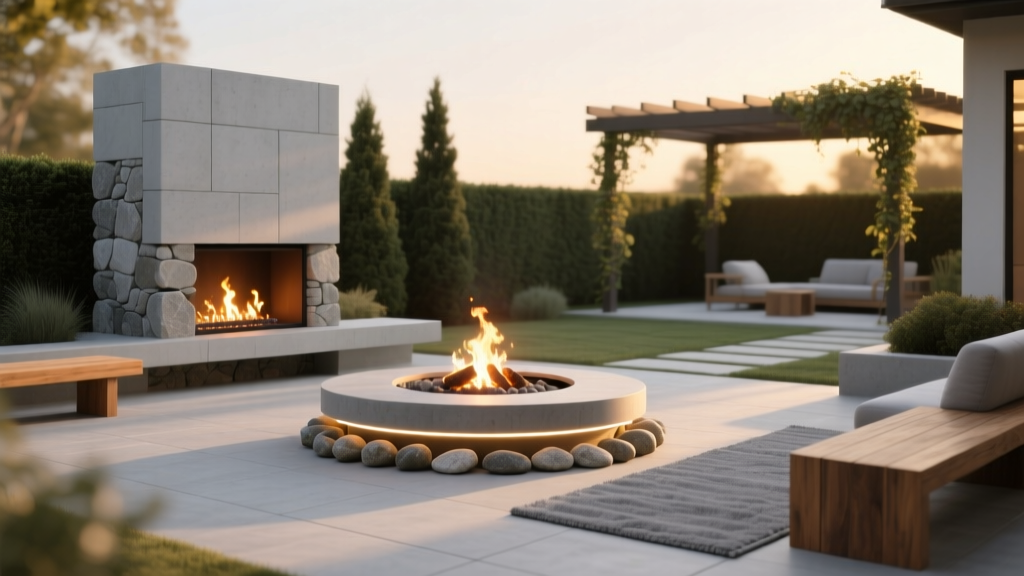
Outdoor Fireplace and Fire Pit Ideas - The Decor Mag
An outdoor fireplace or fire pit changes how you use your patio, garden, or yard. It adds warmth, atmosphere, and a natural gathering point—turning an outdoor space into a true outdoor living room. Whether you’re hosting neighbors for s’mores, sharing a quiet glass of wine on a crisp fall evening, or simply extending patio season by a few months, fire features deliver comfort and instant ambiance.
Beyond the glow, a well-designed fire element can solve real layout challenges. It anchors seating, creates “zones” in open yards, and makes even small patios feel intentional. The best part: there are fire pit ideas for almost every budget, from portable propane bowls to full masonry outdoor fireplaces with built-in seating and lighting.
Below you’ll find practical outdoor fireplace and fire pit ideas—plus material recommendations, furniture pairings, plant suggestions, climate considerations, and the common mistakes that can make a beautiful setup frustrating to live with.
Outdoor Fireplace vs. Fire Pit: Choose the Right Fire Feature
Both can elevate patio living, but they function differently. Start by deciding how you want the space to feel and how you’ll use it year-round.
Outdoor Fireplace: Best for Structure, Privacy, and Shoulder Seasons
- More wind protection: A vertical chimney helps draw smoke upward and shields the flame.
- Architectural impact: Works like an outdoor “feature wall” and can improve privacy.
- Heat direction: Radiates forward, making seating arrangements more defined.
- Ideal for: Covered patios, outdoor rooms, smaller yards needing a focal point, and cooler climates.
Fire Pit: Best for Social Seating and Flexible Layouts
- 360-degree gathering: Perfect for conversation and group seating.
- More design styles: From rustic stone circles to sleek gas fire tables.
- Often simpler installation: Especially propane or kit-based gas options.
- Ideal for: Open lawns, larger patios, families who entertain, and casual backyard landscapes.
Budget Snapshot (Typical Ranges)
- Portable propane fire bowl: $150–$600
- Wood-burning steel fire pit: $200–$1,000
- Built-in paver/stone fire pit (DIY kit): $600–$2,500
- Gas fire table: $800–$3,500
- Prefabricated outdoor fireplace (gas or wood): $2,500–$8,000
- Custom masonry outdoor fireplace: $8,000–$25,000+
Design Ideas That Make Fire Features Feel Intentional
1) The Classic Conversation Circle
A round layout feels welcoming and keeps sightlines open—ideal for patios and garden rooms.
- Best fire feature: Round stone fire pit or low concrete bowl
- Furniture recommendation: 4–6 deep lounge chairs with cushions (weather-resistant olefin or solution-dyed acrylic)
- Layout tip: Keep 24–30 inches between chair edges for circulation; keep seat fronts 30–36 inches from the fire pit edge for comfort and safety.
2) Outdoor Fireplace as a “Living Room Wall”
Use a fireplace to define an outdoor room, especially on a large patio that feels exposed.
- Pair with: A 7'–9' outdoor rug, sofa + two club chairs, and a coffee table that’s heat-safe (powder-coated aluminum or concrete composite)
- Add-ons: Built-in wood storage niche, TV mount (only with proper heat clearance), and symmetrical sconces for evening lighting
- Material recommendation: Stone veneer over masonry or a stucco fireplace with a concrete hearth for a modern patio design
3) The Dining-Adjacent Fire Feature
If you entertain, place a fire element near (but not too near) the dining zone to keep guests lingering after dinner.
- Best fire feature: Linear gas fire pit or fire table
- Placement rule: Keep at least 10–15 feet from the dining table to avoid smoke and excessive heat.
- Furniture recommendation: Low-profile sectional or bench seating for flexible group sizes
4) Sunken Fire Pit Lounge (High Impact)
A sunken seating area feels custom and luxurious, and it helps block wind—excellent for year-round outdoor living in cooler or breezier regions.
- Best fire feature: Gas fire pit (cleaner and easier for enclosed areas)
- Materials: Segmental retaining wall blocks, natural stone caps, and paver flooring with proper drainage
- Comfort upgrade: Integrated step lights and a hidden drainage channel
5) Small Patio Fire Pit Ideas That Don’t Crowd the Space
Compact patios can absolutely handle fire—just keep scale and clearances in check.
- Go vertical: Choose a slim outdoor fireplace or a tall chiminea-style unit
- Choose multi-use pieces: A fire table that doubles as a coffee table with a burner cover
- Furniture: Two lounge chairs + a small loveseat beats a bulky sectional in tight spaces
- Surface: Use porcelain pavers or concrete for a clean, fire-safe base
Materials That Hold Up Outdoors (And Look Better Over Time)
Fire Pit and Fireplace Surround Materials
- Natural stone (granite, bluestone, limestone): Timeless, durable, and ideal for upscale landscaping designs. Bluestone is a favorite for patios; granite handles freeze-thaw well.
- Concrete (cast-in-place or precast): Modern, versatile, and budget-friendly. Seal it to reduce staining and moisture absorption.
- Brick: Classic and charming for traditional outdoor living spaces. Use fire brick where flame contact occurs.
- Steel (Corten or powder-coated): Sleek and contemporary. Corten develops a protective rust patina; powder coat offers color options.
- Pavers: Great for DIY fire pit kits and patios. Choose concrete pavers rated for exterior freeze-thaw if you live in cold climates.
Fuel Options: Wood, Propane, or Natural Gas?
- Wood-burning: The crackle and scent are unbeatable, but expect smoke, ash cleanup, and wood storage needs. Best for larger yards and areas with fewer restrictions.
- Propane: Clean and easy with on/off control—excellent for patios and smaller outdoor living areas.
- Natural gas: Most convenient for daily use and entertaining, but requires professional installation and a gas line.
Best Patio Flooring Around Fire Features
- Porcelain pavers: Low maintenance, stain-resistant, and modern. Great for year-round patios.
- Concrete: Affordable and flexible; broom-finish provides traction.
- Natural stone: Premium look; choose textured finishes for slip resistance.
- Avoid: Composite decking too close to wood-burning pits without proper protection and clearances.
Furniture and Accessories That Complete the Fire Zone
Best Seating Styles for Fire Pit Areas
- Deep lounge chairs: Ideal for conversation circles and small patios.
- Outdoor sectional: Great for linear gas fire pits and outdoor fireplaces (keep fabric away from direct heat).
- Built-in benches: Space-efficient and cohesive; add outdoor cushions in quick-dry foam.
Practical Add-Ons for Comfort
- Side tables: Every seat needs a landing spot for drinks—choose aluminum, ceramic, or concrete.
- Outdoor lighting: Mix pathway lights, step lights, and dimmable string lights for layered ambiance.
- Storage: A weatherproof deck box for blankets, lighters, and roasting sticks keeps the area tidy.
- Textiles: Use fade-resistant outdoor pillows and throws; store them in rainy seasons.
Plants and Landscaping Ideas Around Fire Features
Landscaping around fire pits should balance softness with safety. Choose plants that handle heat, occasional dryness, and foot traffic.
Heat-Tolerant, Low-Litter Plant Picks
- Lavender: Fragrant, drought-tolerant, and perfect for Mediterranean-style patios.
- Ornamental grasses (switchgrass, feather reed grass): Adds movement; keep trimmed back for fire safety.
- Rosemary (in warm climates): Hardy, aromatic, and great near seating areas.
- Agave and yucca (arid climates): Bold architectural forms for modern outdoor design.
- Boxwood or inkberry holly: Structured evergreen backdrop near an outdoor fireplace wall.
Smart Layouts: Soft Edges Without Fire Hazards
- Create a non-combustible ring: Gravel, decomposed granite, or pavers for a 3–5' border around the fire feature.
- Use planters as space dividers: Concrete or glazed ceramic planters can define zones without building walls.
- Skip resin mulch near flames: Choose rock mulch or stone chip for better fire safety.
Climate and Seasonal Considerations for Year-Round Patio Living
Cold and Snowy Climates
- Choose freeze-thaw resistant materials: Granite, quality concrete pavers, and properly installed stone with correct base prep.
- Plan for snow storage: Don’t place the fire pit where shoveled snow piles will soak the patio base.
- Winter comfort: Add wind screens, heavier throws, and consider a gas fire feature for quick, reliable heat.
Hot, Dry, and Fire-Prone Regions
- Check local burn restrictions: Some areas limit wood burning or require spark arrestors.
- Prefer gas: Propane or natural gas is cleaner and easier to control.
- Use non-combustible hardscaping: Gravel bands, stone seating walls, and minimal dry plant debris near the flame.
Humid, Coastal, or Rainy Climates
- Corrosion-resistant metals: Marine-grade stainless steel, powder-coated aluminum, or sealed steel components.
- Protect cushions: Quick-dry foam and breathable covers prevent mildew.
- Drainage matters: Grade patios away from the fire feature; use permeable joints or channel drains where needed.
Maintenance Checklist: Keep It Safe and Looking Great
- Weekly (during season): Remove ash (wood), wipe soot stains early, check for debris in burners (gas).
- Monthly: Inspect ignition, hoses, and fittings; tighten loose stone caps; clean burner ports with a soft brush.
- Seasonally: Reseal concrete or stone if recommended; store propane tanks properly; cover fire features when not in use.
- Annually: Have a professional inspect gas lines and valves; check chimney and spark arrestor on fireplaces.
Common Mistakes to Avoid
- Placing the fire feature too close to the house: Keep appropriate clearances from siding, railings, and eaves—especially for wood-burning designs.
- Ignoring wind direction: A fire pit that constantly blows smoke into seating won’t get used. Test your prevailing wind before final placement.
- Choosing the wrong scale: Oversized fire pits overpower small patios; tiny pits feel underwhelming in large yards.
- Forgetting circulation space: Plan comfortable walkways (typically 36"+) so guests aren’t squeezing behind chairs near heat.
- Using high-litter plants nearby: Drop-prone trees and shrubs create constant cleanup and can clog burners.
- Skipping a solid base: Settling pavers or uneven stone around a fire pit becomes a trip hazard and looks sloppy fast.
FAQ: Outdoor Fireplaces and Fire Pits
What’s safer: a gas fire pit or a wood-burning fire pit?
Gas fire pits are typically easier to control (instant on/off, fewer embers, less smoke). Wood-burning pits can be safe too, but they require more attention, spark management, and cleanup. Always follow manufacturer guidelines and local codes.
How much space do I need around a fire pit?
Aim for a clear, non-combustible zone around the fire feature and comfortable seating distance. A common planning guideline is keeping seat fronts about 30–36 inches from the fire edge, with walkways of 36 inches or more behind seating when possible.
Can I put a fire pit on a paver patio or concrete slab?
Yes—pavers and concrete are common bases for outdoor fire pits. Confirm the fire pit’s heat requirements, protect surfaces if needed, and avoid placing wood-burning pits directly over materials that can crack from heat without proper design.
What are the best low-maintenance fire pit materials?
Gas fire pits with stainless steel burners, fire glass or lava rock, and surrounds made from concrete, stone, or porcelain pavers tend to be low maintenance. For wood-burning pits, look for heavy-gauge steel or stone designs with easy ash removal.
Do outdoor fireplaces add home value?
They can, especially when integrated into a cohesive outdoor living space with quality hardscaping, lighting, and seating. Value depends on your market, the build quality, and whether the feature fits the scale of your yard and patio.
Next Steps: Plan a Fire Feature You’ll Use Every Season
Start by deciding how you want to gather—conversation circle, outdoor living room, or dining-adjacent lounge—then match the fire feature to your climate, maintenance preferences, and patio layout. Choose durable materials, plan comfortable clearances, and finish the space with practical seating, layered lighting, and heat-tolerant landscaping for a polished outdoor design that works from spring through winter.
For more patio living inspiration, landscaping ideas, and outdoor room design guides, explore the latest outdoor features on thedecormag.com.
More Articles
 Outdoor Pergola Fairy Light Draping Guide - The Decor Mag
 Best Outdoor String Light Arrangements - The Decor Mag
 How to Design a Dragonfly Garden - The Decor Mag
 How to Design a Hummingbird Garden - The Decor Mag
 Outdoor Gazebo Design Inspiration - The Decor Mag
 Safety vs Scheme: Balancing Aesthetic Vision with Real-World Outdoor Living Protection
 The Outdoor Living Room Tools Checklist: Essential Gear for Designing, Building, and Maintaining Your Backyard Living Space
 How to Design a Rain Garden - The Decor Mag
 Best Outdoor Bar Mint Sprig Glass Ideas - The Decor Mag
 How to Design a Fern Garden - The Decor Mag