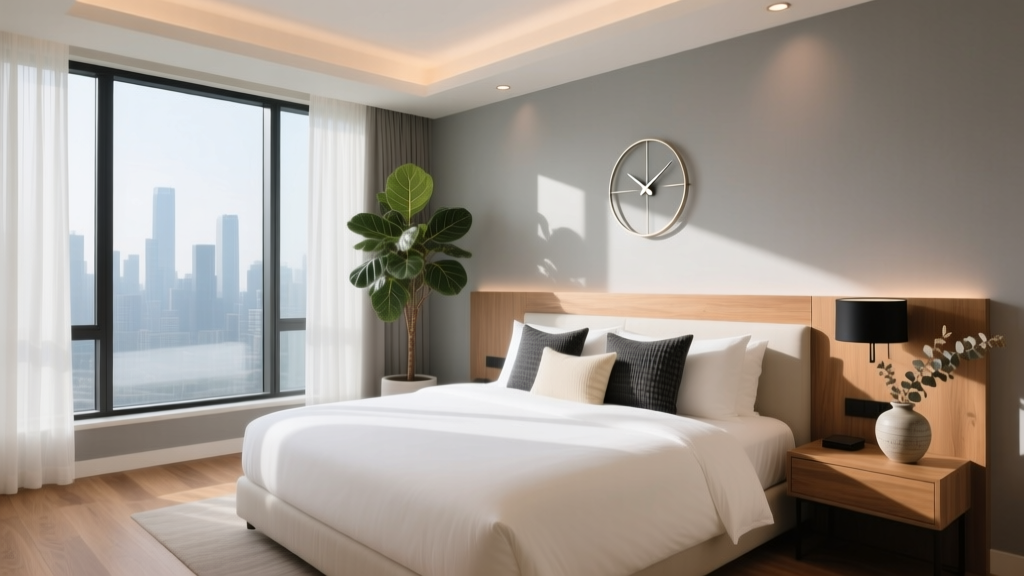
Hotel Bedroom Decor: Transform Your Space (2026)
There’s a reason you sleep so well in a great hotel. The room is designed to feel quiet, orderly, and effortlessly comfortable—three ingredients that directly support better sleep quality. When your bedroom looks and feels calming, your brain gets a clear signal that it’s time to downshift. That lowers stress, reduces mental “noise,” and makes it easier to fall asleep and stay asleep.
A hotel-style bedroom isn’t about copying a trend or buying the most expensive pieces. It’s about creating a sleep-friendly environment through thoughtful bedroom design: balanced lighting, tactile bedding, clutter-free layout, and a color palette that softens the edges of your day. Whether you’re a homeowner refining your primary suite or a renter upgrading a small room, you can recreate that polished, restorative feel with practical choices and a few strategic upgrades.
This guide breaks down the key elements of hotel bedroom decor—bedding, furniture, lighting, colors, layout, and wellness-focused touches—so you can build a bedroom that looks elevated and supports deeper rest.
Start With the Hotel Mindset: Calm, Clean, and Intentional
The best hotel rooms feel curated, not crowded. Before shopping, decide what you want the room to do: support sleep, reduce stress, and feel like a retreat. That clarity makes every design decision easier.
A simple reset: the “clear surface” rule
- Keep nightstands mostly clear (lamp, book, water, one small tray).
- Limit dresser tops to 1–3 objects (a lamp, a catchall, a framed photo).
- Remove anything that visually reads as “to-do” (mail, laundry piles, work papers).
Budget range for the reset
- $0–$50: Declutter, add a tray or small lidded box for essentials.
- $50–$200: Matching hangers, under-bed storage bins, cable management clips.
Choose a Hotel-Worthy Bed Setup (The True Centerpiece)
If you change only one thing, change the bed. Hotel vibes are built on plush layers, crisp lines, and breathable materials that help regulate temperature—one of the most overlooked factors in sleep wellness.
1) Mattress and topper: supportive, not sinky
Hotels often use medium to medium-firm support, then add softness with a topper. That combination reduces pressure points while keeping your spine aligned.
- Mattress feel: Medium or medium-firm tends to suit most sleepers.
- Topper types:
- Down-alternative fiberfill: plush, budget-friendly, easy care.
- Latex: responsive, breathable, great for hot sleepers.
- Memory foam (ventilated): pressure relief; choose cooling versions if you run warm.
Budget range: Topper $80–$350; quality mattress $700–$2,500+ (often the best long-term investment for sleep quality).
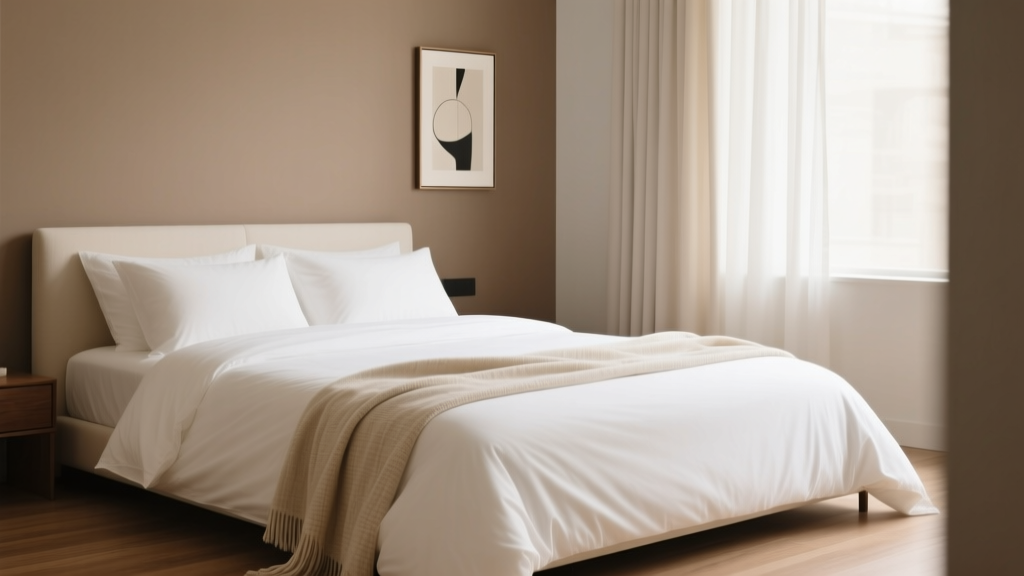
2) Bedding materials that feel crisp, cool, and elevated
For a luxury hotel bedroom feel, prioritize natural, breathable textiles. They’re comfortable and help your sleep environment stay cooler and drier.
- Sheets:
- Long-staple cotton percale (250–400 thread count): classic hotel crispness, ideal for warm sleepers.
- Cotton sateen: smoother, slightly warmer, more drape.
- Linen: airy, relaxed-luxury texture, excellent temperature regulation.
- Duvet insert: Choose by warmth level (lightweight, all-season, winter).
- Duvet cover: Cotton percale or linen for breathable comfort.
- Pillows: Mix firmness levels to suit how you sleep (side sleepers often prefer firmer, back sleepers medium, stomach sleepers softer/low loft).
3) The hotel layering formula (easy and reliable)
- Fitted sheet (smooth, tightly fitted).
- Flat sheet (for that tucked-in, crisp feeling).
- Duvet insert + cover (fluffed daily).
- Optional quilt or coverlet folded at the foot for structure.
- 2 sleeping pillows per person (practical, supportive).
- 2–4 accent pillows max (keep it calm, not crowded).
- Throw blanket in a soft texture (cashmere blend, brushed cotton, or waffle weave).
Budget range for a full bedding refresh:
- $150–$350: Quality cotton sheet set + duvet cover + 2 good pillows.
- $350–$900: Add a premium duvet insert, topper, upgraded pillows, and a coverlet.
- $900+: Long-staple cotton or linen sets, multiple pillow options, higher-end insert materials.
Pick a Calming Color Palette That Signals “Rest”
Hotel bedroom design typically uses restrained, soothing tones that reduce visual stimulation. Color choices affect perceived brightness and calm—both tied to how quickly your body settles at night.
Hotel-inspired palettes that work in real homes
- Soft neutral: warm white, oatmeal, sand, camel, and matte black accents.
- Cool calm: pale greige, fog gray, soft white, and muted navy details.
- Nature-toned: warm white + sage + natural oak + linen textures.
- Modern moody (still sleep-friendly): deep charcoal or inky blue on one wall paired with creamy bedding and warm lighting.
Paint and finish tips
- Choose matte or eggshell finishes for softer light reflection.
- Avoid overly bright whites if your room gets harsh daylight—try warm whites instead.
- If you rent, mimic paint with textiles: curtains, bedding, and a large rug in the same palette.
Lighting: The Secret to a True Hotel Bedroom Atmosphere
Lighting influences your circadian rhythm, melatonin production, and overall sleep environment. Great hotels layer light so you can move from bright and functional to dim and cozy without thinking.
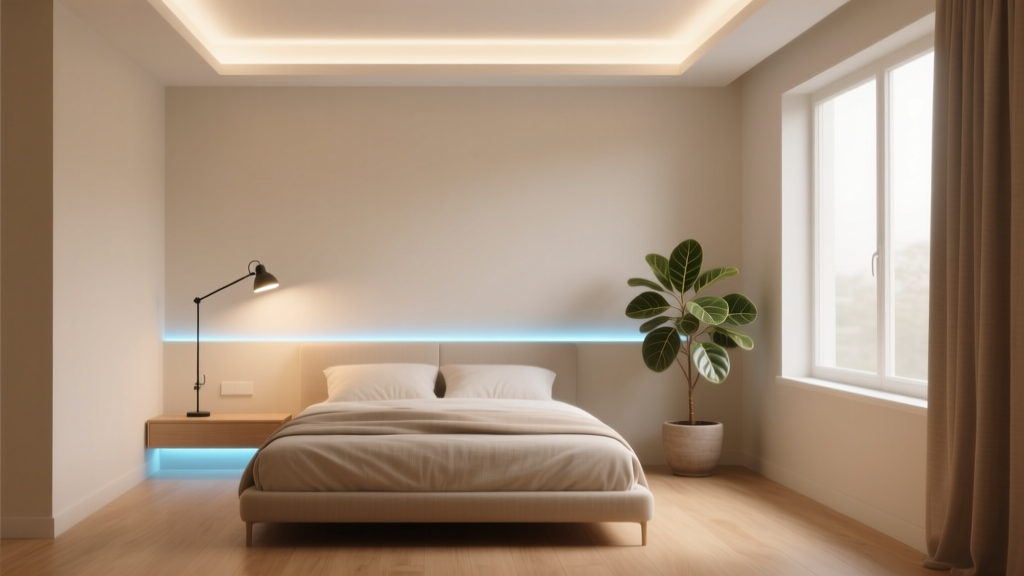
Use three layers of light
- Ambient: overhead fixture or semi-flush mount for general light.
- Task: bedside lamps or wall sconces for reading.
- Accent: a soft glow (picture light, small table lamp on a dresser, or LED strip hidden behind a headboard).
Hotel lighting specs (simple rules that work)
- Warm color temperature: 2700K (soft) to 3000K (warm-white).
- Dimmers: add them whenever possible for instant mood control.
- Bulbs: choose high-quality LED bulbs with good color rendering (CRI 90+ if you can).
Budget range:
- $30–$80: Warm LED bulbs + plug-in dimmer + soft bedside lamp shades.
- $80–$250: Matching bedside lamps or plug-in wall sconces.
- $250–$800+: Hardwired sconces, statement flush mount, layered lighting plan.
Sleep-friendly lighting habits
- Switch to low, warm light 1–2 hours before bed.
- Avoid bright overhead lighting at night—use bedside lamps instead.
- Keep a motion-activated night light for safe midnight trips without fully waking up.
Furniture and Layout: Make the Room Feel Spacious and Balanced
A hotel-style bedroom feels open because the layout is intentional. Clear pathways reduce friction and subconsciously lower stress—helpful for winding down.
Layout guidelines that mimic hotel flow
- Leave 24–36 inches of walking space around the bed when possible.
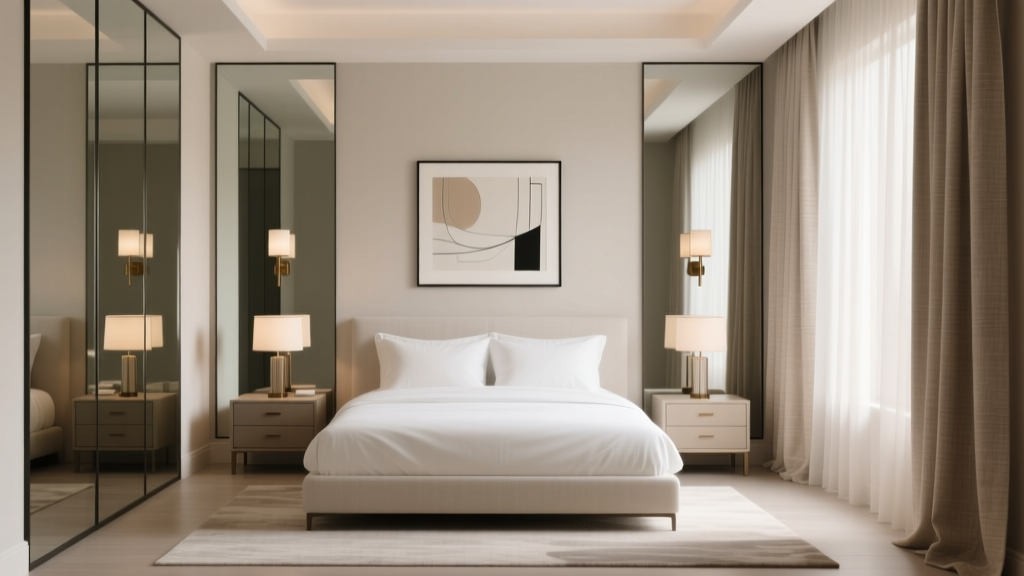
- Center the bed on the main wall for a grounded, symmetrical look.
- Use matching nightstands (or at least matching lamps) for visual calm.
- Keep one side “light” if the room is small: a slimmer nightstand or wall shelf.
Key furniture pieces (and what to look for)
- Headboard: Upholstered fabric or wood for a finished, hotel-like focal point. Look for performance fabric if you snack or have pets.
- Nightstands: Ideally with a drawer to hide chargers and clutter.
- Bench or ottoman at the foot of the bed: Adds polish and a place to set a tray or throw.
- Dresser or wardrobe storage: Clean-lined fronts, minimal hardware, and enough capacity to avoid overflow.
Budget range:
- $100–$400: Basic upholstered headboard, simple nightstands, storage solutions.
- $400–$1,200: Coordinated set (headboard + nightstands), bench, upgraded hardware.
- $1,200+: Custom headboard, solid wood casegoods, built-in closet systems.
Texture and Finishing Touches: Quiet Luxury Without Clutter
Hotels rely on texture—linen, wood, wool, leather—more than lots of decor. The result is a room that feels rich but restful.
High-impact, low-clutter upgrades
- Rug: A large area rug under the bed softens sound and feels warm underfoot. Aim for at least 8x10 for a queen bed if space allows (or 6x9 in smaller rooms).
- Window treatments: Layer sheers + blackout curtains for hotel polish and better sleep.
- Art: One large piece above the bed or a calm set of two—avoid overly busy imagery.
- Tray styling: A small tray on the nightstand corrals items (hand cream, book, glasses).
- Greenery: One easy plant (snake plant, pothos) for a fresh, spa-like feel.
Material recommendations that feel “hotel”
- Metals: brushed nickel, antique brass, matte black (choose one and repeat it).
- Wood tones: light oak for airy calm; walnut for warmth and depth.
- Textiles: cotton percale, linen, wool blends, velvet (sparingly).
Wellness Details: Make the Bedroom a Better Sleep Environment
Hotel vibes are great—hotel-level sleep is even better. A sleep-friendly bedroom design supports comfort, air quality, darkness, and quiet.
Temperature, sound, and air: the sleep trifecta
- Keep it cool: Many people sleep best around 60–67°F (adjust to your comfort).
- Add white noise: A dedicated sound machine or a fan can mask street noise.
- Improve air quality: Use a HEPA air purifier if allergies or dust affect your sleep.
Budget range:
- $20–$60: Basic fan, sleep mask, silicone earplugs.
- $60–$200: White noise machine, better blackout curtain liner.
- $150–$400: HEPA air purifier for a medium bedroom.
Keep electronics from stealing your rest
- Charge your phone in a drawer or across the room to reduce late-night scrolling.
- Use an analog clock or a dimmable bedside clock with a low-brightness display.
- If you work in your bedroom, create a “close-down” routine: hide the laptop, clear papers, dim lights.
Common Mistakes That Ruin the Hotel Feel
- Too many pillows and decorative items: Visual clutter cancels calm. Keep surfaces open.
- Cold, bright bulbs: 4000K–5000K lighting can feel clinical and disrupt your wind-down.
- Undersized rug: A small rug makes the room feel disjointed; go bigger if possible.
- Mismatched metals and wood tones everywhere: Limit finishes to 1–2 metal tones and 1–2 wood tones.
- Ignoring window treatments: Light leaks can reduce sleep quality. Prioritize blackout options.
- Buying “luxury” decor without upgrading touchpoints: You’ll feel the difference more in sheets, pillows, and lighting than in extra accessories.
FAQ: Hotel-Style Bedroom Design and Sleep Wellness
How can I make my bedroom look like a hotel on a budget?
Focus on the highest-impact changes first: crisp bedding (cotton percale), warm lighting (2700K bulbs), matching nightstand lamps, and decluttered surfaces. With $150–$300, you can often refresh sheets, add a duvet cover, and upgrade bulbs for an immediate hotel-style feel.
What type of sheets feel most like a hotel?
Cotton percale sheets (often 250–400 thread count) deliver that cool, crisp hotel sensation. Look for long-staple cotton for smoother, longer-lasting fabric.
Do blackout curtains really help sleep quality?
Yes. A darker sleep environment supports melatonin production and reduces wake-ups from streetlights or early sunrise. If full blackout curtains aren’t possible, try a blackout liner or a room-darkening shade paired with curtains.
What lighting should I avoid in a sleep-friendly bedroom?
Avoid very bright overhead lights at night and cool-toned bulbs (around 4000K+). Use warm, dimmable bedside lighting for evenings, and keep the brightest light for mornings.
What’s the easiest way to make a small bedroom feel like a luxury hotel room?
Go for symmetry and simplicity: a centered bed, two matching lamps (or sconces), one large piece of art, and a cohesive neutral palette. Use under-bed storage to keep clutter out of sight, and choose a rug large enough to anchor the bed.
How do I keep a hotel-style bedroom from feeling sterile?
Add warmth through texture: a linen duvet cover, a wool-blend rug, a soft throw, and warm wood tones. Keep decor minimal, but choose pieces that feel tactile and inviting.
Actionable Next Steps: Your 30-Minute Hotel Bedroom Upgrade
If you want results fast, start with a short, practical reset:
- Clear the nightstands and add one tray to hold essentials.
- Swap bulbs to warm 2700K lighting in bedside lamps.
- Make the bed like a hotel: smooth sheets, fluffed duvet, fewer decorative pillows.
- Add one texture (a coverlet, throw, or larger rug) to soften the room.
- Improve darkness with blackout curtains or a liner for a better sleep environment.
A hotel-feeling bedroom is really a well-designed sleep sanctuary: calming to look at, comfortable to touch, and supportive of consistent rest. Choose a few upgrades that enhance both bedroom decor and sleep quality, then build from there as your budget allows.
For more soothing bedroom design ideas, bedding guides, and sleep-friendly decor inspiration, explore the latest at thedecormag.com.
More Articles
 How to Mix Patterns on Your Bed - The Decor Mag
 Best Bedroom Mirror Placement Ideas - The Decor Mag
 Handmade Ceramics in Bedrooms (2026)
 Three-Layer Bedroom Lighting: Calm & Functional (2026)
 How to Choose Bedroom Sheet Thread Count - The Decor Mag
 How to Create Symmetry in Bedroom Design - The Decor Mag
 Coastal Bedroom Decor Inspiration - The Decor Mag
 How to Choose the Right Bed Frame - The Decor Mag
 Bedroom Plaster Sconce Wall Application - The Decor Mag
 Natural Bedroom Materials: Stylish Ideas for 2026