How to Create Symmetry in Bedroom Design - The Decor Mag
When a bedroom feels calm, your nervous system can soften into rest. Symmetry plays a quiet but powerful role in that sensation. A balanced room reduces visual “noise,” helps your eyes settle, and creates a sense of order—an often-overlooked ingredient in a sleep-friendly bedroom design.
Whether you’re furnishing a new space or trying to make a rental feel more intentional, symmetry gives you an easy framework for better decisions. Instead of endlessly rearranging decor, you’ll be working with a simple principle: distribute visual weight evenly. The result is a bedroom that looks composed, feels soothing, and supports sleep quality by making the environment more predictable and less stimulating.
This guide breaks down how to create symmetry in bedroom design with practical layouts, furniture and lighting recommendations, budget ranges, and wellness-minded tips—so your room not only looks better, it feels better at night.
What Symmetry Means in Bedroom Design (and Why It Helps You Sleep)
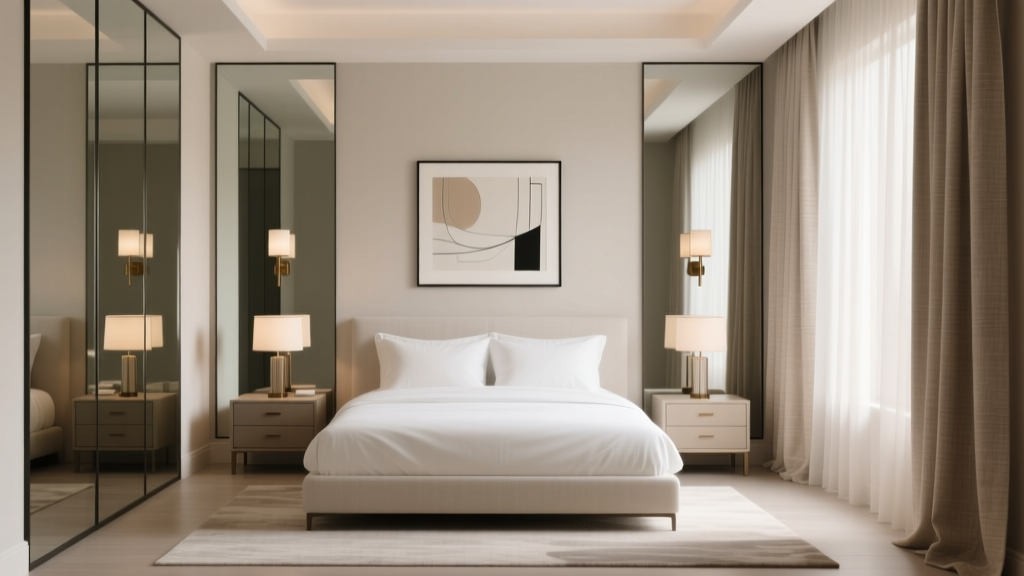
Symmetry is the balanced arrangement of elements across an axis—often the bed wall in a bedroom. In practice, it might mean matching nightstands on both sides of the bed, paired lamps, or artwork centered over the headboard. The goal isn’t perfection; it’s harmony.
Symmetry vs. Balance: What’s the Difference?
- Symmetry: Mirror-like repetition (two of the same item on each side).
- Asymmetrical balance: Different items that feel equal in visual weight (a tall lamp on one side balanced by a stack of books and a plant on the other).
For sleep wellness, symmetry is especially helpful because it:
- Reduces visual clutter and decision fatigue at bedtime.
- Creates a predictable environment, which can support relaxation.
- Makes the room feel “finished”, lowering the urge to keep tweaking the space.
Start with the Anchor: Bed Placement and a Clear Visual Axis
The bed is almost always the visual center of a bedroom. Building symmetry becomes much easier when the bed is placed intentionally.
Best Bed Placement for Symmetry
- Center the bed on the main wall when possible (the wall you see first when entering).
- Avoid crowding one side with a tight walkway and leaving the other side wide open. Aim for similar spacing.
- Keep the headboard wall simple so the eye reads it as one cohesive “scene.”
Sleep-friendly layout tip: If centering the bed isn’t possible (common in small bedrooms or rentals with awkward doors), create a “symmetry moment” around the bed itself—matching pillows, matching sconces, or two similar art pieces—so the bed still feels stable and grounded.
Recommended Clearances
- Walkway space: 24–30 inches on each side of the bed if you can; 18–24 inches works in tight rooms.
- Foot of bed: 30–36 inches for comfortable movement; 24 inches minimum.
The Classic Symmetry Formula: Matching Nightstands + Matching Lighting
If you do only one thing, do this. Matching nightstands and lighting instantly create symmetry in bedroom decor and make the room feel designed on purpose.
Nightstands: Size, Style, and Materials
Choose nightstands that match (or closely coordinate) in height and visual weight. Ideally, the top is level with the top of your mattress or 1–3 inches higher.
- Product types that work well:
- Two-drawer nightstands for hidden storage (best for a clutter-free sleep environment)
- Floating nightstands for small bedrooms
- Narrow drink-table style stands in ultra-tight spaces
- Materials for a calming bedroom:
- Solid wood or wood veneer (warm, timeless, grounding)
- Upholstered nightstands (softens sound and sharp edges)
- Matte lacquer or painted finishes (clean and light-reflective without glare)
Budget ranges (per pair):
- $150–$350: Flat-pack or simple wood/metal styles; prioritize sturdy drawer slides
- $350–$900: Better finishes, soft-close drawers, solid-wood elements
- $900–$2,000+: Solid hardwood, artisan details, premium hardware
Lighting: Lamps or Sconces (and Why Warm Light Matters)
Symmetrical lighting frames the bed and supports a healthier nighttime routine.
- Best product types:
- Matching table lamps with shades (soft diffusion for a cozy bedroom)
- Hardwired sconces or plug-in sconces (great for saving nightstand space)
- Adjustable swing-arm sconces (ideal for bedtime reading)
Sleep-friendly lighting specs:
- Bulb temperature: 2200K–2700K for warm, melatonin-friendly light
- Dimming: Use dimmable bulbs or smart bulbs to gradually lower brightness
- Shades: Linen, cotton, or parchment shades reduce harsh glare
Budget ranges (pair):
- $60–$180: Basic matching lamps or plug-in sconces
- $180–$500: Better materials (ceramic, linen shades), dimming options
- $500–$1,200+: Designer sconces, premium finishes, built-in dimmers
Symmetry Through Bedding: The Easiest Visual Reset
Bedding is a powerful tool for bedroom symmetry because it’s centered on the bed and easy to change. Even if your furniture can’t match perfectly (or you’re renting), bedding can create that “balanced” look immediately.
A Simple Layering Plan for a Symmetrical Bed
- Two matching sleeping pillows in the same fabric and fill (down-alternative is great for allergies).
- Two matching shams (euro or standard) to frame the headboard.
- One centered accent pillow or two smaller ones placed evenly.
- A duvet or quilt with even drape on both sides.
- A throw blanket folded neatly across the foot (centered or evenly offset).
Materials That Support Sleep Comfort
- Cotton percale: crisp, breathable, ideal for hot sleepers
- Cotton sateen: smoother and slightly warmer
- Linen: temperature-regulating, relaxed texture, great for year-round comfort
- Wool or cotton throws: breathable warmth without overheating
Budget ranges:
- $80–$200: Basic sheet set + quilt; focus on 100% cotton
- $200–$500: Higher-quality percale/linen, better stitching, nicer drape
- $500–$1,200+: Premium linen, long-staple cotton, elevated craftsmanship
Color and Symmetry: Create a Calm, Cohesive Palette
Symmetry isn’t only about matching objects—it’s also about repeating color in a predictable way. A cohesive color palette reduces visual stimulation and supports a restful bedroom environment.
How to Use Color Repetition
- Repeat one main neutral (warm white, soft beige, greige, pale taupe) across walls, bedding, and curtains.
- Add one secondary color in pairs (two bedside lamps with the same shade tone, two matching pillows, two framed prints).
- Keep contrast gentle near the bed to avoid a “high-alert” look.
Sleep-Friendly Color Ideas
- Soft blue-gray: serene and cooling
- Sage or muted olive: grounded, nature-inspired
- Warm taupe: cocooning without feeling dark
- Dusty blush or clay: soft warmth, especially nice with natural wood
Tip for renters: Use removable wallpaper behind the bed or symmetrical curtain panels to build color structure without painting.
Symmetry Beyond the Bed: Rugs, Curtains, Art, and Seating
Once the bed wall looks balanced, extend symmetry gently throughout the room. The key is to repeat shapes and spacing rather than doubling every single object.
Rugs: Centering and Proportion
- Center the rug under the bed so equal rug shows on both sides.
- Common sizes:
- Queen bed: 8' x 10' (most balanced), 6' x 9' (tight), 9' x 12' (spacious)
- King bed: 9' x 12' (most balanced)
- Choose low-pile wool or a wool-blend for softness and durability; avoid overly shaggy rugs if you’re sensitive to dust.
Budget ranges:
- $150–$400: Synthetic blends; look for low-VOC certifications
- $400–$1,200: Wool or wool-blend, better density
- $1,200–$3,000+: Hand-knotted wool, heirloom quality
Curtains: Make the Window Feel Balanced
- Hang curtain rods wider than the window so panels stack evenly on both sides.
- Use two equal panels, even for small windows, to create symmetry.
- Pick lined curtains for light control; blackout lining supports melatonin production and deeper sleep.
Artwork and Mirrors: Center and Repeat
- Center one larger piece above the headboard, or use two matching frames side-by-side for mirrored symmetry.
- Keep frames consistent (same color/finish) for a calmer look.
- If you use a mirror, place it intentionally so it reflects light softly—not clutter.
Benches and Chairs: Add Function Without Visual Chaos
- A bench at the foot of the bed adds symmetry and gives you a landing spot for blankets.
- If you have room for seating, consider two small matching stools or a pair of compact chairs rather than one bulky chair that visually “leans” the room.
Practical Symmetry for Small Bedrooms and Rentals
You don’t need a large room to create symmetry. Small bedrooms often benefit the most because the eye has fewer places to “escape.”
Small-Space Strategies
- Go vertical: Use matching wall sconces and floating shelves as nightstands.
- Match shapes, not furniture: If you can’t fit two nightstands, use two matching wall-mounted lights and keep the bedding perfectly balanced.
- Use a storage bed: It replaces the need for extra dressers, reducing visual clutter.
- Choose slim profiles: Narrow nightstands (10–14 inches wide) can still look intentional when paired.
Rental-Friendly Product Types
- Plug-in sconces with cord covers
- Peel-and-stick wallpaper for a centered headboard wall
- Removable hooks for symmetrical art placement
- Tension rods or no-drill brackets for curtains (where appropriate)
Sleep Wellness Tips That Pair Naturally with Symmetry
Symmetry sets the stage visually; these additions support the actual sensory experience of rest.
- Prioritize darkness: Blackout curtains or layered window treatments reduce sleep disruptions.
- Lower nighttime stimulation: Keep surfaces symmetrical and minimally styled—one book, one candle, one tray per side at most.
- Choose low-VOC materials: Especially for rugs, paint, and pressed-wood furniture to support cleaner bedroom air quality.
- Reduce bedroom noise: Upholstered headboards, curtains, and rugs soften sound reflections.
- Keep cords tidy: Symmetry breaks instantly when cords sprawl; use cord clips or nightstands with cable cutouts.
Common Mistakes to Avoid
- Matching everything too literally: A bedroom can feel stiff if every item is identical. Keep key pairs (nightstands, lights), then add subtle variation through texture.
- Ignoring scale: Two tiny lamps on large nightstands (or vice versa) won’t feel balanced. Match the size of lighting and furniture to the bed’s visual weight.
- Over-accessorizing both sides: Symmetry doesn’t mean doubling clutter. Too many mirrored objects creates busy energy.
- Centering the bed but not the rug: A misaligned rug makes the whole room feel “off,” even if everything else matches.
- Using cool, bright bulbs at night: 4000K–5000K light can feel harsh and may interfere with melatonin production.
- Forgetting function: If one side has a lamp and the other doesn’t, someone ends up living with inconvenience. Symmetry should make the room work better, not just look better.
FAQ: Symmetry in Bedroom Design
Do my nightstands have to match exactly?
No. For a cohesive bedroom decor look, matching is easiest, but you can use two different nightstands if they share similar height and visual weight. Tie them together with matching lamps or matching hardware.
How do I create symmetry if my bed is against a corner?
Build symmetry on what you can control: balanced bedding (paired pillows/shams), a centered piece of art above the bed, and a matching pair of sconces. You can also add a slim wall shelf on the open side to mimic a nightstand.
What’s the best lighting for a sleep-friendly bedroom?
Warm, dimmable lighting is ideal—look for 2200K–2700K bulbs, shaded fixtures, and dimmers or smart bulbs for gradual wind-down. Matching bedside lights also help the room feel calm and intentional.
Can symmetrical design feel too formal?
It can, but texture keeps it relaxed. Mix in soft materials like linen bedding, a wool rug, a boucle bench, or a woven basket. Symmetry provides structure; texture provides comfort.
What’s a quick, budget-friendly way to add symmetry?
Add a matched pair where the eye naturally lands: two pillows, two lampshades, two identical frames, or two curtain panels. Even a pair of matching plug-in sconces can dramatically upgrade a bedroom layout without major furniture costs.
Next Steps: A Simple Symmetry Checklist
If you want a calmer, more sleep-supportive bedroom design, use this checklist tonight or this weekend:
- Center the bed as much as your layout allows.
- Add (or align) two nightstands with similar height and depth.
- Choose paired bedside lighting with warm, dimmable bulbs.
- Reset bedding into a balanced arrangement (matching shams, even drape).
- Center the rug and simplify surfaces to reduce visual clutter.
- Finish with blackout curtains or lined drapes for a darker sleep environment.
Symmetry doesn’t demand a perfect room—it offers a calming structure that makes your bedroom feel steady, intentional, and easier to rest in. For more ideas on bedroom decor, sleep-friendly lighting, and restful layouts, explore more inspiration on thedecormag.com.
More Articles
 How to Choose Bedroom Sheet Thread Count - The Decor Mag
 Best Bedroom Bedside Reading Stack - The Decor Mag
 How to Create a Bedroom That Feels Warm - The Decor Mag
 How To Start Living Room Ideas: A Practical, Step-by-Step Framework for Real Homes
 Best Bedroom Essential Oil Blend for Sleep - The Decor Mag
 Best Bedroom Sleep Temperature Guide - The Decor Mag
 Stylish Bedroom Design for Hot Summers
 Bedroom Natural Stone Nightstand Top - The Decor Mag
 Best Bedroom Color Palettes for Relaxation - The Decor Mag
 Bedroom Limewash Bedroom Wall Treatment - The Decor Mag