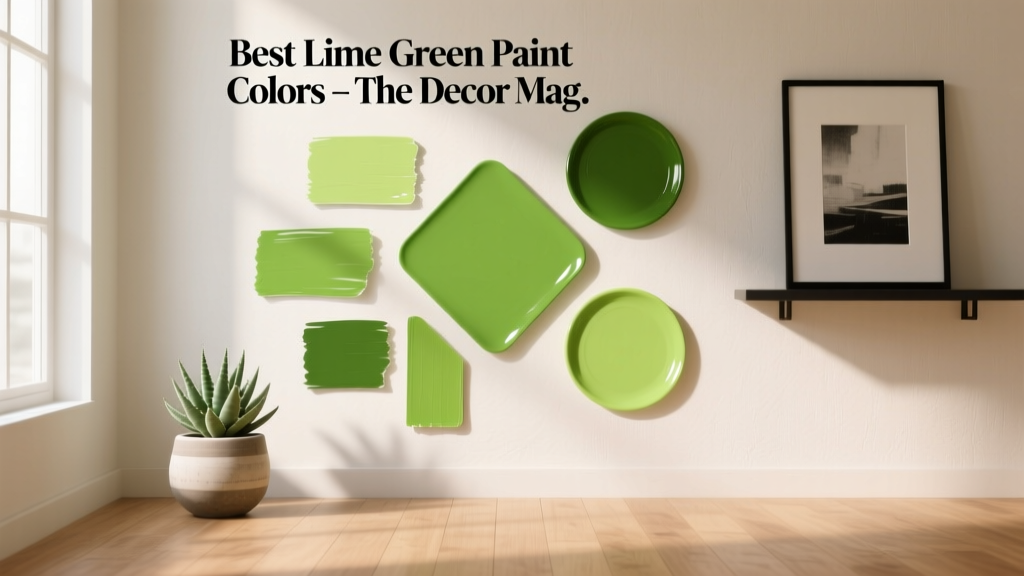
Best Lime Green Paint Colors - The Decor Mag
Lime green is one of those rare paint colors that can feel both playful and polished—fresh enough to wake up a tired room, yet sophisticated when paired with the right finishes. Homeowners often shy away from it because it reads “bold,” but lime is less about shouting and more about energy: the crispness of citrus, the snap of new leaves, the optimism of sunshine filtered through greenery.
This topic matters because lime green sits in a tricky zone of color perception. Lighting, undertones, and surrounding materials can swing it from bright and modern to sour or fluorescent. When you understand the color theory behind lime and apply it with intention—on the right wall, in the right sheen, alongside the right neutrals—lime green becomes a versatile tool for modern interior color design.
Whether you want a statement powder room, a cheerful kitchen nook, or a contemporary front door, these are the best lime green paint colors to consider, plus practical guidance for building a cohesive color scheme.
What Makes a Paint Color “Lime Green”?
Lime green typically lives between yellow-green and green on the color wheel, with a noticeable yellow influence. In paint terms, it’s often:
- High-chroma (more saturated) than sage, olive, or moss
- Higher value (lighter) than emerald or hunter greens
- More energetic than muted “green-gray” designer favorites
Because lime green reflects a lot of light, it can amplify brightness in a room—great for dark corners, but potentially overwhelming in full sun. Think of lime as a “spotlight color”: use it intentionally, and it looks modern and tailored.
Color Psychology: Why Lime Green Works
Green is associated with balance, restoration, and nature. Lime green adds an extra layer of vitality thanks to its yellow undertone, which reads as optimistic and friendly. In practical terms:
- In kitchens, lime can feel clean, fresh, and appetite-friendly (especially near natural wood and white tile).
- In home offices, it can boost alertness and creative momentum—best used as an accent rather than four walls.
- In entryways, it delivers a memorable first impression without feeling heavy.
How to Choose the Right Lime Green Paint for Your Home
1) Check Undertones (Yellow vs. Green)
Lime greens can lean:
- More yellow (warmer, “citrus peel,” works well with creamy whites and warm metals)
- More green (cooler, “fresh leaf,” pairs well with crisp whites and chrome)
2) Consider Light Direction
- North-facing rooms: Lime can look cooler and slightly sharper. Balance with warm whites, rattan, oak, or brass.
- South-facing rooms: Lime can become very bright. Consider a slightly softened lime or use it as an accent wall.
- East-facing rooms: Morning light makes lime feel sunny; later it can dull. Choose a lime with enough clarity to hold up.
- West-facing rooms: Afternoon light can turn lime warmer and more intense—test before committing.
3) Pick the Right Sheen
- Matte/flat: Best for walls if you want lime to feel modern, not glossy or “neon.”
- Eggshell/satin: Great for kitchens, hallways, and kids’ spaces where durability matters.
- Semi-gloss: Ideal for trim, cabinets, and doors—lime looks crisp and intentional in higher sheen.
Best Lime Green Paint Colors (Designer-Approved Picks)
These lime green paint colors span bold citrus to softened chartreuse, with brand references to help you sample confidently. Always test with peel-and-stick samples or large swatches—lime is highly responsive to surrounding colors.
Benjamin Moore Lime Green Paint Colors
-
Benjamin Moore “Lime” (2021-10)
A true, bright lime with a clean, modern attitude. Best as an accent wall, on built-ins, or in a playful breakfast nook. -
Benjamin Moore “Chartreuse” (2024-10)
A classic yellow-green that reads “designer” when paired with crisp white trim and black accents. Excellent for a powder room or modern entry. -
Benjamin Moore “Spring Green” (2034-30)
Vibrant and youthful—ideal for a kid’s room, craft space, or a contemporary laundry room where you want energy and brightness.
Sherwin-Williams Lime Green Paint Colors
-
Sherwin-Williams “Lime Granita” (SW 6715)
A lively, citrus-forward lime that pairs beautifully with white subway tile, light oak, and brushed brass. Great for a kitchen accent wall or pantry door. -
Sherwin-Williams “Eco Green” (SW 6739)
A fresh green that can read lime-adjacent depending on lighting. Works well in sunrooms and plant-filled spaces where you want “fresh leaf” energy. -
Sherwin-Williams “Oh Pistachio” (SW 9121)
Softer than classic lime, with a friendly, approachable vibe. A smart choice if you love lime green but want a slightly more livable wall color.
Farrow & Ball (Chartreuse-Style Limes)
-
Farrow & Ball “Green Ground” (No. 206)
Not a neon lime—more of a refined yellow-green. Beautiful in traditional homes, especially with warm whites, natural linen, and antique wood. -
Farrow & Ball “Yeabridge Green” (No. 287)
A cheerful green with a sunny undertone that can feel lime-like in bright daylight. Great for cabinetry, mudrooms, and utility areas.
Behr Lime Green Paint Colors
-
Behr “Sour Apple”
A punchy, playful lime that shines as an accent in contemporary spaces—think bar carts, reading nooks, or a single focal wall. -
Behr “Limeade”
Bright and clean; pairs nicely with white, charcoal, and pale woods for a modern color scheme.
Real Room Examples: Where Lime Green Looks Best
Lime Green in a Kitchen: Fresh, Clean, Unexpected
Best uses: pantry door, island base, banquette wall, or a thin band of cabinetry.
Try this look:
- Cabinet/door: Sherwin-Williams Lime Granita (SW 6715) in satin
- Walls: warm white (creamy, not stark)
- Countertops: white quartz or light terrazzo
- Hardware: brushed brass or matte black
Design tip: Lime green loves natural wood. Add white oak stools or walnut open shelving to keep it grounded.
Lime Green in a Powder Room: Big Impact, Small Footprint
Powder rooms are ideal for bold paint colors because the commitment is contained. Lime green can feel high-end when layered with pattern and contrast.
- Walls: Benjamin Moore Chartreuse (2024-10) in matte
- Vanity: black, espresso, or natural oak
- Mirror: rounded shape with brass frame
- Extras: botanical wallpaper on the ceiling or behind open shelving
Lime Green in a Living Room: Use It as a Highlight
In living rooms, lime works best as an accent rather than an all-over wall color—unless the room is flooded with even light and you’re aiming for a fearless modern look.
Application scenarios:
- Paint the fireplace surround lime green to create a focal point
- Use lime on built-in bookcases and keep walls a soft neutral
- Try a single accent wall behind the sofa, balanced by textured textiles
Pair with: ivory, warm gray, camel leather, and black accents for a clean, editorial palette.
Lime Green in a Home Office or Creative Studio
Lime green supports mental alertness and feels energizing—use it to frame a zone for focus.
- Paint a desk wall or niche in Benjamin Moore Lime (2021-10)
- Keep adjacent walls soft white to avoid visual fatigue
- Add blue-green accessories (teal pens, art, or a rug) to cool the palette
Lime Green on a Front Door: Modern Curb Appeal
If you want to try lime without committing indoors, a front door is a smart entry point.
- Best finish: exterior-grade satin or semi-gloss
- Best pairings: white siding, charcoal trim, natural stone, or warm brick
- Hardware: black or aged brass
Winning Color Schemes with Lime Green
Lime green looks best when it has something to “bounce off” visually—neutrals, deep anchors, or complementary hues. Use these color combinations as a starting point:
1) Lime Green + Crisp White + Black (Modern Classic)
- White walls and trim keep lime feeling clean
- Black adds structure (frames, lighting, hardware)
- Works in kitchens, baths, and contemporary living rooms
2) Lime Green + Navy (High Contrast, Sophisticated)
- Navy stabilizes lime’s brightness
- Great for offices, teen rooms, and eclectic spaces
- Add brass for warmth and polish
3) Lime Green + Warm Wood + Cream (Organic Modern)
- Wood tones “earth” lime green
- Creamy whites soften the overall palette
- Ideal for Scandinavian-inspired or nature-forward interiors
4) Lime Green + Blush or Dusty Pink (Playful, Trend-Forward)
- A fresh, fashion-inspired pairing
- Use blush in textiles and art; keep lime to one key surface
Common Lime Green Paint Mistakes to Avoid
Lime green is forgiving when styled well, but it will highlight missteps quickly. Avoid these common errors:
-
Choosing lime based on a tiny swatch
Lime intensifies on a full wall. Test large samples in multiple areas of the room. -
Ignoring undertones in fixed finishes
Check your countertop, flooring, tile, and upholstery. A lime that leans too yellow may clash with cool gray tile; a greener lime may look sharp next to creamy travertine. -
Using lime on every wall in a high-glare space
In strong sunlight, lime can read fluorescent. Consider one focal wall or a softened lime (pistachio/chartreuse) instead. -
Pairing lime with the wrong white
Bright, blue-white can make some limes feel harsher. If the lime is very yellow, try a warmer white; if the lime is greener, crisp white can work beautifully. -
Forgetting a “grounding” color
Lime needs an anchor—charcoal, black, navy, or warm wood—to feel intentional rather than accidental.
Practical Application Tips for a Professional Result
- Start with accents: interior doors, built-ins, a bar area, or a mudroom bench before committing to a major open-plan wall.
- Use painter’s tape thoughtfully: lime edges should be crisp—clean lines make bold colors look more expensive.
- Balance saturation with texture: add linen curtains, wool rugs, cane, or matte ceramics to keep the room from feeling overly “graphic.”
- Repeat the color 2–3 times: a lime wall plus a pillow and a piece of art helps the color scheme feel cohesive.
- Pick the right trim strategy: white trim sharpens lime; matching trim softens it and can feel more modern in small spaces.
FAQ: Lime Green Paint Colors
Is lime green a good wall color for a whole room?
It can be, but it depends on light and room function. Lime green works best on all walls in smaller “moment” spaces (powder rooms, laundry rooms) or in rooms with balanced daylight. In large living areas, many homeowners prefer lime as an accent wall or on built-ins.
What neutrals go best with lime green paint?
Crisp white, warm off-white, light greige, and soft taupe are all reliable. The best neutral is the one that matches your lime’s undertone—warmer limes like creamy whites; greener limes can handle cleaner whites and cooler grays.
How do I keep lime green from looking neon?
Choose a lime that’s slightly softened (pistachio or chartreuse), use a matte finish on walls, and add grounding elements like natural wood, black accents, or a deep navy. Avoid pairing it with overly bright cool whites in high-sun rooms.
Does lime green work with gray flooring?
Yes, with the right lime. If your gray floor is cool/blue-leaning, choose a greener lime rather than a yellow-heavy one. Add warm wood and textiles to prevent the palette from feeling cold.
What are the best rooms for lime green paint?
Kitchens (accents), powder rooms, mudrooms, laundry rooms, home offices, and front doors are top choices. These spaces benefit from lime’s energetic color psychology and can handle bolder color schemes.
Should I use lime green in a north-facing room?
You can, but expect it to look cooler and sometimes sharper. Counterbalance with warm lighting (2700K–3000K), creamy whites, brass, and natural textures.
Next Steps: Make Lime Green Feel Effortless
Pick two to three lime green paint colors from the list above, then test them on multiple walls at different times of day. Build your color scheme around a grounding partner—warm wood, black, navy, or a soft neutral—and choose your sheen intentionally to control how much the color “pops.” Lime green is at its best when it’s styled, repeated, and given breathing room.
If you’re ready to keep refining your palette, explore more color guides, paint roundups, and interior color design tips on thedecormag.com.
More Articles
 How to Choose Colors for a Music Room - The Decor Mag
 Best Gray Paint Colors for 2026 - The Decor Mag
 Best Lilac Paint Colors for Gentle Spaces - The Decor Mag
 How to Choose Colors for a Courtyard - The Decor Mag
 Best Scarlet Paint Colors - The Decor Mag
 Best Burgundy Paint Colors - The Decor Mag
 The Ultimate Reading Guide: Science-Backed Strategies for Faster Comprehension, Retention, and Lifelong Engagement
 How to Create a Playful Color Palette - The Decor Mag
 Sage Green Paint: Most Versatile Neutral (2026)
 Best Yellow Paint Colors for Cheerful Rooms - The Decor Mag