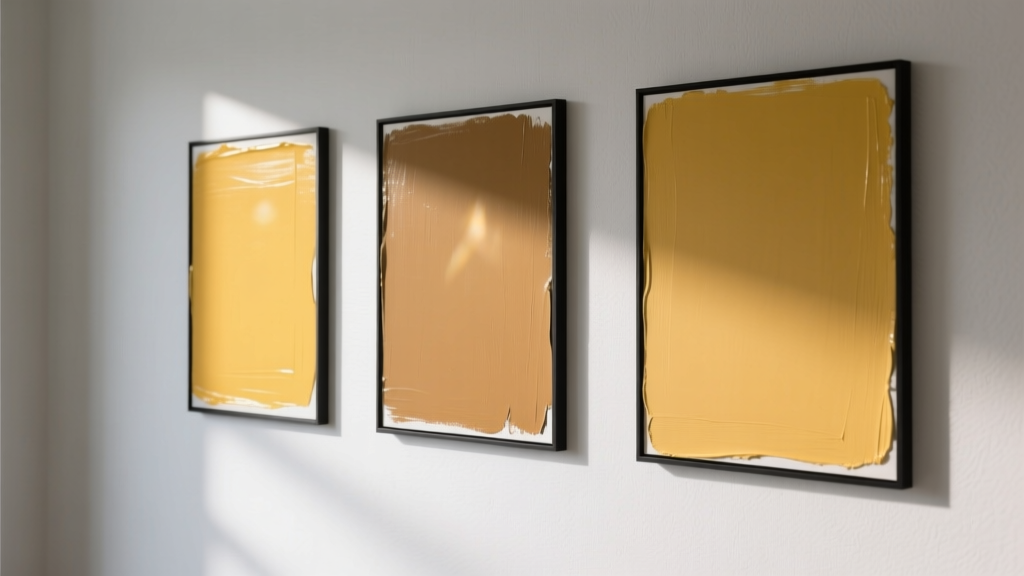
Best Mustard Yellow Paint Colors - The Decor Mag
Mustard yellow sits in that sweet spot between cheerful and sophisticated. It brings the optimism of yellow, but with a grounded, earthy depth that feels grown-up—more “collected over time” than “freshly decorated.” If you love warm, welcoming interiors but worry about yellow looking loud or dated, mustard is often the solution.
This shade also matters because it’s incredibly adaptable. In the right undertone, mustard yellow can read as vintage, modern, bohemian, or classic. It can glow like late-afternoon sunlight in a north-facing room, or it can lean cozy and muted alongside warm neutrals and natural materials. With a few color theory cues—undertones, light exposure, and contrast—you can pick a mustard yellow paint color that feels intentional and timeless.
Below, you’ll find standout mustard yellow paint colors from trusted brands, plus room-by-room ideas, foolproof color schemes, and the most common mistakes homeowners make when decorating with yellow.
What Counts as “Mustard Yellow” in Interior Design?
Mustard yellow is generally a deeper yellow with muted saturation and a noticeable earthy undertone—often leaning toward ochre, golden brown, or even green-gray. This is why mustard works so well with wood tones, leather, and stone: it shares similar “soil and sun” pigments.
Color psychology: why mustard feels so livable
- Optimism without intensity: Mustard carries yellow’s uplifting energy, but the added depth reduces visual sharpness.
- Comfort and nostalgia: Earthy yellows suggest heritage palettes—think antique textiles, worn leather, aged brass.
- Creativity and warmth: Mustard is stimulating (great for studios, kitchens, dining rooms) yet cozy enough for living rooms.
Undertones to watch: golden vs. earthy vs. green-leaning
- Golden mustards (more orange/red undertone) flatter warm woods and terracotta.
- Earthy ochres (more brown/neutral base) feel classic and pair beautifully with creams and charcoals.
- Green-leaning mustards feel moody and modern, especially with black, walnut, and olive accents.
How to Choose the Right Mustard Yellow Paint Color
1) Start with light exposure
- North-facing rooms: Cool light can gray out yellows. Choose a mustard with a warmer, golden undertone to keep it from feeling dull.
- South-facing rooms: Strong warm light can make mustard look more saturated. Consider a slightly muted ochre to avoid “too bright” moments.
- East-facing rooms: Morning sun boosts warmth; afternoons can look cooler. A balanced mustard works best.
- West-facing rooms: Afternoon light can intensify gold tones. Try a deeper mustard that holds its color without turning neon.
2) Decide: accent wall, full room, or cabinetry
- Accent wall: Choose a richer, deeper mustard for impact.
- Full room: Pick a muted mustard or ochre with a softer base so it feels enveloping, not overwhelming.
- Cabinetry/doors: Look for a mustard that reads strong and clean in different lighting; consider a satin finish for durability.
3) Sample smarter (mustard changes a lot)
- Paint a large sample (at least 2’ x 2’) on multiple walls.
- Check it next to your biggest fixed elements: flooring, countertops, sofa upholstery, and tile.
- Evaluate morning, midday, and evening—mustard can swing from “golden” to “olive” depending on bulbs and daylight.
Best Mustard Yellow Paint Colors (Designer-Approved Picks)
These paint color recommendations are well-known for their versatility and depth. Always confirm with real samples, since screens skew yellow significantly.
Benjamin Moore Mustard Yellow Paint Colors
- Benjamin Moore India Yellow (2153-30): A rich, confident mustard that feels historic yet fresh. Great for dining rooms, libraries, and statement built-ins.
- Benjamin Moore Golden Retriever (2165-30): Warm, approachable, and slightly softer than a bold mustard. Lovely in family rooms and hallways.
- Benjamin Moore Hawthorne Yellow (HC-4): A classic, heritage yellow with an earthy backbone. Reads elegant in traditional homes and stunning with dark wood trim.
- Benjamin Moore Dorset Gold (HC-8): Deeper and more golden-ochre; pairs beautifully with creams, navy, and aged brass.
Sherwin-Williams Mustard Yellow Paint Colors
- Sherwin-Williams Nugget (SW 6697): A bold, true mustard with a sun-baked quality. Ideal for accent walls or powder rooms with dramatic lighting.
- Sherwin-Williams Goldenrod (SW 6677): Bright but grounded—great when you want mustard energy without going too brown.
- Sherwin-Williams Anjou Pear (SW 6381): A yellow-green mustard that leans modern. Works well with black windows, walnut, and concrete.
- Sherwin-Williams Kingdom Gold (SW 6698): A deeper, more traditional gold-mustard that suits craftsman and colonial styles.
Farrow & Ball and Other Premium Mustard Yellows
- Farrow & Ball India Yellow (No. 66): A saturated, artisanal mustard with serious depth. Beautiful for cozy rooms and color-drenched looks.
- Farrow & Ball Sudbury Yellow (No. 51): A softer, gentler yellow with an old-world feel—excellent for kitchens and breakfast nooks.
- Farrow & Ball Yellowcake (No. 279): A modern, clean mustard that can feel surprisingly neutral in the right setting.
Budget-friendly mustards worth sampling
- Behr and Valspar both offer strong mustard/ochre families. Bring a fabric swatch (rug, curtain, or throw pillow) to the store and pull 3–5 chips that move from “golden” to “earthy” to see which undertone matches your home.
Real Room Examples: Where Mustard Yellow Looks Best
Living room: a warm neutral alternative
Mustard yellow can behave like a warm neutral when paired with the right supporting cast. Try it on walls with a warm white trim and layered textures.
- Paint idea: Benjamin Moore Hawthorne Yellow on walls
- Pair with: creamy whites, camel leather, walnut, black metal accents
- Style cue: add a patterned rug with hints of ochre and rust to “lock in” the color
Kitchen: mustard cabinetry with timeless appeal
Mustard yellow cabinets can be a showstopper, especially in kitchens that need warmth. Keep countertops and backsplash quieter to avoid visual competition.
- Paint idea: Sherwin-Williams Nugget on lower cabinets, warm white uppers
- Countertop: white quartz, soapstone, or warm-veined marble
- Hardware: aged brass or matte black for crisp contrast
Dining room: candlelight magic
Dining rooms love moody warmth—mustard makes skin tones look healthy and makes evening lighting feel intentional.
- Paint idea: Benjamin Moore India Yellow
- Best trims: creamy off-white or a deep, inky accent (navy or charcoal) on millwork
- Design tip: use warm bulbs (2700K) to enhance the golden undertone
Bedroom: cozy, not childish
Mustard in a bedroom works best when it’s softened with textiles and grounded by deeper colors.
- Paint idea: Farrow & Ball Sudbury Yellow for a calmer look
- Color scheme: mustard + oatmeal linen + olive or deep teal accents
- Placement: consider a mustard headboard wall rather than full-room color if you’re light-sensitive
Entryway/hallway: instant warmth
Transitional spaces are perfect for bold color because you experience them in motion—mustard reads intentional and welcoming, not overwhelming.
- Paint idea: Sherwin-Williams Kingdom Gold
- Pair with: crisp white trim, framed black-and-white art, a vintage runner with warm tones
Winning Color Schemes with Mustard Yellow
Mustard plays well with both high-contrast and tonal palettes. Use these combinations to build a cohesive interior color design.
Mustard + warm white (classic and airy)
- Best for: traditional homes, farmhouse updates, bright kitchens
- Try with: creamy whites, ivory linens, light oak
Mustard + navy (high contrast, always polished)
- Best for: living rooms, offices, bedrooms
- Design tip: repeat navy at least 2–3 times (pillows, rug detail, art) so it feels integrated
Mustard + charcoal/black (modern and graphic)
- Best for: contemporary spaces, industrial details, black window frames
- Balance: add warm woods or woven textures to keep it from feeling stark
Mustard + olive/forest green (earthy and curated)
- Best for: vintage-inspired interiors, boho, European farmhouse looks
- Materials that sing: linen, rattan, antique brass, natural stone
Mustard + terracotta/rust (sun-baked warmth)
- Best for: southwestern, Mediterranean, eclectic homes
- Tip: keep one color dominant and the other as an accent to avoid visual overload
Application Guidance: Finishes, Trim, and Flow
Choose the right paint finish
- Walls: eggshell or matte (matte hides imperfections; eggshell cleans easier)
- Trim: satin or semi-gloss for crisp contrast
- Cabinetry/doors: satin or semi-gloss; consider a cabinet-grade enamel for durability
Trim color ideas that flatter mustard
- Warm white trim: keeps mustard looking sunny, not muddy
- Creamy off-white: makes mustard feel vintage and soft
- Deep trim (charcoal/navy): dramatic, tailored, best with higher ceilings
Create whole-home flow with mustard
If you’re using mustard as a feature color, echo it subtly elsewhere:
- a small patterned rug with ochre accents
- throw pillows that repeat mustard + a dark contrast (navy/charcoal)
- artwork with warm golden tones
- brass lighting or hardware to reinforce the warmth
Common Mustard Yellow Mistakes to Avoid
- Picking mustard without checking undertones: A green-leaning mustard can look olive or drab next to pink-beige floors; a golden mustard can look loud next to cool gray tile.
- Using cool white bulbs: 4000K–5000K lighting can make mustard appear flat or slightly sickly. Aim for 2700K–3000K for cozy accuracy.
- Pairing with the wrong “gray”: Cool grays often fight mustard. If you want gray, choose a warmer greige or a deep charcoal.
- Not enough contrast: Mustard needs either crisp trim (warm white) or a deep anchor (navy/black/walnut) to feel intentional.
- Over-accessorizing with competing warm colors: Too much red/orange nearby can make mustard skew brassy. Use rust/terracotta as controlled accents.
- Sampling too small: Mustard changes dramatically by wall direction and time of day. Tiny swatches mislead.
FAQ: Mustard Yellow Paint Colors
Is mustard yellow a good choice for small rooms?
Yes—especially as an accent wall, on cabinetry, or in a powder room. For full-room coverage, choose a muted ochre and keep trim and ceiling light to maintain openness.
What colors go best with mustard yellow paint?
Top pairings include warm white, cream, navy, charcoal, black, olive green, forest green, terracotta, and natural wood tones. For a modern look, add crisp black accents; for a softer look, layer creams and warm neutrals.
How do I keep mustard yellow from looking dated?
Focus on fresh contrast and updated finishes: clean-lined lighting, minimal window treatments, matte black or aged brass hardware, and a simplified palette (mustard + warm white + one deep accent like navy or charcoal).
Does mustard yellow work with gray flooring?
It can. If your gray flooring is cool (blue-leaning), choose a mustard with a slightly green or neutral undertone and warm up the room with creamy textiles and wood accents. If the gray is a warm greige, most mustards will cooperate.
Should I use mustard yellow on walls or as an accent color?
If you’re cautious, start with an accent: a hallway, a built-in, interior doors, or lower kitchen cabinets. If you love color, a full room in a softer mustard can feel like a warm neutral—especially with warm white trim.
What’s the best way to test mustard yellow paint at home?
Paint large samples on at least two walls, view them across the day, and check them under your actual evening lighting. Mustard is one of the most lighting-sensitive families of paint colors.
Your Next Steps: Make Mustard Yellow Work in Your Home
Choose three mustard yellow paint colors that match your home’s fixed finishes, sample them generously, then decide where mustard will have the most impact—an accent wall, cabinetry, or a color-drenched room. Build a simple color scheme around it (mustard + warm white + one deep anchor), and repeat the tone in a few textiles or accessories for an effortless, designed look.
For more paint color recommendations, color schemes, and interior color design tips, explore the latest color guides on thedecormag.com.
More Articles
 Best Black Paint Colors for Dramatic Spaces - The Decor Mag
 How to Choose Colors for a Patio - The Decor Mag
 Best Pistachio Paint Colors - The Decor Mag
 Best Papaya Paint Colors - The Decor Mag
 How to Choose Colors for a Conservatory - The Decor Mag
 Studio Color Palettes That Expand Small Rooms
 How to Use Muted Colors for Sophistication - The Decor Mag
 How to Use Color to Create Contrast - The Decor Mag
 Best Chartreuse Paint Colors - The Decor Mag
 Best Coral Paint Colors for Vibrant Spaces - The Decor Mag