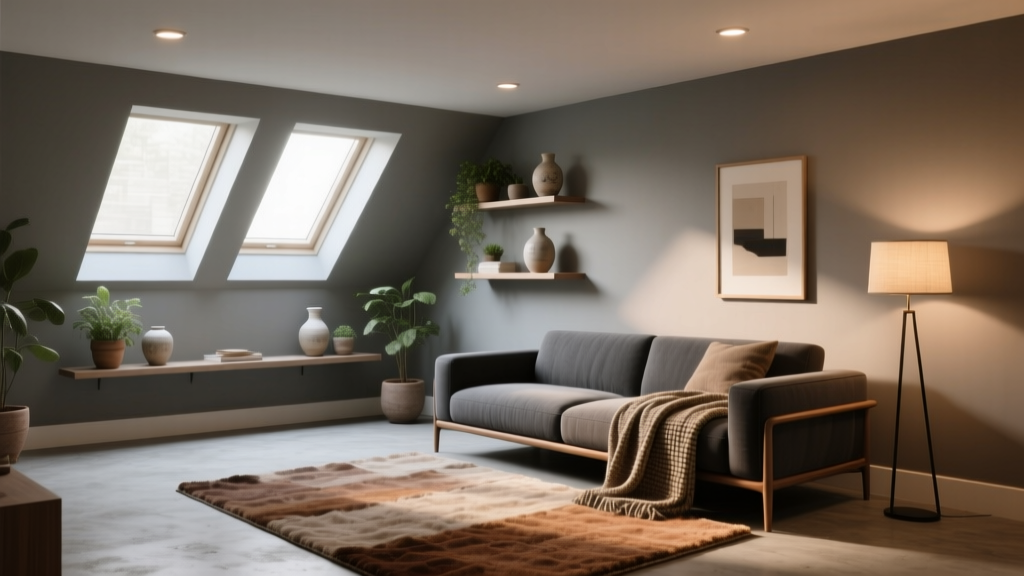
How to Choose Colors for a Basement - The Decor Mag
Basements are full of possibility: a cozy family room, a guest suite, a home gym, a creative studio, even a small bar for entertaining. Yet color is often an afterthought—chosen quickly, without considering how basement conditions (limited natural light, lower ceilings, concrete surfaces) affect paint colors and the way you feel in the space.
Choosing basement paint colors well can transform a room from “unfinished and dim” to bright, welcoming, and intentionally designed. The right color scheme can visually lift the ceiling, expand the footprint, and support the purpose of the space—whether you want energizing, calm, focused, or social.
This guide breaks down color psychology and design principles specifically for basements, with practical tips, tested color combinations, and real room scenarios. You’ll walk away knowing how to pick a wall color, coordinate trim and ceilings, and avoid the common mistakes that make basement color feel muddy or flat.
Start With the Basement Reality: Light, Height, and Undertones
1) Identify your light situation (and don’t guess)
Basement color decisions should start with light. A paint color that looks airy upstairs can turn gray, green, or heavy below grade. Before committing:
- Check window size and exposure: Small north-facing windows produce cool, flat light; south-facing windows add warmth and contrast.
- Observe artificial lighting: Many basements rely on recessed LEDs, which can skew paint undertones.
- Test at different times: Morning vs. evening shifts matter, especially if your basement lighting changes with dimmers.
2) Choose the right bulb temperature before choosing paint
Lighting and paint color are inseparable. For most basements, aim for:
- 2700K–3000K for living rooms, guest rooms, and media spaces (warm, inviting).
- 3000K–3500K for gyms, laundry areas, and workspaces (cleaner, more energizing).
- High CRI (90+) to render paint colors accurately.
3) Understand undertones: your basement’s secret mood-maker
Basements often have cool materials—concrete floors, gray carpet, stone foundations—that pull paint undertones forward. When shopping for basement paint colors, look beyond “white” or “gray” and identify whether it leans:
- Warm (yellow, red, beige): cozy, inviting, can counteract cool basement light.
- Cool (blue, green): calming, crisp, can feel chilly in dim rooms.
- Neutral-balanced: safer, flexible, often best for open-concept basements.
Choose a Color Strategy Based on How You’ll Use the Basement
Basement family room or lounge: warm neutrals + soft contrast
For comfort-driven spaces, color psychology points to warm neutrals and muted earth tones—they signal rest, connection, and ease.
Try these wall colors:
- Sherwin-Williams Accessible Beige (SW 7036): warm greige that stays grounded in low light.
- Benjamin Moore Edgecomb Gray (HC-173): a classic “basement-friendly” neutral that doesn’t go icy.
- Farrow & Ball Skimming Stone (No. 241): refined warmth for a more elevated look.
Pair with: crisp-but-not-stark trim (Benjamin Moore White Dove OC-17 or Sherwin-Williams Alabaster SW 7008) and a slightly deeper accent (SW Urbane Bronze SW 7048) for a built-in or media wall.
Media room: deeper hues that minimize glare
Darker colors can be a basement advantage, especially for a home theater. Deep, low-reflective wall colors reduce screen glare and create a cinematic envelope.
- Benjamin Moore Hale Navy (HC-154): timeless navy that reads rich rather than black.
- Sherwin-Williams Iron Ore (SW 7069): charcoal with softness—great for a modern theater.
- Farrow & Ball Railings (No. 31): inky blue-black for drama.
Application tip: Use a matte or velvet finish on walls to reduce shine. Keep ceilings a shade lighter than the walls if height feels tight.
Home office or studio: balanced neutrals and focus-friendly colors
Basement offices benefit from colors that support clarity and reduce fatigue. Balanced greiges and soft greens work well—green is linked to restoration and sustained attention.
- Benjamin Moore Classic Gray (OC-23): light, calm, flexible; great if you want a bright backdrop.
- Sherwin-Williams Sea Salt (SW 6204): a gentle blue-green that reads airy with the right lighting.
- Benjamin Moore Saybrook Sage (HC-114): a muted sage with warmth—excellent for built-ins or an accent wall.
Gym or wellness space: clean energy without harshness
For a home gym, color psychology leans toward energizing yet controlled tones—think crisp whites, cool neutrals, and sporty contrasts.
- Sherwin-Williams Pure White (SW 7005): clean and modern, especially with 3500K lighting.
- Benjamin Moore Stonington Gray (HC-170): a reliable light gray that feels fresh, not gloomy.
- Accent idea: SW Distance (SW 6243) or BM Gentleman’s Gray (2062-20) for a bold stripe or feature wall.
Guest bedroom: soothing, sunless-safe colors
Basement guest rooms should feel calm and safe—soft warm neutrals or muted blue-grays can feel hotel-like if you keep undertones in check.
- Benjamin Moore Balboa Mist (OC-27): brightens without turning stark.
- Sherwin-Williams Agreeable Gray (SW 7029): versatile greige that plays nicely with many floors.
- Benjamin Moore Pale Oak (OC-20): warm, gentle, flattering under warm LEDs.
Basement Color Schemes That Work (With Real Application Scenarios)
Scenario 1: Low ceiling + small windows (make it feel taller)
Goal: visually raise the ceiling and expand the room.
- Walls: Benjamin Moore Classic Gray (OC-23)
- Ceiling: Benjamin Moore White Dove (OC-17) in flat
- Trim: White Dove in satin or semi-gloss
- Design move: Paint the crown molding (if present) the same as the ceiling to “lift” the top edge.
Scenario 2: Open-concept basement (family room + play area + bar)
Goal: a cohesive whole with gentle zoning.
- Main wall color: Sherwin-Williams Accessible Beige (SW 7036)
- Bar cabinets or built-ins: Sherwin-Williams Urbane Bronze (SW 7048)
- Trim: Sherwin-Williams Alabaster (SW 7008)
- Zoning trick: Use one consistent neutral on walls, then shift color through cabinetry, rugs, and art. This avoids choppy transitions in a low-light environment.
Scenario 3: Basement with gray LVP flooring (avoid the “cold gray box”)
Goal: warm up gray floors without clashing.
- Walls: Benjamin Moore Edgecomb Gray (HC-173) or Pale Oak (OC-20)
- Trim: Benjamin Moore Simply White (OC-117) if you want crispness, or White Dove for softness
- Accent: muted terracotta accessories or a warm leather sofa to bring in natural warmth
Scenario 4: Cozy reading nook or craft corner (create intimacy)
Goal: embrace the basement’s cocoon effect.
- Walls: Farrow & Ball Skimming Stone (No. 241) or Benjamin Moore Balboa Mist (OC-27)
- Feature wall (optional): Benjamin Moore Hale Navy (HC-154)
- Tip: Add layered lighting—floor lamp + wall sconce—to keep darker colors feeling intentional rather than dim.
Paint Finish and Placement: Where Basement Color Matters Most
Choose the right sheen for basement durability
- Walls: eggshell or matte (matte hides imperfections; eggshell wipes easier).
- Trim/doors: satin or semi-gloss for durability.
- Ceilings: flat to reduce glare and visually smooth uneven surfaces.
Use “color placement” to solve typical basement problems
- To widen a narrow basement: Paint the long walls slightly lighter than the short end wall (or keep all walls light and add a deeper accent at the far end).
- To reduce a tunnel effect: Add a mid-tone accent on the end wall (Iron Ore or Hale Navy) and keep side walls lighter.
- To make soffits disappear: Paint soffits the same color as the ceiling, not the wall.
- To make a low ceiling feel higher: Extend the wall color 1–2 inches onto the ceiling (a “color wash” edge) to blur the transition.
Specific Basement Color Recommendations (Tried-and-True Picks)
Best light neutrals for basements
- Benjamin Moore Classic Gray (OC-23)
- Benjamin Moore Balboa Mist (OC-27)
- Sherwin-Williams Agreeable Gray (SW 7029)
- Sherwin-Williams Alabaster (SW 7008) for walls in very dark basements
Best warm neutrals to counter cool basement light
- Benjamin Moore Edgecomb Gray (HC-173)
- Benjamin Moore Pale Oak (OC-20)
- Sherwin-Williams Accessible Beige (SW 7036)
Best moody colors for basement theaters and bars
- Benjamin Moore Hale Navy (HC-154)
- Sherwin-Williams Iron Ore (SW 7069)
- Sherwin-Williams Urbane Bronze (SW 7048)
- Farrow & Ball Railings (No. 31)
Common Basement Color Mistakes to Avoid
- Choosing a cool gray without checking undertones: Many cool grays turn bluish or purple in basements. If your basement already feels cold, switch to a warm greige or a balanced neutral.
- Using bright, stark white on every surface: High-contrast white can look clinical under cool LEDs and highlight imperfections. Consider softer whites (White Dove, Alabaster) or use white only on trim.
- Ignoring the floor color: Gray LVP, beige carpet, and stained concrete all push wall colors in different directions. Always test paint next to the floor.
- Skipping sample testing: Basements demand testing. Use large swatches (at least 12x12) or sample boards you can move around.
- Over-zoning with too many paint colors: Multiple small areas in different colors can make a basement feel chopped up. Use one main color and repeat accents for cohesion.
- Choosing high-sheen paint in a flawed space: Glossy finishes reflect light and can emphasize wavy drywall, patched walls, and ceiling issues.
Step-by-Step: A Simple System for Picking Basement Paint Colors
- Set your lighting plan first: bulb temperature (Kelvin), CRI, and where fixtures go.
- Decide the mood: cozy lounge, bright multipurpose, dramatic theater, calm guest suite.
- Pick one main neutral: choose a “bridge color” that works with flooring and fixed finishes.
- Select a trim/ceiling white: soft whites typically look better below grade than stark whites.
- Add one accent color: built-ins, a media wall, or a bar area. Repeat it in textiles for a designed look.
- Test samples properly: check day/night, lights on/off, and next to the floor.
FAQ: Basement Paint Colors and Color Schemes
What is the best color to make a basement feel brighter?
Light, warm neutrals usually brighten basements without turning cold. Great options include Benjamin Moore Classic Gray (OC-23), Benjamin Moore Balboa Mist (OC-27), and Sherwin-Williams Alabaster (SW 7008), paired with warm (2700K–3000K) high-CRI lighting.
Should basement ceilings be painted white?
Often yes, but choose a soft white rather than a sharp, blue-white. Benjamin Moore White Dove (OC-17) and Sherwin-Williams Alabaster (SW 7008) are popular for basement ceilings because they feel warm and forgiving.
Do dark colors work in basements?
Yes—especially in media rooms, bars, and cozy lounges. Dark colors like Benjamin Moore Hale Navy (HC-154) or Sherwin-Williams Iron Ore (SW 7069) can look sophisticated when you add layered lighting and keep finishes matte or eggshell to control glare.
How do I choose basement colors if my flooring is gray?
Gray floors often make basements feel cooler. Counterbalance with warm greiges and warm whites: Benjamin Moore Edgecomb Gray (HC-173), Benjamin Moore Pale Oak (OC-20), or Sherwin-Williams Accessible Beige (SW 7036). Avoid icy, blue-leaning grays unless you want a deliberately cool scheme.
What paint finish is best for basement walls?
For most basements, eggshell is the sweet spot: durable and cleanable with moderate reflection. If your walls have flaws or you want a softer look, use matte (choose a washable formula). Reserve higher sheens for trim and doors.
How many colors should I use in an open basement?
As a rule, keep to one main wall color, one trim/ceiling white, and one accent color. This creates a cohesive color scheme and prevents the space from feeling visually chopped up.
Next Steps: Turn Your Basement Into a Designed Space
Choose your lighting first, then pick a main wall color that complements your floors and supports the room’s purpose. Test large samples in multiple spots, commit to a cohesive palette, and use accent colors strategically—on built-ins, a bar wall, or a media zone—to bring depth without darkening the whole basement.
For more paint color ideas, color schemes, and room-by-room guidance, explore the color guides at thedecormag.com.
More Articles
 Best Coral Paint Colors for Vibrant Spaces - The Decor Mag
 How to Choose Colors for a Deck - The Decor Mag
 How to Use the 60-30-10 Color Rule - The Decor Mag
 Best Yellow Paint Colors for Cheerful Rooms - The Decor Mag
 Best Jade Green Paint Colors - The Decor Mag
 Best Cherry Red Paint Colors - The Decor Mag
 Warm vs Cool Color Temperatures Explained - The Decor Mag
 How to Create an Eclectic Color Palette - The Decor Mag
 How to Create a Low Contrast Color Palette - The Decor Mag
 How to Choose Colors for Small Spaces - The Decor Mag