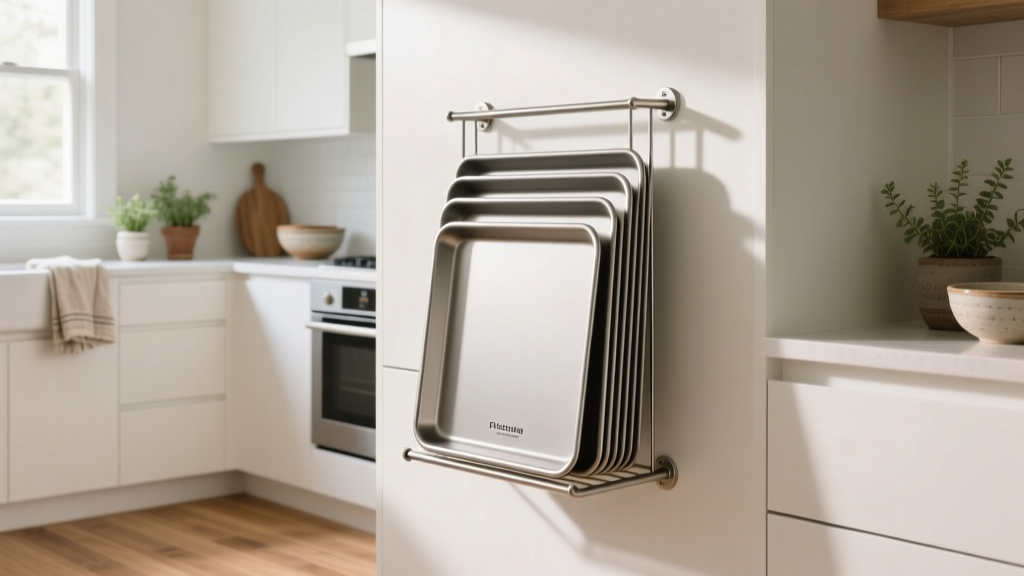
Best Kitchen Baking Sheet Vertical Storage - The Decor Mag
Baking sheets, muffin tins, cooling racks, and cutting boards are some of the hardest-working tools in a kitchen—and some of the most awkward to store. Stacking them in a deep cabinet creates the familiar clanging avalanche every time you reach for one pan. Slide them into an overstuffed drawer, and you lose precious space while scratching nonstick finishes and denting edges.
Vertical storage solves the problem in a way that feels both modern and timeless. It keeps flat cookware upright, separated, and easy to grab with one hand—an approach aligned with today’s most popular kitchen renovation goals: streamlined organization, clutter-free countertops, and cabinetry that supports real daily routines. Whether you’re planning a full kitchen remodel or upgrading a few cabinets, the right vertical baking sheet storage can dramatically improve flow at the cook zone and baking station.
This guide walks through the best vertical storage layouts, measurements that actually work, material and hardware recommendations, cost ranges, and common mistakes to avoid—so your kitchen organization feels intentional, durable, and beautiful.
Why Vertical Baking Sheet Storage Works (and Where It Belongs)
Vertical storage keeps items upright like files in a filing cabinet. You can see what you own, access it without unstacking, and protect surfaces from scratches. In kitchen design terms, it supports:
- Efficient workflow: store baking sheets near the oven, mixer, or baking prep area.
- Ergonomics: fewer awkward lifts and less bending into deep stacks.
- Longevity: reduced chipping and warping from constant banging and friction.
- Space optimization: turns a hard-to-use cabinet “void” into organized storage.
Best Locations in a Kitchen Layout
- Base cabinet near the oven: ideal for sheet pans, pizza stones, roasting pans.
- Base cabinet near the cooktop: good for griddles, grill pans, splatter screens.
- Pantry or tall cabinet: best for bulkier trays, specialty pans, cooling racks.
- Island base cabinet: a great renovation upgrade if your main run is tight.
Planning Measurements: Make It Fit Before You Buy or Build
Vertical storage succeeds or fails on a few inches. Use these measurement guidelines when designing a kitchen renovation or retrofitting an existing cabinet.
Common Baking Sheet Sizes (Plan for the Largest)
- Half-sheet pan: typically 18" x 13" (most common for home bakers)
- Quarter-sheet pan: typically 13" x 9"
- Standard cookie sheets: vary, often around 15" x 10" to 16" x 12"
- Cooling racks: often match half-sheet dimensions
- Cutting boards: commonly 12"–18" long
Recommended Cabinet Dimensions
- Minimum cabinet width: 9" (tight), 12" (comfortable), 15"–18" (ideal for mixed items)
- Minimum interior height: 19" to comfortably stand a half-sheet pan on edge
- Minimum interior depth: 13.5" for half-sheet pans; 14.5"–15" gives breathing room
Slot Spacing That Prevents Jams
When using dividers, spacing determines whether items glide or get stuck.
- For baking sheets and cooling racks: 1.25"–1.5" per slot
- For thicker pans (roasting pans, griddles): 2"–2.5" per slot
- For cutting boards: 1.5"–2" (depending on thickness and handles)
Practical tip: Measure your thickest item (often a rimmed sheet pan or heavy cutting board) and add 1/4" clearance to prevent scraping knuckles and cabinet sides.
Top Vertical Storage Approaches (Best for Renovations and Quick Upgrades)
1) Base Cabinet with Vertical Dividers (The Gold Standard)
This is the most renovation-friendly and designer-approved option: a base cabinet with fixed or adjustable vertical dividers. It looks custom, functions beautifully, and scales to your collection.
Best for: sheet pans, muffin tins, cutting boards, serving trays, cooling racks
Design recommendations:
- Use a 12"–18" wide base cabinet to avoid overcrowding.
- Place it within 3–6 feet of the oven for a practical baking zone.
- Choose removable dividers if you anticipate changing your cookware set.
Material options:
- Maple or birch plywood dividers: durable, stable, mid-range cost
- Solid hardwood (maple, oak): premium feel, very durable, higher cost
- Metal dividers: sleek and thin, easy wipe-down, can rattle without bumpers
Typical cost range:
- DIY divider inserts: $30–$120
- Mid-range pull-out divider system (installed): $150–$450
- Custom cabinet with integrated dividers: $400–$1,200+ depending on cabinetry line and finish
2) Pull-Out Tray Divider Base (Best for Deep Cabinets)
If you have a deep base cabinet, a pull-out vertical divider unit brings everything to you. This is especially helpful for homeowners who want easy access without kneeling or reaching to the back.
Best for: deeper base cabinets, heavier pans, limited mobility, high-use kitchens
Look for:
- Full-extension, soft-close slides rated 75–100 lbs for durability.
- Non-slip base or a lined platform to reduce rattling.
- Adjustable dividers so you can mix baking sheets and cutting boards.
Typical cost range: $200–$600 for quality pull-out systems (hardware + insert); installation can add $100–$250 if not DIY.
3) Narrow Vertical Cabinet (Tray Cabinet) Beside the Oven or Fridge
A tall, narrow tray cabinet is a classic in custom kitchens and a rising favorite in renovated spaces where every inch counts. It’s a clean, built-in look that works beautifully in modern, transitional, and even traditional kitchens.
Best for: baking sheets, serving trays, pizza stones, large cutting boards
Recommended sizing:
- Width: 9"–12" is common
- Depth: match surrounding cabinetry (typically 24" base depth)
- Interior slot count: 6–10 slots with mixed spacing
Typical cost range: If added during a kitchen renovation, the cabinet upgrade is often $250–$900 depending on door style and brand; fully custom builds can run $1,000–$2,500+.
4) Drawer-Based Vertical Storage (Best for Modern Kitchens)
Deep drawers are a top kitchen design trend for timeless functionality—especially in “everything-in-drawers” base cabinet layouts. You can store sheet pans vertically in a deep drawer using adjustable pegs or a drawer insert system.
Best for: homeowners who prefer drawers over doors, sleek modern storage
Recommended drawer specs:
- Drawer depth: 21"–24" typical
- Drawer height: 10"–12" minimum for vertical organization inserts (varies by system)
- Use a non-slip mat to reduce shifting and noise.
Typical cost range: $40–$200 for inserts and peg systems; new deep drawers as part of a remodel can be $300–$900+ per cabinet depending on construction and hardware.
Best Materials and Finishes: What Holds Up in Real Kitchens
Wood vs. Metal Dividers
- Plywood (maple/birch): stable, resists warping, easy to clean; best balance for most renovations.
- Solid hardwood: premium look and feel; great for custom cabinetry and higher-end remodels.
- Powder-coated metal: very wipeable; thinner profile; can chip if low quality.
- Stainless steel: durable and modern; typically higher cost and may show fingerprints.
Hardware That Makes Storage Feel High-End
- Soft-close slides: reduce noise and protect cookware edges.
- Full-extension glides: ensure you can access the back without pulling everything out.
- Bumpers or silicone edge guards: prevent rattling and protect nonstick coatings.
Product and Design Recommendations (What to Look For)
Rather than chasing a one-size-fits-all organizer, choose a system that matches your cabinet style, cooking habits, and renovation scope.
Best for Quick Upgrades (No Major Remodel)
- Adjustable wire or metal rack inserts: budget-friendly and fast to install in a standard cabinet.
- Tension-mounted or screw-in dividers: ideal for renters (tension) or homeowners (screw-in) who want stability.
- Pan organizers with wide feet: more stable than narrow-frame racks, especially for heavy cutting boards.
Best for Renovations (Built-In Functionality)
- Dedicated tray cabinet (9"–12" wide): a classic “custom kitchen” detail with daily payoff.
- Pull-out divider base: especially valuable when your layout forces deeper lower cabinets.
- Deep drawer with peg system: a clean, contemporary approach that keeps items separated.
Small Detail That Improves Everyday Use
- Add a labeled “baking zone”: store baking sheets with parchment, silicone mats, cooling racks, and measuring tools nearby.
- Use a washable liner: protects the cabinet base from scratches and makes crumbs easy to remove.
- Keep the heaviest items closest to the opening: reduces strain and accidental bumps.
Budget and Cost Considerations
Vertical baking sheet storage can be a low-cost organization project or a smart add-on during a full kitchen renovation. Use these ranges to plan realistically:
- Under $50: basic rack insert, non-slip liner, simple divider bars
- $50–$200: sturdier adjustable systems, drawer peg organizers, better finishes
- $200–$600: quality pull-out systems with full-extension soft-close slides
- $600–$2,500+: dedicated custom tray cabinets or premium cabinetry upgrades
Where to spend more: hardware (slides), stability (thicker materials), and custom sizing when you have awkward cabinet widths.
Where you can save: simple divider inserts inside an existing cabinet, especially if your pans are lightweight and your cabinet is already near the oven.
Maintenance and Care: Keep It Quiet, Clean, and Scratch-Free
- Wipe dividers monthly: grease and flour dust build up quickly near baking zones. Use a mild degreaser for metal and a gentle soap solution for wood.
- Replace liners as needed: a worn liner can trap crumbs and moisture; swap it every 6–12 months in busy kitchens.
- Add felt or silicone bumpers: especially if you store heavy sheet pans or metal cooling racks that clang.
- Avoid storing damp pans: moisture can warp wood dividers over time and cause corrosion on certain metal finishes.
Common Mistakes to Avoid
- Choosing slots that are too tight: if you have to force a pan in, you’ll stop using the system. Plan for the thickest item and add clearance.
- Ignoring cabinet door clearance: dividers placed too close to the door hinge side can block full access or scrape knuckles.
- Storing everything in one oversized slot: this defeats the purpose; aim for separation so items lift out without a shuffle.
- Placing storage far from the oven: the best organization supports workflow—keep baking tools near baking tasks.
- Buying flimsy racks: thin wire racks tip under heavy cutting boards and large trays; look for wide bases and stable feet.
- Overlooking noise control: without liners or bumpers, vertical storage can be loud—especially in open-concept kitchens.
FAQ: Kitchen Baking Sheet Vertical Storage
What cabinet size is best for vertical baking sheet storage?
A 12" to 18" wide base cabinet is the sweet spot for most homeowners. It’s wide enough for multiple slots without feeling cramped, and it fits easily into many kitchen layouts during a renovation.
Can I store cutting boards and baking sheets together?
Yes—vertical dividers are ideal for mixing baking sheets, cutting boards, and cooling racks. Use wider spacing (around 1.5"–2") for thick boards and narrower spacing (1.25"–1.5") for sheet pans.
Is a pull-out organizer worth the extra cost?
If your cabinet is deep or hard to access, a pull-out divider system is often worth it. Full-extension soft-close slides improve accessibility and reduce wear on cookware, especially in busy family kitchens.
What’s the best material for dividers in a high-use kitchen?
Maple or birch plywood dividers offer an excellent balance of durability and cost. Powder-coated metal is also practical and easy to clean; add bumpers to reduce rattling and protect pan edges.
How do I prevent scratching my nonstick baking sheets?
Store pans in separate slots, add a cabinet liner at the base, and consider thin silicone edge guards or bumpers where pans make contact. Avoid sliding nonstick surfaces tightly against rough metal edges.
Should baking sheets be stored near the oven or near the pantry?
For the best kitchen workflow, store baking sheets near the oven and baking prep space. If you bake occasionally, a pantry cabinet can work—just keep your most-used items in the most convenient location.
Next Steps: Create a Baking Zone That Feels Custom
Start by measuring your largest sheet pan and the interior dimensions of the cabinet you want to use. Decide whether you need a simple divider insert, a pull-out organizer for deep cabinets, or a dedicated tray cabinet as part of a kitchen renovation. Add a liner and bumpers for a quiet, scratch-free setup, and keep your baking essentials grouped nearby for a true baking zone that supports how you cook.
For more kitchen renovation ideas, cabinet planning tips, and organization upgrades that look as good as they function, explore more inspiration and guides on thedecormag.com.
More Articles
 Industrial Kitchen Design Inspiration - The Decor Mag
 Kitchen Pantry Organization: Pro Tips (2026)
 Kitchen Arched Doorway to Kitchen Design - The Decor Mag
 How to Design a Kitchen with a Breakfast Bar - The Decor Mag
 Best Kitchen Under-Sink Organization - The Decor Mag
 Kitchen Backsplash Ideas That Stand Out - The Decor Mag
 Kitchen Cabinet Color Trends - The Decor Mag
 Vintage Kitchen Decor: Ideas & Tips (2026)
 Best Kitchen Mixing Bowl Storage - The Decor Mag
 Smart Kitchen Tech: How to Incorporate in 2026