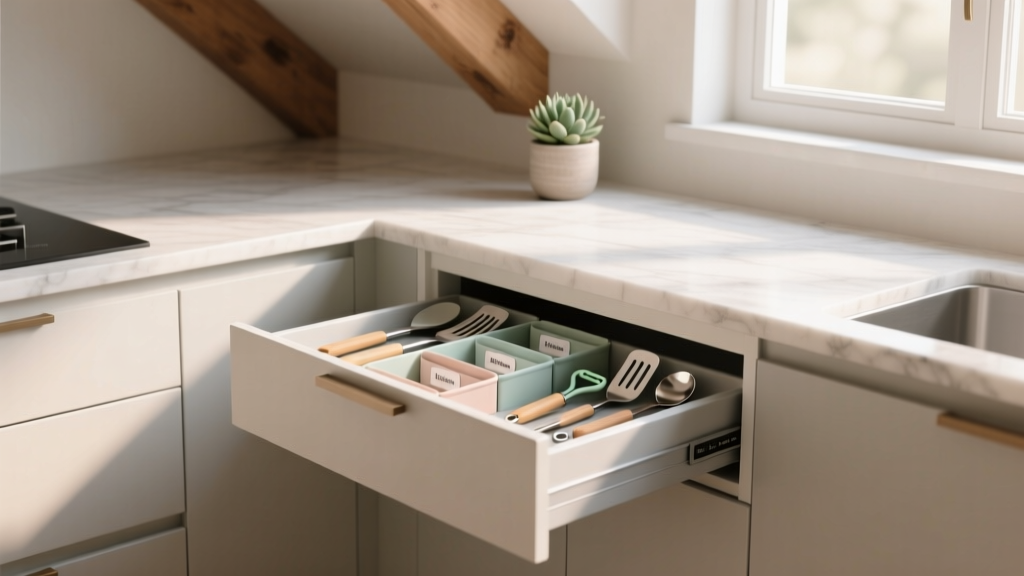
Best Kitchen Drawer Organization Systems - The Decor Mag
Kitchen drawers are where daily life happens: the cutlery you reach for three times a day, the spatula that somehow never makes it back to the same spot, the “junk” that accumulates when storage doesn’t match your routines. A smart kitchen drawer organization system turns that chaos into a layout that supports faster cooking, easier cleanup, and a calmer-looking kitchen—especially in open-concept homes where the kitchen is always on display.
For homeowners renovating or upgrading their kitchen organization, drawers are often the highest-return investment. Modern kitchen design trends favor deep drawers over wall cabinets for base storage, integrated organizers, and streamlined interiors that hide clutter. The best systems aren’t just pretty inserts—they’re sized correctly, built from durable materials, and planned around how you cook.
This guide covers the most effective kitchen drawer organizers, recommended layouts, measurements, material options, cost ranges, and the mistakes that derail even the most beautiful kitchen renovation.
Start With a Drawer Inventory (Before You Buy Anything)
The best drawer organization systems begin with a quick audit. You’ll save money and avoid “organizer clutter” by planning around your existing drawer sizes and tools.
Measure Your Drawer the Right Way
- Inside width: Measure wall-to-wall inside the drawer box.
- Inside depth: Measure from the inside front to the inside back.
- Inside height: Measure from drawer bottom to the lowest point under the drawer sides/rails (don’t assume the full box height is usable).
- Note the drawer type: Standard (3–5" tall), medium (6–8"), deep (9–12"+). Drawer height determines which organizers will fit (especially knife blocks and spice tiers).
Group Items by Use, Not by Category
Instead of “all utensils together,” plan by task zones. A kitchen renovation that follows zone-based organization tends to stay tidy long-term.
- Prep zone: Knives, peelers, measuring tools, mixing tools
- Cooking zone: Spatulas, tongs, ladles, splatter screen, thermometer
- Baking zone: Whisks, rolling pin, measuring cups, parchment, piping tips
- Storage zone: Wraps, bags, containers, labels
- Kid/snack zone: Small plates, lunch containers, reusable pouches
Best Kitchen Drawer Organization Systems (By Drawer Type)
1) Adjustable Drawer Dividers (The Most Flexible Foundation)
Adjustable dividers are the backbone of a practical kitchen drawer organizer plan. They’re ideal for wide drawers where items shift around.
Best for: utensils, dish towels, gadgets, pantry packets, food storage lids
Recommended specs:
- Divider thickness: 1/4"–3/8" for sturdy wood or bamboo; thinner for plastic is fine if reinforced
- Height: 2"–4" for shallow drawers; 4"–6" for medium drawers
- Non-slip ends or screw-in brackets for deep drawers
Material recommendation: Solid wood or high-quality bamboo for durability and a premium look in remodeled kitchens. Powder-coated metal is excellent for modern kitchens but may rattle unless lined.
Typical cost range: $15–$60 per drawer (DIY/retail); $80–$250+ per drawer for custom-fit systems.
2) Modular Insert Trays (For a Built-In, Custom Look)
Modular trays are the upgrade from a single cutlery insert. They let you build a drawer interior like a grid—clean lines, no wasted gaps, and easy reconfiguring.
Best for: cutlery, prep tools, coffee accessories, bar tools, small spice jars
Layout tip: In a 24" wide drawer, a combination of 2–4 modules usually fits best. Leave a narrow section (2–3" wide) for odd tools like chopsticks, reusable straws, or bag clips.
Materials compared:
- Bamboo: warm, popular, mid-priced; can stain if left damp
- Hardwood (maple, walnut, oak): most durable; best for high-end kitchen renovations
- Food-grade plastic: easiest to wash; budget-friendly; may look less “custom”
Typical cost range: $25–$120 per drawer for modular sets; $150–$500+ per drawer for premium hardwood or brand-name custom systems.
3) Knife Drawer Inserts (Safer Than Counter Blocks)
Knife storage is one of the biggest safety wins in kitchen drawer organization. A dedicated knife insert protects blades, protects fingers, and frees up counter space—key in modern minimalist kitchen design.
Best for: chefs who want quick access; households that prefer hidden storage
Measurements that matter:
- Many knife inserts require at least 2.75"–3.5" interior height.
- For chef’s knives (8–10"), choose inserts with longer slots or angled designs.
- Plan a 15"–18" wide section for a full knife set, depending on slot count.
Design approach: Place the knife drawer near the prep zone (between sink and cooktop is ideal) but not directly under where small kids can access it.
Typical cost range: $20–$80 for ready-made inserts; $150–$400 for custom hardwood knife organizers.
4) Deep Drawer Peg Systems (The Unsung Hero for Dishes and Pots)
Pegboard-style drawer systems are a major trend in kitchen renovation because they turn deep drawers into stable storage for plates, bowls, pans, and lids—without stacking.
Best for: dishes, pots and pans, mixing bowls, food storage containers
How to design it:
- Use a 3/8"–1/2" thick baseboard with a grid of holes and removable pegs.
- Leave 1"–1.5" clearance between stacks for easy lifting.
- For heavy cookware, choose thicker pegs or reinforced metal posts.
Typical cost range: $40–$150 per deep drawer; $200–$700+ for premium brand systems or fully customized drawer interiors.
5) Spice Drawer Systems (A Renovation Upgrade That Pays Off Daily)
Spice drawers are one of the most satisfying kitchen organization upgrades. They keep labels readable, reduce duplicates, and match current trends toward uncluttered countertops and efficient cooking zones.
Best for: frequent cooks, anyone who buys spices in bulk or refills jars
Two proven formats:
- Angled tier inserts: Labels face up, easy scanning
- Flat-lay grids: Best for uniform jars and minimalist aesthetics
Measurements & jar sizing tips:
- Common spice jars are 4"–5" tall; many spice drawers work best in 3"–5" drawer heights.
- Plan on 2.5"–3" width per jar slot for angled layouts.
- Place spices near the cooktop, but away from heat vents if possible to preserve flavor.
Typical cost range: $25–$100 for inserts; $100–$350+ for drawer-wide custom spice systems and uniform jar sets.
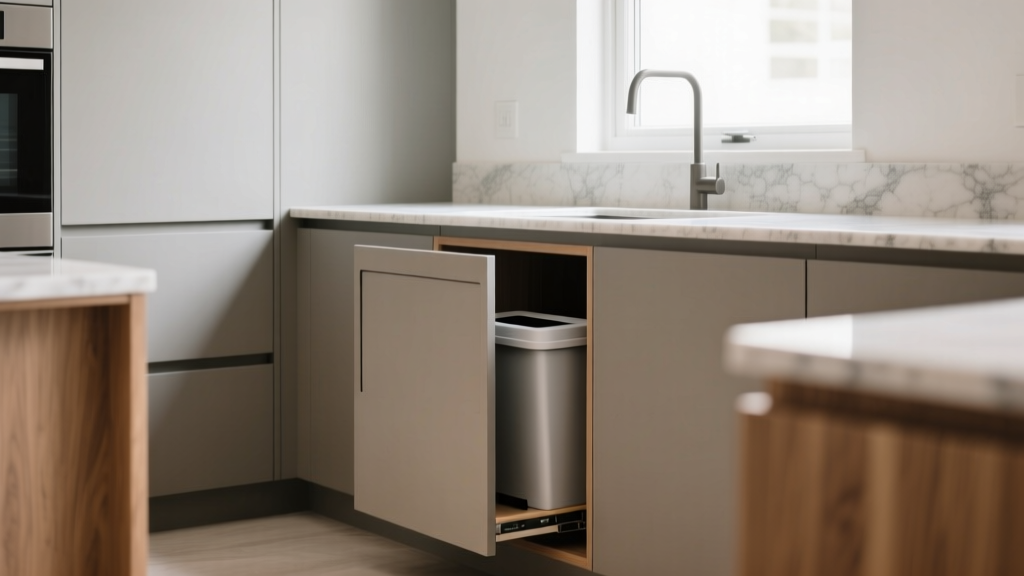
6) Waste, Recycling, and Compost Drawer Pull-Outs (Hidden, Hygienic, On-Trend)
Pull-out waste systems are a timeless functionality upgrade and a current design trend—especially in homes prioritizing sustainability and clean-lined cabinetry.
Best for: households that cook often, families, open-plan kitchens
Design recommendations:
- Choose soft-close, heavy-duty slides rated 75–100 lbs (or higher for large bins).
- Allow room for a compost caddy; many setups work well with 2-bin (trash/recycle) + small compost.
- Add a deodorizing liner and a washable drip tray if possible.
Typical cost range: $80–$250 for retrofit pull-outs; $250–$900+ for premium hardware, integrated bins, and custom cabinet modifications.
Recommended Drawer Layouts (Real-World Kitchen Zones)
Classic “Most Efficient” Base Cabinet Drawer Stack
If you’re choosing new cabinetry, a three-drawer base near the prep zone is a high-performance standard.
- Top drawer (3–5" height): cutlery + daily utensils with modular trays
- Middle drawer (6–8"): prep tools, small bowls, wraps, measuring cups
- Bottom deep drawer (9–12"+): pots, pans, or dishes with peg system
Kitchen Island Drawer Organization (Entertaining-Friendly)
- Seating side drawers: napkins, placemats, kids’ items, board games (if you want the island to do double duty)
- Prep side drawers: knives, mixing tools, cutting boards (vertical dividers if the drawer is deep)
- Serving drawer: trivets, serving spoons, wine tools
Small Kitchen Renovation Strategy
In compact kitchens, drawers can replace bulky cabinet shelves and reduce wasted space.
- Choose more drawers instead of doors in base cabinets whenever possible.
- Use full-extension slides so the back of the drawer is usable.
- Add one “utility drawer” with strict zones (batteries, scissors, tape) rather than multiple clutter drawers.
Materials & Hardware: What Lasts (and What Looks Best)
Organizer Material Comparison
- Bamboo: attractive, renewable, mid-range. Best if you wipe spills quickly. Consider a light sealant if humidity is high.
- Hardwood: strongest and most upscale; excellent for custom kitchen design. Highest cost but longest lifespan.
- Plastic (food-grade): easiest to clean, budget-friendly, ideal for messy zones (wraps, snacks). Can discolor over time.
- Metal (powder-coated/steel): sleek and durable, great for modern kitchens; pair with liners to prevent sliding/noise.
Drawer Slides and Why They Matter
- Full-extension slides: best for organization; you can reach everything.
- Soft-close: prevents slamming and shifting organizers.
- Weight rating: aim for 75 lbs minimum for deep drawers storing cookware.
Budget tip: If you’re renovating, invest in better slides first. Even a simple organizer feels premium when the drawer glides smoothly and opens fully.
Budget Considerations: What to Spend (and Where to Save)
- Budget refresh ($50–$200 total): non-slip liners + cutlery tray + 1–2 adjustable dividers. Best for renters or quick upgrades.
- Mid-range upgrade ($200–$800): modular inserts for 2–4 drawers, spice drawer insert, a knife insert, and one deep drawer peg system.
- Renovation-level investment ($800–$3,000+): custom-fit hardwood systems, integrated waste pull-outs, premium slides, and multiple deep-drawer storage zones.
Where to prioritize spending:
- Deep drawers holding heavy cookware (peg systems + strong hardware)
- Knife storage (safety + blade protection)
- Spice drawer systems (daily convenience and reduced waste)
Where you can save:
- Snack and wrap drawers (plastic bins are perfectly fine)
- Occasional-use tools (simple dividers and labeled bins)
Common Kitchen Drawer Organization Mistakes to Avoid
- Buying organizers before measuring: even a 1/4" mismatch causes shifting and wasted space.
- Over-compartmentalizing: too many tiny sections makes drawers hard to maintain and limits flexibility.
- Ignoring drawer height: tall inserts in shallow drawers jam; short inserts in deep drawers become clutter zones.
- Storing heavy items in weak drawers: deep drawers need proper slides and sturdy construction or they’ll sag.
- Skipping liners: without non-slip liners, trays drift and crumbs collect in corners.
- Creating a “junk drawer” without rules: designate it, divide it, and limit it to one drawer.
Maintenance: Keep Drawers Clean and Systems Working
- Use a washable non-slip liner: trim to fit and replace yearly (or as needed).
- Monthly 5-minute reset: remove crumbs, wipe inserts, and return items to zones.
- Protect wood/bamboo: wipe spills immediately; avoid soaking; use a mild soap and damp cloth.
- Check slide screws twice a year: especially for deep drawers loaded with pans.
- Label spice jar tops: it keeps a spice drawer functional and visually tidy.
FAQ: Kitchen Drawer Organization Systems
What’s the best kitchen drawer organizer material for long-term durability?
Hardwood organizers (maple, walnut, oak) last the longest and look the most custom, especially in renovated kitchens. High-quality bamboo is a strong mid-range option, while food-grade plastic is best for easy wash zones.
How do I organize deep kitchen drawers without making a mess?
Use a peg system for bowls, plates, and cookware, and add tall dividers or bins to prevent stacking piles. Full-extension, soft-close slides also reduce shifting when the drawer opens and closes.
Are custom drawer organizers worth it during a kitchen renovation?
If you’re already investing in cabinetry and hardware, custom organizers are often worth it for key drawers (prep, spices, pots). For secondary drawers, modular inserts provide a near-custom look for less.
What’s the ideal width for utensil and cutlery drawers?
A 24" wide drawer is a common sweet spot for cutlery plus daily tools. Wider drawers (30"–36") work well with modular systems and dividers to prevent items from migrating.
How do I keep a spice drawer from getting chaotic?
Choose an angled tier insert or a grid that fits your jar size, label the tops, and commit to one jar style if possible. A quick audit every few months prevents duplicates and expired spices.
Can I add drawer organization to an existing kitchen without replacing cabinets?
Yes. Start with liners, modular trays, and adjustable dividers. For a bigger upgrade, retrofit a pull-out waste system or add peg organizers to deep drawers—both can be installed without a full renovation.
Next Steps: Build a Drawer System That Matches How You Live
Start by measuring your drawers and mapping your kitchen zones (prep, cook, bake, store). Upgrade one “high-traffic” drawer first—usually cutlery/utensils—then move to a spice drawer and a deep drawer peg system for cookware or dishes. If you’re renovating, prioritize full-extension, soft-close slides and plan drawers where you naturally work.
For more kitchen renovation tips, cabinet layout ideas, and home organization inspiration, explore the latest guides and design trends on thedecormag.com.
More Articles
 Kitchen Island Seating Overhang: How Much? (2026)
 Sustainable vs. Kitchen: Rethinking Design, Appliances, and Daily Habits for Real Environmental Impact
 How to Choose Kitchen Cabinet Door Styles - The Decor Mag
 Best Kitchen Stool and Bar Seating Picks - The Decor Mag
 Kitchen Glass Front Cabinet Styling - The Decor Mag
 Kitchen Statement Range as Focal Point - The Decor Mag
 Kitchen Integrated Look Appliance Paneling - The Decor Mag
 Best Kitchen Baking Supply Organization - The Decor Mag
 Walk-In Pantry Kitchen Design Ideas (2026)
 Best Kitchen Trash Can Hideaway Solutions - The Decor Mag