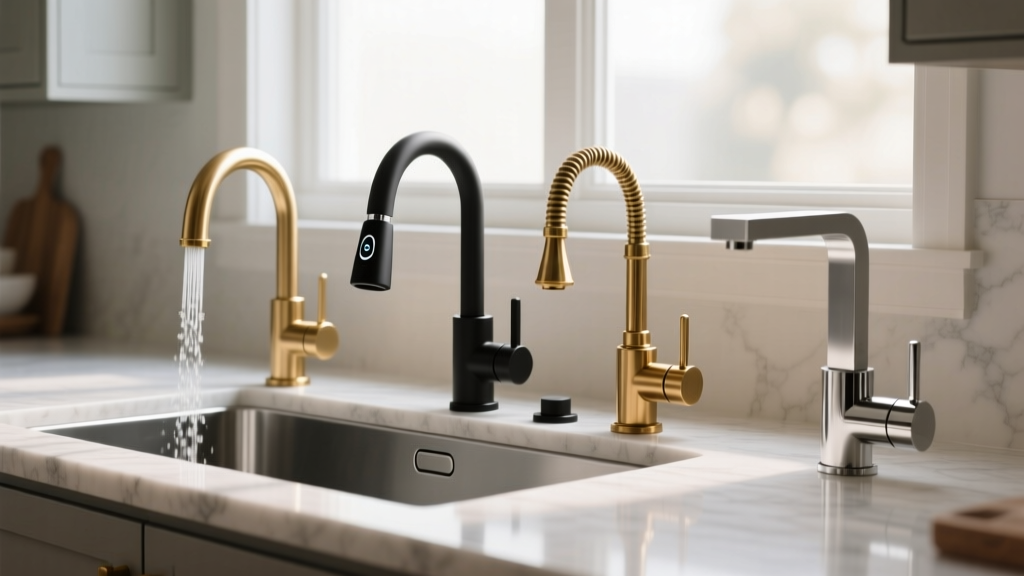
Best Kitchen Faucet Styles for 2026 - The Decor Mag
A kitchen faucet is one of the most-used “tools” in the home—switched on dozens of times a day for cooking, cleaning, filling pots, rinsing produce, and even quick hand-washes between tasks. During a kitchen renovation, it’s easy to focus on cabinets, countertops, and appliances, then treat the faucet as a final detail. In practice, faucet style and functionality have an outsized impact on how your kitchen feels and how smoothly it runs.
For 2026, kitchen design trends are balancing warmth and character (think brushed metals and soft silhouettes) with hard-working performance (pull-down sprayers, touchless control, and smarter water use). Homeowners want fixtures that look intentional with modern layouts—especially open-concept kitchens—while still delivering timeless reliability. The right kitchen faucet can elevate a standard sink area into a design feature and reduce everyday friction in meal prep.
This guide breaks down the best kitchen faucet styles for 2026, plus materials, finishes, costs, and the practical details that make the difference—mounting measurements, maintenance, and mistakes to avoid. Whether you’re planning a full kitchen remodel or refreshing your sink zone for better organization and workflow, you’ll find a faucet style that fits both your aesthetic and your routines.
Kitchen Faucet Trends Shaping 2026
2026 is leaning into “quiet luxury” and performance-forward fixtures. These trends are influencing what homeowners and designers are choosing during kitchen renovations:
- Softened silhouettes: Gentle arcs, tapered necks, and streamlined handle shapes that feel modern but not harsh.
- Warm metals: Brushed nickel, champagne bronze, and “soft brass” tones are continuing to replace high-shine chrome in many kitchens.
- Mixed finishes: Two-tone faucets (e.g., brushed nickel body with matte black accents) for depth and coordination with appliances and cabinet hardware.
- Smarter usability: Touchless activation, magnetic docking, better spray patterns, and integrated filtration are moving from luxury to mainstream.
- Water efficiency without compromise: Strong rinse performance at lower flow rates, paired with easy-to-clean aerators.
Before You Choose: Key Measurements and Compatibility
Great faucet style starts with fit. These practical checkpoints help you avoid costly returns and awkward clearances.
Sink and Countertop Mounting Basics
- Number of holes: Common configurations are 1-hole (modern), 2–3-hole (widespread or with accessories), and 4-hole (older setups). If you’re switching styles, you may need an escutcheon plate to cover unused holes.
- Spout reach: Aim for the water stream to hit near the center of the sink bowl. Typical spout reach ranges from 7–10 inches depending on sink size.
- Faucet height: High-arc faucets often range from 15–20 inches tall. Ensure clearance under upper cabinets or shelves if your sink is close to a wall.
- Backsplash clearance: If you have a tight ledge behind the sink, verify handle swing and lever clearance. Single-handle designs usually work best in compact setups.
Plumbing and Performance Specs
- Flow rate: Many kitchen faucets are 1.5–1.8 GPM (gallons per minute). Lower can save water, but choose a model with a strong spray function.
- Valve type: Look for ceramic disc valves for long-term drip resistance.
- Hose length: Pull-down and pull-out faucets often have 20–30 inch hoses; longer is helpful for farmhouse sinks and larger basins.
Best Kitchen Faucet Styles for 2026 (With Practical Pros and Cons)
1) Pull-Down Kitchen Faucets (The 2026 All-Around Favorite)
Pull-down faucets remain the top choice for homeowners because they fit most kitchen layouts and improve everyday cleaning. In 2026, expect more refined profiles and better docking systems.
Best for: Standard undermount sinks, single-bowl sinks, kitchen islands, busy family kitchens
- Pros: Easy sink rinsing, great for pots and sheet pans, often includes multiple spray modes.
- Cons: Taller designs can splash in shallow sinks; the hose and head add moving parts.
Recommended features to look for:
- Magnetic docking (prevents drooping spray head over time)
- Two spray patterns (aerated stream + powerful rinse)
- Spot-resistant finish if you have hard water
Typical cost range: $180–$550 mid-range; $600–$1,200 premium designer lines
2) Pull-Out Kitchen Faucets (Compact, Practical, Great for Smaller Spaces)
Pull-out faucets have a shorter spout and a spray head that pulls toward you rather than down. They’re trending again for 2026 in smaller kitchens and apartment renovations where every inch matters.
Best for: Smaller sinks, bar/prep sinks, kitchens with low cabinets above the sink
- Pros: Lower height, less splash risk, easy for kids to use, flexible hose control.
- Cons: Slightly less reach into large farmhouse sinks; can feel less dramatic visually.
Typical cost range: $140–$450
3) Bridge Faucets (Timeless Character With 2026 “Heritage Modern” Appeal)
Bridge faucets connect hot and cold lines with an exposed horizontal bridge. They’re a strong match for classic kitchens, English-inspired design, and the continuing interest in “heritage” details paired with modern layouts.
Best for: Traditional kitchens, apron-front sinks, decorative backsplashes, statement sink walls
- Pros: High style impact, suits vintage and transitional decor, often pairs beautifully with fireclay sinks.
- Cons: More crevices to clean; may require a 3- or 4-hole setup; not always the most ergonomic for rapid daily rinsing.
Typical cost range: $250–$800; premium $900–$1,800
4) Touchless and Touch-Activated Faucets (Hygienic Convenience Meets Busy Kitchens)
Hands-free faucets are becoming more common in 2026, especially in family homes and cooking-forward kitchens. They’re excellent for reducing mess and improving kitchen organization by keeping surfaces cleaner.
Best for: High-traffic kitchens, bakers and home chefs, households prioritizing hygiene
- Pros: Turn on water with messy hands, reduces handle grime, can save water.
- Cons: Requires power (battery or outlet), sensors need occasional cleaning/adjustment.
Practical buying tips:
- Prefer models with a manual override (you want water even if batteries die).
- Check where the battery pack mounts—ensure clearance in your cabinet, especially with pull-out trash systems.
- Look for adjustable sensor range if your sink area is tight.
Typical cost range: $250–$750; premium smart models $800–$1,500
5) Semi-Professional (Pro-Style) Faucets (Bold, High-Performance Statement)
Pro-style faucets with spring coils and flexible hoses are still popular, but 2026 versions tend to be more polished—less industrial, more refined—so they blend into modern kitchen design.
Best for: Serious home cooks, large sinks, modern kitchens, open-concept spaces where the faucet is visible
- Pros: Powerful spray, excellent maneuverability, dramatic visual presence.
- Cons: Visual bulk can overwhelm smaller kitchens; more surfaces to wipe; higher chance of splash in shallow bowls.
Typical cost range: $300–$900
6) Wall-Mounted Kitchen Faucets (Architectural, Clean Countertops)
Wall-mount faucets are a standout trend for 2026, especially in design-forward renovations. They create a cleaner countertop line and look striking over farmhouse or integrated sinks.
Best for: Full renovations (since plumbing must be in the wall), statement backsplashes, minimalist kitchens
- Pros: Easier countertop cleaning, strong architectural style, works beautifully with tiled sink walls.
- Cons: Requires precise rough-in; any future servicing may be more complex; must manage water splash carefully.
Measurement tip: Plan for a spout reach that lands the water stream near the center of the sink. Many wall mounts perform best with a reach around 7–9 inches, but it depends on your sink depth and offset.
Typical cost range: $220–$700 plus potential wall/plumbing labor
Best Faucet Finishes and Materials for 2026
Materials: What Lasts and What’s Worth Paying For
- Solid brass: A top choice for durability and corrosion resistance. Usually found in mid-to-high-end faucets. Great long-term value for kitchen remodels.
- Stainless steel (304): Excellent for modern kitchens and high humidity. Resists rust and can be easier to maintain. Look for true stainless rather than “stainless finish.”
- Zinc alloy / mixed metals: Common in budget faucets. Can perform fine, but longevity varies; prioritize strong warranties and ceramic disc valves.
Finish Comparisons (Style + Maintenance)
- Brushed nickel: Versatile and forgiving with water spots; fits transitional kitchen design and many cabinet hardware styles.
- Matte black: Bold contrast with light countertops and wood cabinets; can show mineral deposits in hard water—use gentle cleaners and wipe dry.
- Chrome: Bright, budget-friendly, and classic; shows fingerprints and water spots more than brushed finishes.
- Brushed brass / champagne bronze: Warmer, upscale look; pairs well with natural stone, cream cabinets, and earthy palettes.
- Gunmetal / graphite: A 2026 favorite for contemporary kitchens; hides fingerprints and adds depth next to stainless appliances.
Maintenance advice: Avoid abrasive pads and harsh chemicals. Clean weekly with mild dish soap and a soft cloth, then dry to prevent spotting. If you have hard water, consider an occasional vinegar-and-water wipe (check manufacturer guidance first, especially on specialty finishes).
Matching Faucet Style to Kitchen Layout and Sink Type
Kitchen Islands and Open-Concept Layouts
When your sink faces the living area, the faucet becomes a visual focal point. For open-concept kitchens, prioritize:
- Pull-down or semi-pro faucets with clean lines
- Finish coordination with pendants and cabinet pulls
- A refined silhouette that doesn’t visually clutter the island
Farmhouse (Apron-Front) Sinks
- Choose a taller faucet with a longer hose (often 24–30 inches) for deep bowls.
- Bridge faucets look classic; pull-downs deliver the best daily functionality.
- To reduce splash, pair deep sinks with an aerated stream option and avoid overly high water pressure.
Workstation Sinks and Organized Prep Zones
If you’ve invested in a workstation sink (built-in ledges for cutting boards and colanders), look for:
- Pull-down head with a strong rinse mode
- High arc for clearing accessories
- Optional side sprayer only if your sink is oversized (often unnecessary with a good pull-down)
Budget Planning: What You Get at Different Price Points
- $100–$200: Basic pull-down/pull-out models, fewer finish options, lighter materials. Best for quick upgrades and rental-friendly refreshes.
- $200–$500: The sweet spot for many kitchen renovations—better valves, stronger docking, improved finishes, more consistent quality control.
- $500–$1,000: Premium build, standout design, better warranties, often smoother operation and more refined spray performance.
- $1,000+: Designer fixtures, specialized finishes, advanced smart features, and statement-making silhouettes for luxury kitchens.
Where to spend: If you cook often, upgrade spray performance, docking quality, and valve durability before paying extra for niche finishes.
Common Kitchen Faucet Mistakes to Avoid
- Choosing style over reach: A beautiful faucet that hits the back of the sink bowl is frustrating daily. Measure spout reach carefully.
- Ignoring sink depth: Very tall faucets over shallow sinks increase splashing. Consider a lower arc or a sink with adequate depth (often 8–10 inches for busy kitchens).
- Mismatch with hole configuration: Switching from a 4-hole setup to a 1-hole faucet without an escutcheon plate can leave exposed holes.
- Overlooking maintenance realities: High-shine finishes show water spots; matte black may show mineral buildup. Choose what you’ll actually maintain.
- Buying off-brand with weak support: Faucets have wear parts. A strong warranty and accessible replacement cartridges matter more than most homeowners expect.
- Forgetting cabinet space: Touchless battery packs, filtration systems, and pull-out organizers compete for room under the sink. Plan the “under-sink layout” early.
Product and Feature Shortlist for a 2026-Ready Kitchen
Rather than chasing a single “best faucet,” build your shortlist around features that support modern kitchen organization and renovation goals:
- Everyday workhorse: Pull-down faucet, solid brass or stainless build, magnetic dock, two spray modes
- Small kitchen upgrade: Pull-out faucet, single-handle control, spot-resistant finish
- Design statement: Bridge or wall-mount faucet in brushed brass, nickel, or graphite
- Hygiene-forward family kitchen: Touchless faucet with manual override and easy-access battery housing
- Water-quality focus: Faucet compatible with under-sink filtration (or an integrated filtered-water tap to reduce countertop clutter)
FAQ: Kitchen Faucet Styles and Buying Decisions
What kitchen faucet finish is easiest to keep clean?
Brushed nickel and stainless steel are typically the most forgiving for fingerprints and water spots. Chrome looks crisp but shows spots more quickly. Matte black is stylish but may reveal mineral deposits in hard-water areas if not wiped down regularly.
Are touchless kitchen faucets worth it for a renovation?
For many households, yes—especially if you cook often or have kids. Look for a touchless model with a manual handle override and easy battery access. Budget an extra $100–$300 compared with a similar non-touchless faucet.
How do I choose the right faucet height and reach?
Measure from countertop to any cabinet/shelf above for height clearance, and choose a spout reach that positions the stream near the center of the sink bowl. Many kitchens land well with 15–18 inches height and 7–9 inches reach, but sink size and depth should guide the final pick.
Do I need a separate side sprayer?
Usually not if you choose a quality pull-down faucet with a strong rinse mode. Side sprayers can be helpful with very large sinks, but they add another hole and more parts to maintain.
What’s the most durable faucet material?
Solid brass and true stainless steel are top performers for longevity and corrosion resistance. Pair either with ceramic disc valves and a reputable warranty for the best long-term results.
Can I switch from a deck-mounted faucet to a wall-mounted faucet?
Yes, but it’s best done during a full kitchen remodel because the plumbing rough-in must move into the wall. Factor in tile/backsplash work and access for future servicing.
Next Steps: Choose a Faucet That Fits How You Live
Start by measuring your sink area (hole configuration, clearance, and ideal spout reach), then decide which style supports your kitchen workflow—pull-down for all-around performance, pull-out for compact spaces, bridge for timeless character, touchless for hygiene and convenience, semi-pro for high-output cooking, or wall-mount for architectural impact. Match the finish to your cabinet hardware and appliances, and prioritize durable materials and warranties to protect your renovation investment.
Looking for more kitchen design, renovation planning, and organization ideas? Explore the latest inspiration and expert guides at thedecormag.com.
More Articles
 Kitchen Cabinet Soft Close: How to Choose (2026)
 How to Organize Family Life: Practical Systems for Calm, Connection, and Consistency
 Kitchen Leaded Glass Cabinet Doors - The Decor Mag
 Kitchen Fluted Wood Island Paneling - The Decor Mag
 Kitchen Terrazzo Countertop Trends - The Decor Mag
 Best Kitchen Small Appliance Storage - The Decor Mag
 Kitchen Plaster Range Hood Organic Look - The Decor Mag
 How to Choose Kitchen Counter Depth - The Decor Mag
 Kitchen Two-Tone Cabinet Ideas - The Decor Mag
 Best Kitchen Herb Garden Window Ideas - The Decor Mag